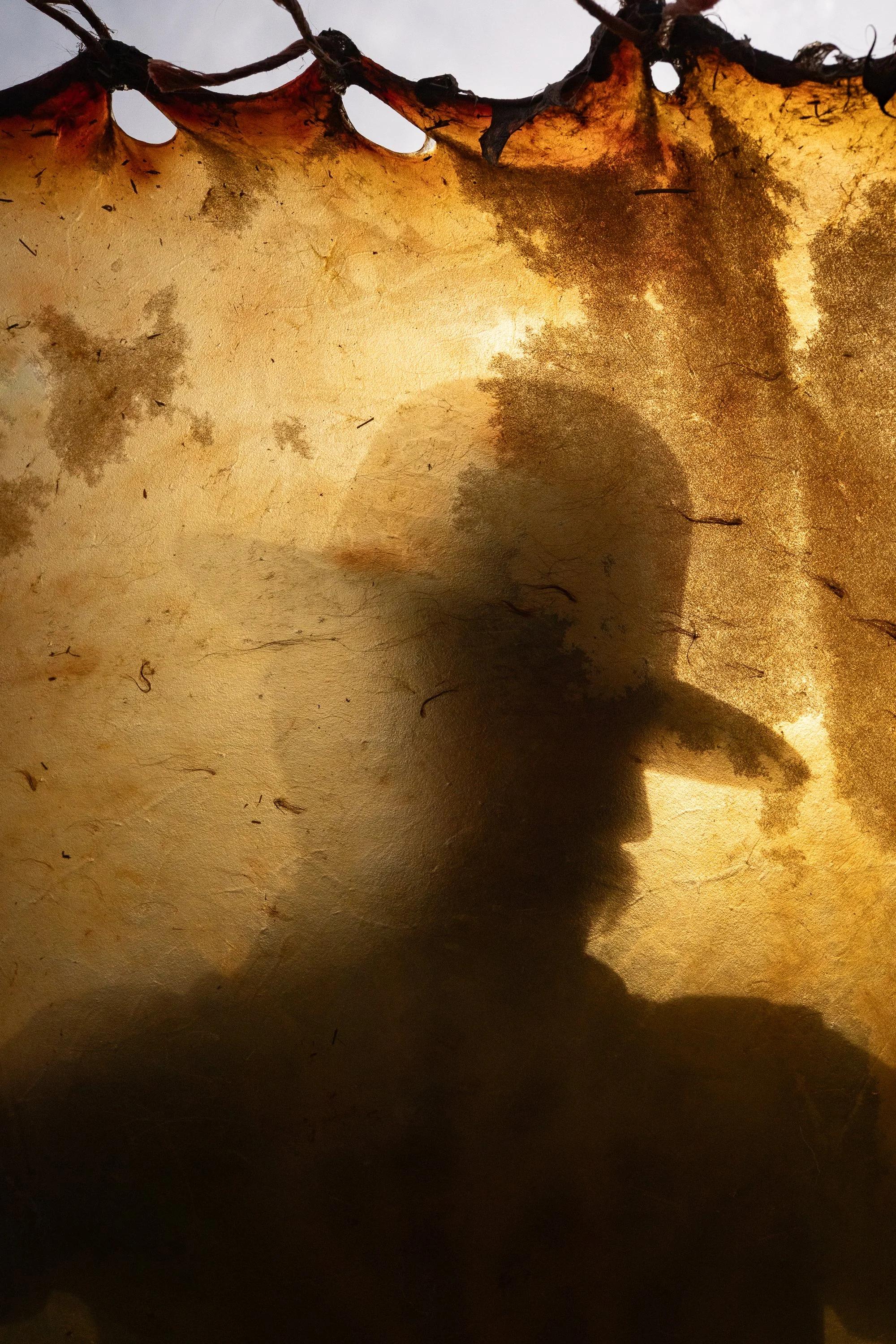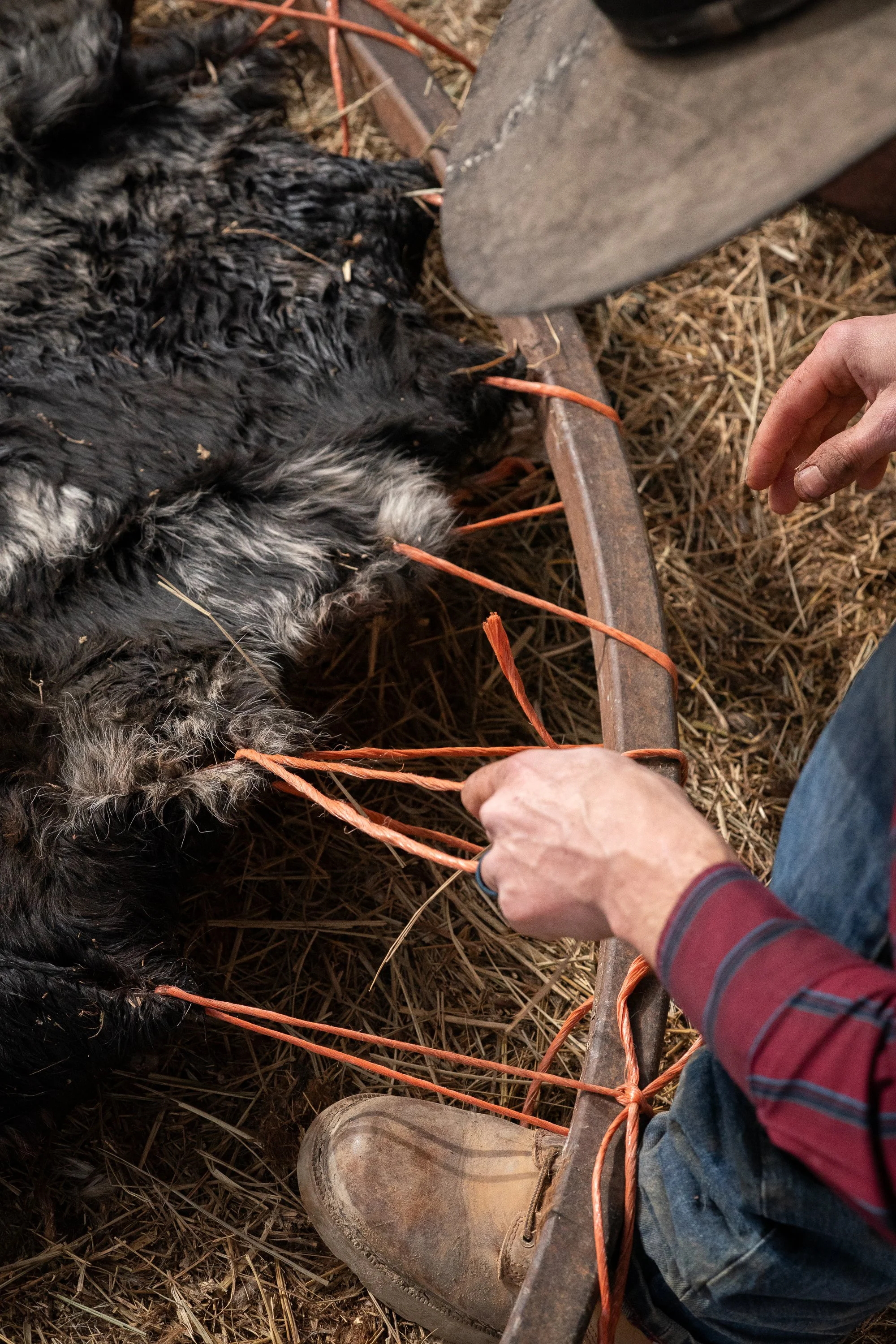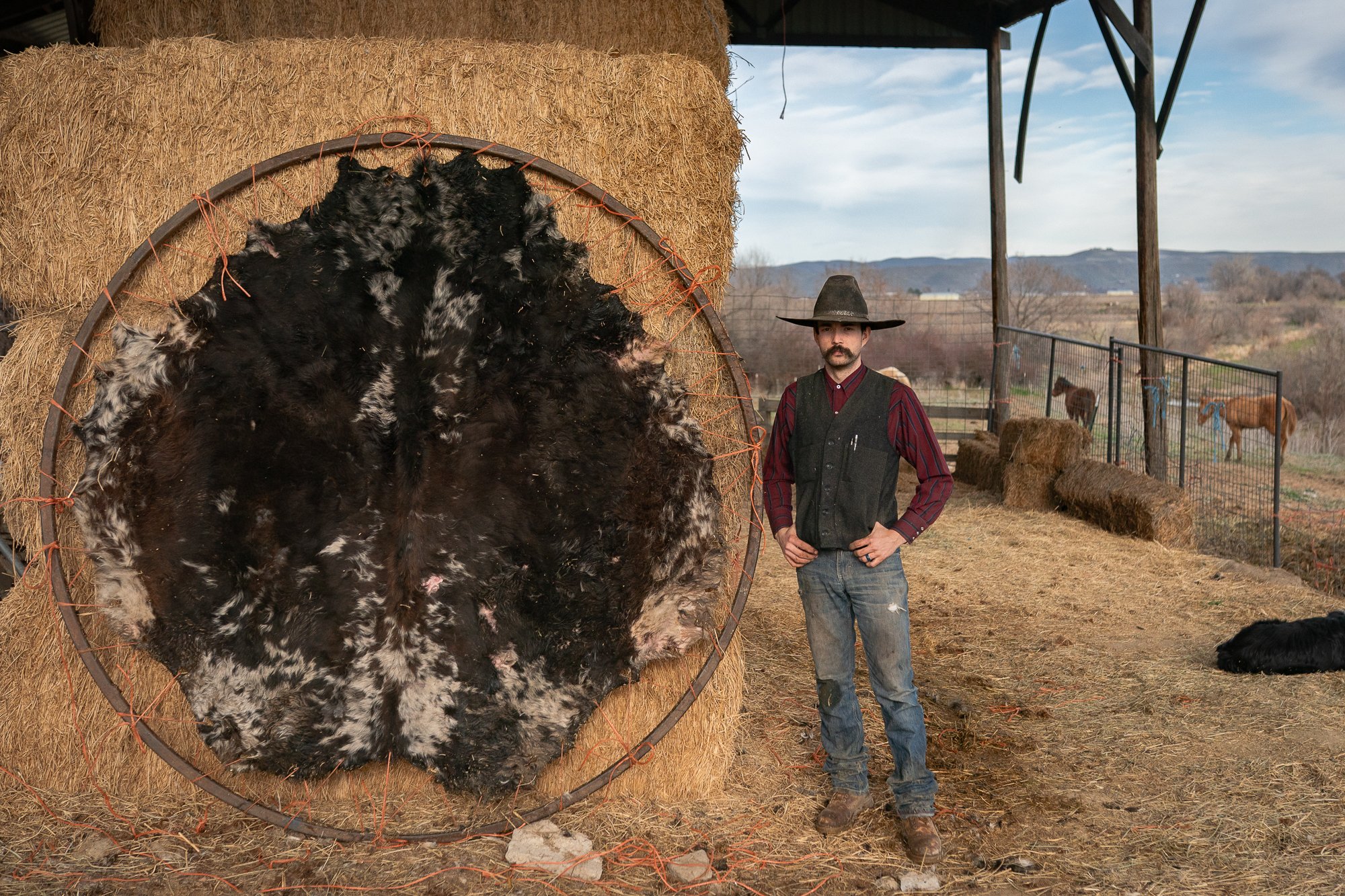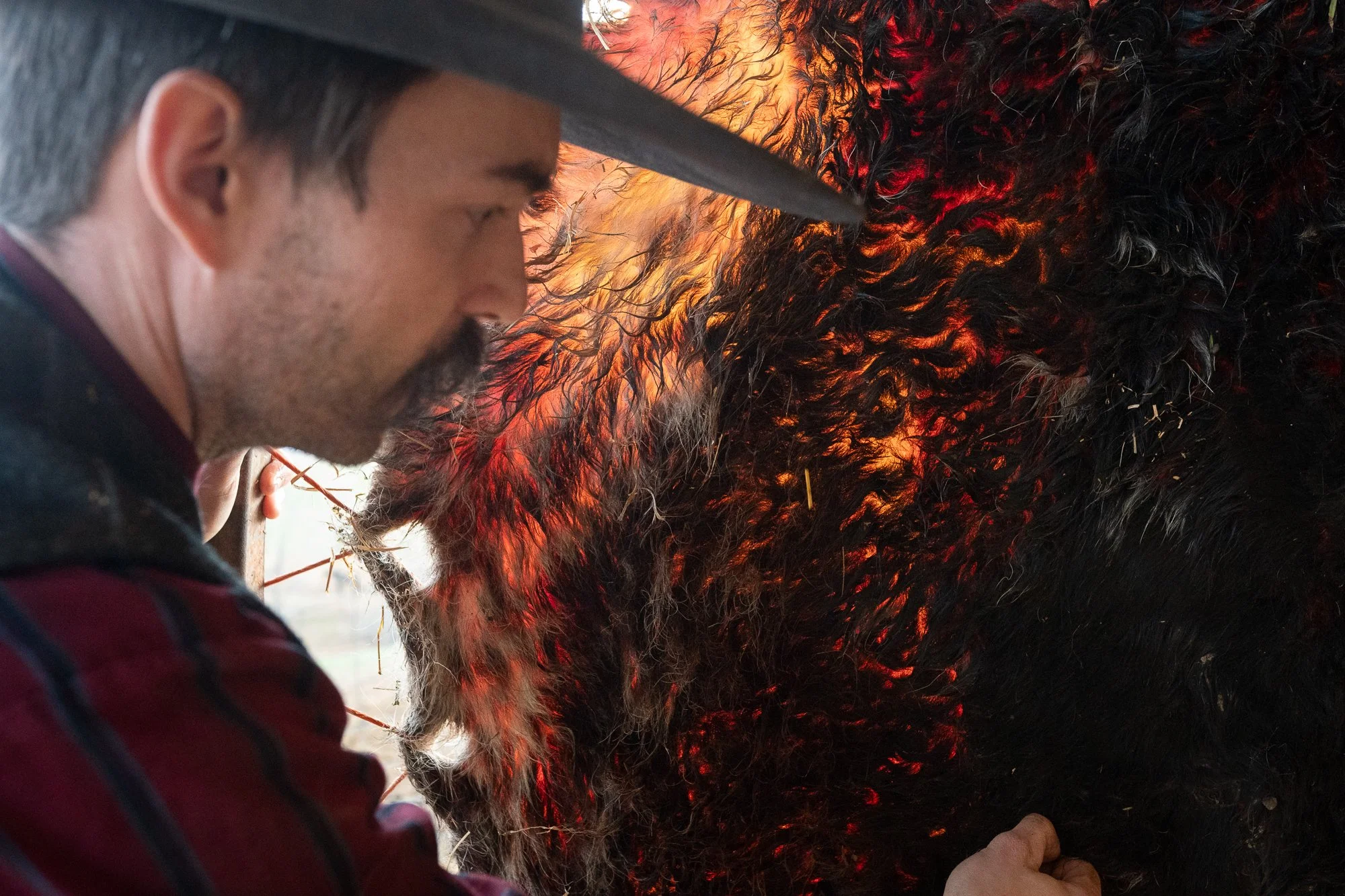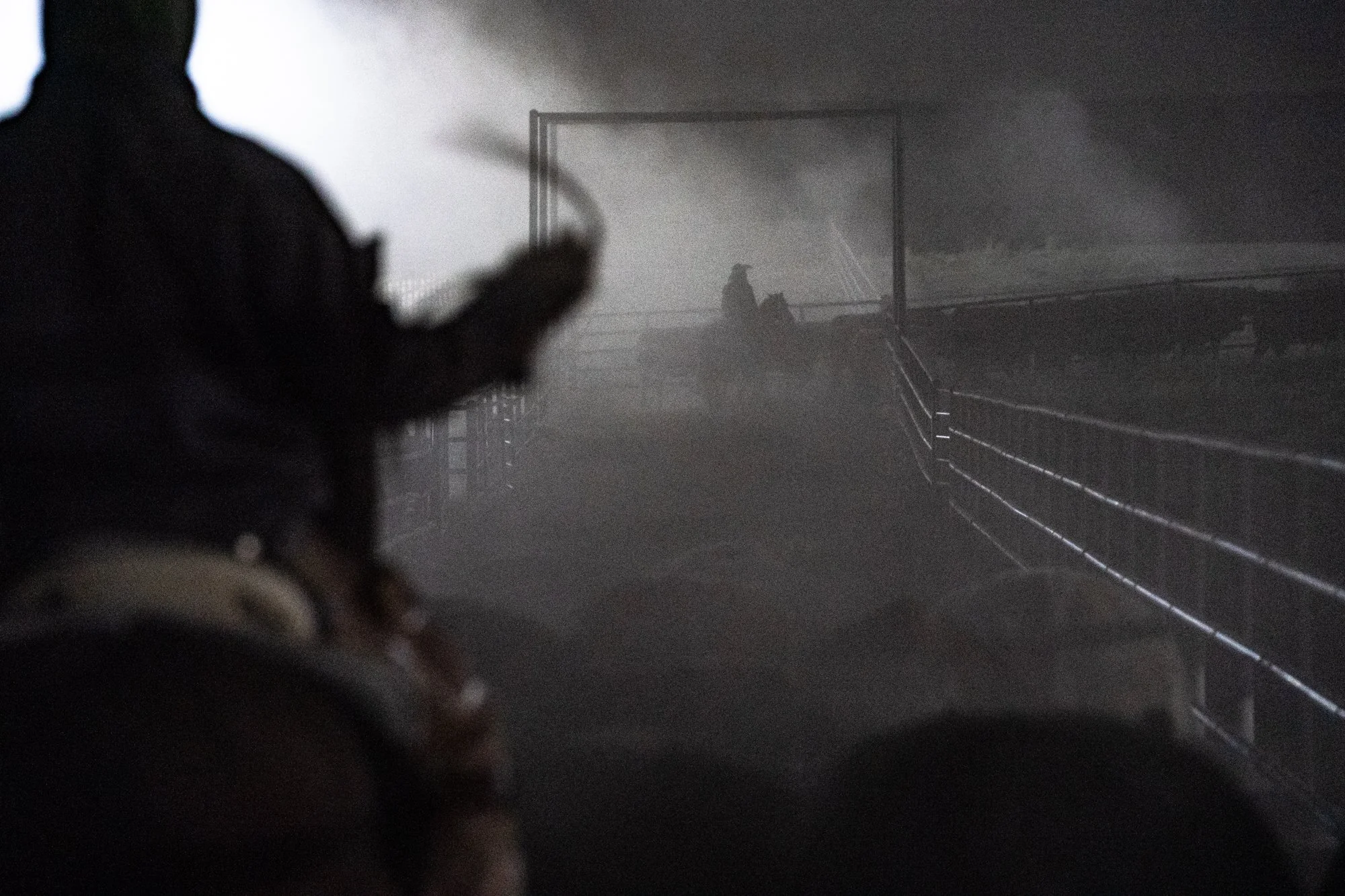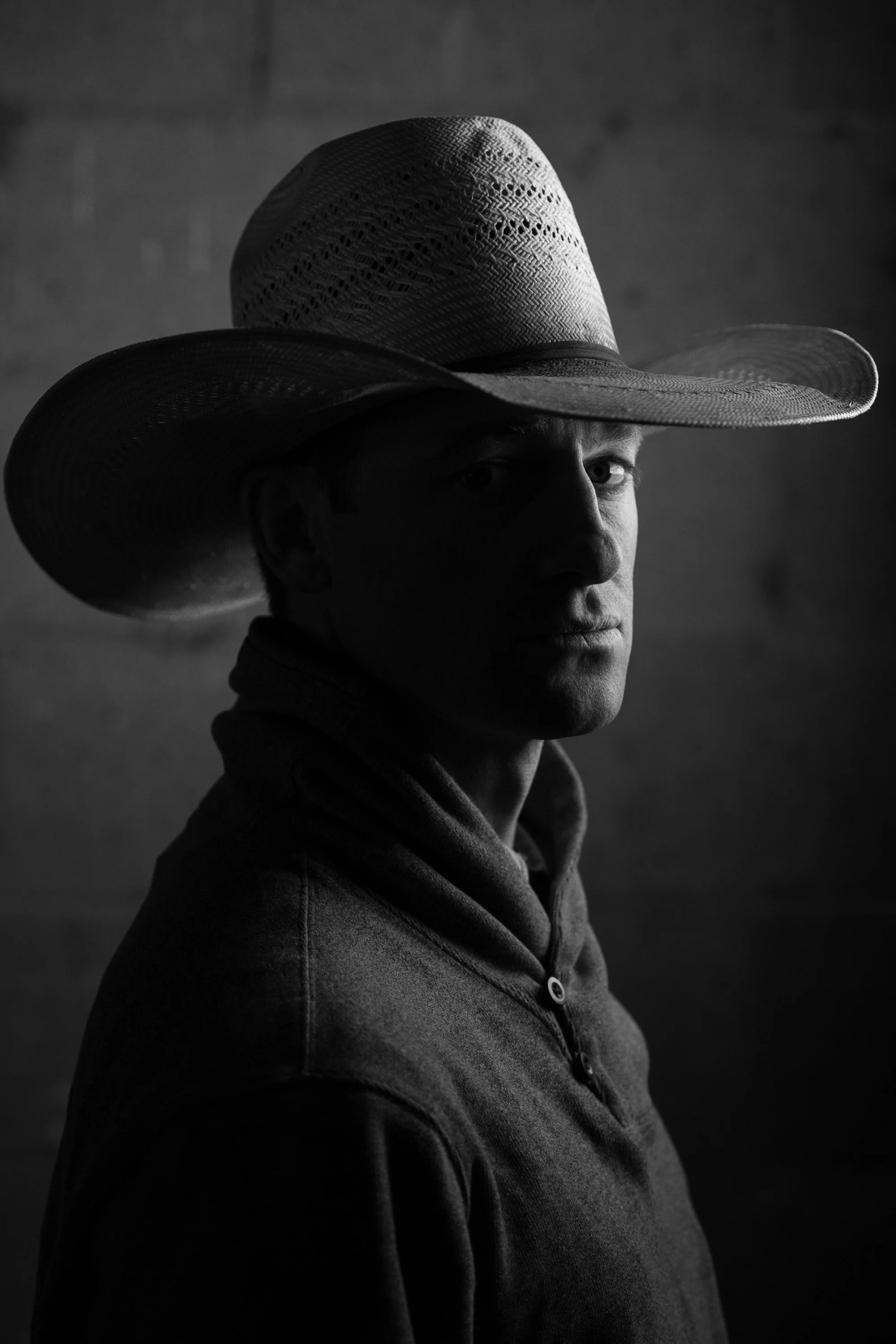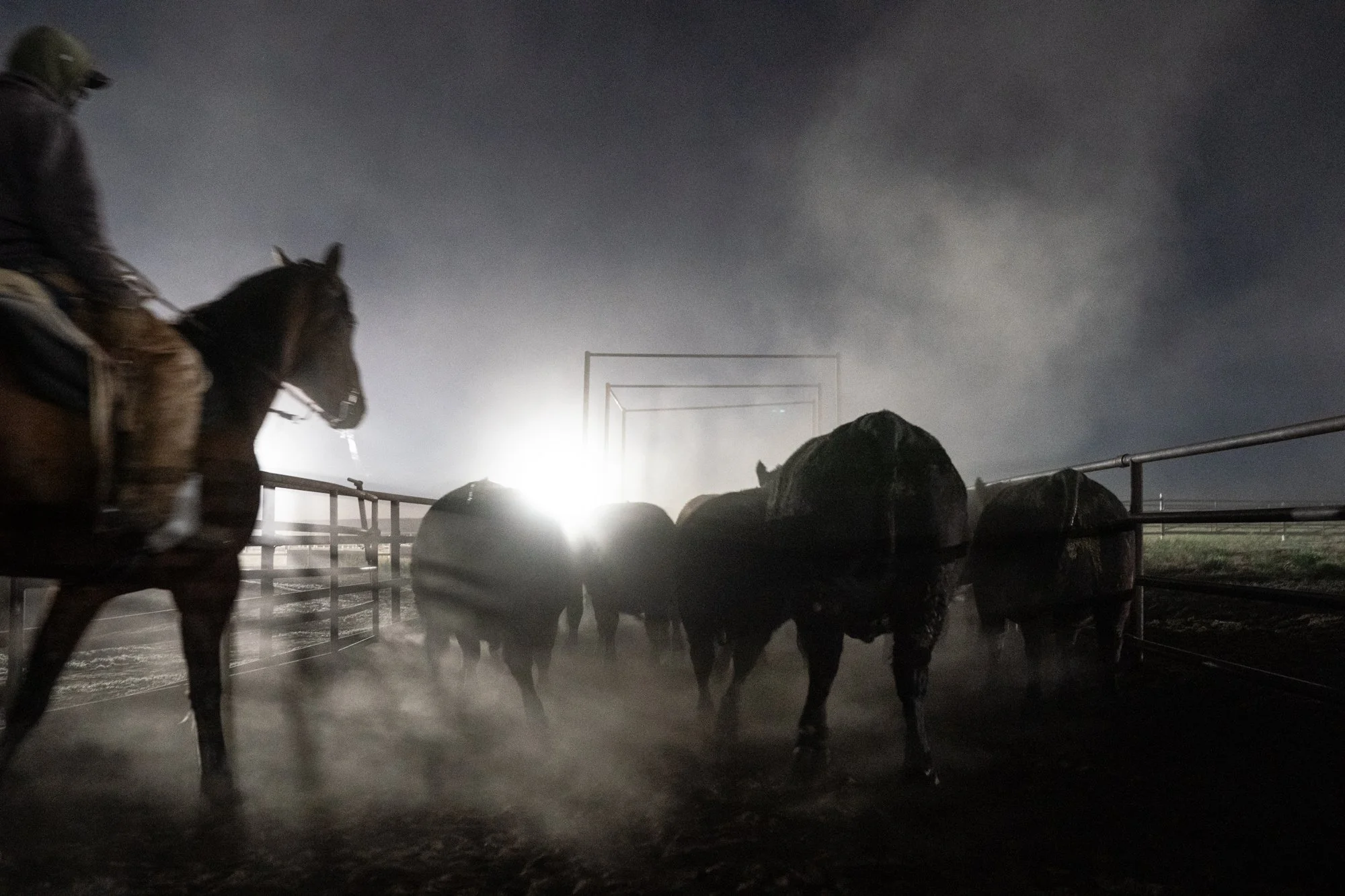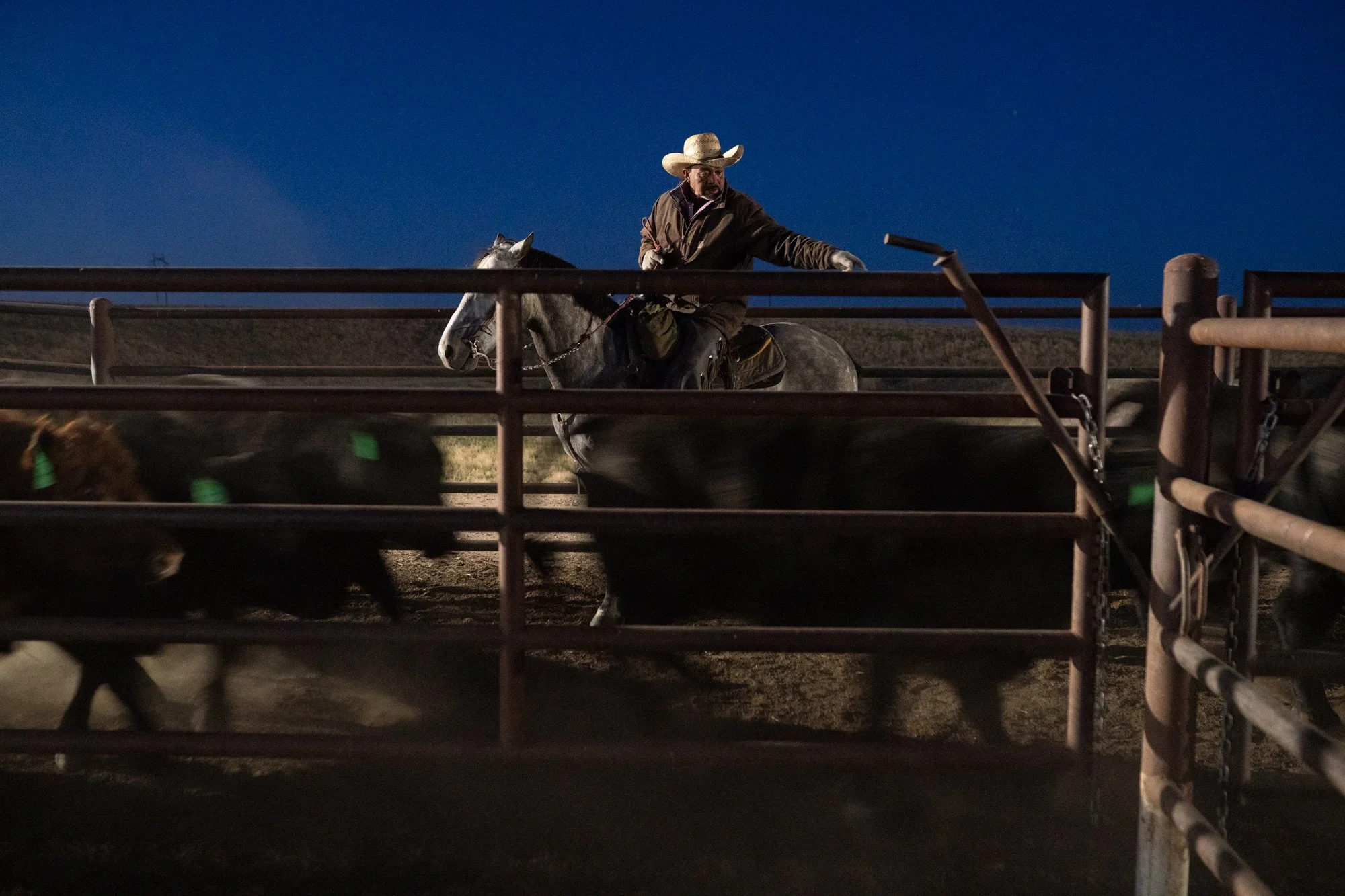
The Mother Hubbard Saddle

The Mother Hubbard Saddle: A Piece of Western History

The last time I photographed saddle maker Doug Cox at his shop in Nevada, he was already thinking about the next challenge he wanted to create for himself.

At 75, after more than 900 saddles and five decades working with leather, Doug doesn't exactly need another challenge. But he had decided to build a Mother Hubbard, an early style of Western saddle rarely made today.

When I asked him why, his answer was simple.

“Just because.”

That answer makes more sense once you understand what a Mother Hubbard saddle actually is.
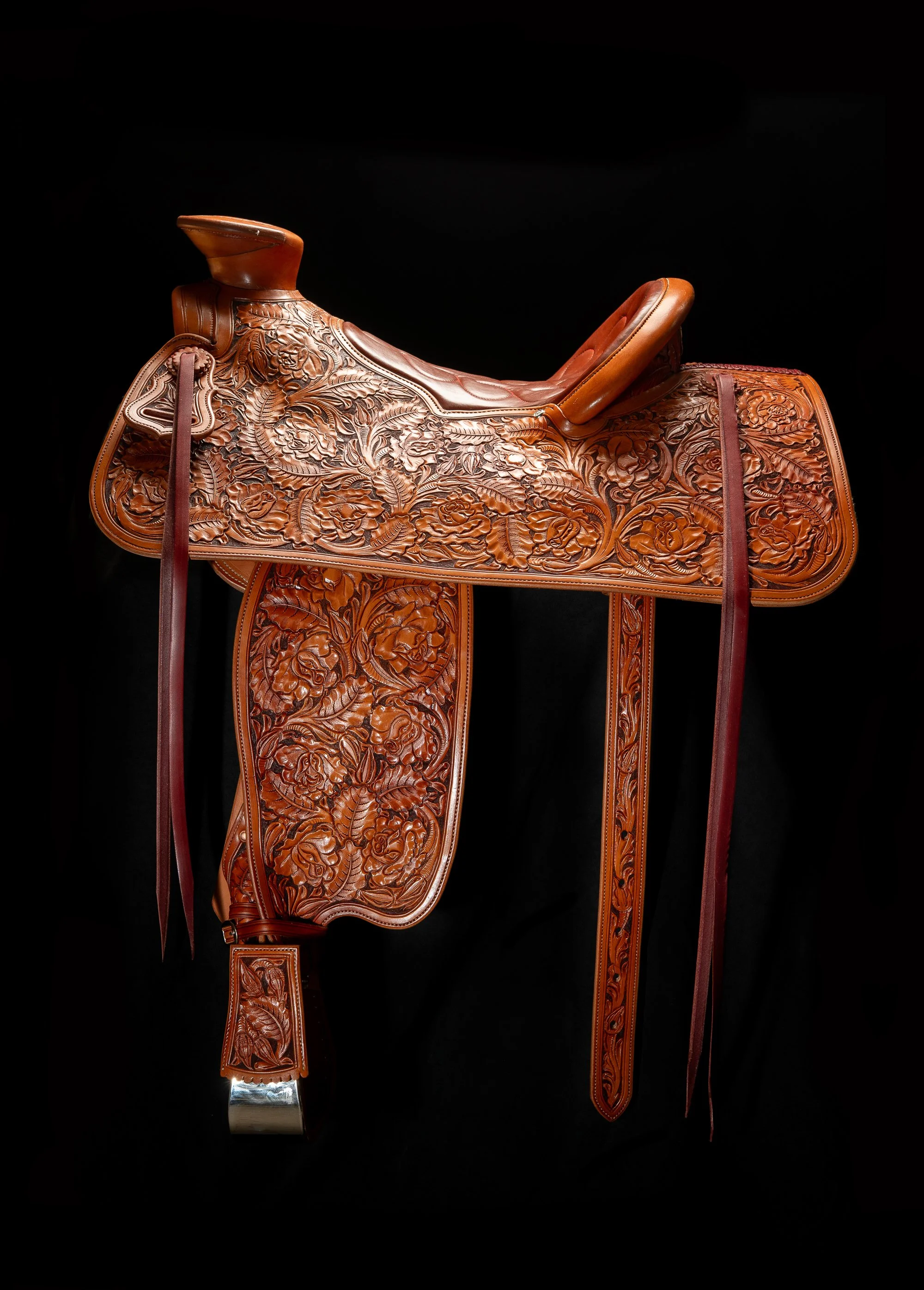
Finished Mother Hubbard Western saddle with extensive floral leather tooling.

The finished Mother Hubbard shows the broad leather coverage that distinguishes the early saddle design, with floral tooling covering much of its surface.

What Is a Mother Hubbard Saddle?

The Mother Hubbard comes from an early period in the development of the American Western saddle, before the familiar cowboy saddle evolved into the form most people recognize today.

Its most obvious characteristic is the amount of leather surrounding the saddle tree. One single large piece of leather extends down, creating a distinctive covered appearance and silhouette. It's immediately different from a modern Western saddle, where the individual components and shape of the tree are much more apparent.

Mother Hubbards emerged during the 19th century and became associated with the developing saddle-making traditions of the American West. Their unusual name is generally connected to the loose, full-coverage “Mother Hubbard” dresses of the period, an appropriate description for a saddle whose leather seems to drape around and cover much of its structure.

But what makes the saddle interesting isn't simply its age or appearance.

It's the way it's built.
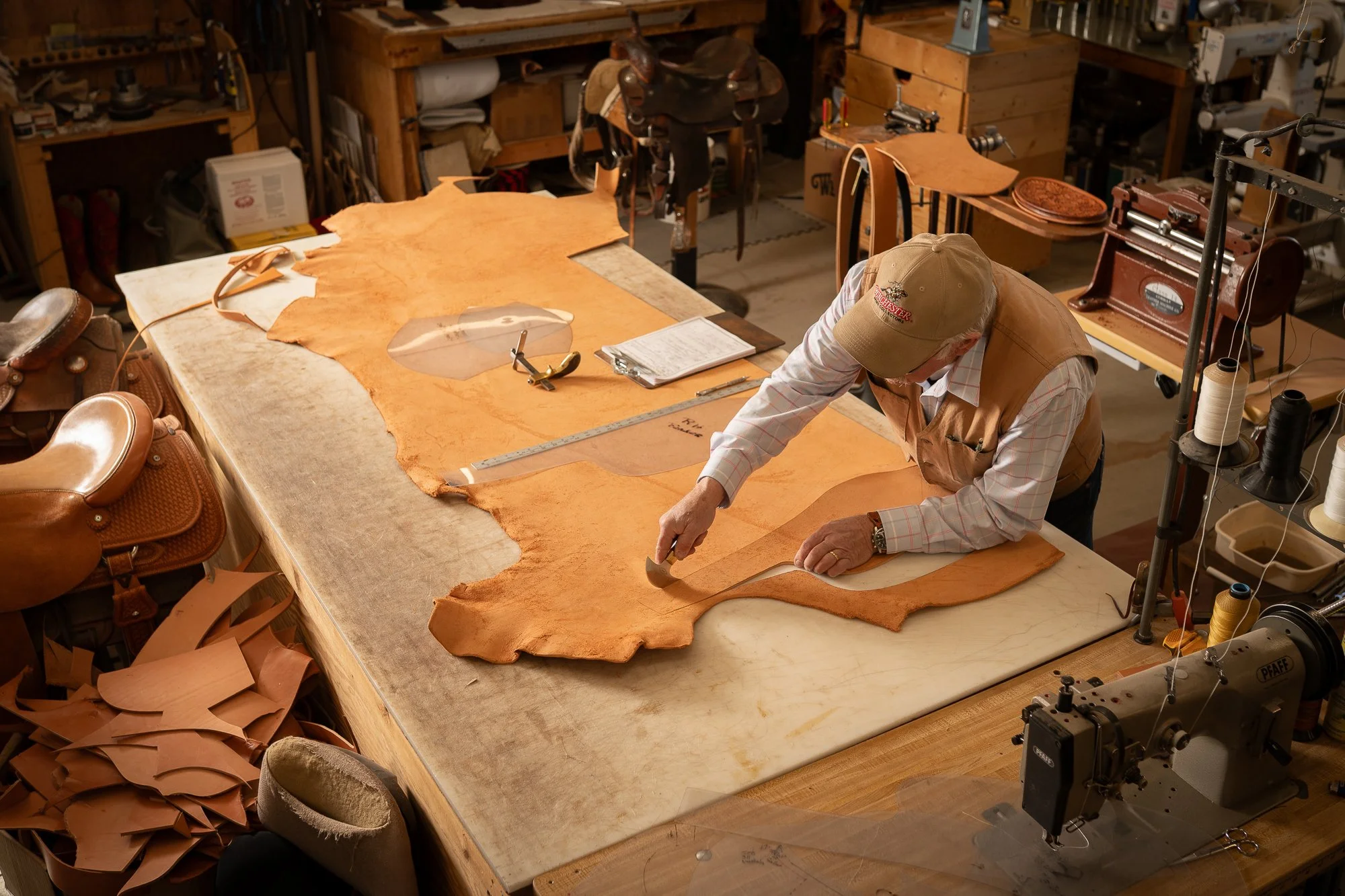
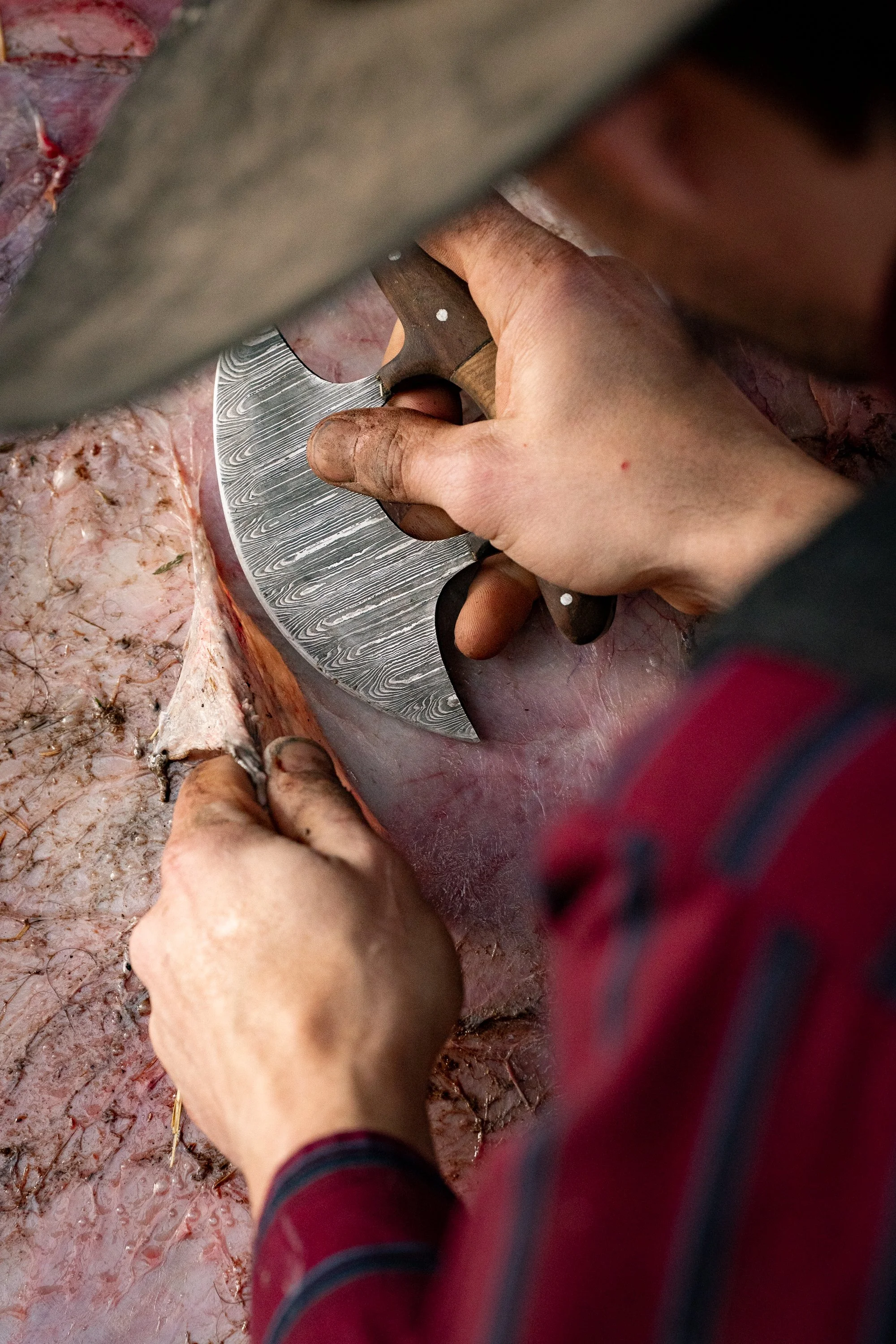
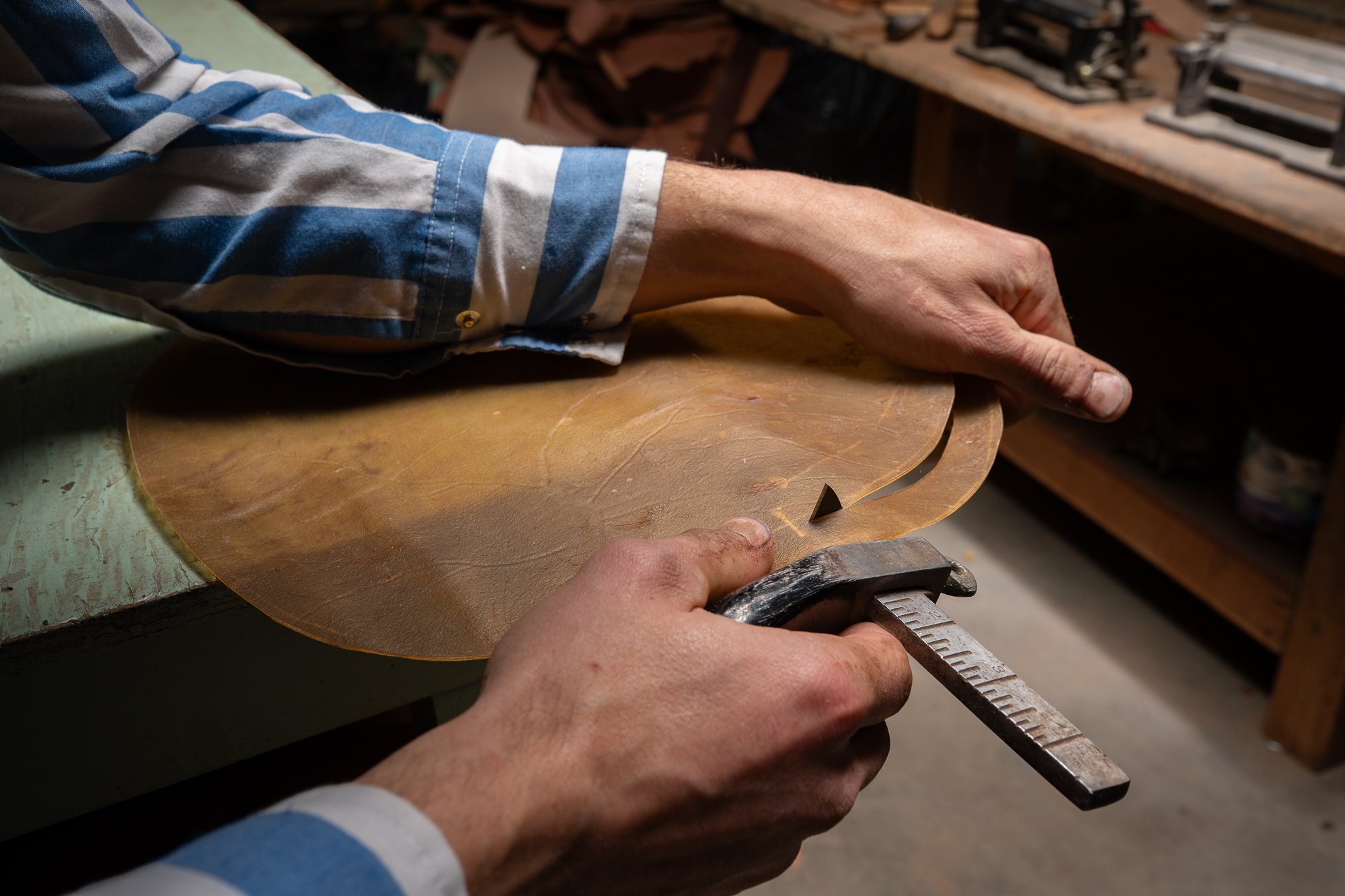
Doug Cox cutting leather for a Mother Hubbard saddle in his Nevada workshop.

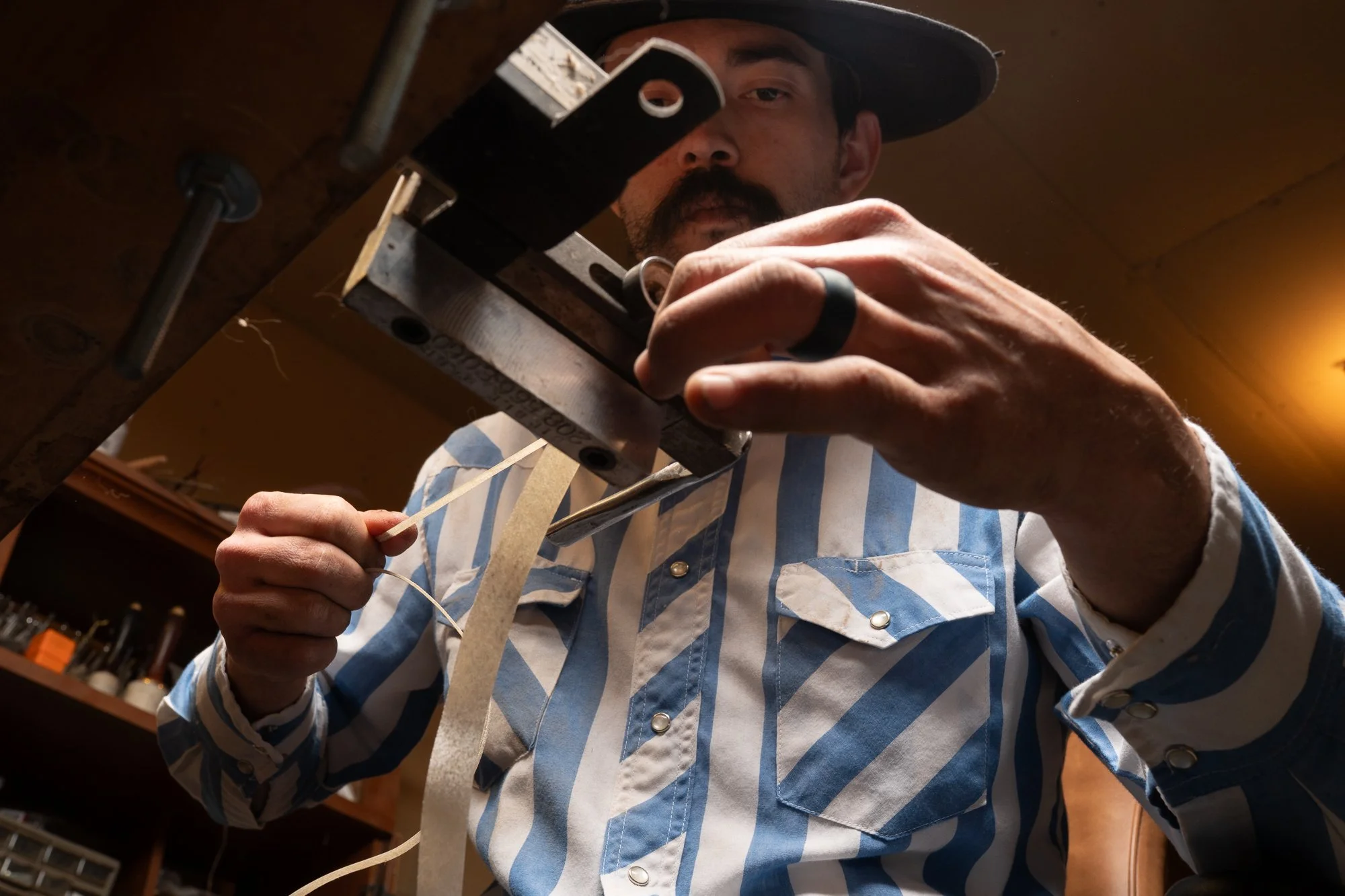
Cutting patterns from a large piece of leather, Doug works at the center of his saddle-making bench.
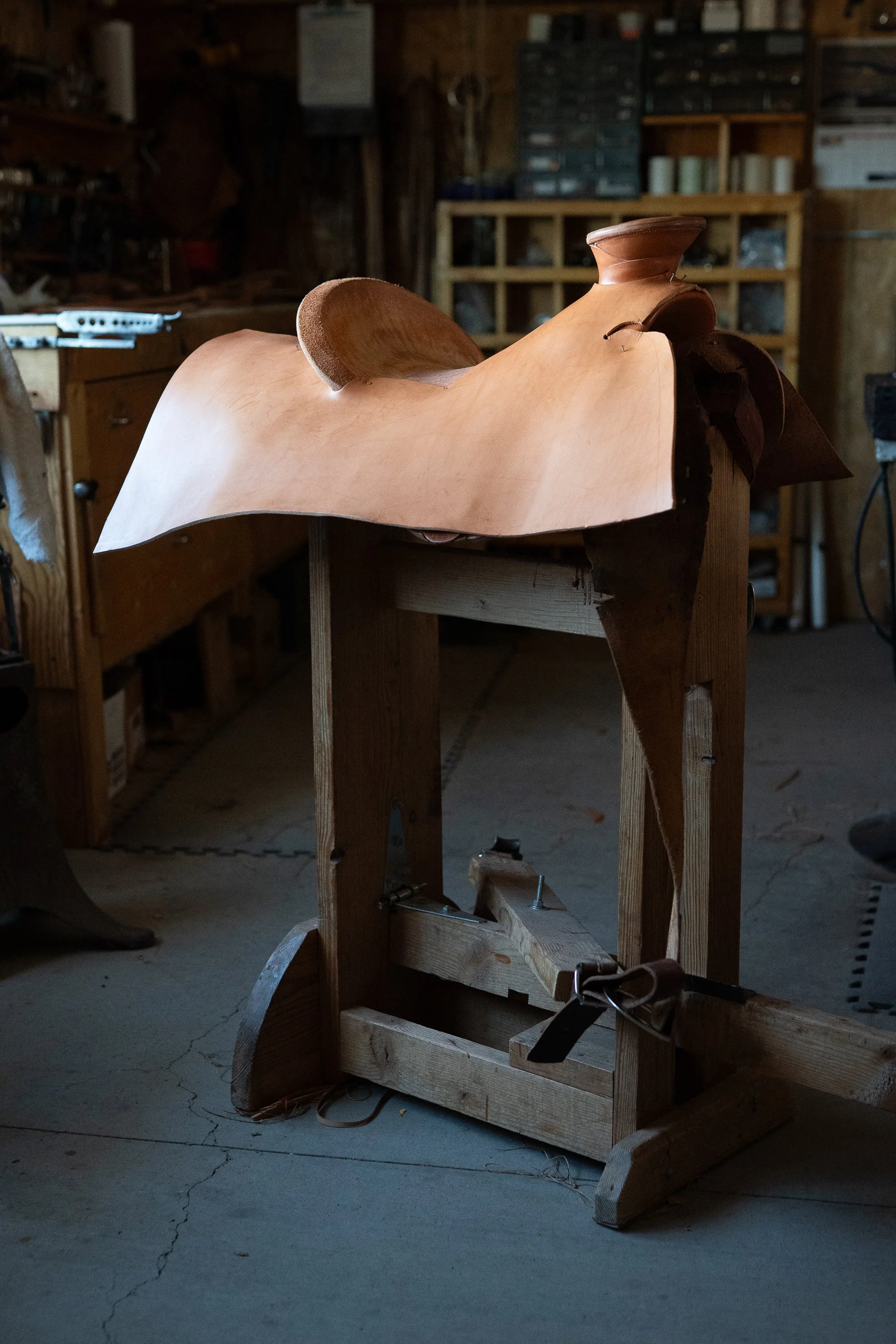
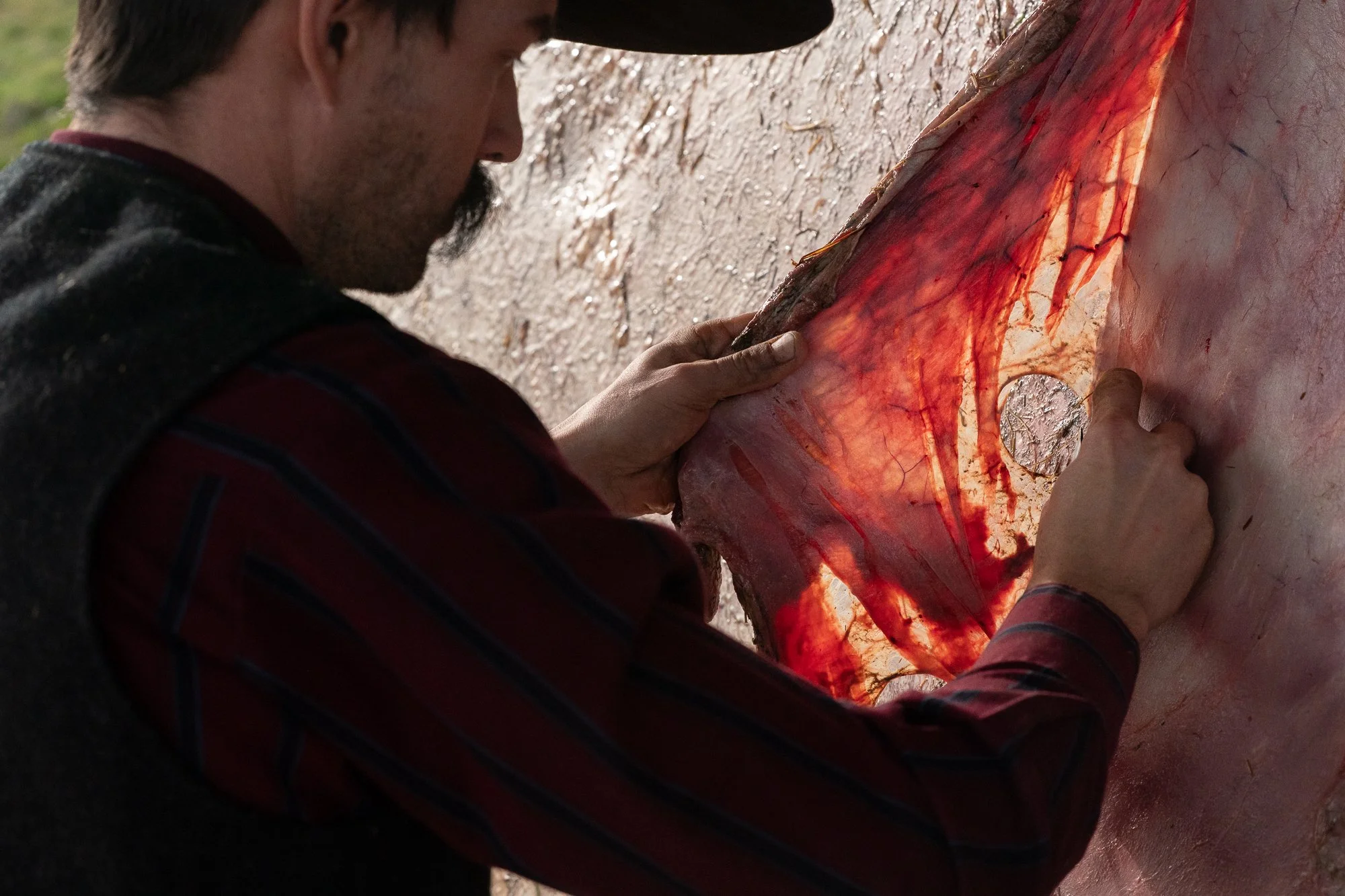
Unfinished Mother Hubbard saddle covered with a broad piece of leather in Doug Cox's workshop.

Before the tooling and finishing, a broad piece of leather is fitted over the saddle tree in Doug Cox's workshop.

Why a Mother Hubbard Is So Difficult to Make

Modern saddle makers benefit from generations of refinement. Over time, Western saddles evolved as makers learned what worked for horses, riders, ranch work, construction, and repair.

Building an earlier design means stepping backward into a very different way of solving those problems.

The single broad piece of leather that give the Mother Hubbard its characteristic appearance also make fitting and shaping the saddle particularly demanding. Leather has to conform around compound curves and transition cleanly across the saddle without looking forced or poorly fitted. Small mistakes become increasingly difficult to hide as the work progresses.

It requires a combination of leather working ability, an understanding of saddle construction, and the patience to figure out techniques that few working saddle makers dare to conquer anymore.

Doug described building one as “absolutely hellacious.”

Coming from someone who has made more than 900 saddles, that carries some weight.

And that's precisely why he wanted to do it.
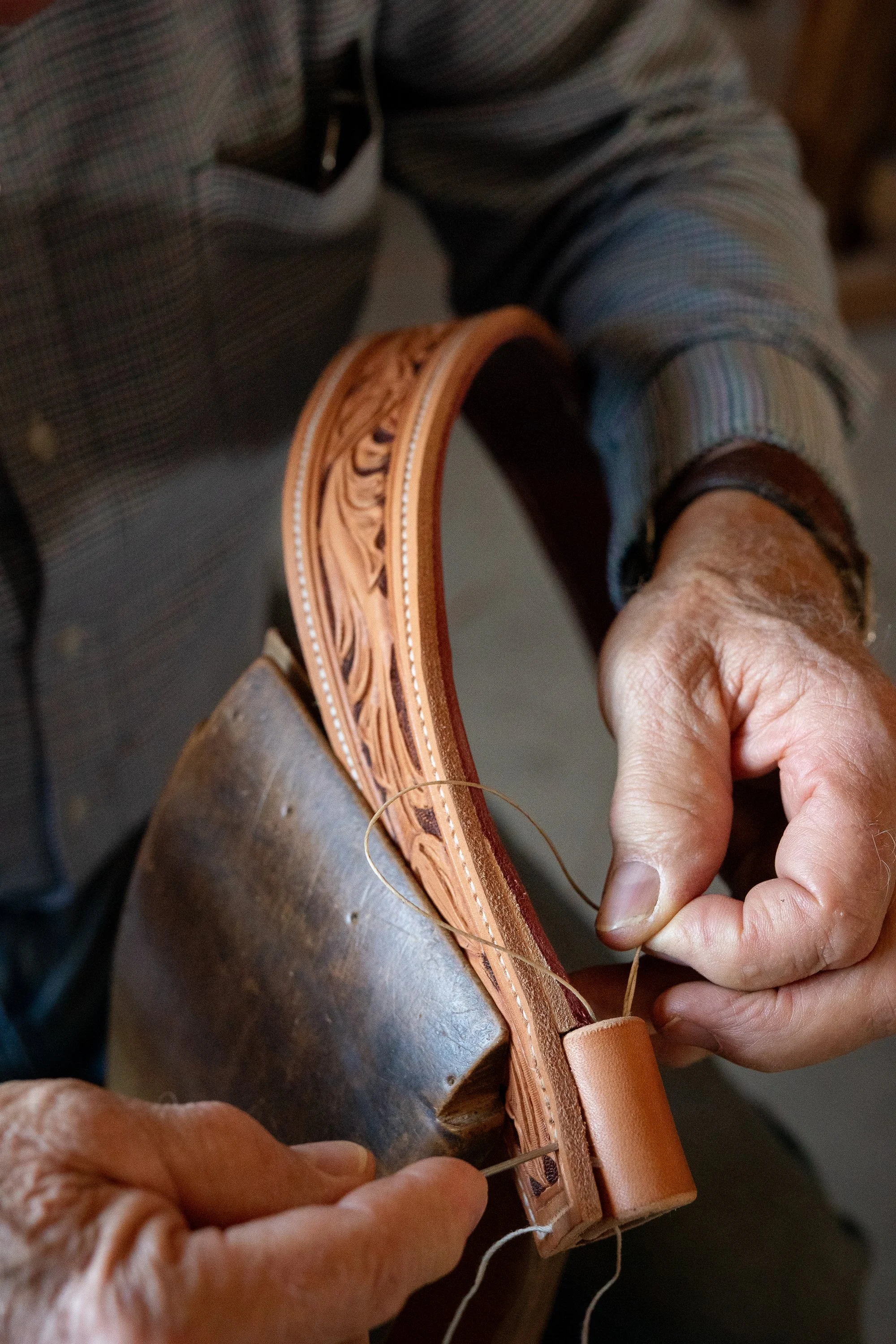
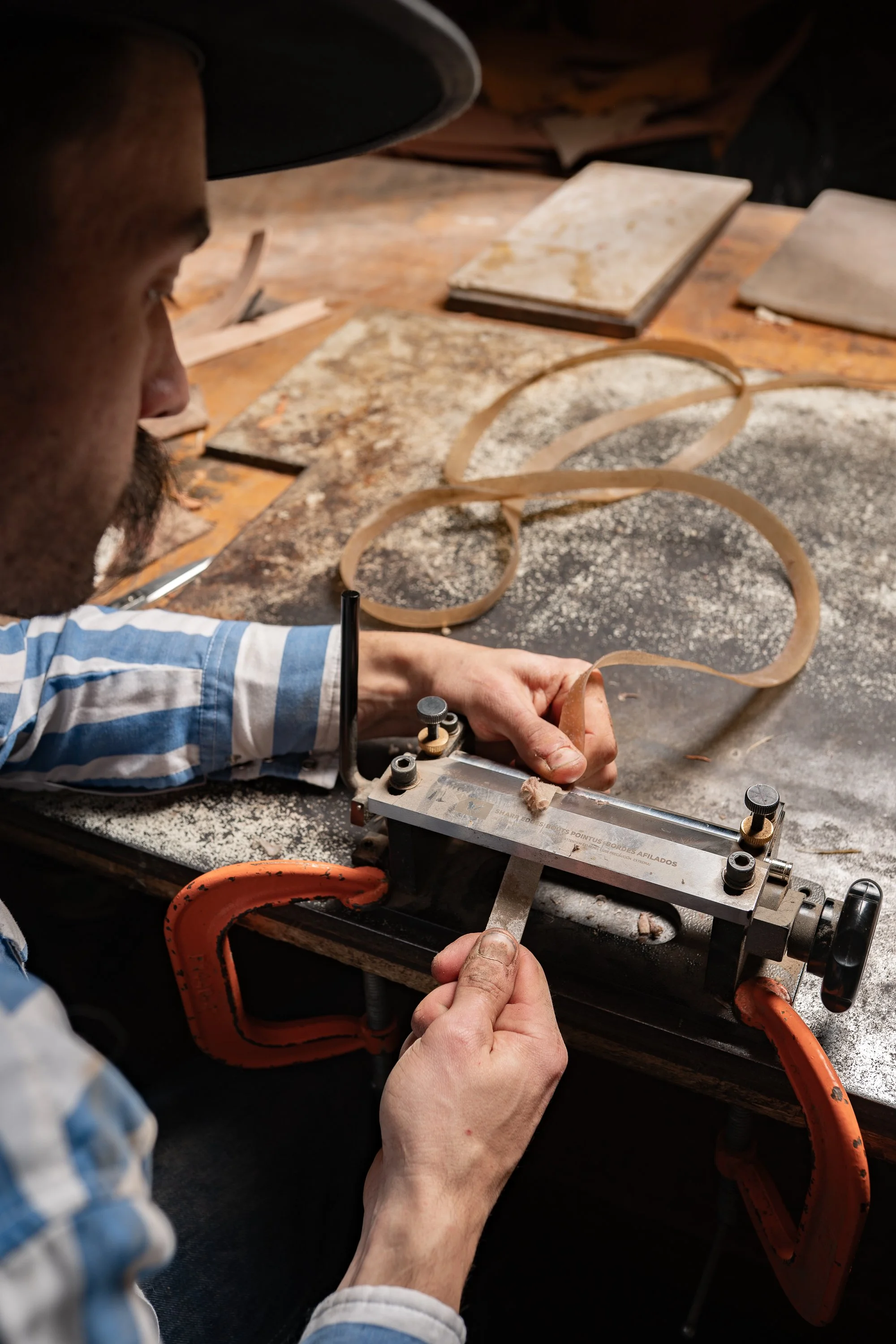
Doug Cox stitching leather on a Mother Hubbard saddle.

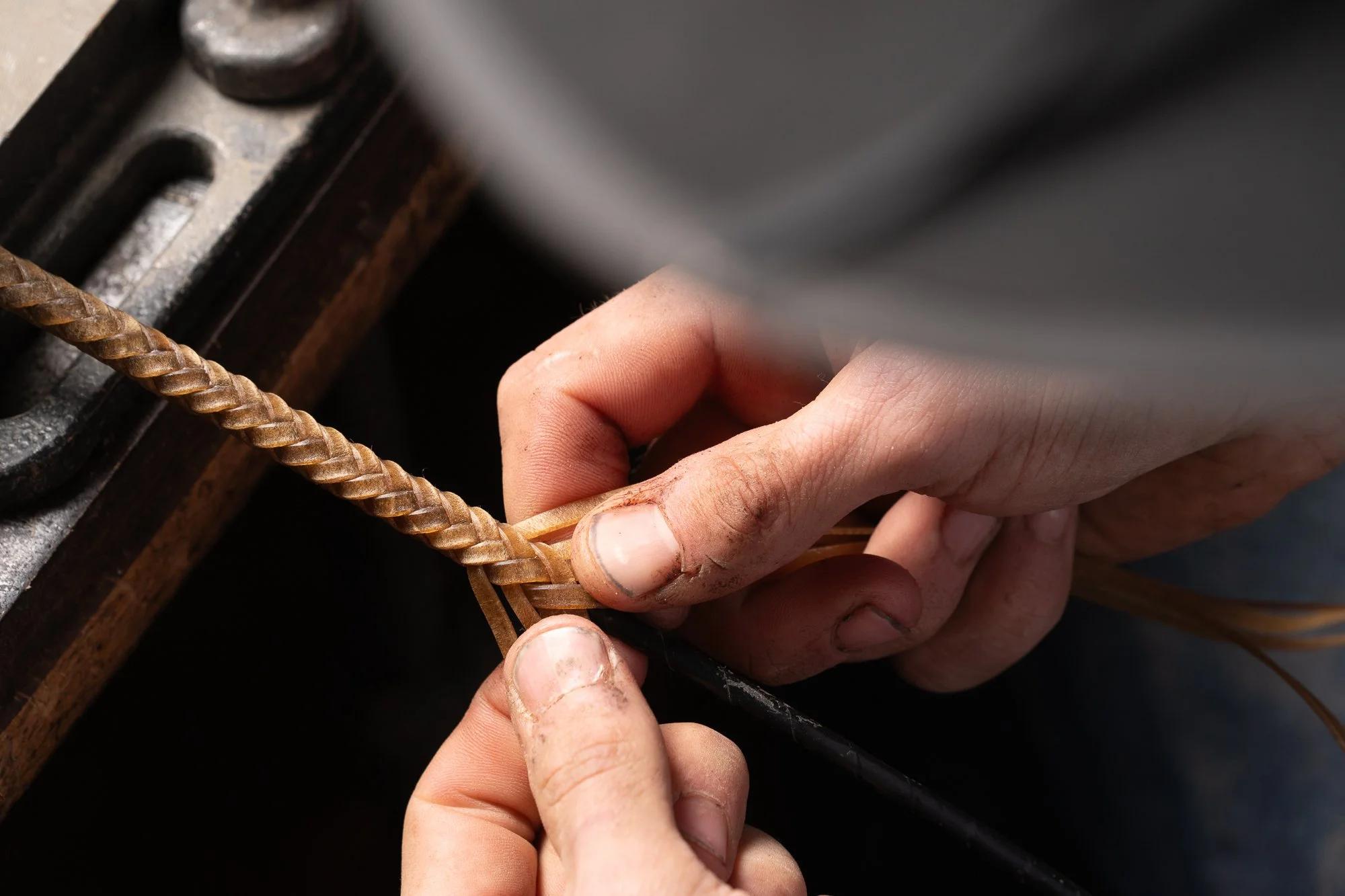
Working by hand, Doug stitches a curved section of leather as he builds the Mother Hubbard saddle.

Doug Cox Builds a Mother Hubbard

The first time Doug told me about the project, the saddle didn't exist yet.

It came up toward the end of a larger story I'd been photographing about him and his career. Doug has spent more than five decades building saddles, repairing them, studying historic examples, and developing his own ideas about what makes a saddle work.

That larger story became Western Saddle Maker, my original piece about Doug, his Nevada shop, and a career spent learning a craft that can't really be mastered quickly.

The Mother Hubbard was different.

There wasn't an order to fill or a customer waiting for a working ranch saddle. This was about curiosity and scratching an itch.

After a lifetime spent building saddles, Doug was going backward to understand one.

That's something I've always found interesting about people who become exceptionally good at a craft. Experience doesn't necessarily make them less curious. Sometimes it gives them the confidence to tackle things that make absolutely no economic sense.

The Mother Hubbard was one of those things.
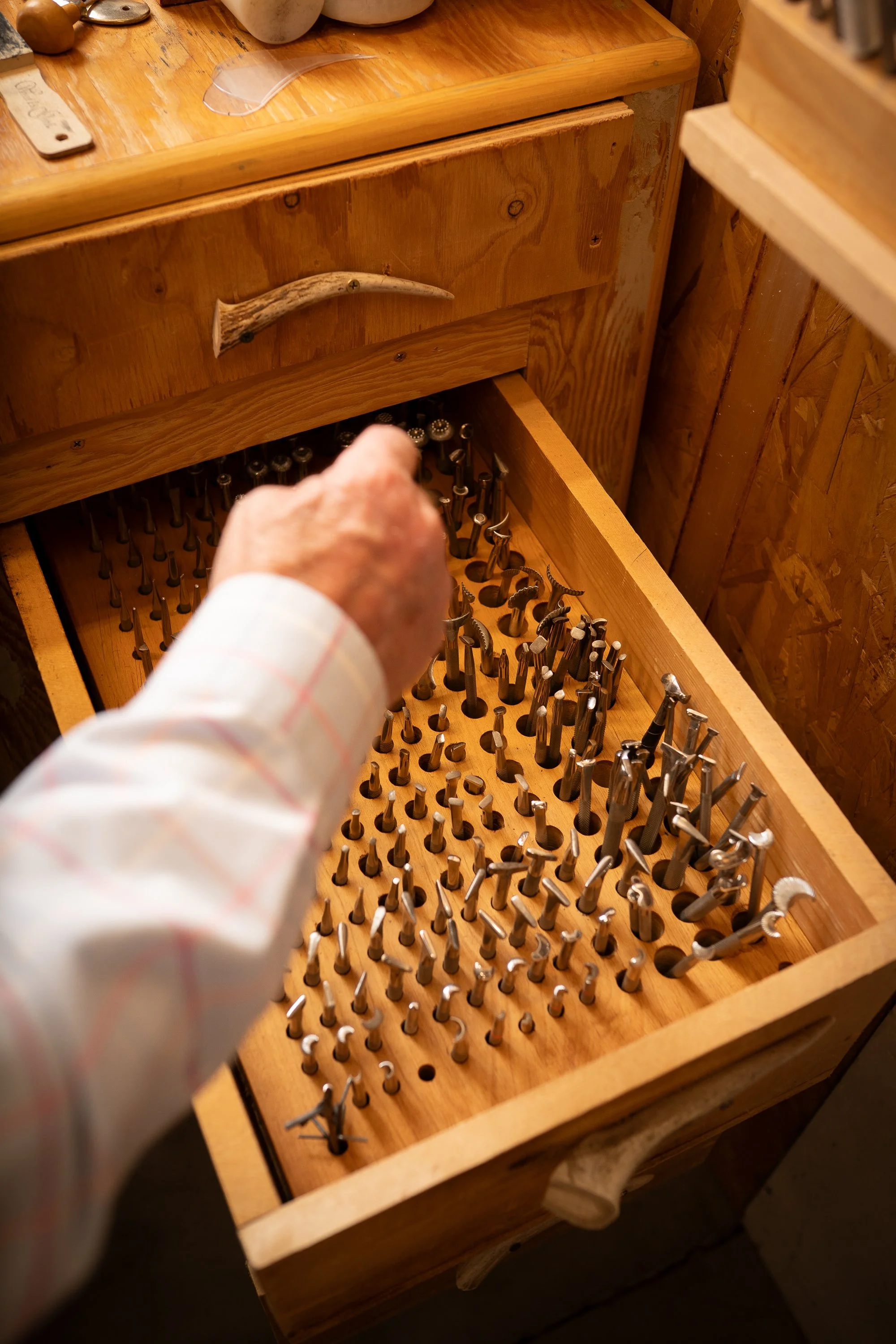
Doug Cox selecting a leatherworking tool from a drawer in his saddle shop.

Leatherworking tools fill the wooden drawer beneath the bench as Doug reaches for one of them.
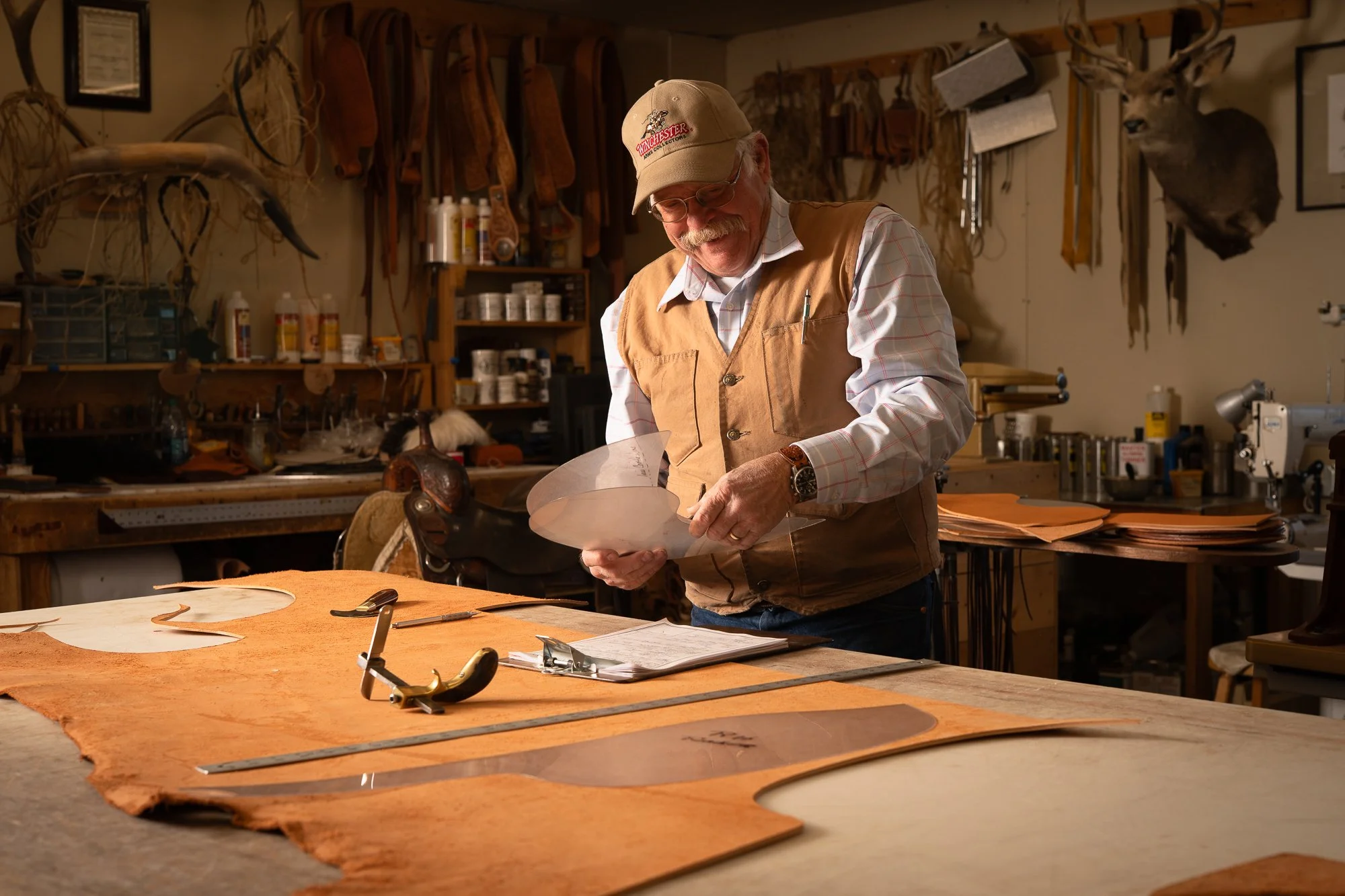
Doug Cox examining leather patterns for a Mother Hubbard saddle in his workshop.

Pattern pieces and measurements cover the workbench as Doug works out the construction of the Mother Hubbard.

An Old Saddle Built Again

By the time I returned, the pieces I'd previously heard Doug talking about had become a finished saddle.

Seeing it completed makes the oddity of the design much easier to understand.

It doesn't look quite like the Western saddle most of us carry around in our heads. The proportions are different. The mass of leather changes the silhouette. Details that might disappear on a contemporary saddle become part of the visual identity of the Mother Hubbard.

And yet it isn't simply a museum reproduction.

It was made by a man who understands saddles from the perspective of someone who has spent his life building them to be used.

That's an important distinction.

There is a difference between making something look old and understanding why an old object was made the way it was. Doug has spent decades studying saddle construction, taking saddles apart, repairing them, riding them, building them, and learning from the craftsmen who came before him.

The Mother Hubbard gave him an opportunity to apply all of that knowledge to a form from another era.
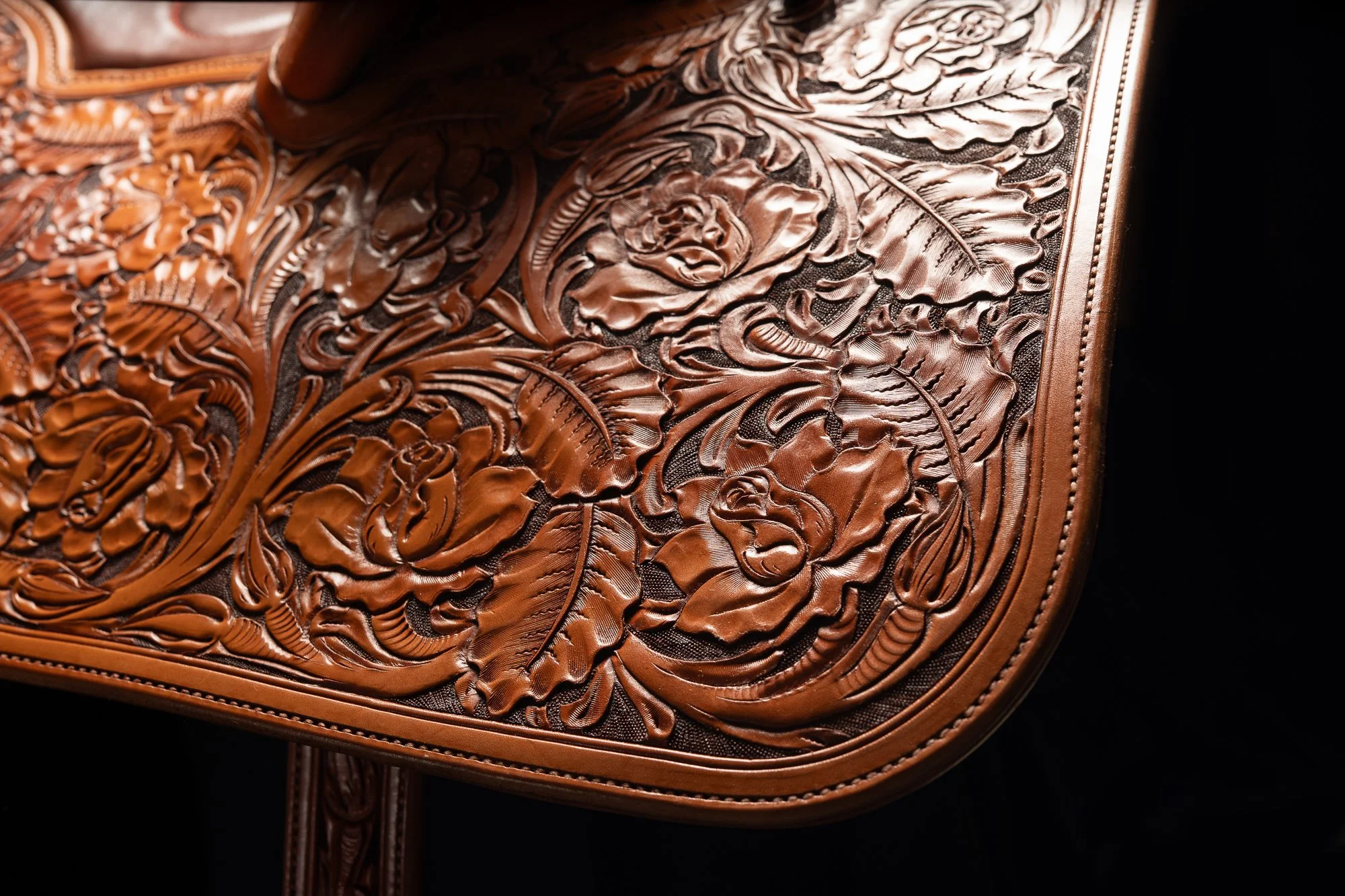
Floral leather tooling on the skirt of a finished Mother Hubbard saddle.

Flowers, leaves and carved lines fill the leather along the skirt of the finished saddle.

Photographing the Mother Hubbard

That's also what interested me about photographing it.

My ongoing work in the West has never been solely about cowboys or cattle. The culture is also defined by people who make the objects that allow it to function: saddles, boots, hats, bits, spurs, silverwork, ropes, and countless other things that are easy to overlook until you meet someone who has devoted a lifetime to making them.

A finished saddle can be beautiful.

But the real story is the knowledge inside it.

The cuts and stitches are visible. The decades required to know where those cuts and stitches belong are not.

That's what makes someone like Doug worth documenting.

And it's what makes this particular saddle more interesting than simply being an unusual antique design.

Someone still knows how to make one.
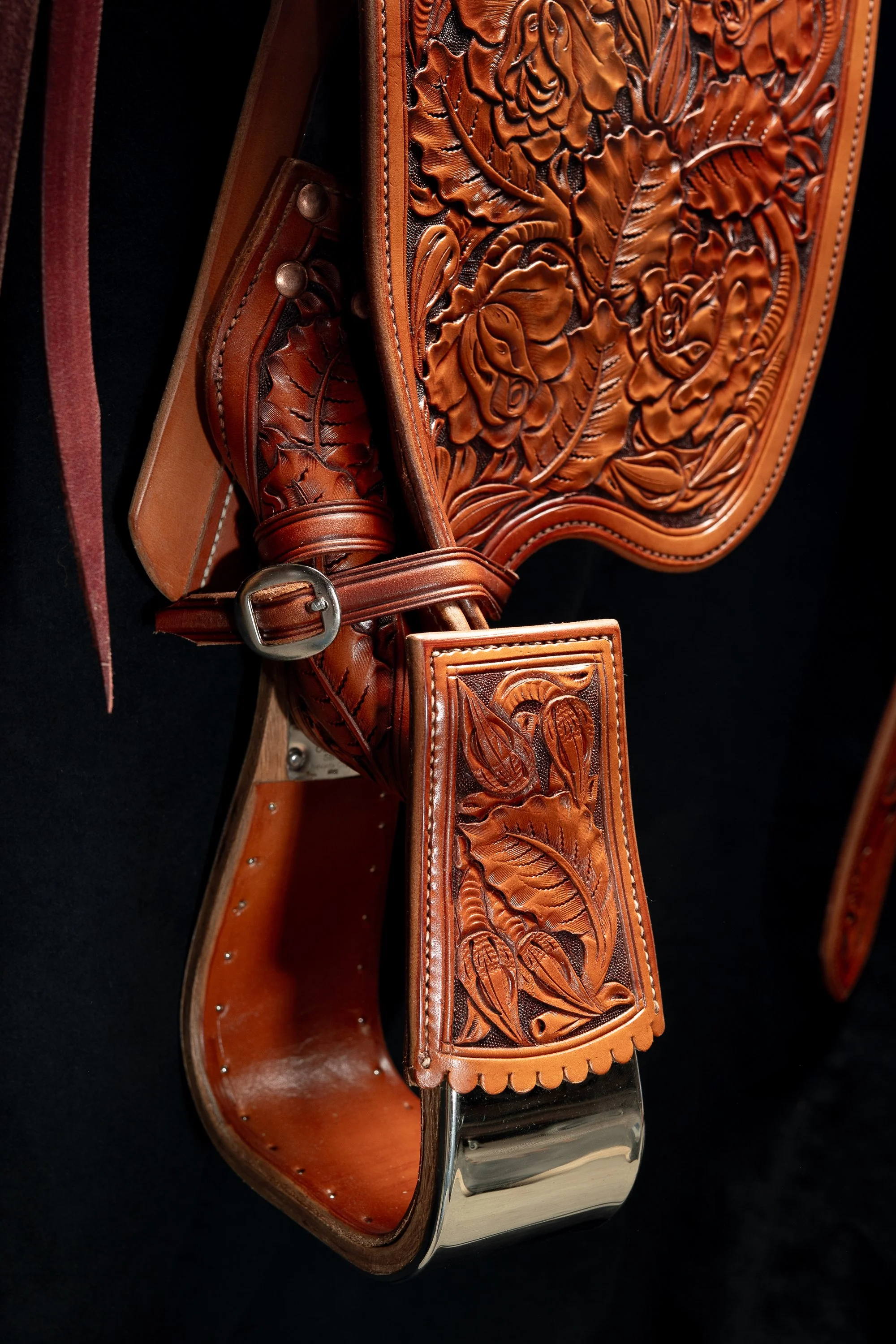
Leather tooling, buckled strap and metal stirrup on a Mother Hubbard saddle.

Polished metal stirrup hangs below the tooled leather and buckled strap of the Mother Hubbard saddle.

The Mother Hubbard in Cowboys & Indians

The finished Mother Hubbard and my photographs of Doug were recently featured in Cowboys & Indians magazine.

For me, the significance of the story goes beyond having the photographs published.

The Mother Hubbard represents something that's becoming increasingly difficult to find: knowledge passed down through people rather than preserved only in books, museums, or old objects.

Historic saddles can tell us a great deal about the American West. But there is something different about watching a living craftsman study one, understand it, wrestle with its problems, and then make another with his own hands.

Doug didn't need to build a Mother Hubbard.

There probably aren't many people who do.

Which brings the story back to the question I asked him before he'd made it.

Why go through all that trouble?

“Just because.”

After seeing the finished saddle, that still seems like the best answer.

More From the American West

My earlier story, Western Saddle Maker, goes deeper into Doug Cox's life, his Nevada shop, and more than five decades spent building saddles.

This work is part of Calves to the Fire, my ongoing photographic documentation of working cowboys, ranches, craftsmen, artists, and traditions throughout the American West.
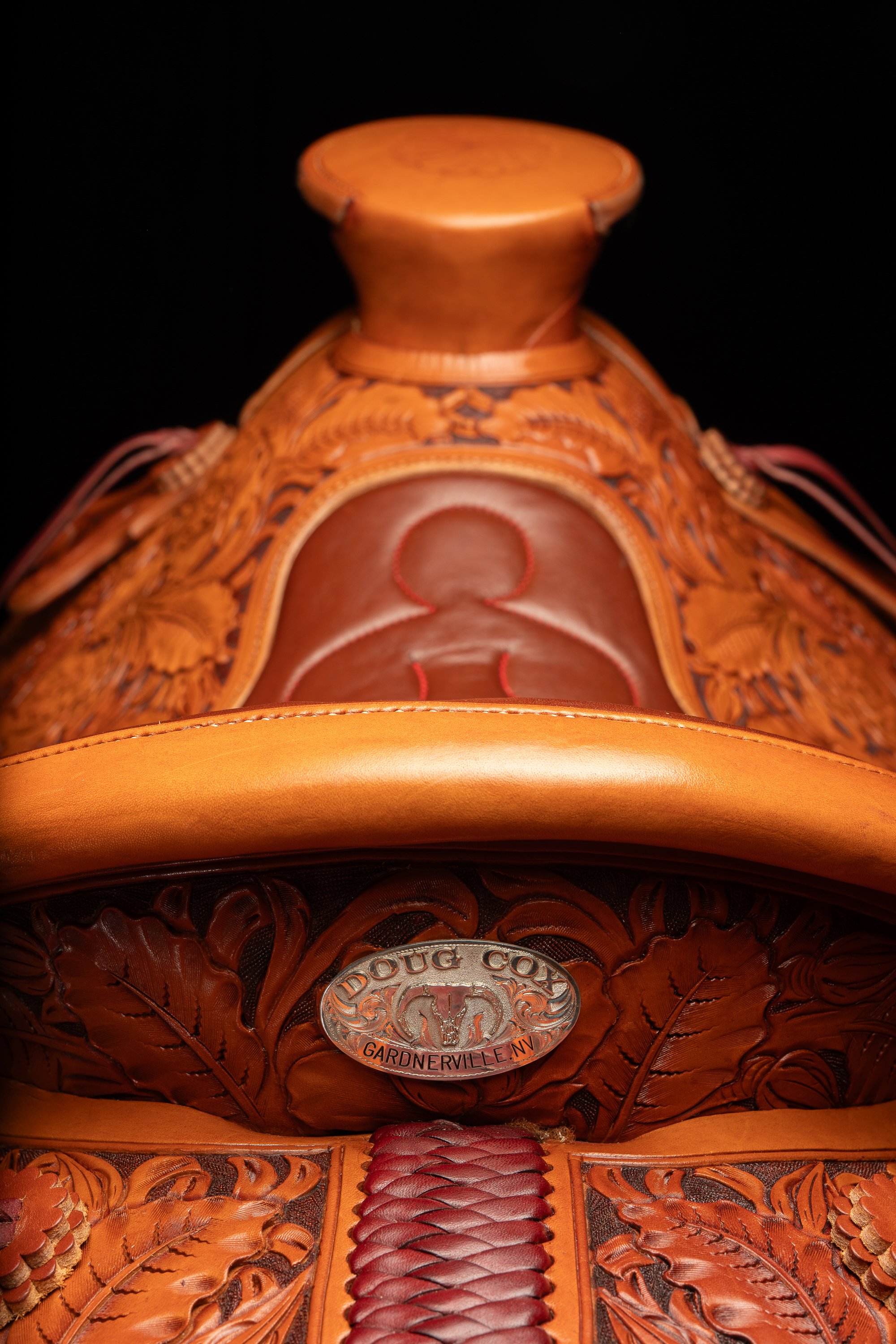
Doug Cox maker's badge and carved leather details on a Mother Hubbard saddle.

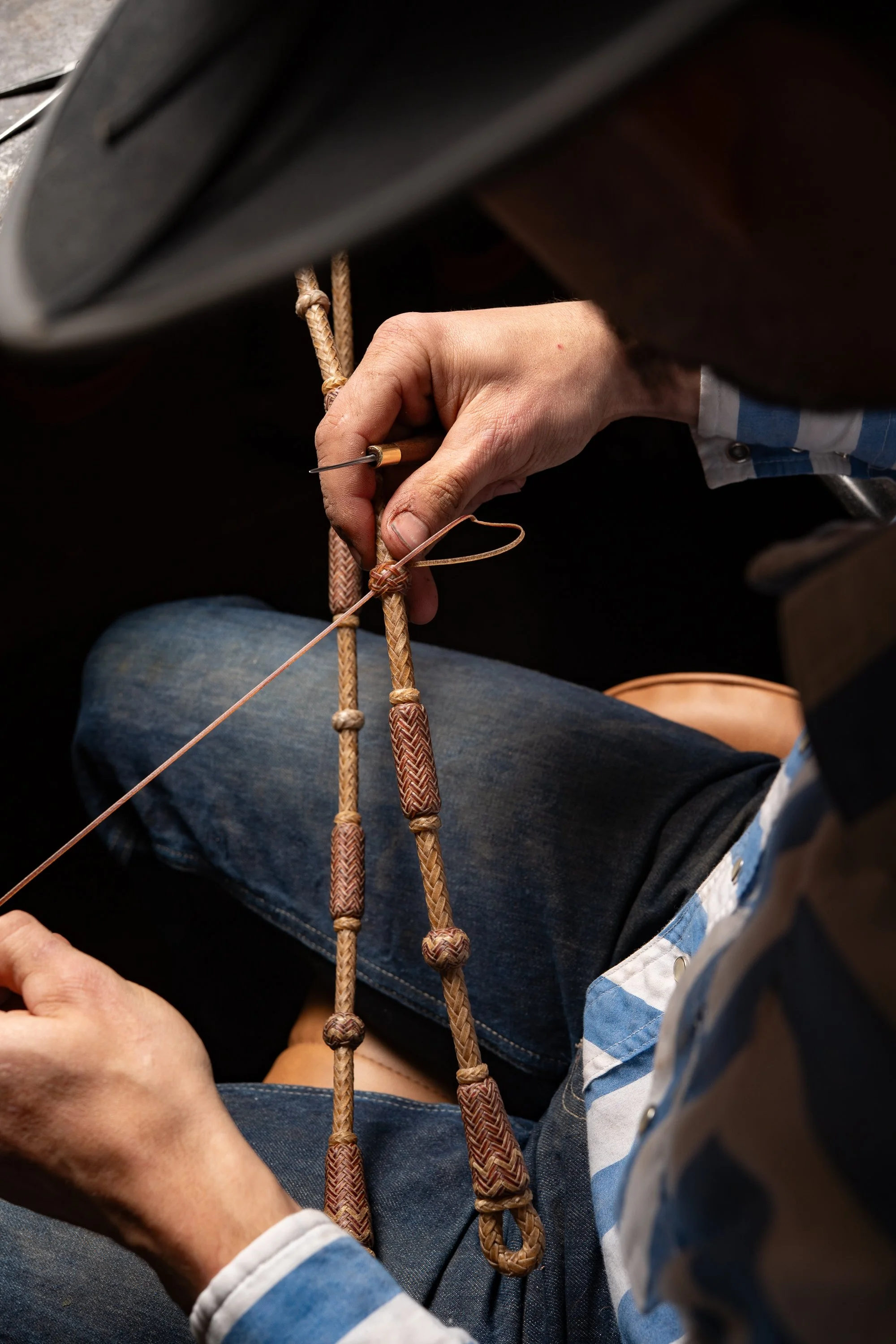
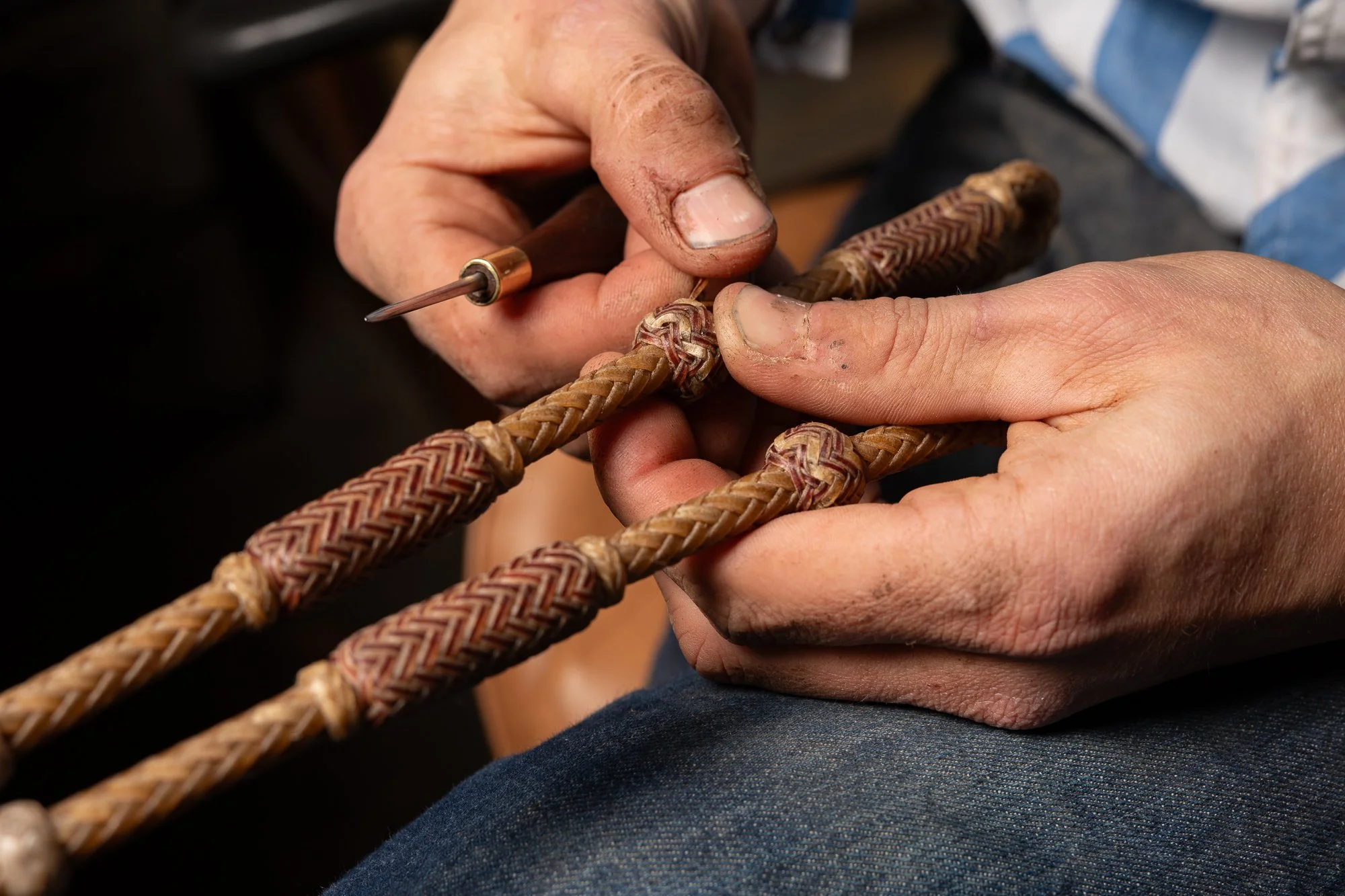
Below the cantle, a Doug Cox maker's badge is set into the carved leather above a braided section.
CrossFit Photography - Boulder, CO

CrossFit Photography in Boulder, Colorado

CrossFit is unusually good territory for photography because very little needs to be manufactured. The movement, effort, repetition, exhaustion, chalk, equipment, and interaction between athletes already create the visual language.

The challenge is staying out of the way long enough for those moments to happen.

These photographs were made during CrossFit training in Boulder, Colorado, with an approach that has shaped much of my fitness work since: photograph athletes actually training rather than repeatedly stopping workouts to manufacture photographs.

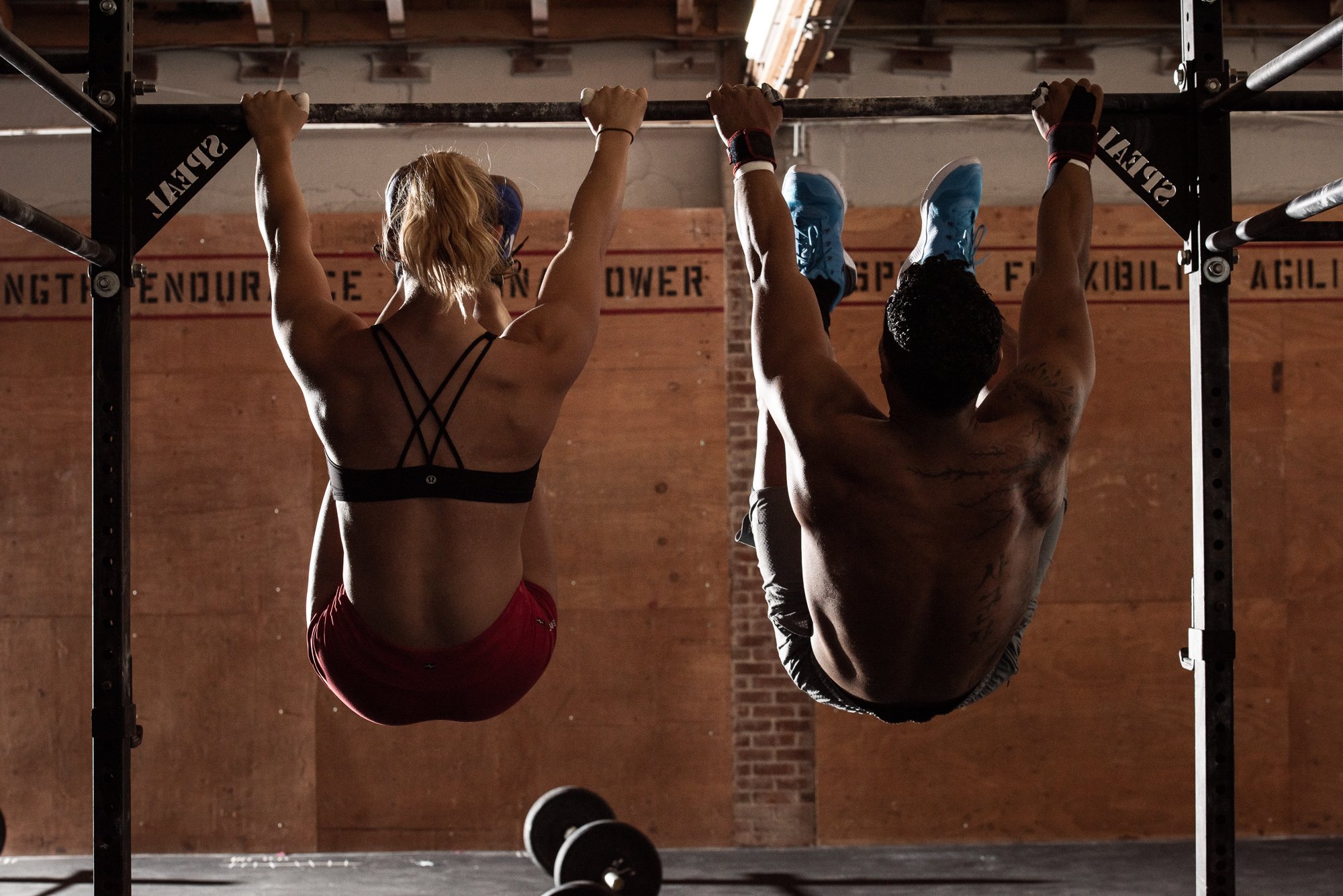
Two CrossFit athletes performing hanging leg raises on a pull-up rig in Boulder, Colorado.

Two athletes hang from the pull-up rig doing toes-to-bar during a CrossFit training session in Boulder.

Photographing the Training, Not Recreating It

There is a noticeable difference between someone performing an exercise for a camera and someone actually training.

Body language changes. Expressions change. Fatigue accumulates. The gym gets messy. Athletes stop thinking about the photographer.

That's usually when the interesting photographs start happening.

Rather than making every frame about a perfectly executed movement, I'm also looking for everything surrounding it: hands preparing for a lift, athletes recovering between efforts, chalk in the air, interaction between training partners, equipment scattered across the floor, and the moments immediately before and after the work.

Those details give a fitness campaign a sense of place and make the resulting library feel less like a collection of exercise demonstrations.

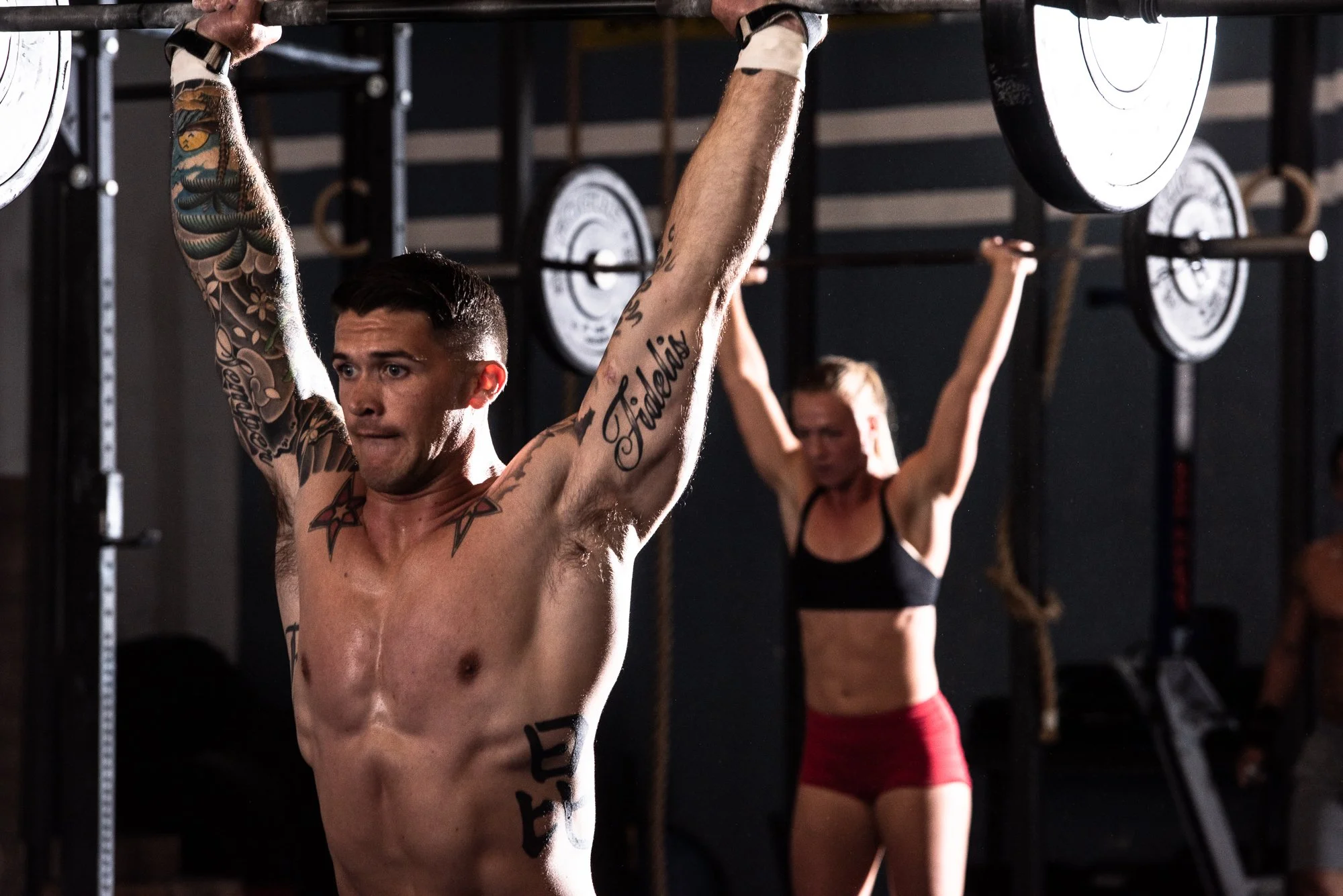
CrossFit athletes holding barbells overhead during functional fitness training in Boulder, Colorado.

Barbells move overhead as athletes work through a training session inside the gym.

CrossFit athlete walking between barbells during a training session.

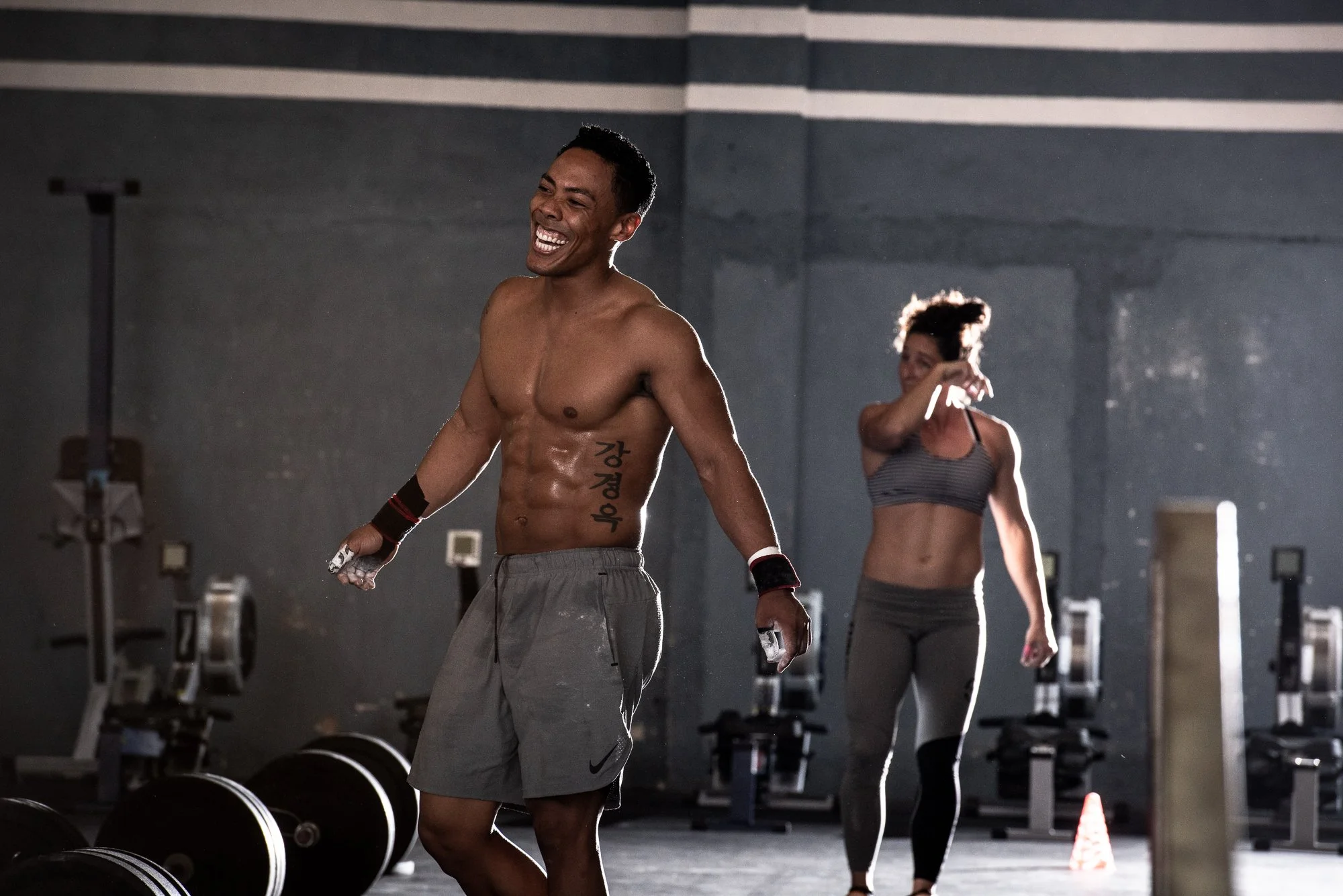
Chalk still covers his hands as an athlete smiles between efforts with other training continuing behind him.

CrossFit Photography for Brands and Advertising

For fitness brands, the advantage of photographing real training is authenticity without giving up production value.

A commercial shoot still needs intention. Lighting, composition, wardrobe, products, locations, shot lists, and usage all matter. But those elements don't necessarily require making the athlete look staged.

My approach is to build the production around the activity whenever possible, then give athletes enough room to move naturally within it.

That can create a much broader image library from a single production: hero images for advertising, wider environmental photographs, product details, portraits, training sequences, and quieter transitional moments for social, editorial, web, and campaign use.

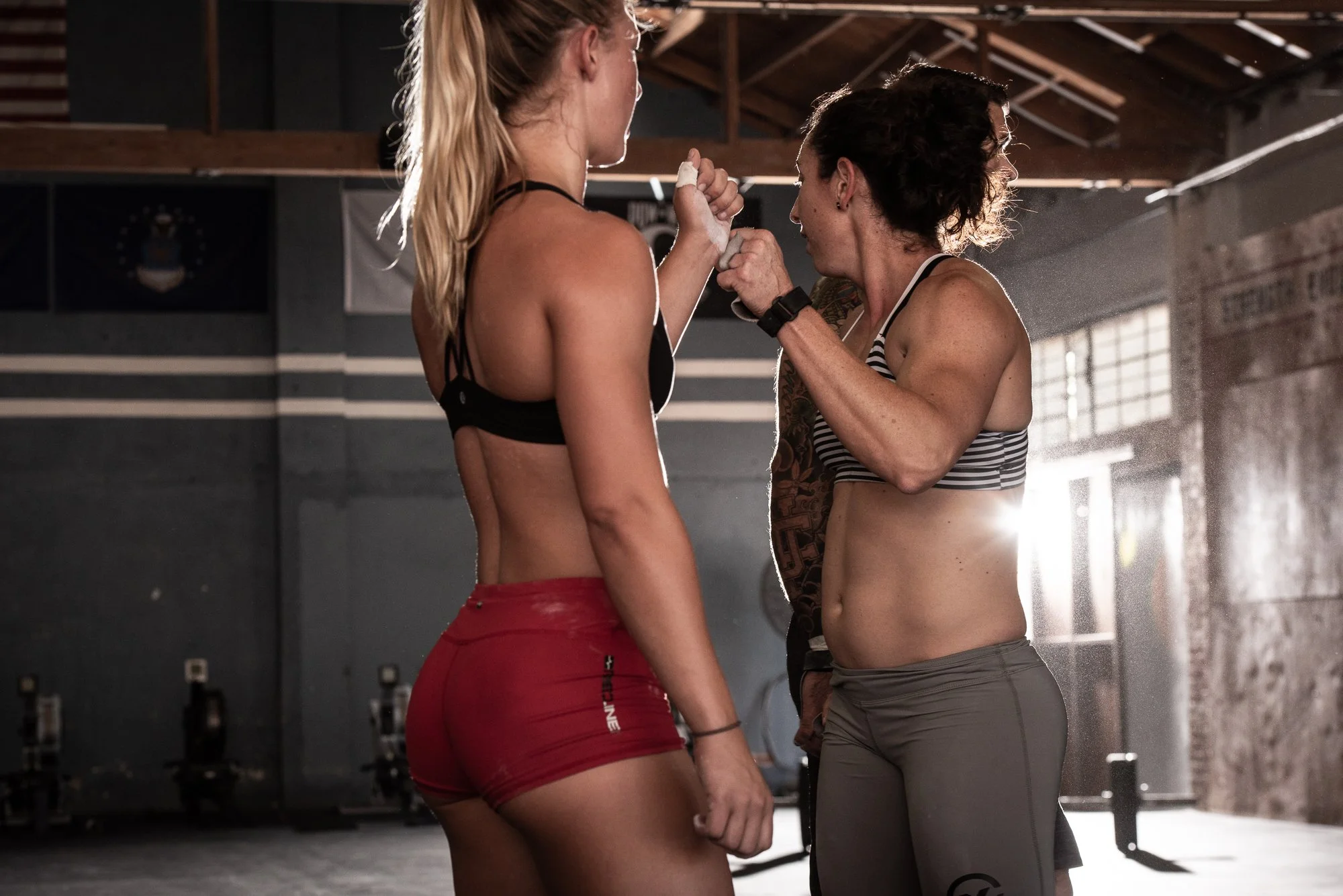
Two CrossFit athletes wrapping their hands between training efforts inside a gym.

Between sets, the two athletes pause together before continuing the workout.

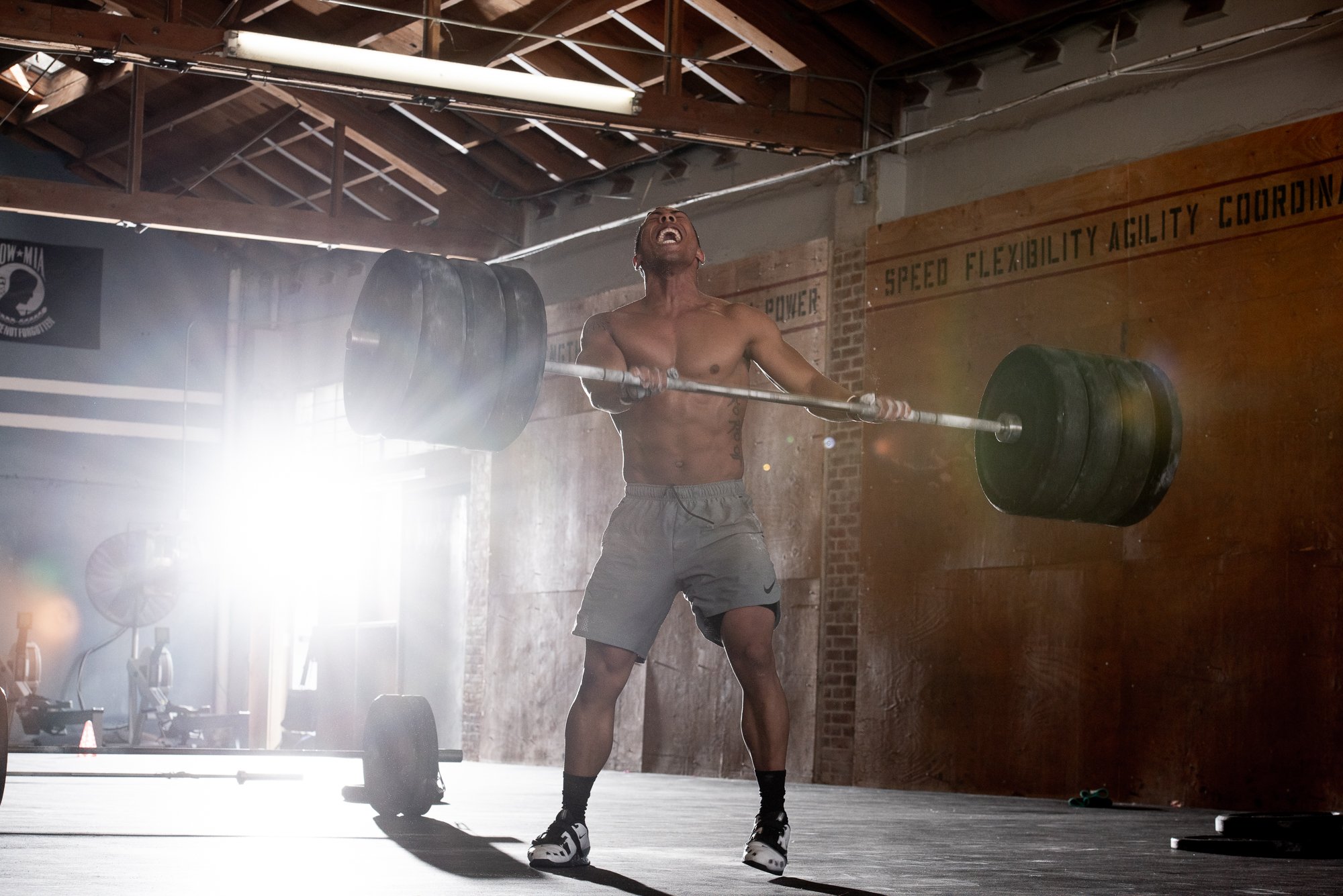
CrossFit athlete lifting a heavily loaded barbell during functional fitness training in Boulder, Colorado.

An athlete screams after a failed attempt as sunlight streams across the gym floor.

The Visual Language of Functional Fitness

Functional fitness has its own visual vocabulary.

Barbells, kettlebells, rowing machines, bikes, pull-up rigs, boxes, ropes, plates, chalk, rubber floors, and worn equipment immediately establish the environment. But equipment alone doesn't make a photograph feel believable.

The athlete does.

Effort has to look like effort.

That's why I prefer working with real athletes whenever a project allows for it. Their familiarity with the movements means less directing, better body positioning, and more freedom to concentrate on making photographs rather than teaching someone how an exercise is supposed to look.

CrossFit athlete working beside a loaded barbell on the gym floor.

An athlete pauses beside a loaded barbell as sunlight cuts across the gym floor.

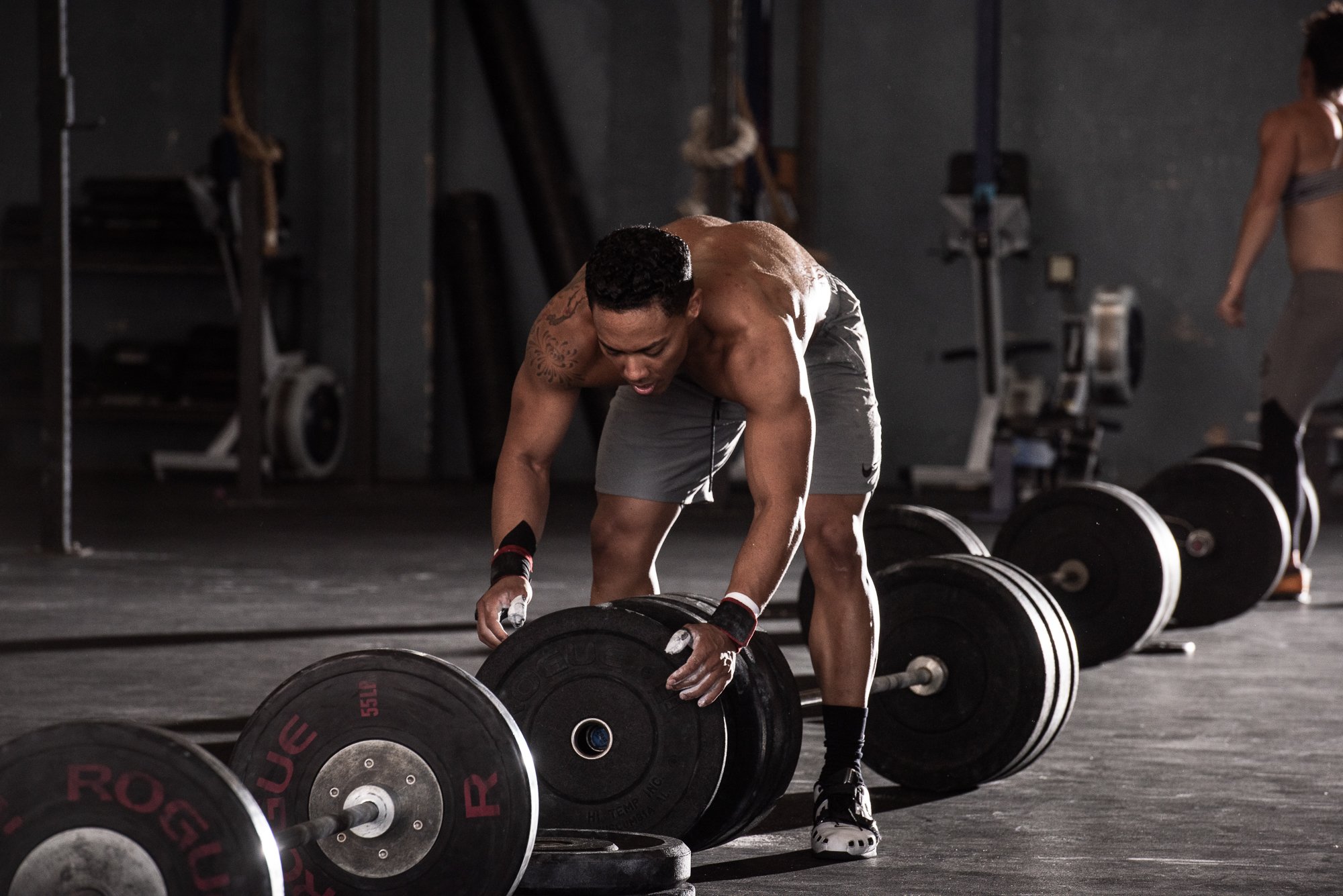
CrossFit athlete preparing a loaded barbell for a strength training movement.

Preparing a loaded barbell on the gym floor, an athlete prepares for the next set.

Fitness Photography in Boulder and Beyond

Boulder has a strong connection to training, endurance, and outdoor athletics, which makes it a natural location for fitness productions. It also offers something particularly useful for commercial shoots: the ability to combine indoor training with Colorado's outdoor environments.

A project can move from strength and functional training inside a gym to running, cycling, hiking, or other active lifestyle imagery outside, creating a larger visual campaign without losing continuity.

While this shoot was made in Boulder, I photograph fitness and active lifestyle campaigns throughout Colorado and travel nationally for commercial and editorial assignments.

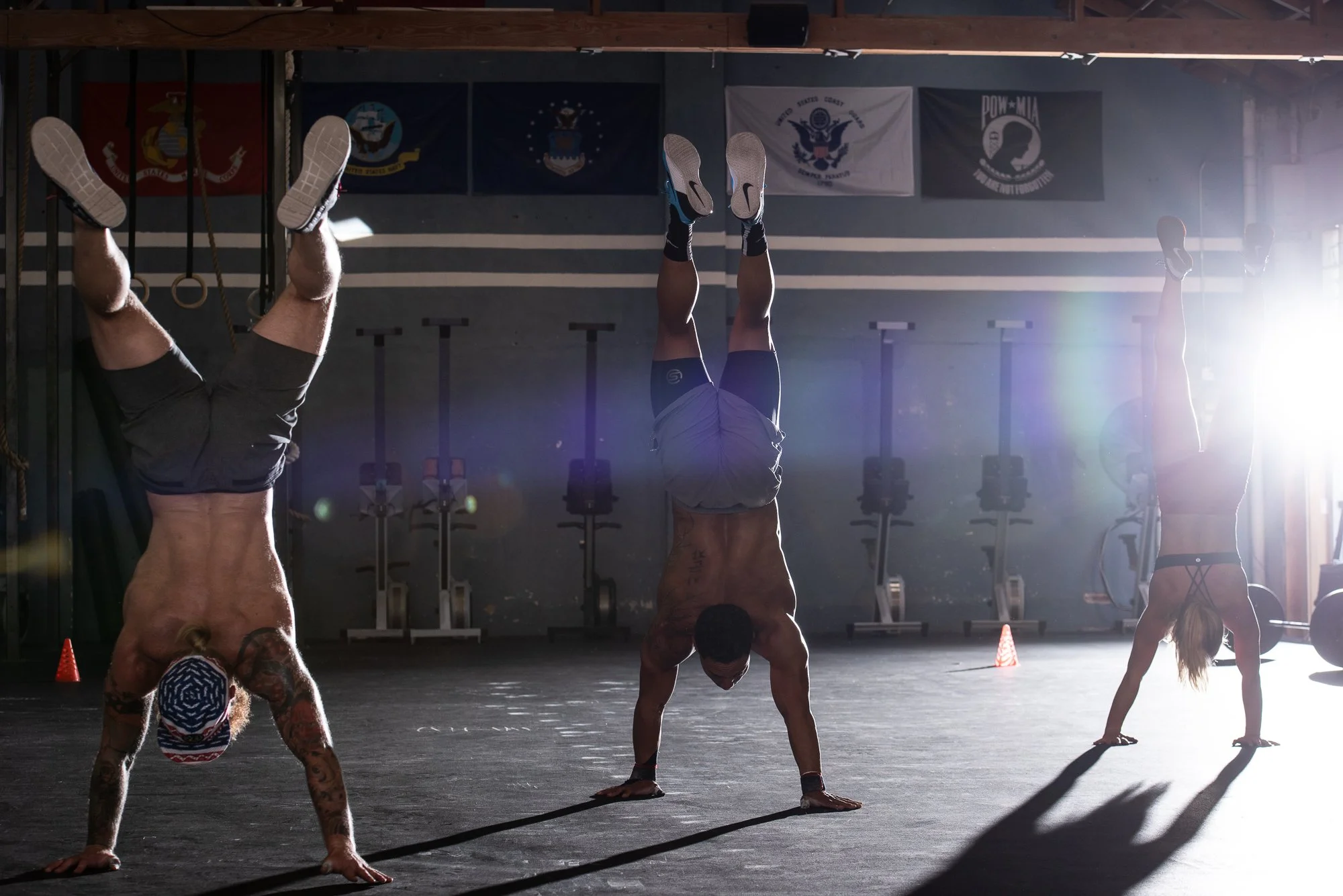
Three CrossFit athletes performing handstands on a gym floor in Boulder, Colorado.

Three athletes work through handstands across the training floor, their shadows stretching through the gym.

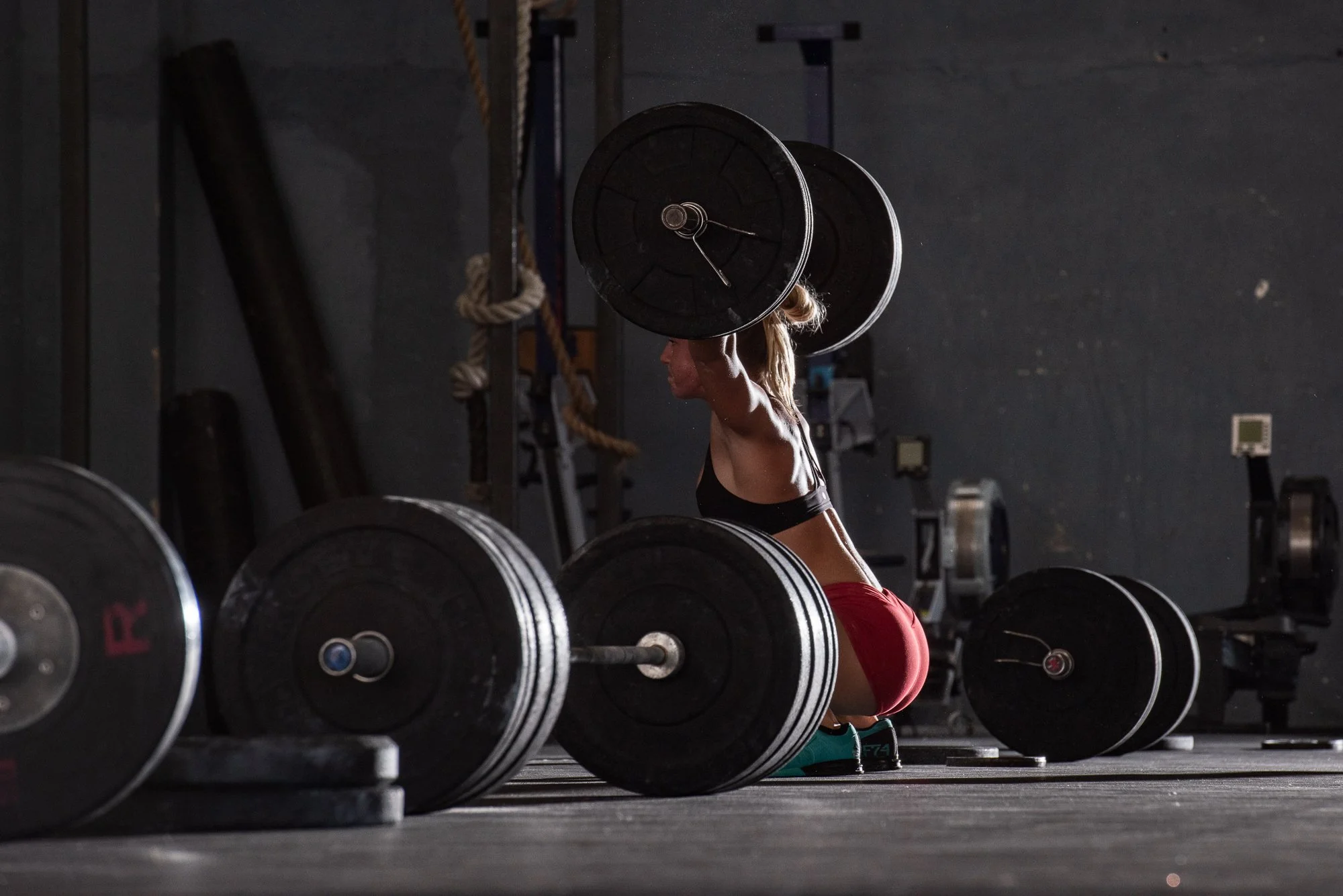
CrossFit athlete holding a loaded barbell overhead during strength training.

A loaded barbell moves overhead as an athlete works through a strength movement among the equipment on the gym floor.

Commercial CrossFit and Fitness Photographer

I work with advertising agencies, fitness brands, apparel and equipment companies, gyms, and athletes to create photography that feels athletic without feeling manufactured.

The goal isn't to make training look perfect.

It's to make it look believable.

For commercial photography projects involving CrossFit, strength training, functional fitness, athletes, or active lifestyle imagery, view my fitness portfolio or get in touch to discuss the production.
Most of my my fitness photography is also available for editorial and commercial licensing.

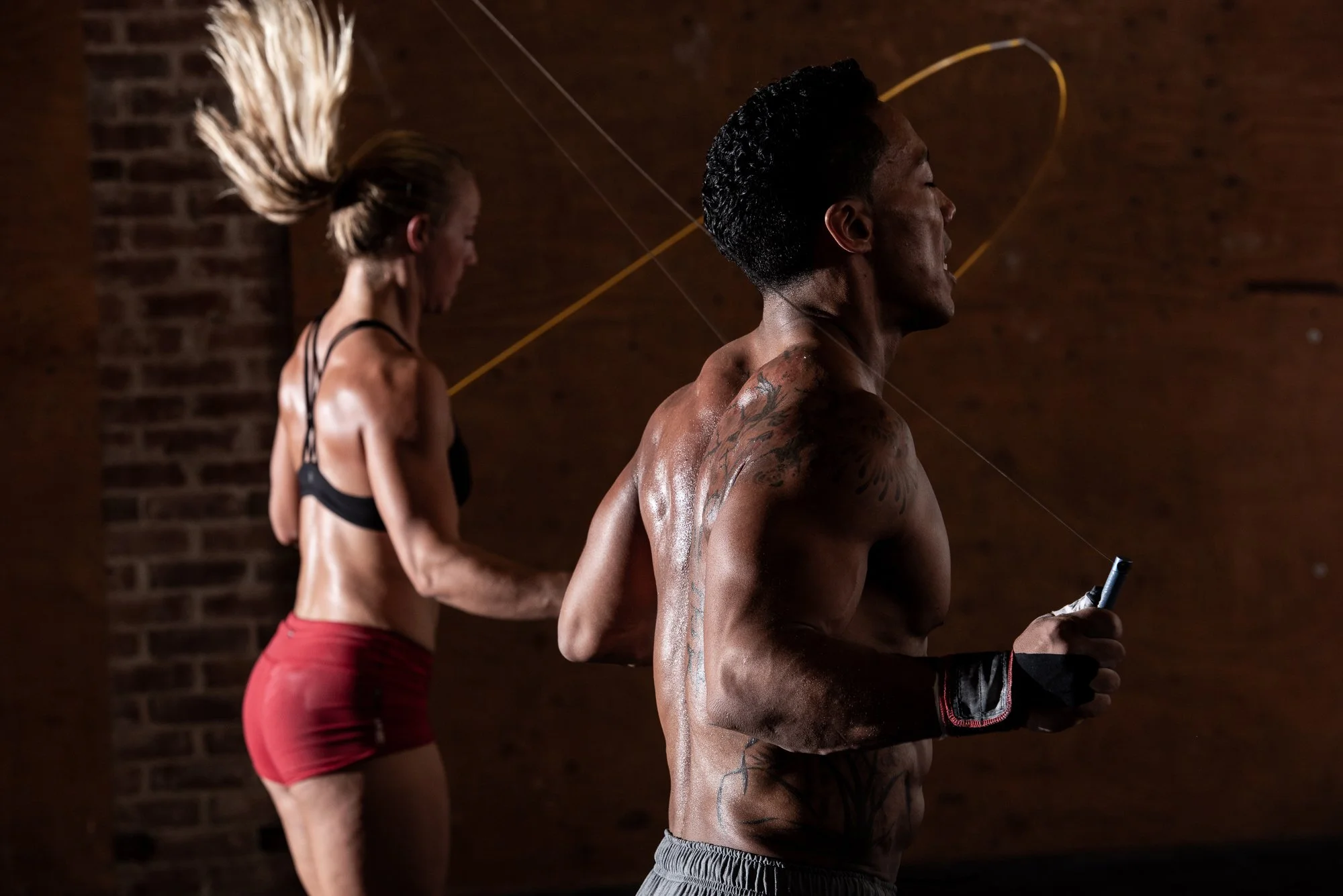
CrossFit athletes jumping rope during functional fitness training.

Jump ropes turn between efforts as two athletes continue training against the wood walls of the gym.

CrossFit athletes resting beside loaded barbells between training efforts.

Between efforts, athletes reset around loaded barbells before getting back to the work.

Dark Fitness Photography

Dark Fitness Photography: Creating Dramatic Images for Athletic Brands

Dark fitness photography isn't simply about making a photograph dark.

Done well, it's about using light selectively. Instead of illuminating everything in a gym, the light can isolate an athlete, define muscle and movement, bring texture out of the environment, and let everything unnecessary disappear.

It's an approach I've used for years photographing athletes and fitness campaigns, particularly when a brand needs imagery that feels strong, focused, and intense.

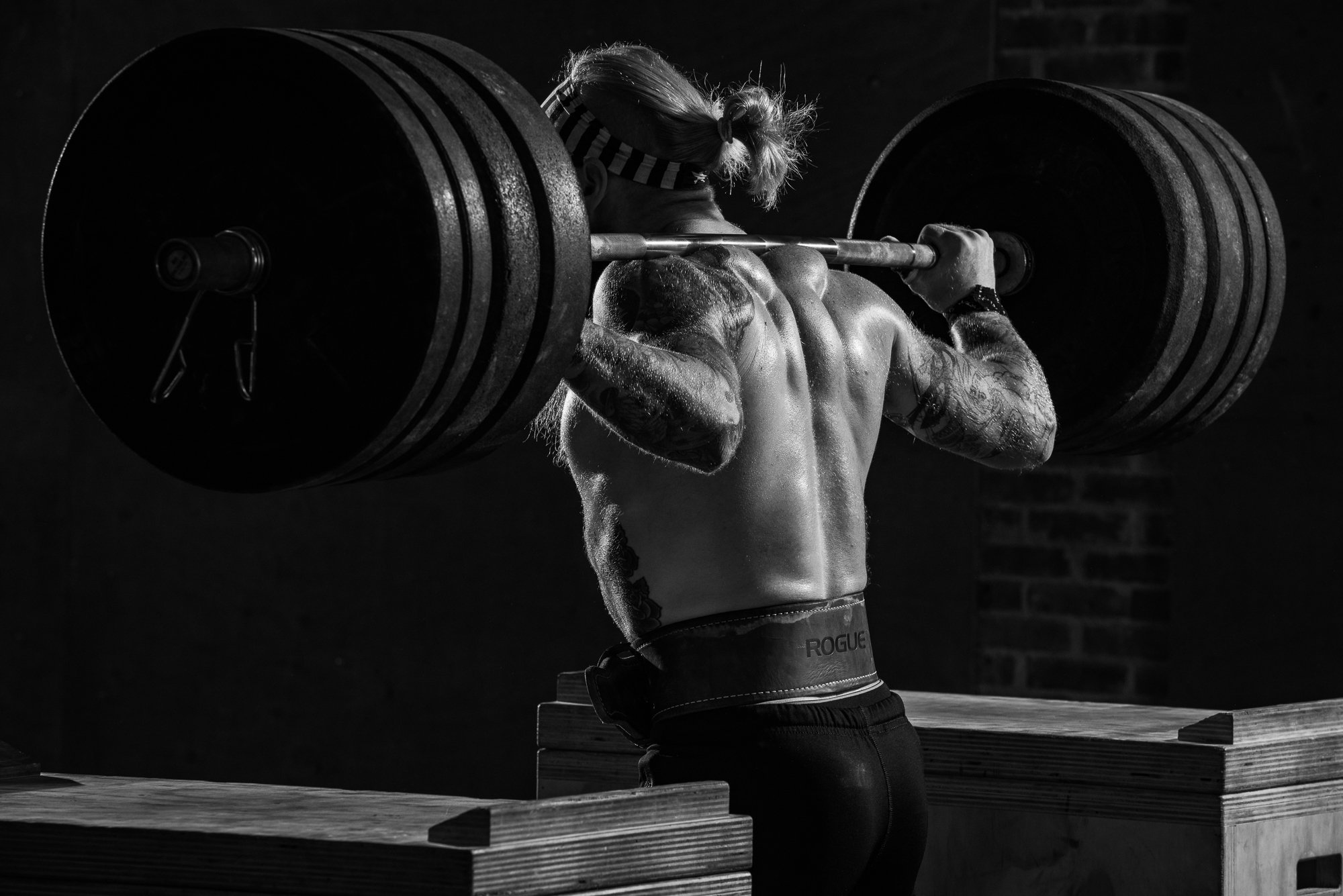
Female CrossFit athlete holding a heavily loaded barbell across her shoulders between wooden plyometric boxes.

A heavily loaded barbell rests across the athlete’s shoulders as he braces between wooden plyometric boxes.

What Makes Dark Fitness Photography Work?

Gyms are visually complicated places.

There are mirrors, machines, signs, windows, equipment, fluorescent lights, people, and dozens of other elements competing for attention. Lighting everything can sometimes make the photograph more confusing.
Darkness can simplify it.

By controlling where light falls, the athlete becomes the obvious focus while the environment provides context without taking over the photograph.

The result can feel much more intentional than simply photographing whatever ambient light happens to exist inside the gym.

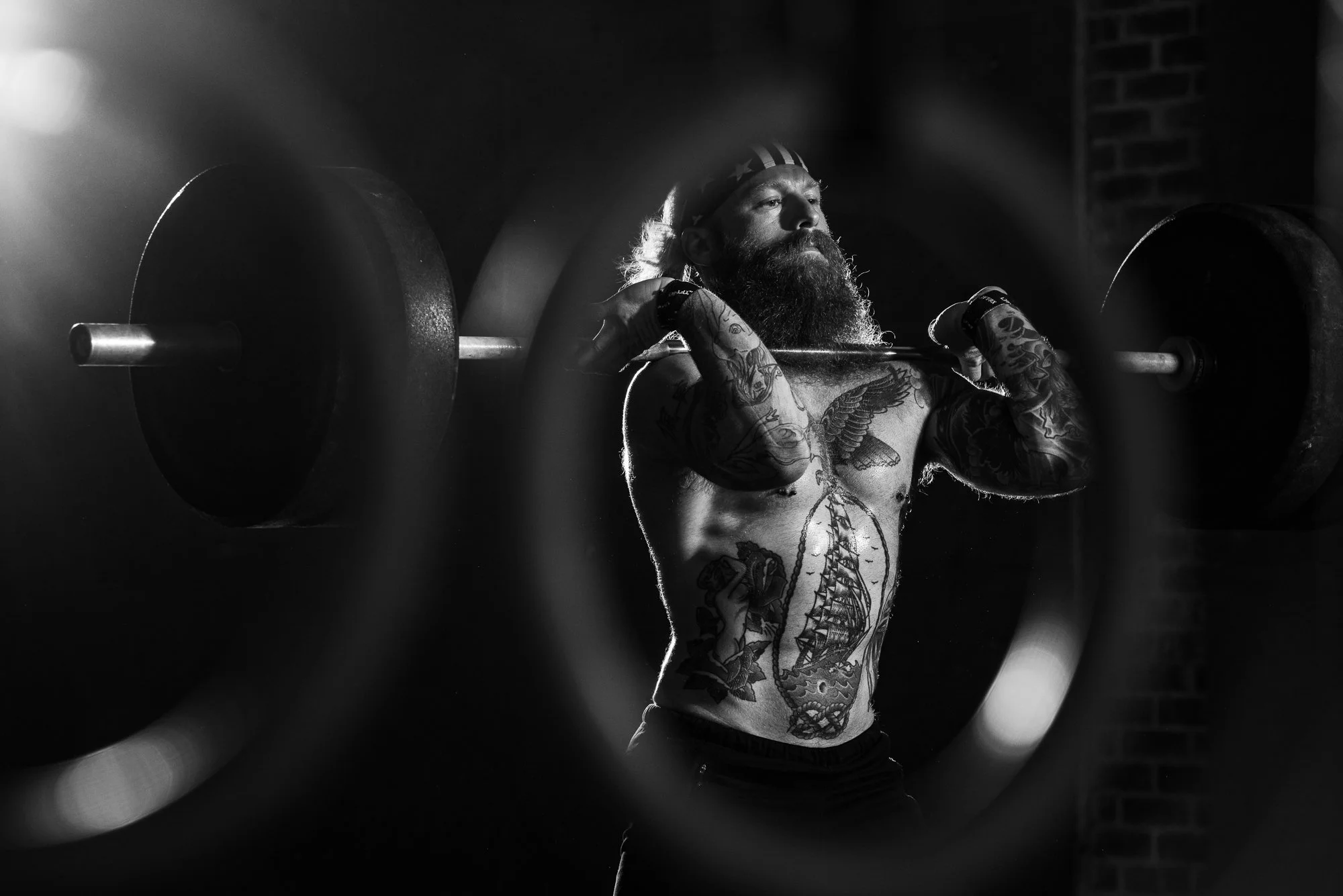
Bearded CrossFit athlete holding a loaded barbell in the front rack position inside a gritty gym.

A loaded barbell rests across the athlete’s shoulders as he prepares for the next part of the lift.

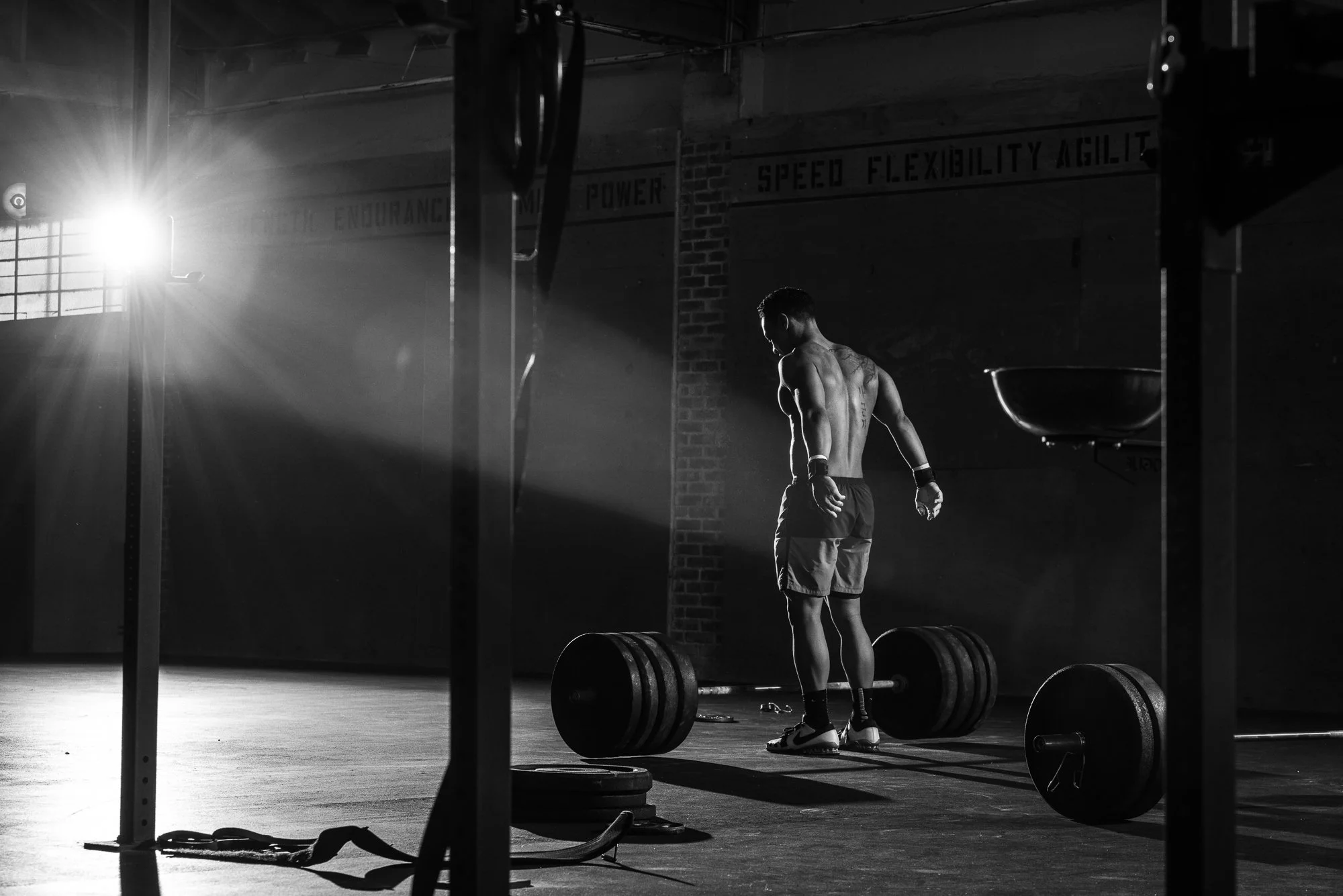
CrossFit athlete standing beside a loaded barbell as sunlight cuts across the gym floor.

Sunlight cuts across the gym floor as the athlete stands beside a heavily loaded barbell.

Using Light to Photograph Strength and Movement

For this kind of fitness photography, I frequently use strobes to create shape rather than simply adding more light.

Where the light comes from matters.

Side and back lighting can define an athlete's body, separate them from a dark background, emphasize sweat and texture, and give movement more dimension. Areas of the frame that don't contribute to the photograph can fall naturally into shadow.
The objective isn't necessarily to make someone look more dramatic than they really are. It's to use light to communicate the intensity that's already there.

That becomes particularly effective with strength training, explosive movement, and exercises where body position and muscular definition are important parts of the photograph.

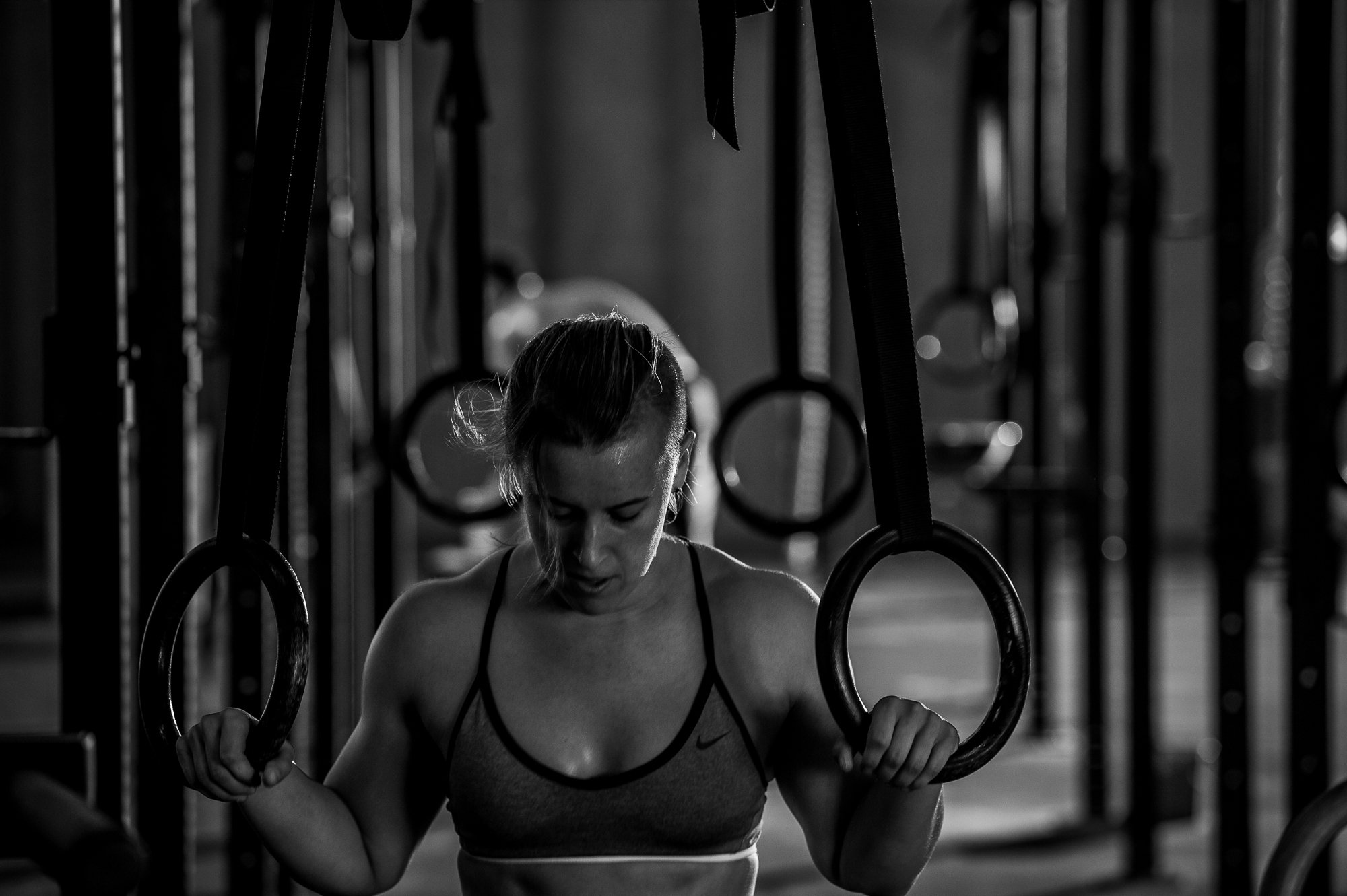
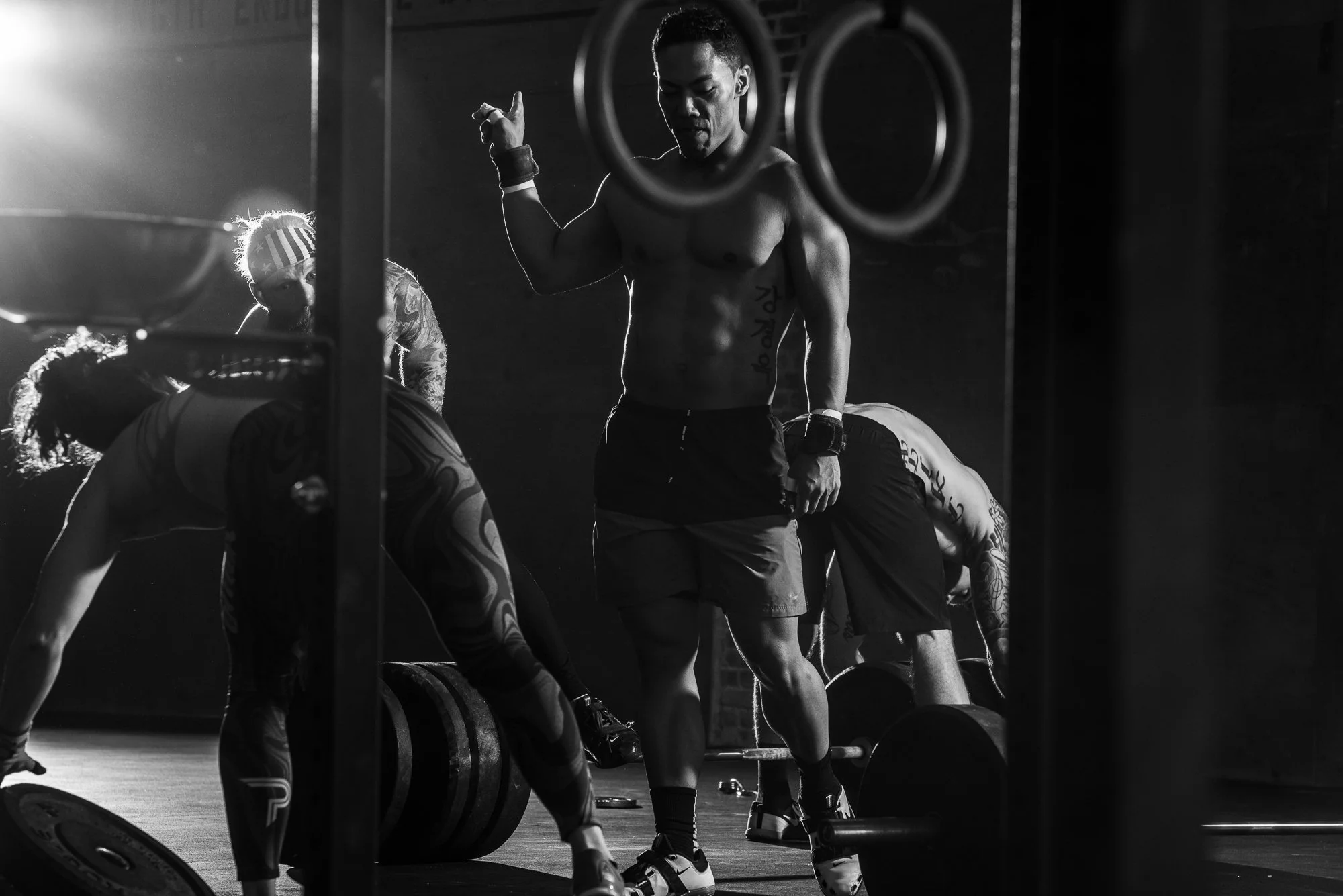
Female CrossFit athlete using gymnastic rings during a workout inside a gritty gym.

Framed by hanging rings, an athlete rests between sets inside the gym.

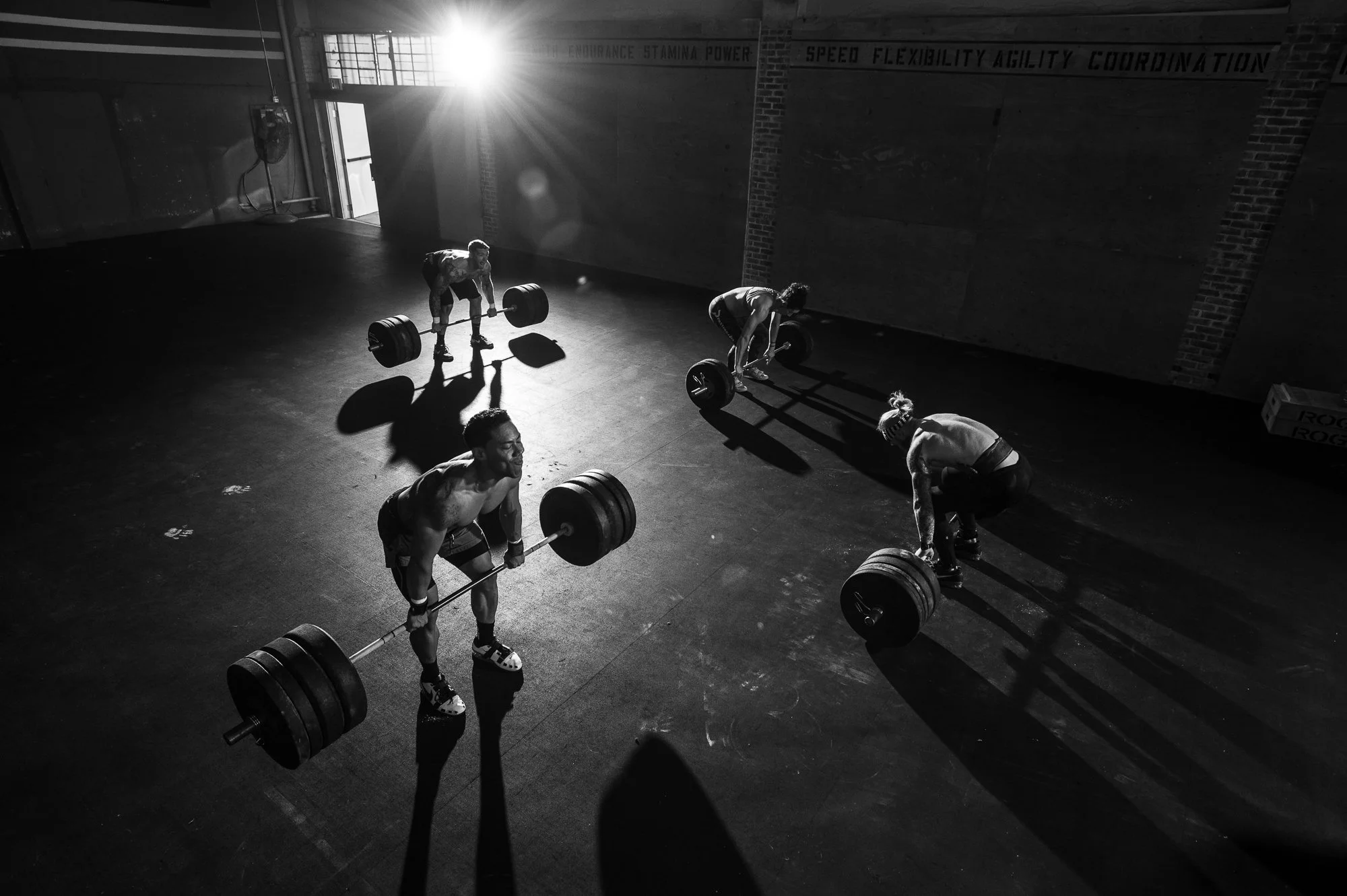
Four CrossFit athletes performing heavy barbell deadlifts in a gritty gym.

Four athletes work through heavy barbell deadlifts as sunlight stretches across the gym floor.

Why Dark Fitness Photography Works for Advertising

A fitness campaign needs more than a collection of impressive individual photographs. The images have to work together.

A darker visual approach can create consistency across different athletes, locations, exercises, and products. It can also give designers room to work with typography, logos, headlines, and other campaign elements.

That matters when photographs need to function across advertising, websites, social campaigns, retail displays, packaging, and other brand applications.

The goal is to create photographs that work as photographs while also understanding that they're part of a larger visual system.

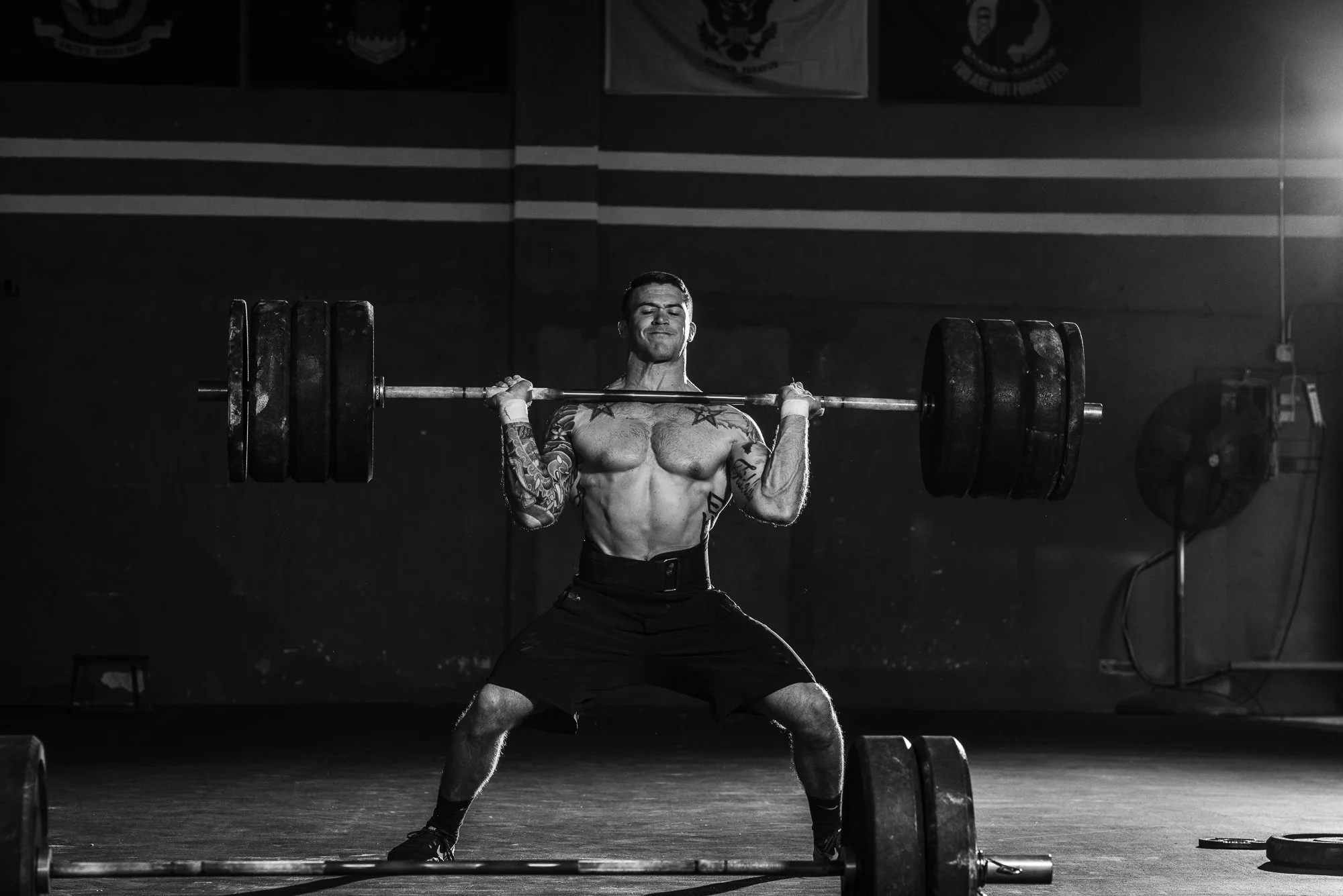
CrossFit athlete holding a heavily loaded barbell in the front rack position during a lift.

Driving upward from a wide stance, the athlete holds a heavily loaded barbell across his shoulders.

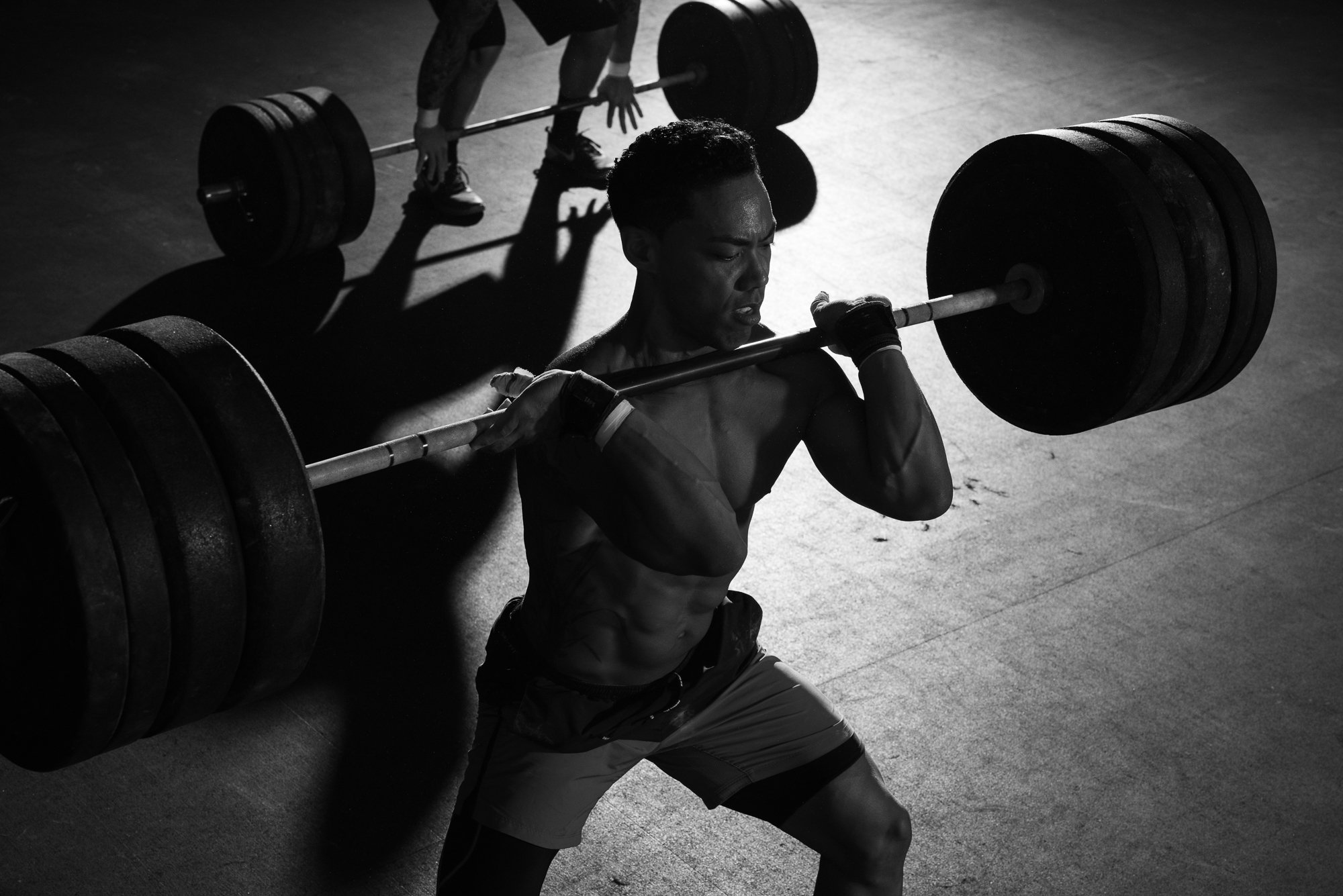
CrossFit athlete driving upward from a deep squat with a heavily loaded barbell in the front rack position.
Working from a deep squat, the athlete drives upward with a heavily loaded barbell as another athlete prepares behind him.

Real Athletes Still Matter

Lighting can change the mood of a photograph. It can't manufacture believable athletic movement.

That's why I prefer photographing real athletes whenever possible.

Someone who has performed a movement thousands of times carries themselves differently than someone performing it for a photograph. Their grip, stance, posture, timing, and reaction to effort are instinctive.

It also allows the photography to move faster.

Instead of spending a production teaching movements or endlessly recreating them, we can concentrate on light, composition, products, wardrobe, angles, and the moments happening around the workout.

The finished photographs can be highly produced without feeling artificial.

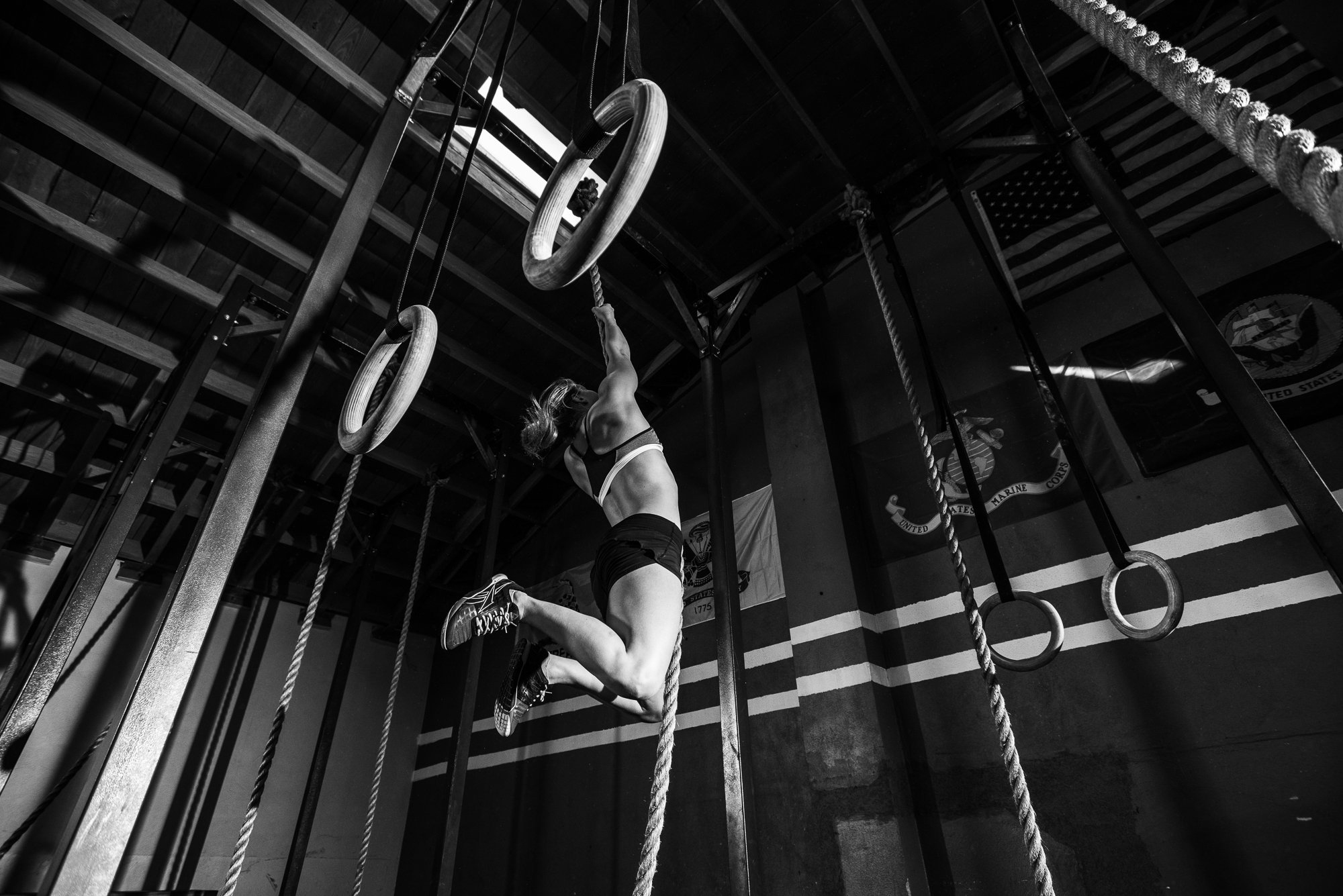
Female CrossFit athlete climbing a rope beneath gymnastic rings inside a gritty gym.

Reaching for the rope above, the athlete climbs through the rig surrounded by gymnastic rings and climbing ropes.

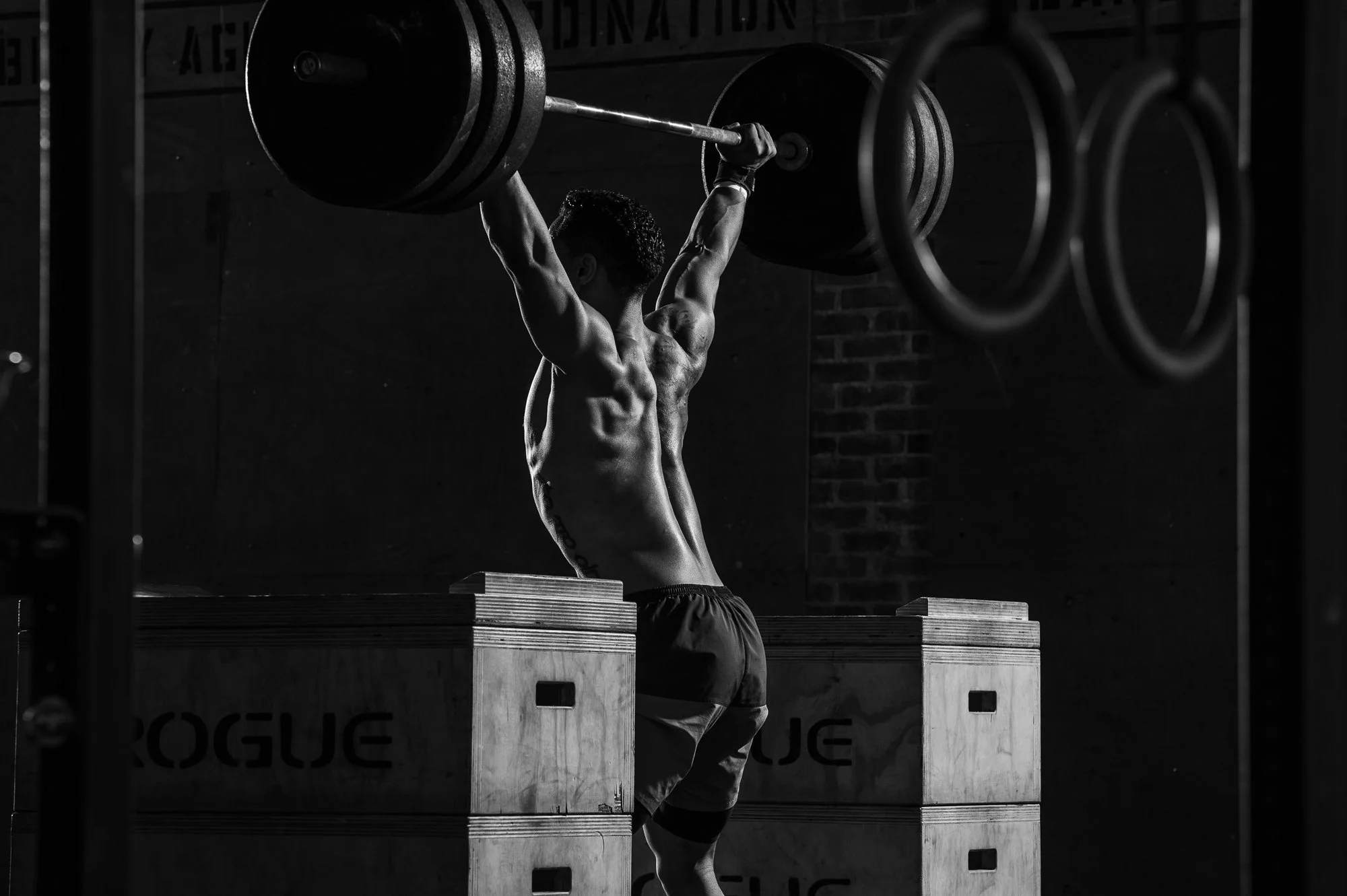
CrossFit athlete holding a loaded barbell overhead between wooden plyometric boxes in a gritty gym.

Holding a loaded barbell overhead, the athlete works between wooden plyometric boxes as gymnastic rings hang in the foreground.

Dark and Gritty Doesn't Have to Mean Cliché

Fitness advertising has developed a familiar vocabulary: sweat, chalk, dramatic expressions, heavy weights, dark rooms.

Those elements can work, but repeating them isn't enough.

The environment, athlete, product, and brand should determine what the photographs look like.

Sometimes that means hard directional light and deep shadows. Sometimes it's a quieter portrait between sets. Sometimes the strongest photograph isn't the lift itself, but the anticipation beforehand or exhaustion immediately afterward.

The visual treatment should support the story rather than become the story.

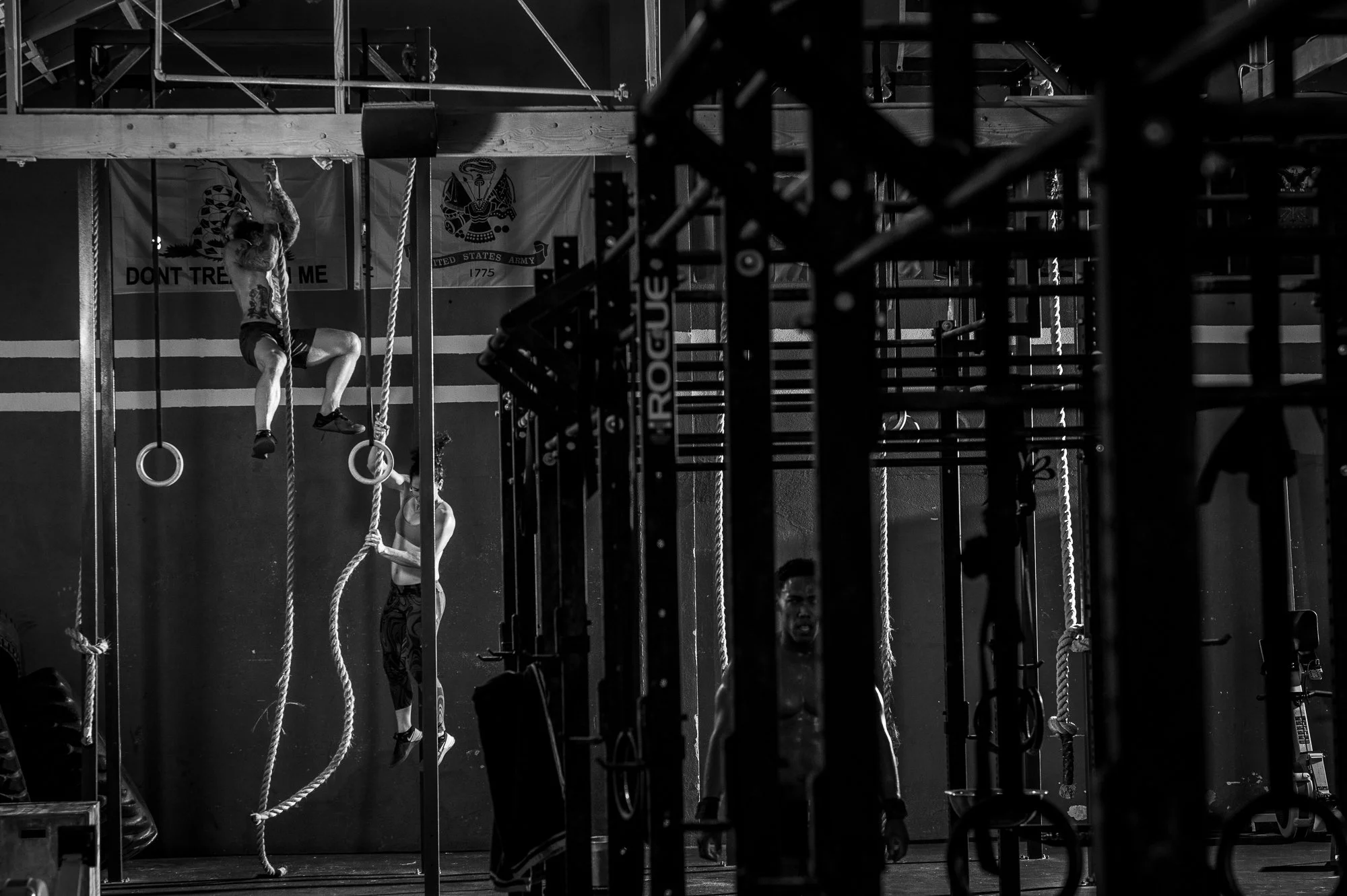
CrossFit athletes climbing ropes and using gymnastic rings inside a gym with a Rogue rig.

Ropes, rings and a Rogue rig fill the gym as athletes move through their workout.

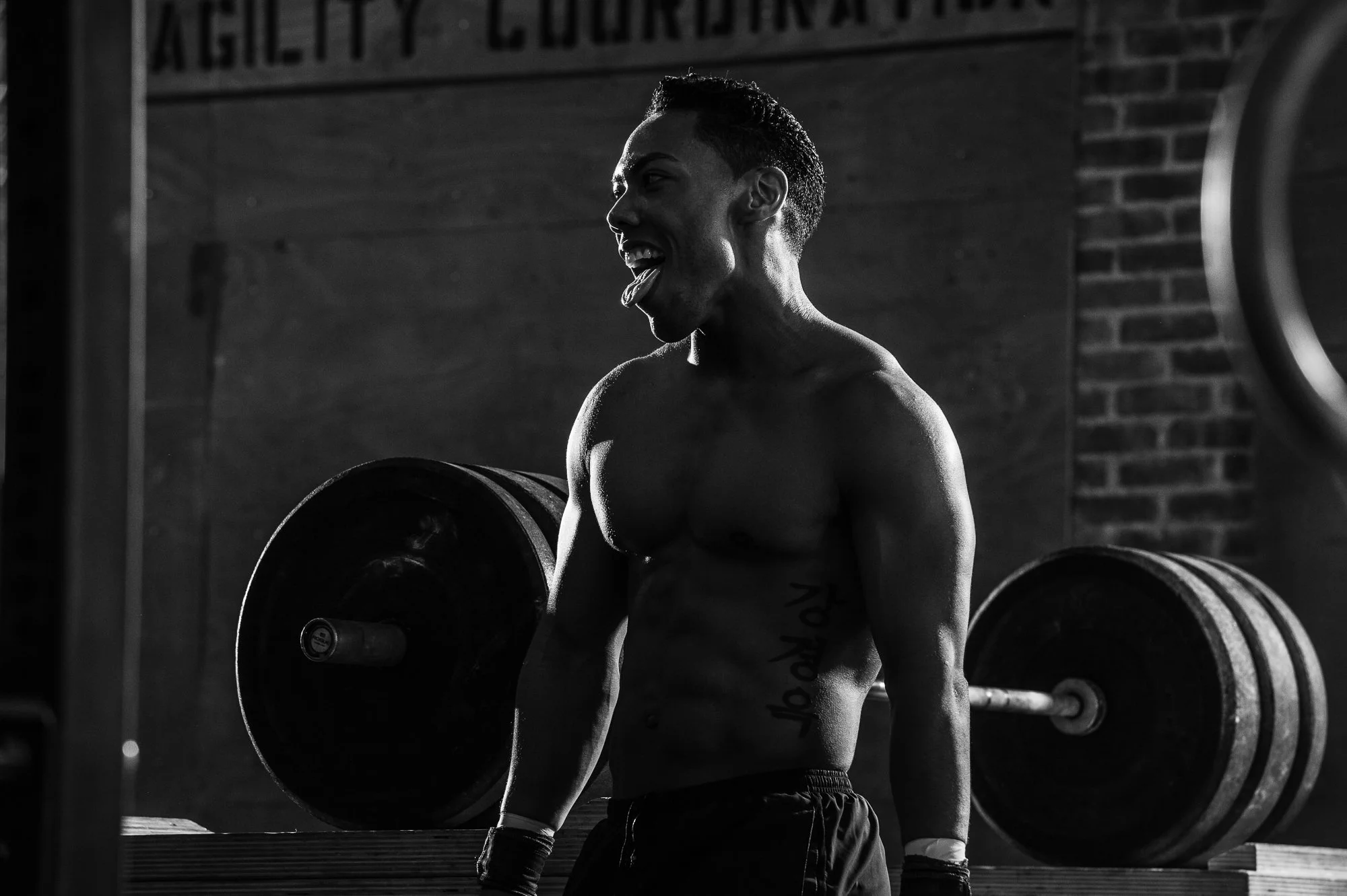
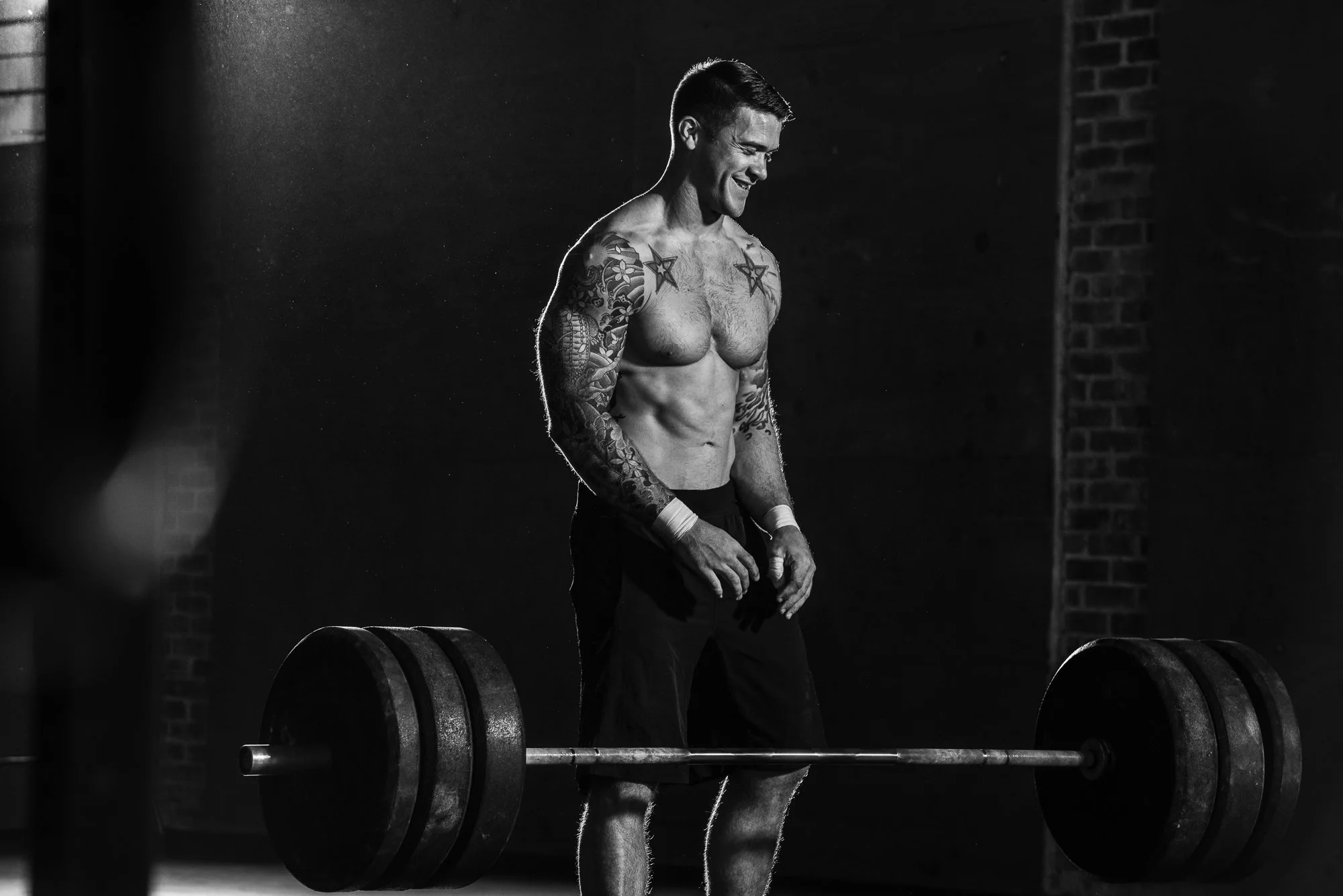
CrossFit athlete standing beside a loaded barbell in a gritty warehouse gym.

Athlete stands beside a loaded barbell between efforts, still wearing wrist wraps.

Building a Fitness Campaign Around a Visual Direction

One advantage of establishing a dark visual direction before a shoot is that it gives the entire production a common language.

Hero photographs can live alongside portraits, movement, details, product imagery, and quieter documentary moments without feeling like they came from five different shoots.

That gives brands and agencies a deeper library of photographs to work with across a campaign.
And when a project calls for something completely different, I also photograph fitness with a brighter, more natural and colorful approach.
The style should always serve the project.

CrossFit athlete standing over a heavily loaded barbell during a workout in a gritty gym.

The athlete resets beside a heavily loaded barbell, his tattoos catching the light.

CrossFit athletes working around loaded barbells during a workout inside a gritty gym.

Athletes work around loaded barbells as gymnastic rings and the rig fill the foreground and background.

Dark Fitness and Athletic Photography

I photograph fitness and athletic campaigns for brands, advertising agencies, athletes, and companies throughout Colorado and across the country.

My fitness work ranges from dark, controlled, high-contrast photography to bright, colorful active lifestyle imagery depending on the visual direction of the campaign.

The common thread is making photographs that feel believable.

View my Dark + Gritty Fitness portfolio to see more of this work, or get in touch to discuss a photo shoot or image licensing.

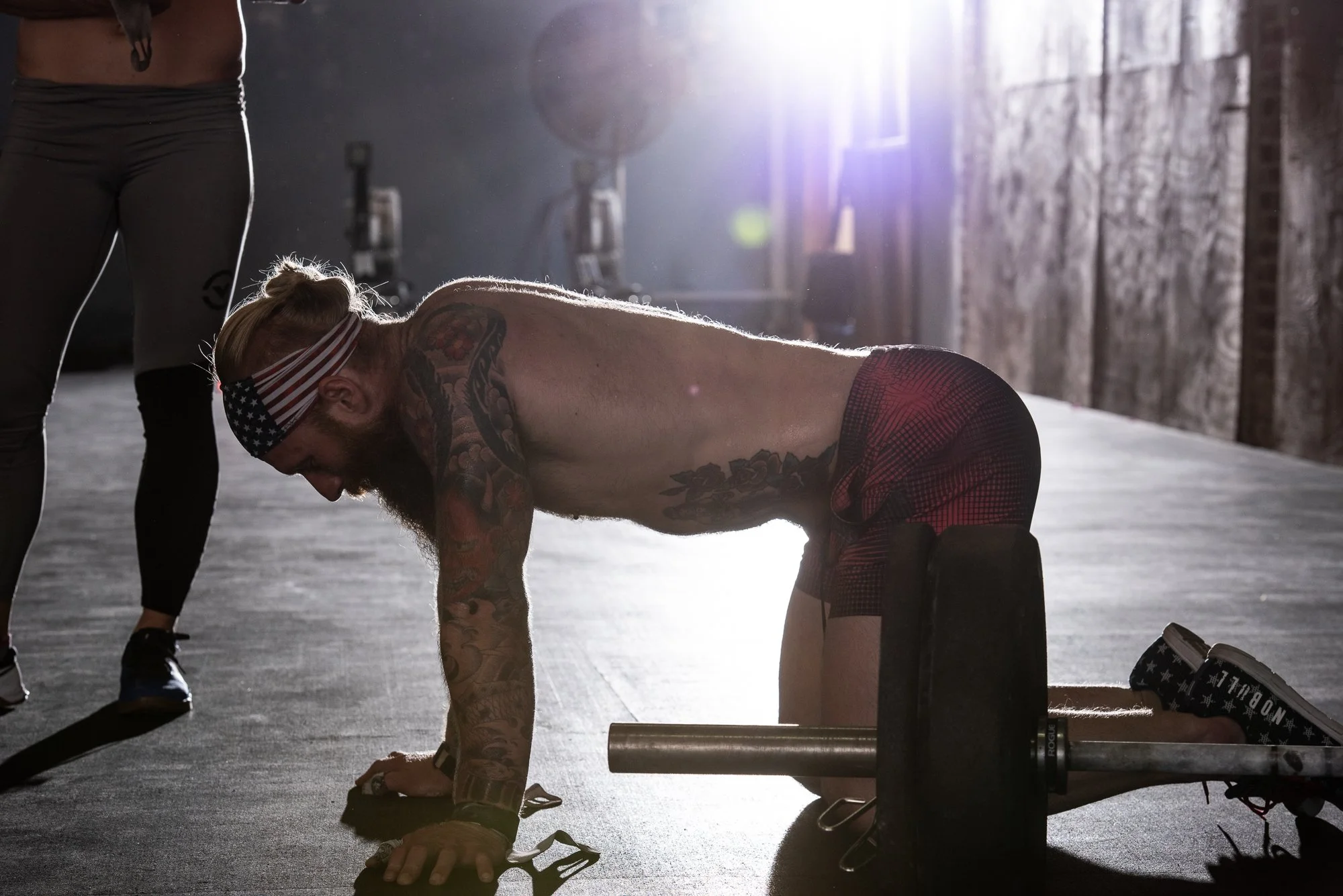
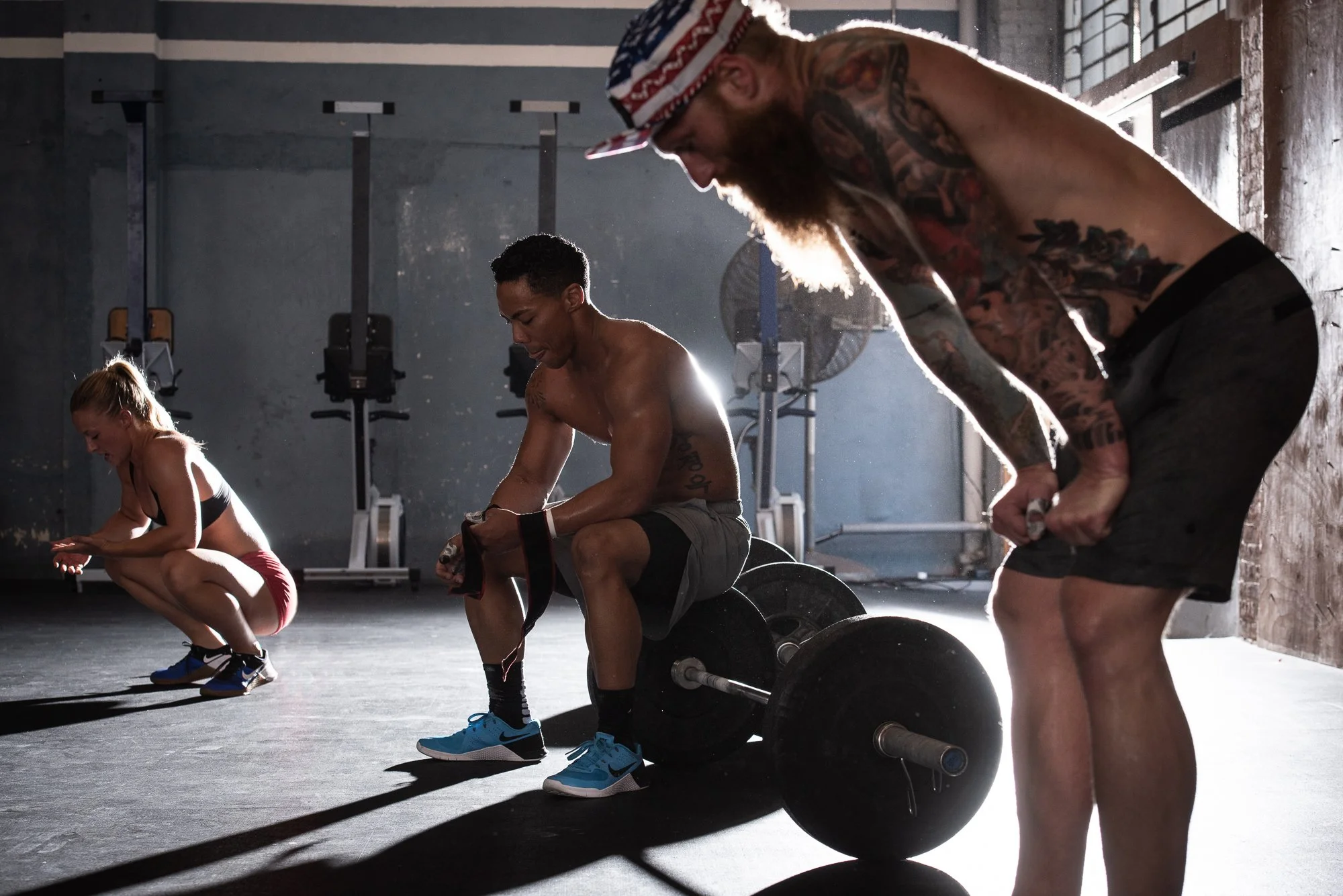
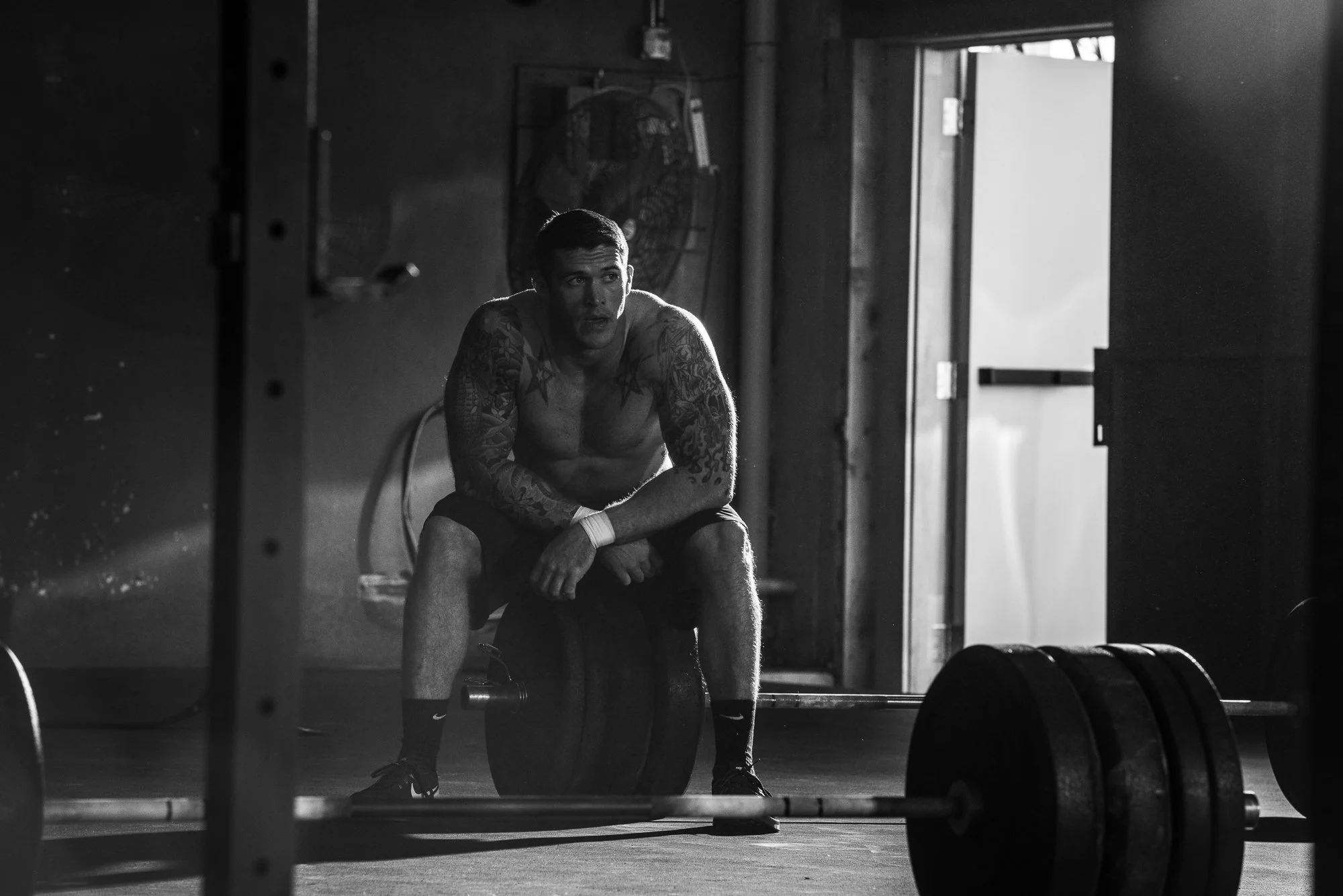
CrossFit athlete resting on a wooden plyometric box beside loaded barbells in a gritty gym.

Between efforts, an athlete sits exhausted on a loaded barbell.

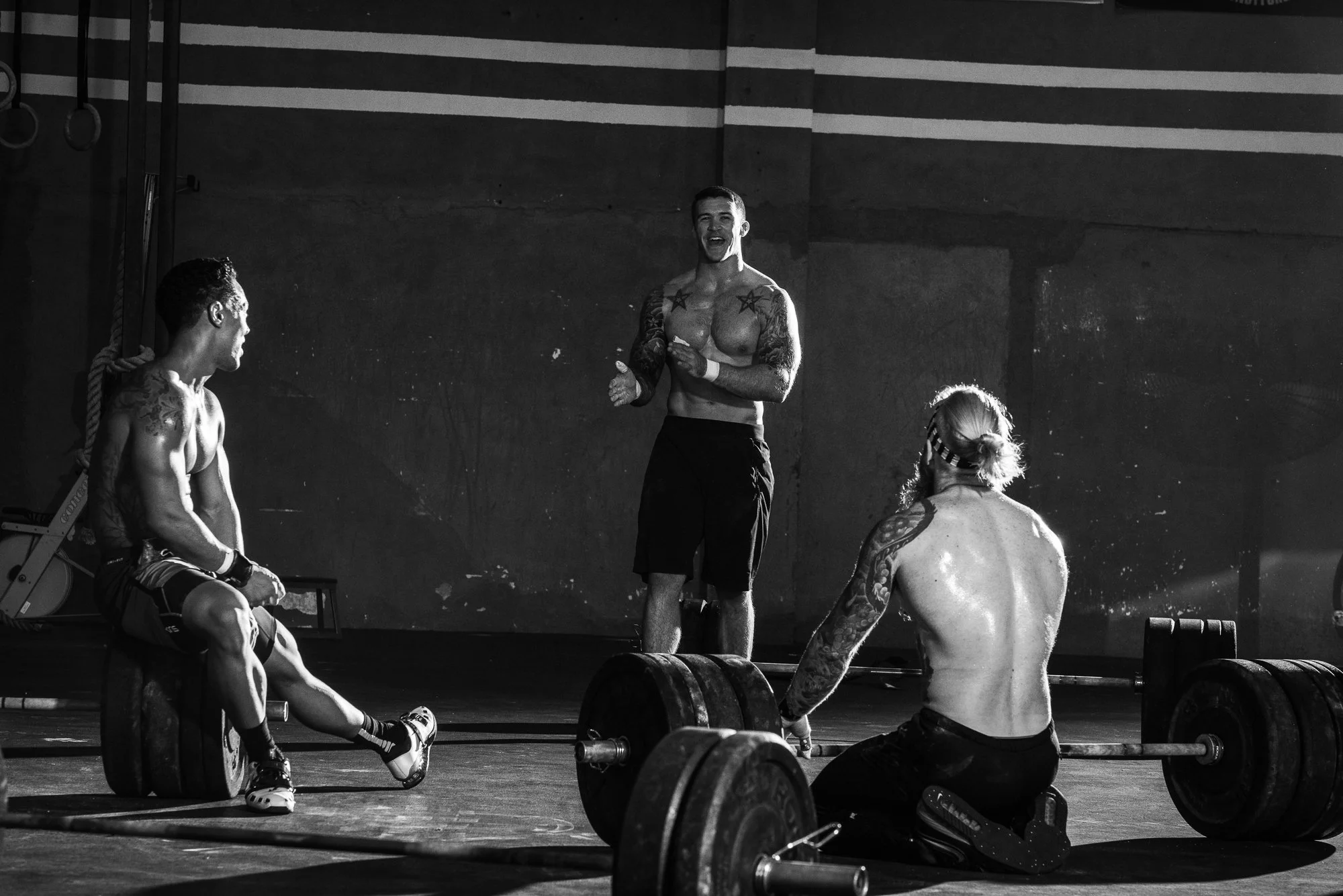
CrossFit athletes resting around loaded barbells during a workout in a gritty gym.

Athletes having fun together after a workout in a warehouse gym.

Where Basketball Begins

The Basketball Courts We Grew Up On

Before basketball became arenas, sneaker deals, and prime time, it was something smaller. More personal.

A hoop over the garage. A crooked rim at the end of a driveway. A backboard nailed to a barn. A court behind a school where the lines had nearly disappeared. A patch of asphalt in a city park where games continued until nobody could see the rim.

For a lot of people who grew up with the game, those places are basketball.

They aren't particularly important on a map. Most will never host an organized game. Some barely qualify as basketball courts at all. But they're where countless people first learned to shoot, competed against siblings, played one-on-one with their father, stayed outside until dark, or imagined taking the final shot with a championship on the line.

That's what makes them worth remembering.

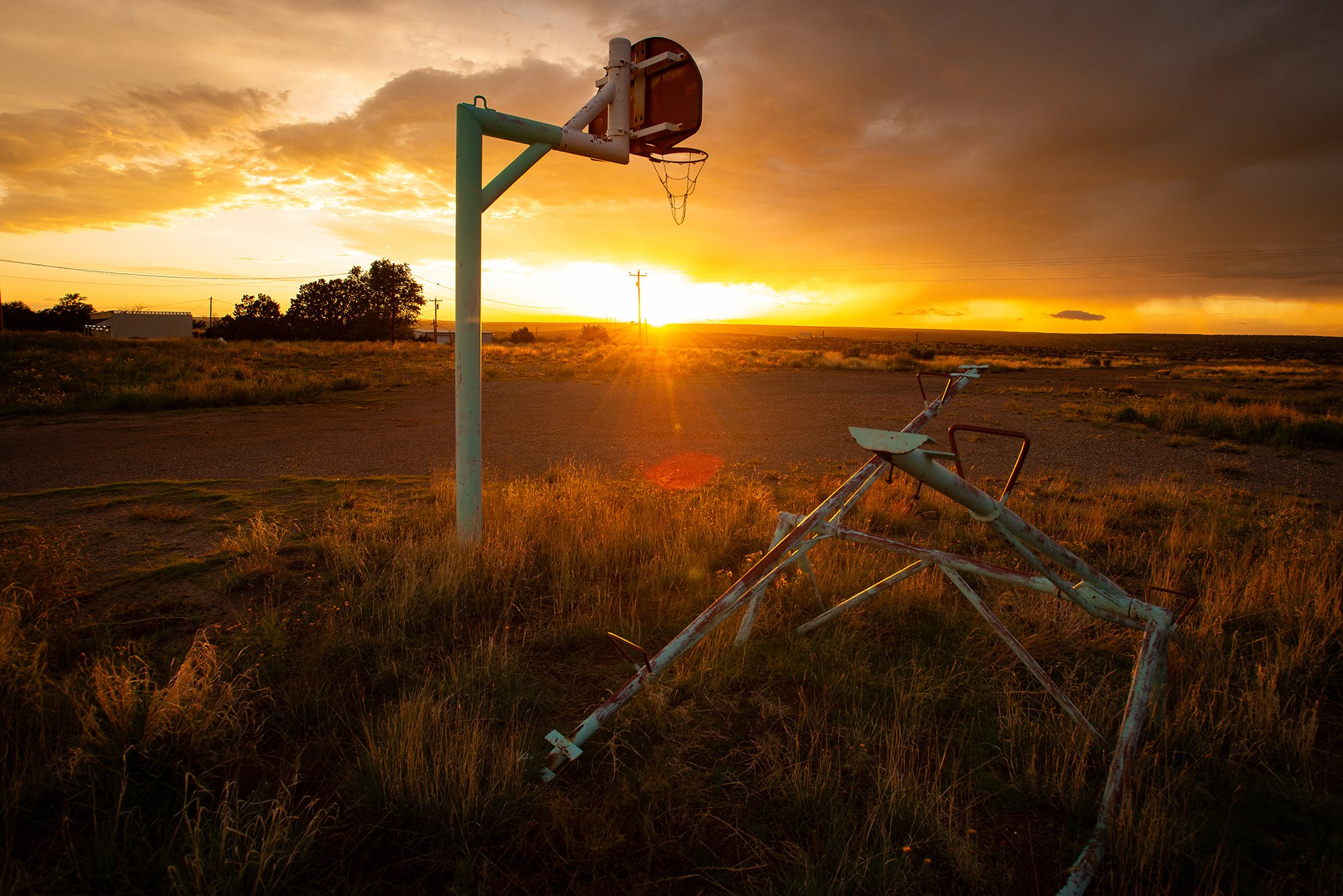
Basketball hoop standing in a rural field at sunset beside an overturned piece of farm equipment.

At the edge of a rural field, the basketball hoop and seesaw sit beneath the setting sun.

Before There Was a Gym

Basketball doesn't require much.

A ball. A rim. Something resembling a backboard. Enough ground to take a few dribbles.

That's one of the things that has always made the game so accessible, and why basketball hoops appear in such unlikely places across America.

They stand beside barns and cornfields, behind churches, on telephone poles, in empty lots and at the ends of rural roads. Some are carefully installed. Others seem to have been assembled from whatever happened to be available.

The setting changes, but the invitation is always the same.

Pick up a ball and shoot.

The Hoop at Home

For many players, the most important basketball court they ever knew wasn't really a court.

It was the driveway.

That's where repetition happened. Ten free throws before dinner became fifty. Fifty became a hundred. Games of HORSE turned competitive. Brothers and sisters settled arguments with one-on-one. Parents rebounded while their kids shot.

The hoop became part of the house.

Years later, the house might be sold and the driveway might belong to somebody else, but people remember exactly where they stood to take those shots.

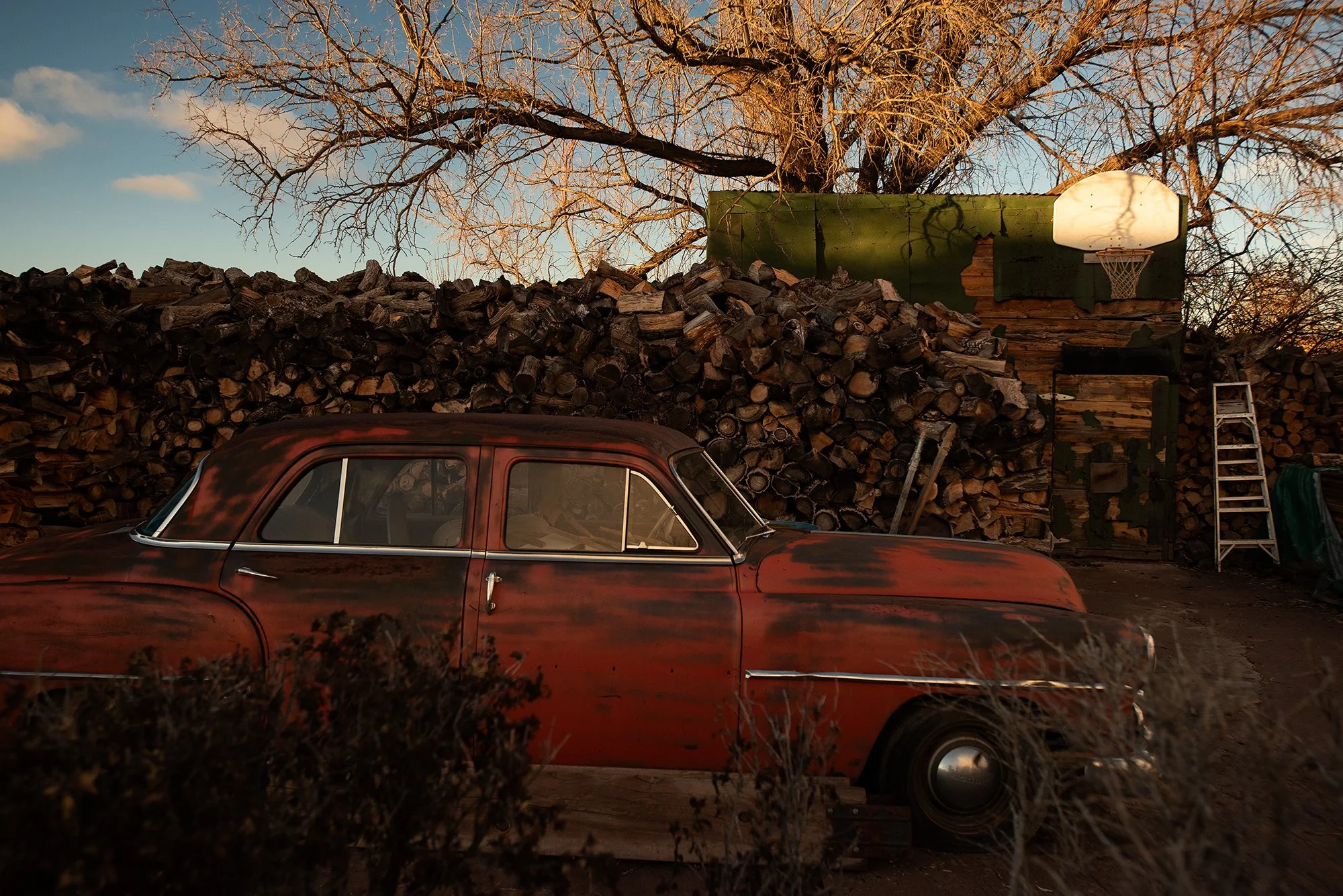
Weathered basketball hoop mounted above a woodpile beside a vintage car and a large green structure.

Beside a vintage car, the basketball hoop stands above a large woodpile in a working yard.

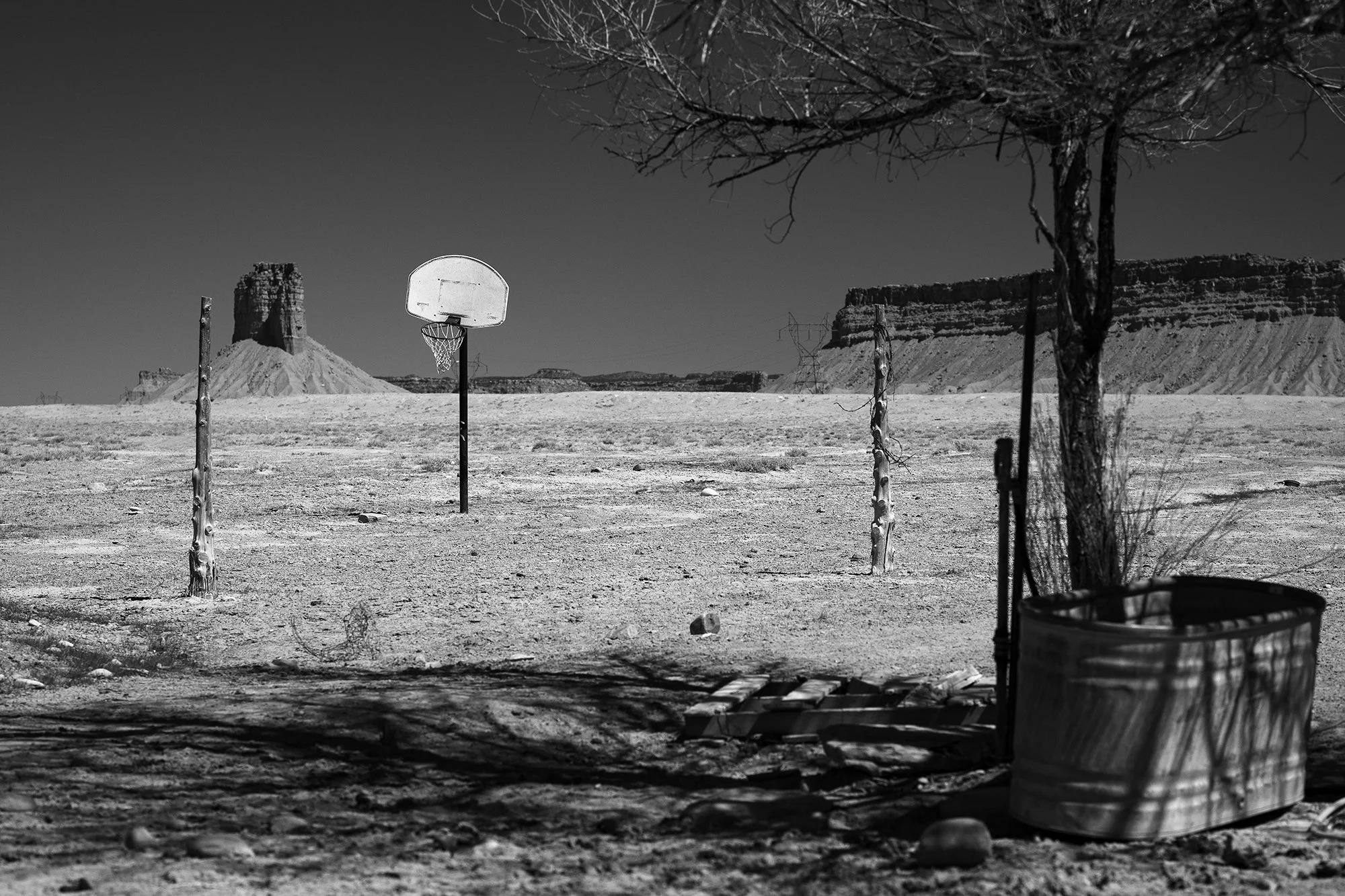
Lone basketball hoop standing in an open landscape with rocky terrain and large earth formations in the distance.

Across the open field, a lone basketball hoop stands with rock formations stretching across the horizon.

Basketball in Small-Town America

Drive through enough of America and basketball hoops begin to appear everywhere.

Small towns have their own versions of Madison Square Garden.

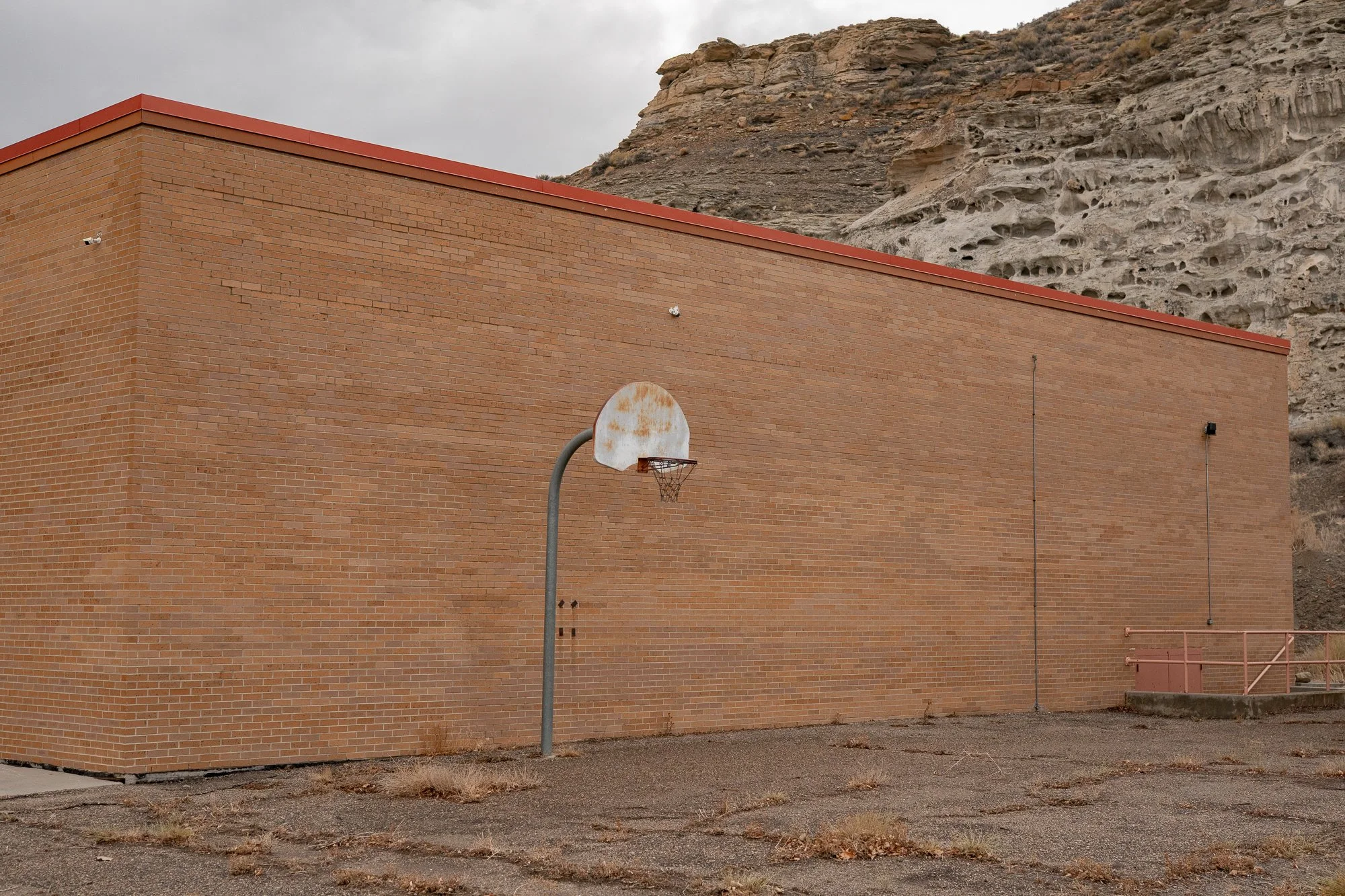
A faded court behind an elementary school. Two rims beside a community center. A hoop overlooking farmland. A backboard standing alone in a place where there doesn't seem to be another person for miles.

These courts aren't surrounded by thousands of spectators. Most of the time they're completely empty.

That's part of what makes them interesting.

Without players, uniforms or crowds, the hoop becomes something else. It becomes part of the landscape and a marker of the people who live there.

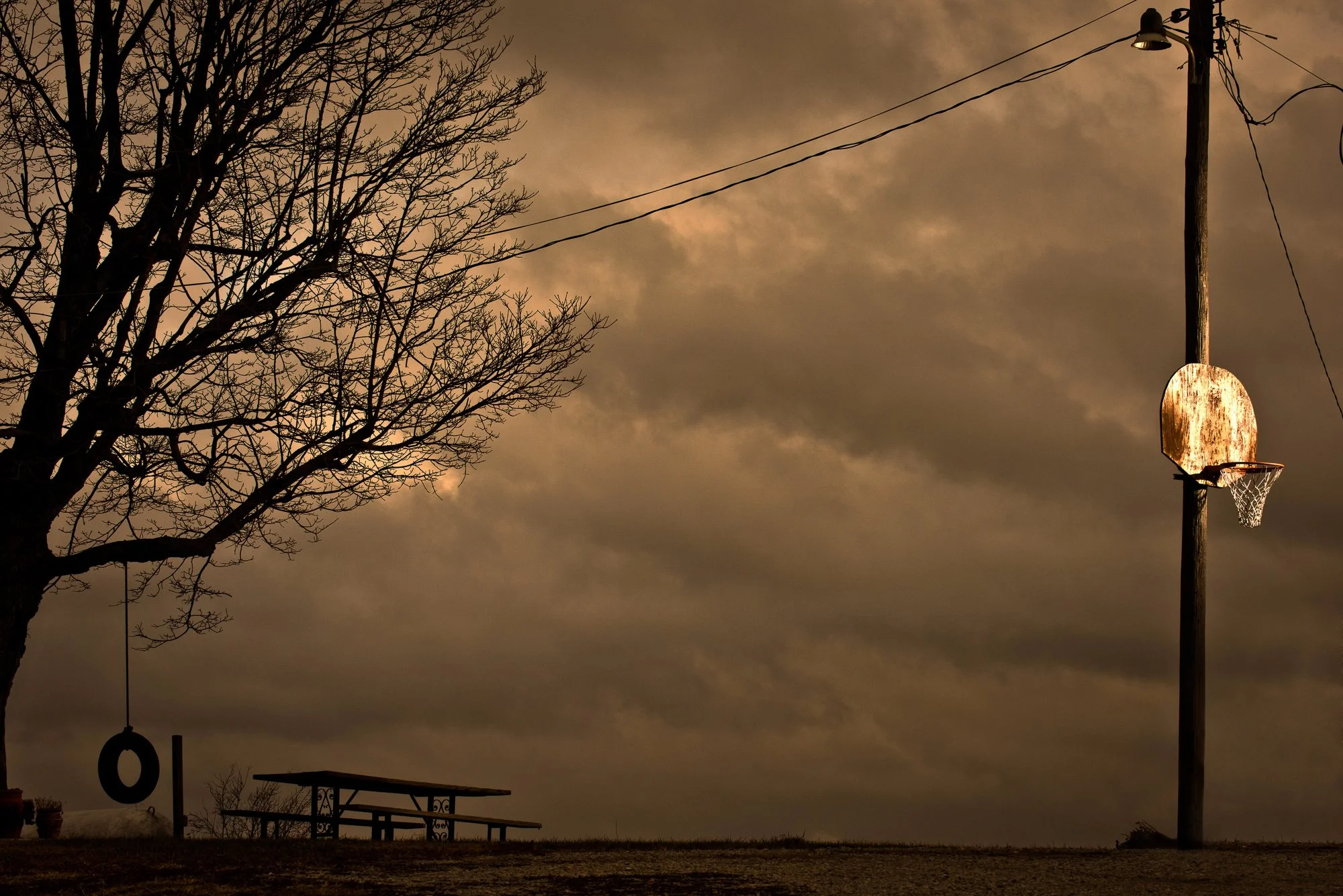
Basketball hoop beside a picnic table beneath a cloudy evening sky, with a large tree and utility pole nearby.

Beside a picnic table and rope swing, the basketball hoop stands beneath a changing sky.

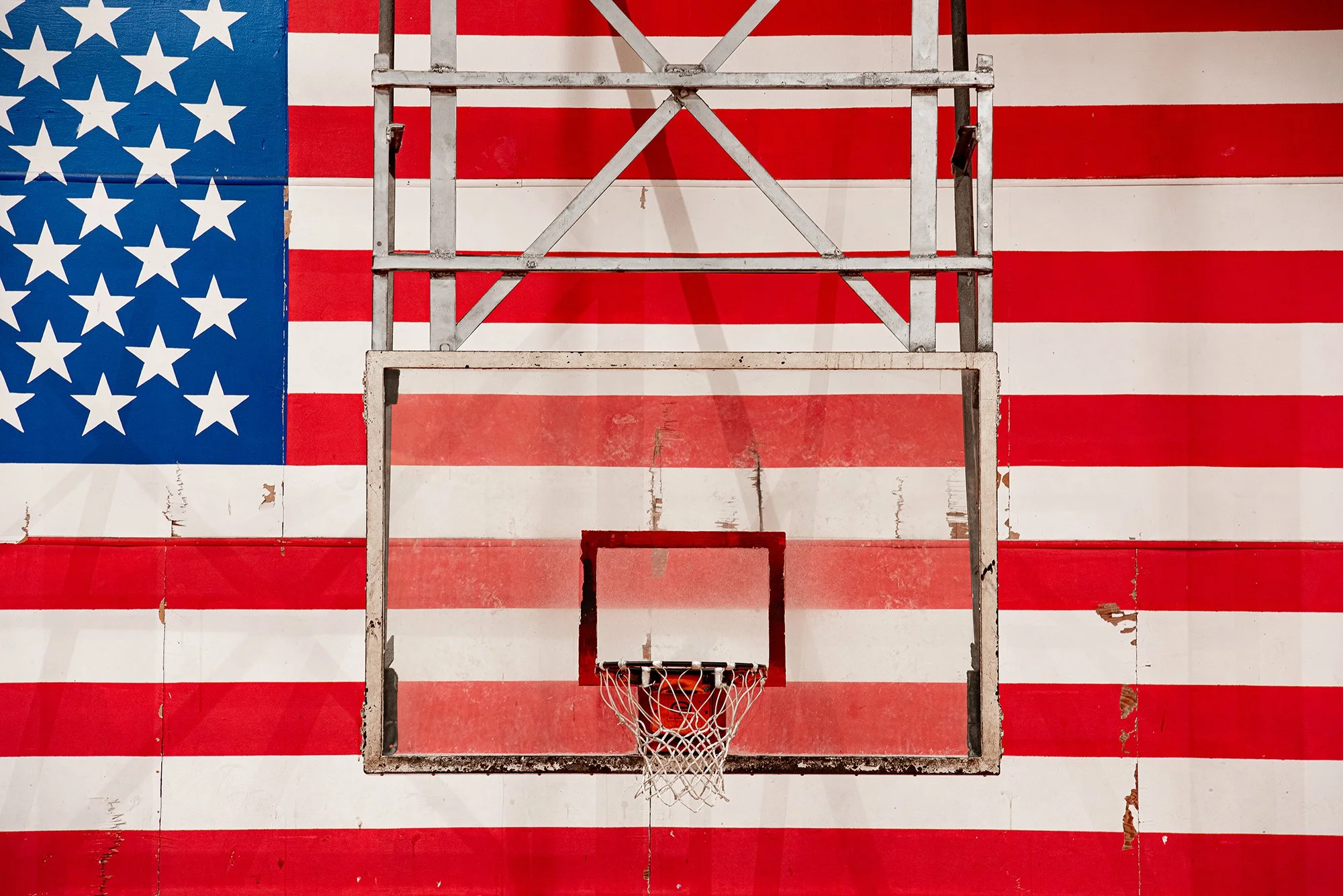
Weathered basketball backboard and hoop mounted against a large American flag mural.

Against an American flag, a worn backboard and rim stand strong as a symbol for the love of the game in America.

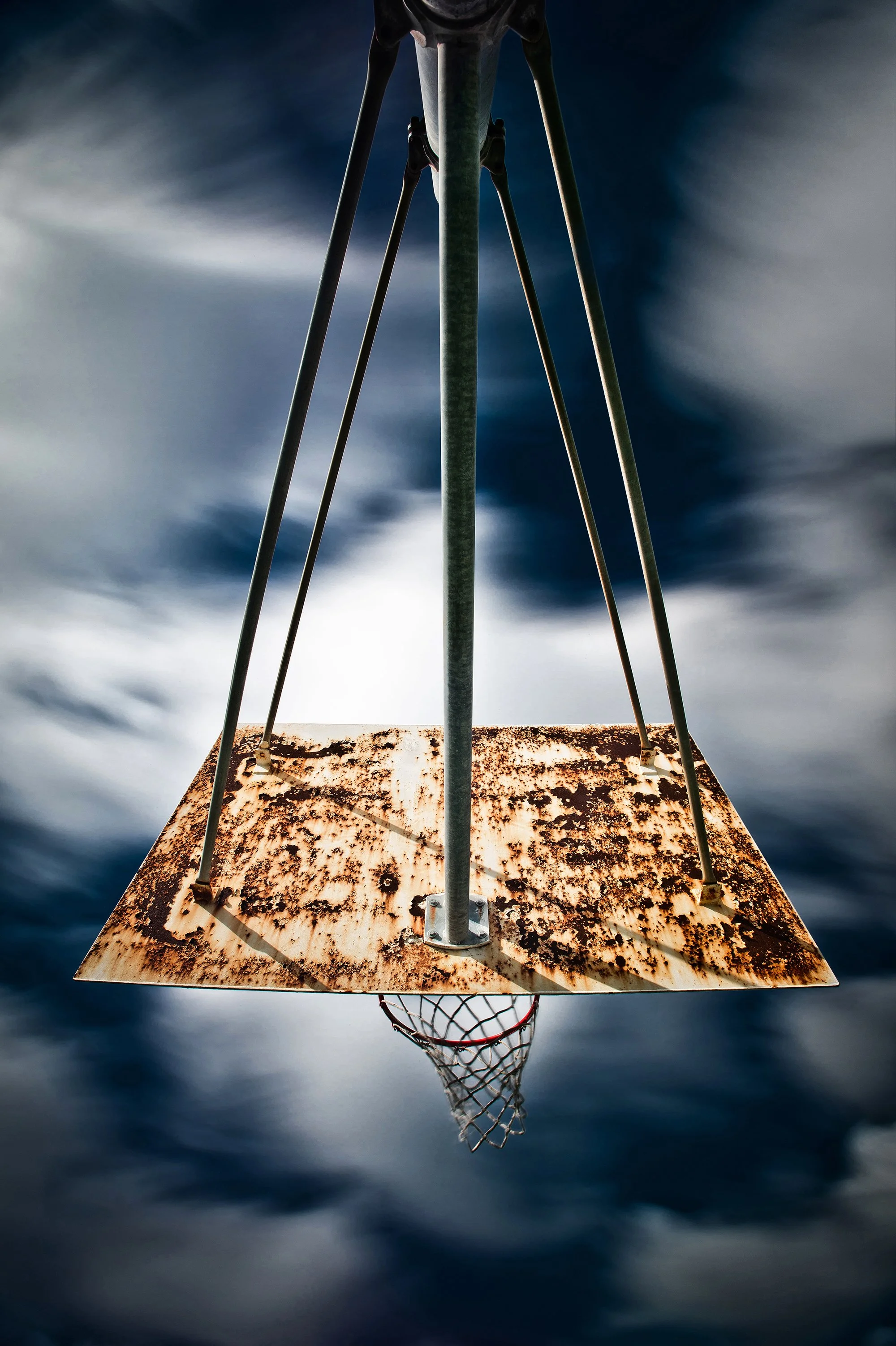
Rusted basketball backboard and hoop photographed from below against a cloudy sky.

A weathered backboard and rim stand against a dark, changing sky.

Farm Ball

Some basketball hoops seem inseparable from where they stand.

A hoop beside a barn isn't simply a place to play basketball. It says something about the people who put it there.

Work and play occupy the same ground. Chores get finished and somebody starts shooting. A patch of dirt or concrete becomes a court because that's the space available.

There doesn't need to be a gym nearby.

There just needs to be a hoop.

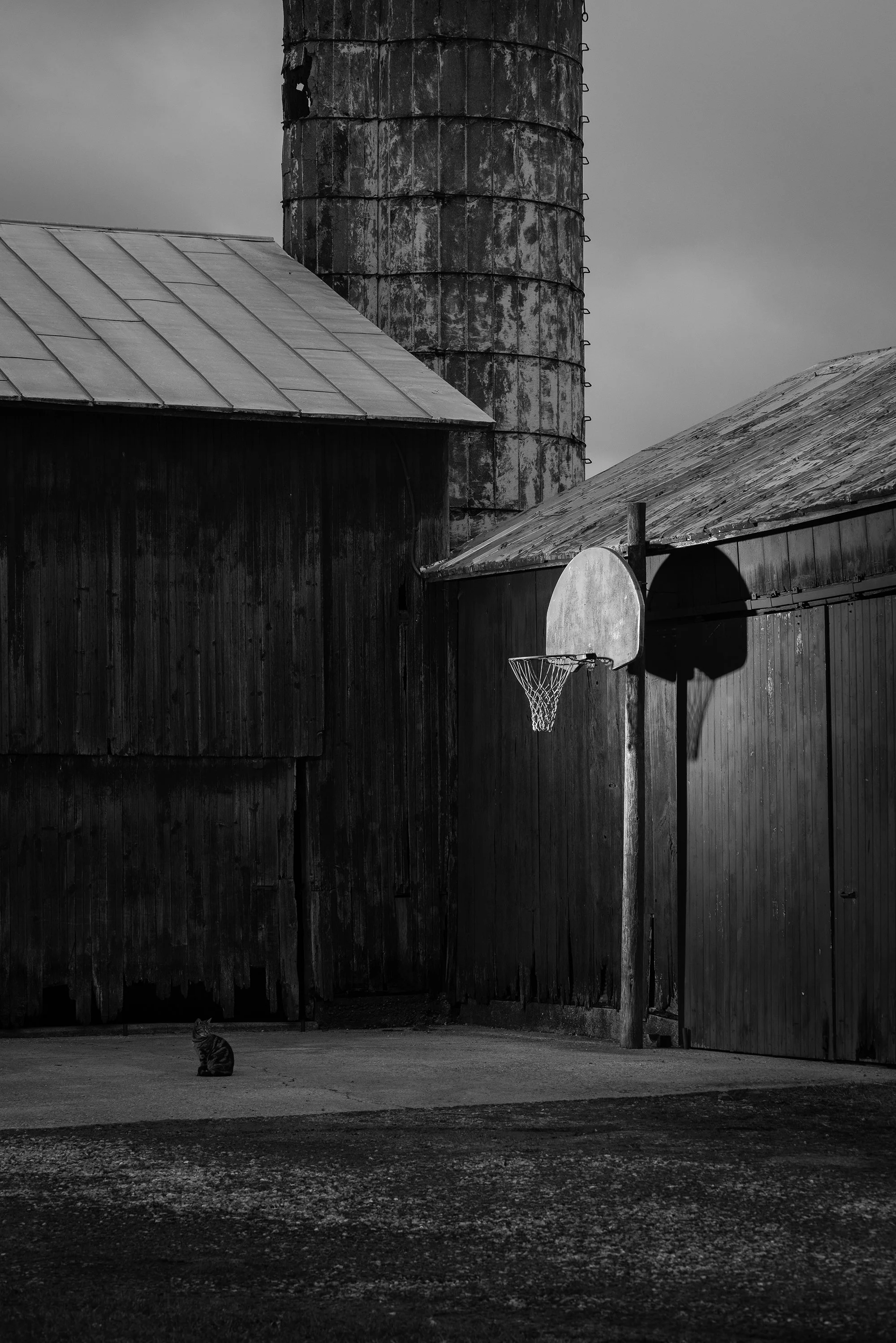
Weathered basketball hoop beside a barn and silo, with a cat sitting on the concrete below.

Between weathered barns and a silo, a basketball hoop stands in an open patch of ground.

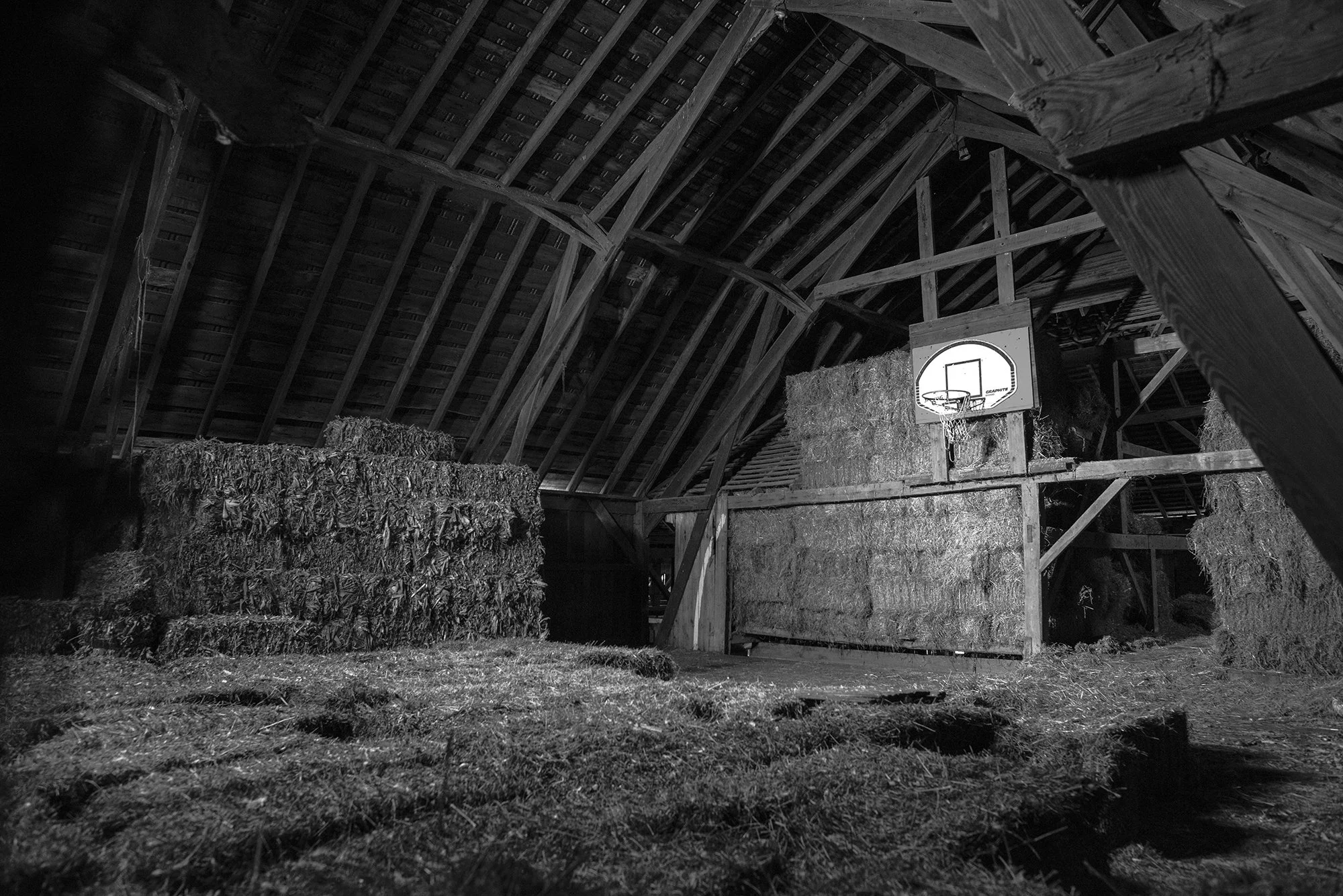
Basketball hoop hanging inside a wooden barn surrounded by stacked hay bales.

Inside the barn, a basketball hoop hangs above stacked hay bales where work and play share the same space.

Barn Ball — View the Fine Art Print

Every Court Has a Story

The longer you look at old basketball hoops, the more questions they create.

Who put it there?

Who played on it?

How many games happened underneath it?

Who left town and still thinks about that court?

The photographs can't answer those questions. That's part of their appeal.

An empty basketball court leaves room for the viewer's own memories.

Someone who grew up playing in Indiana may see something completely different from someone who learned the game on a playground in New York. A former player sees one thing. A coach sees another. A parent who spent years rebounding for a child sees something else entirely.

The photograph stays the same.

The story brought to it changes.

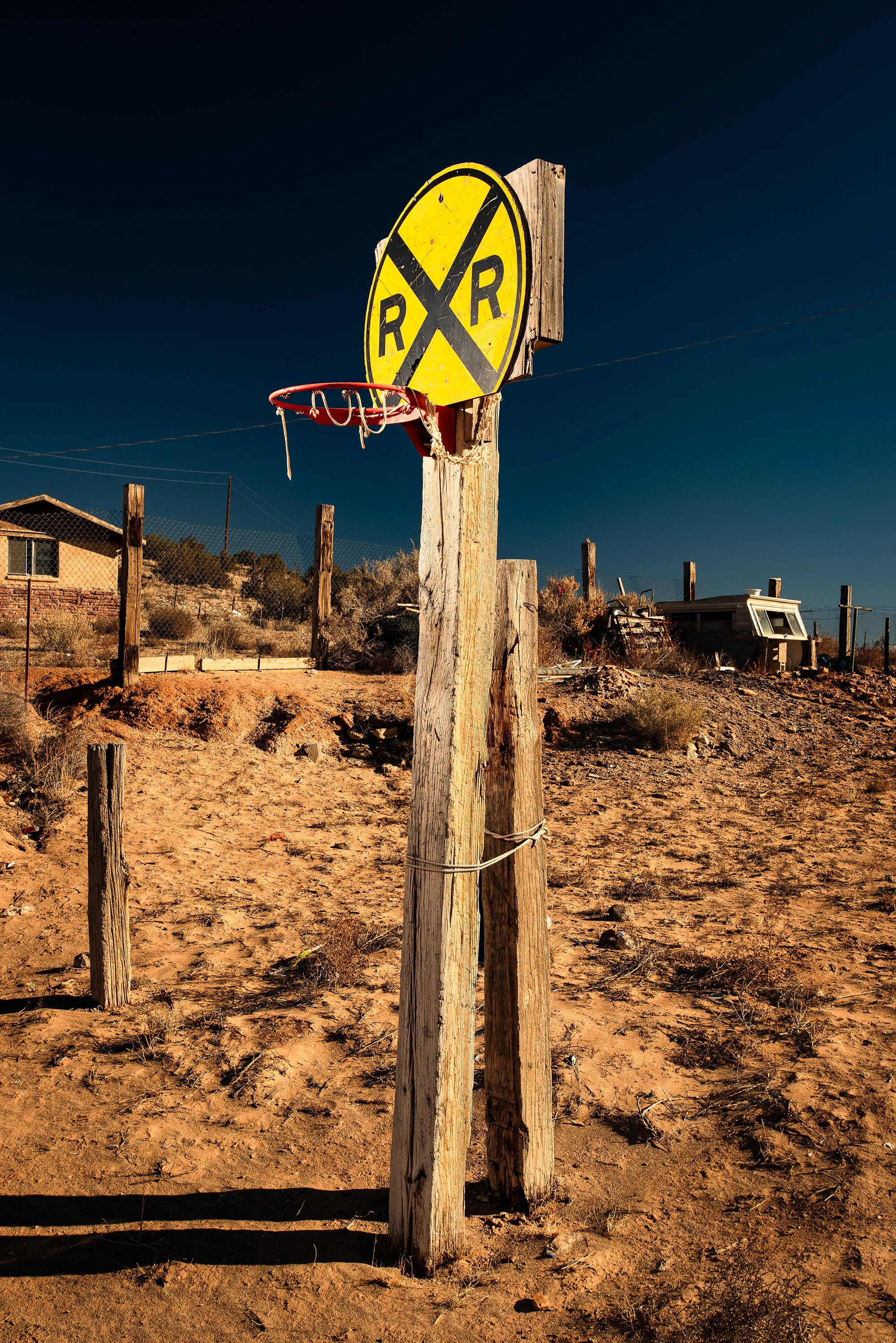
Basketball hoop mounted to a weathered wooden post beneath a yellow railroad crossing sign in a dry desert landscape.

Using a railroad crossing sign as a backboard, this hoop stands in a dry landscape far from a traditional court.

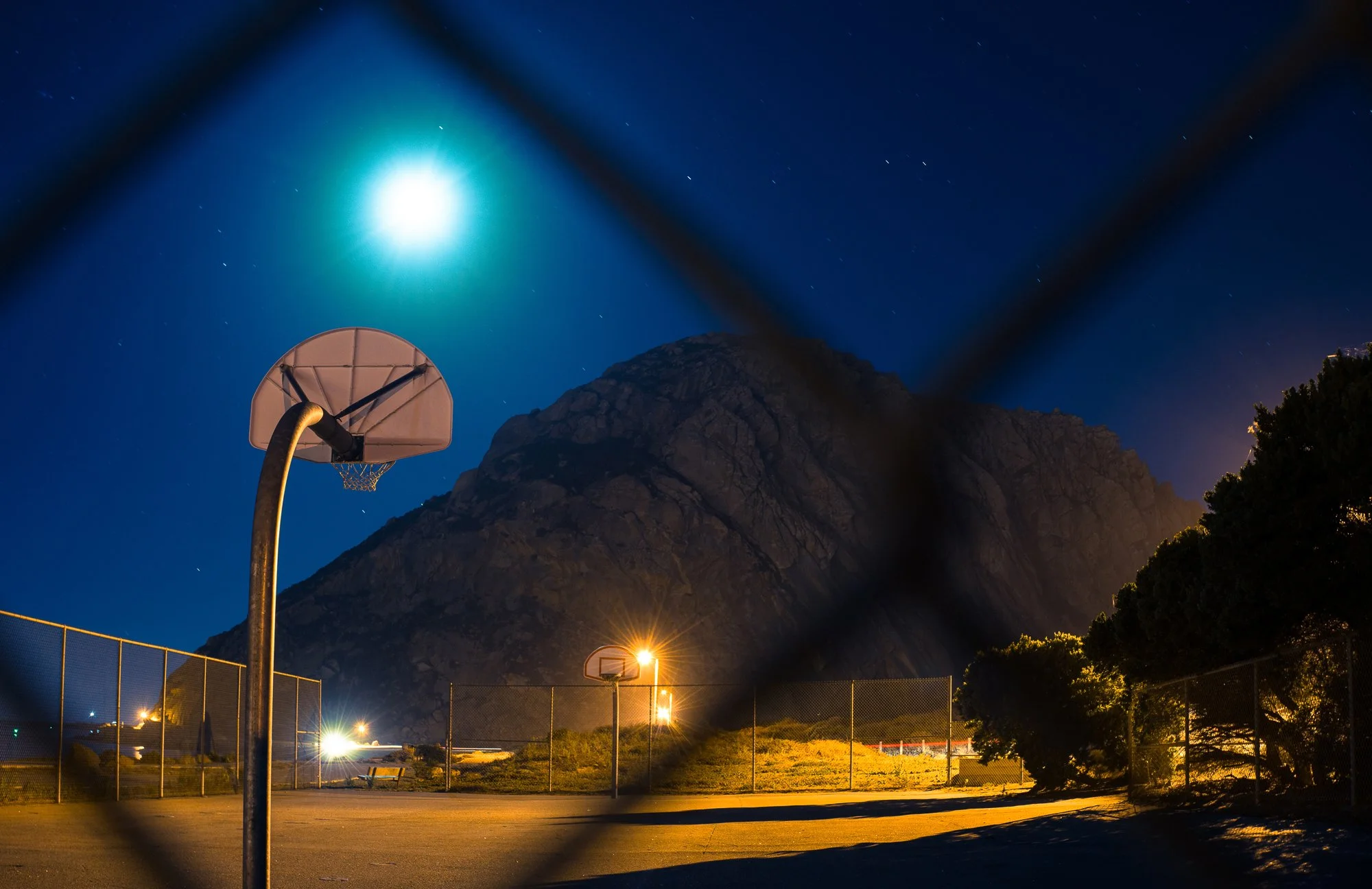
Basketball court with multiple hoops lit at night, with a large mountain rising behind it.

After dark, basketball courts sit beneath the mountain with the surrounding lights visible beyond the fence.

American Backcourts

For more than 15 years, I've photographed basketball hoops and courts while traveling throughout the United States and beyond.

The project became American Backcourts.

It was never intended to document the best courts or the most famous places in basketball. The photographs are about the opposite: ordinary places where the game exists quietly as part of everyday life.

Some courts were found deliberately. Most weren't.

They appeared along highways, behind buildings, in neighborhoods and small towns, beside farms and in places where stopping the car seemed mandatory.

Over time, the collection became less about basketball itself and more about place, ingenuity, community and the peculiar ways people make the game their own.

American Backcourts has been featured by ESPN, NBA TV, SLAM and in fine art photography books, among others, but the subject of the photographs has remained remarkably simple.

A hoop.

A place.

And evidence that somebody, at some point, wanted to play.

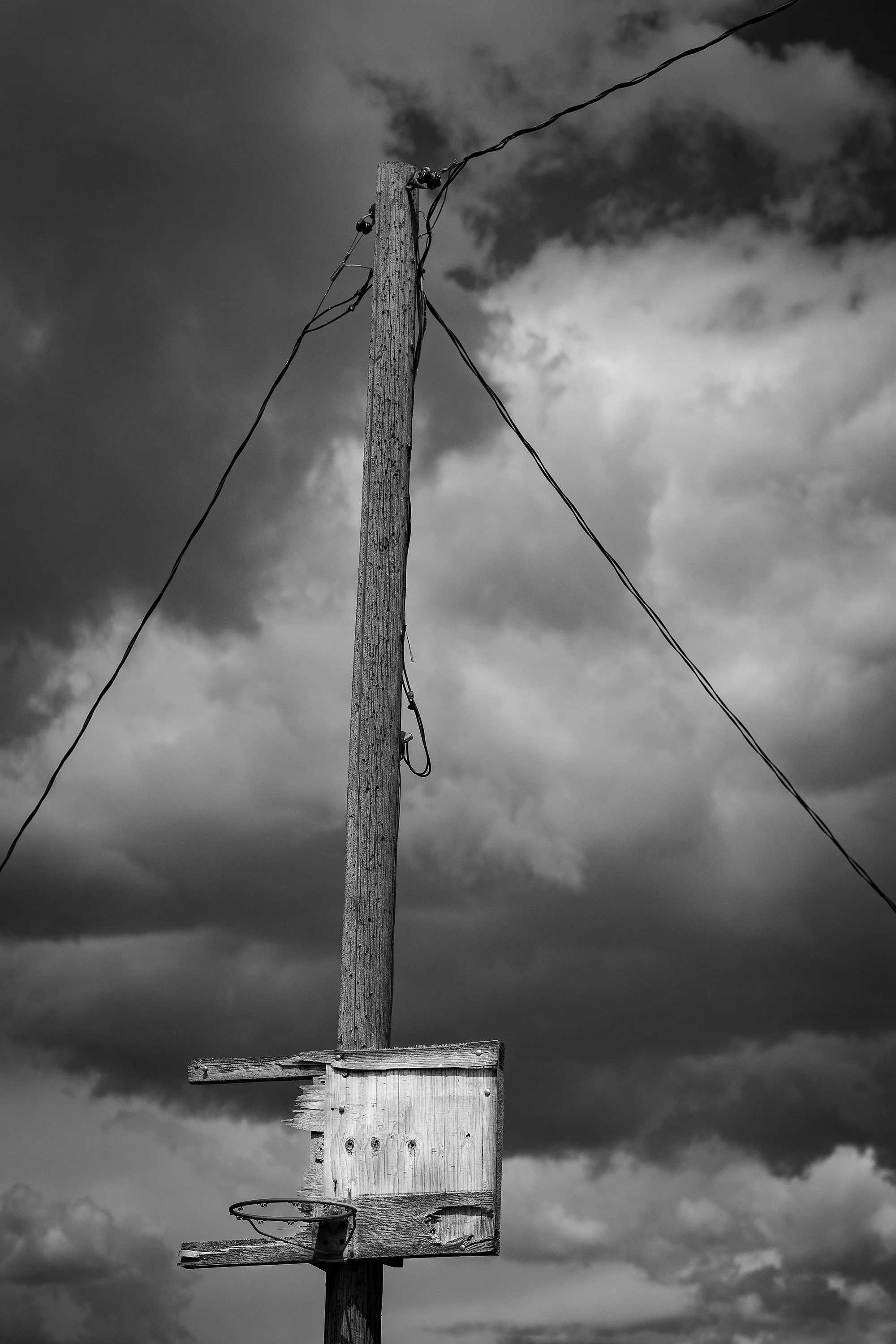
Weathered wooden basketball backboard and hoop mounted to a utility pole beneath a cloudy sky.

A makeshift backboard and rim are attached to a wooden utility pole beside the road.

The Places We Remember

Basketball changes as people get older.

The games become less frequent. The knees hurt a little more. The driveway where you learned to shoot might not belong to your family anymore.

But certain places stay remarkably clear.

You remember the sound of the ball.

You remember where the cracks were in the pavement.

You remember the spot you weren't supposed to shoot from.

You remember playing until it was too dark to see.

Maybe that's why an old basketball hoop can carry so much weight.

It's an ordinary object capable of bringing back an entire part of someone's life.

And somewhere in America, there's probably still a ball bouncing underneath one.

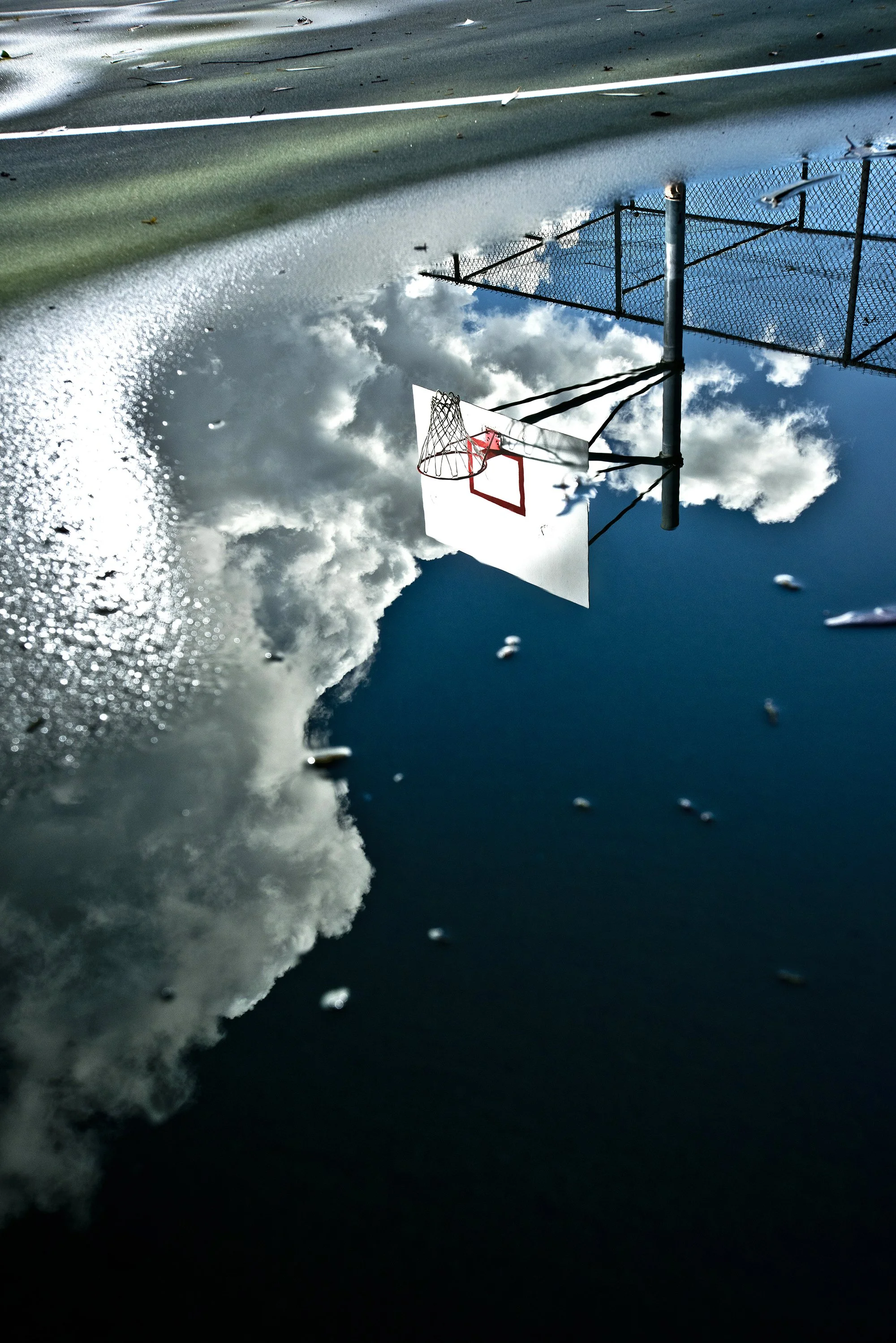
Basketball hoop and backboard reflected in water beneath a partly cloudy sky.

The basketball hoop appears in the reflection of standing water beneath the cloudy sky.

American Backcourts Fine Art Prints

A selection of photographs from American Backcourts is available as signed fine art prints.

Created from more than 15 years of photographing basketball hoops and courts across America, the collection includes rural backboards, backyard hoops, small-town courts and other places where the game becomes part of the landscape.

Explore American Backcourts Fine Art Prints

More American Basketball Photography

Basketball in Europe

Vietnam Hoops

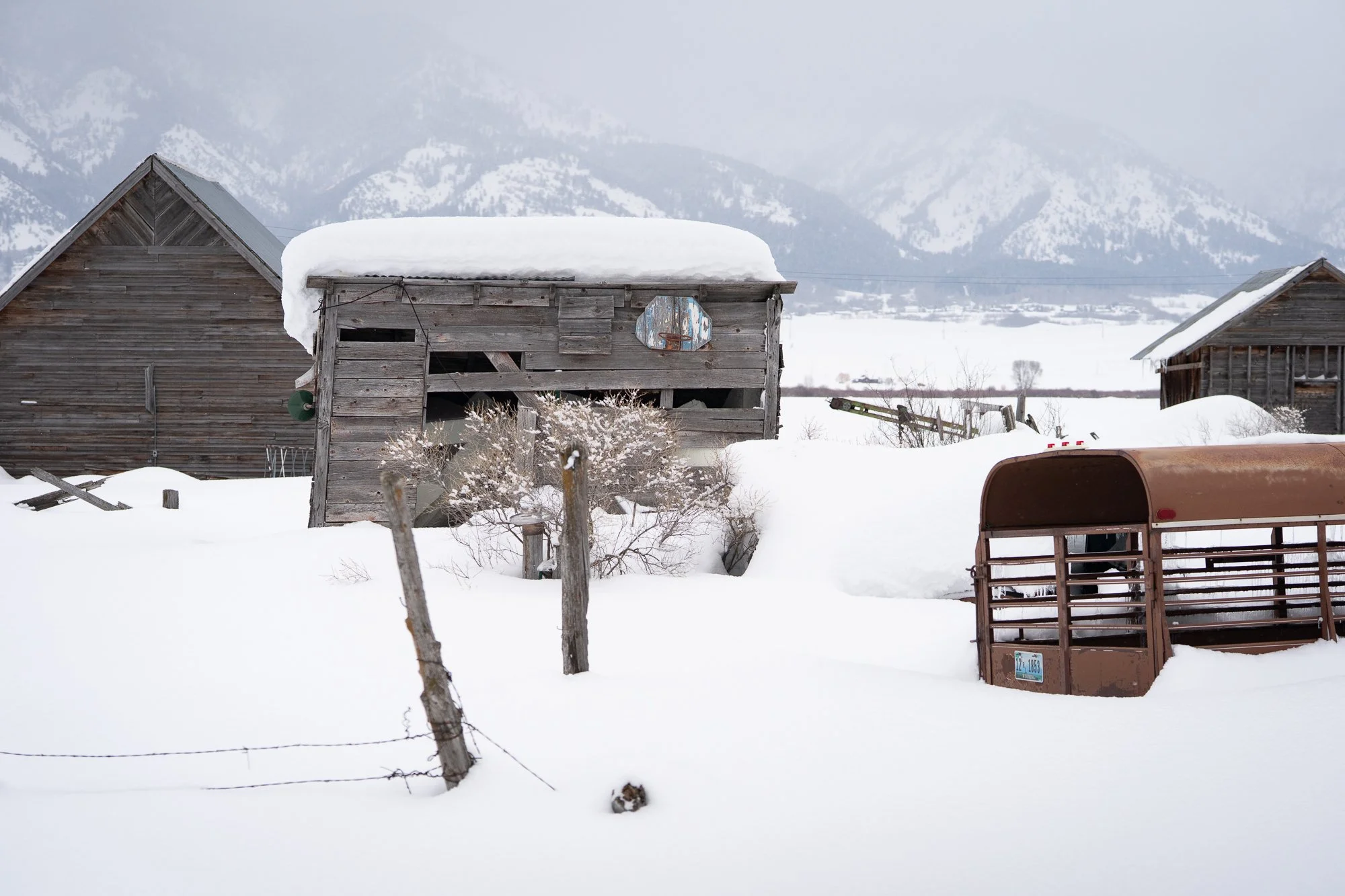
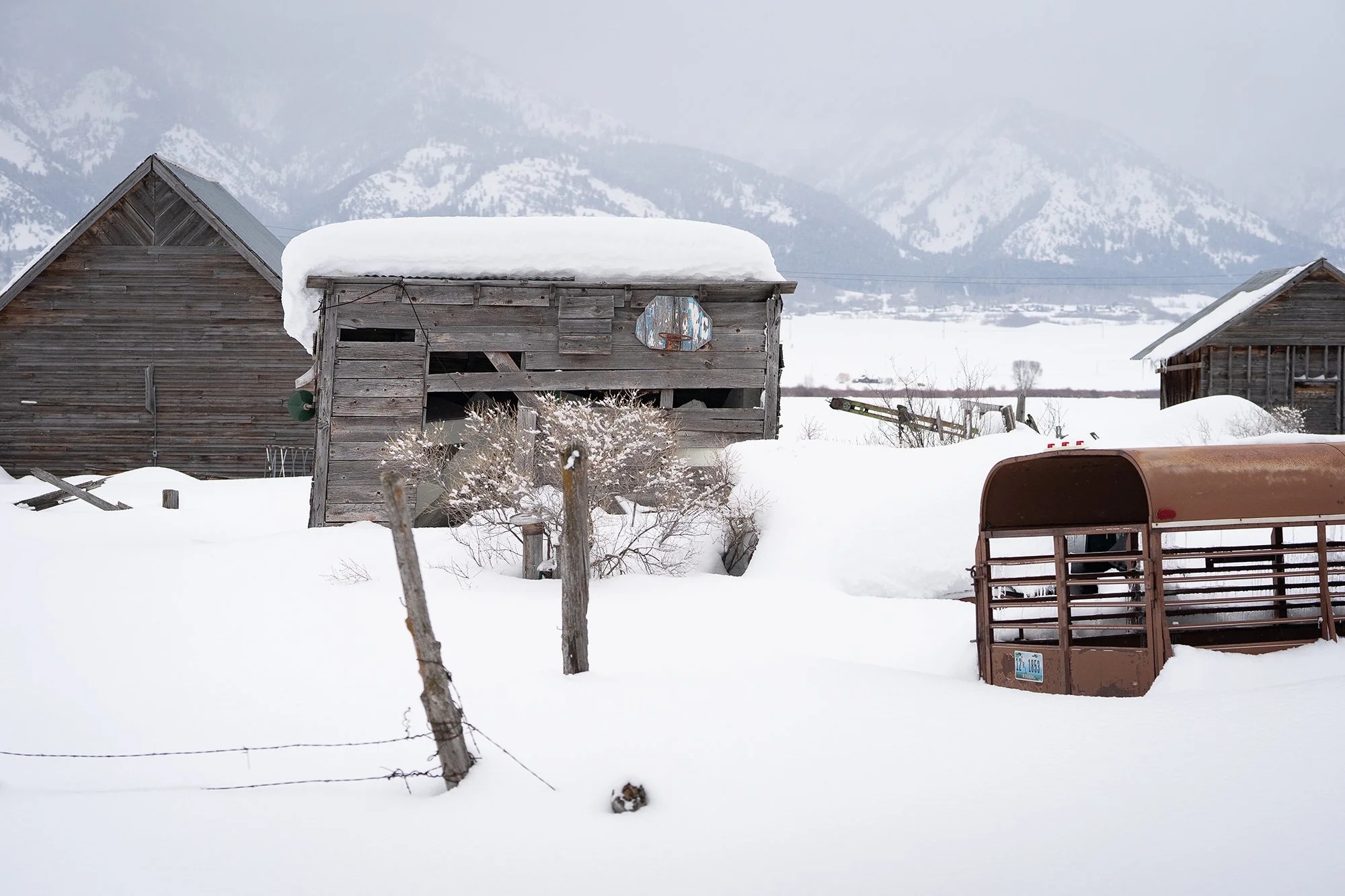
Weathered basketball hoop mounted on a wooden structure surrounded by deep snow, with barns and snow-covered mountains in the background.

Snow covers the ground around a weathered barn where a small basketball hoop remains in place through winter.

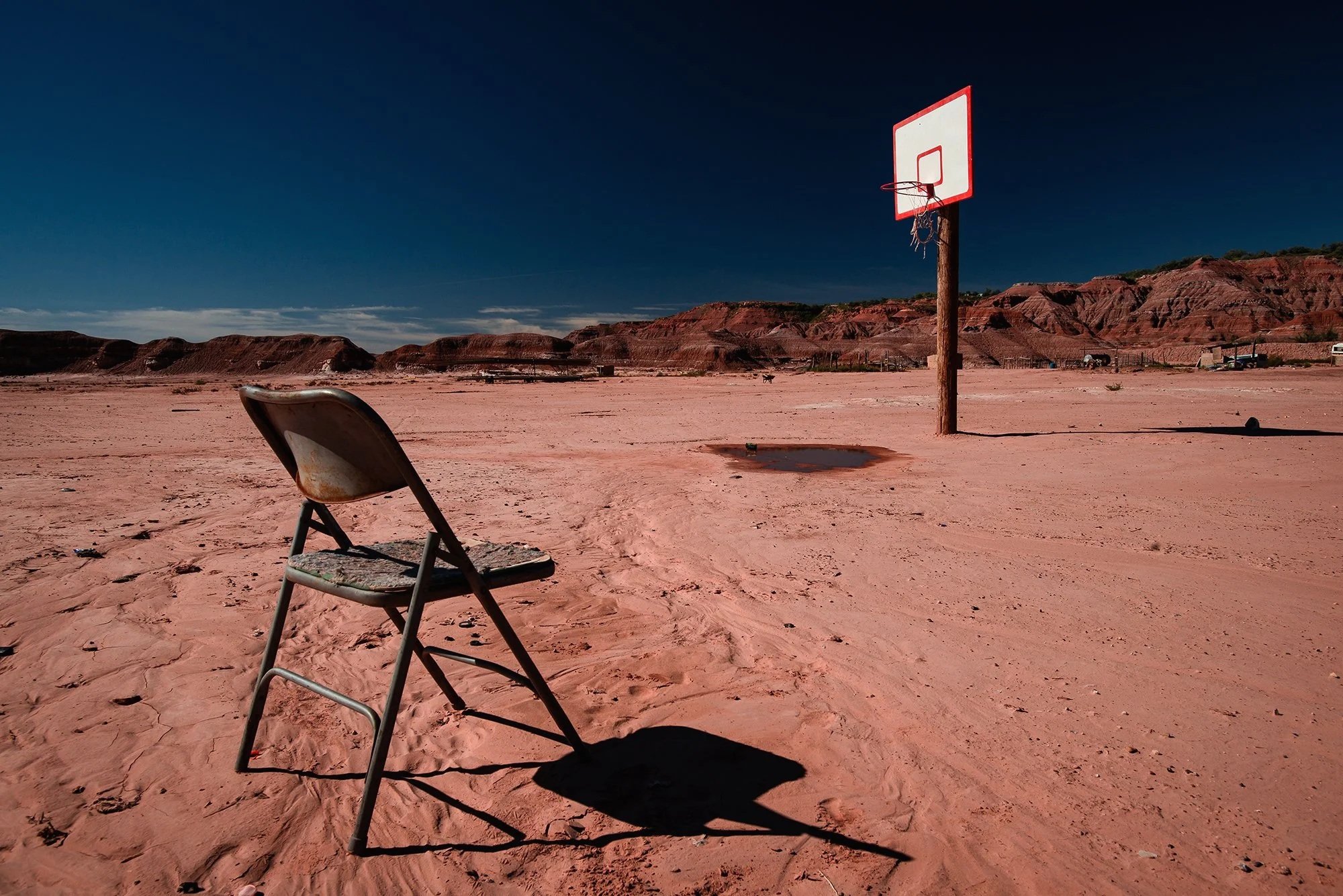
A folding chair faces the lone hoop across an open landscape, with no court, crowd or scoreboard in sight.

Pugsly's Barbershop

Pugsly’s Barbershop, 15 Years Later


Photographing a Kingston, New York Barbershop Across Three Visits

One of the unexpected benefits of working on the same photography project for more than 15 years is getting the chance to go back.

When I started Barbershops of America, the goal was fairly simple: travel around the country and photograph traditional barbershops. I certainly wasn't thinking about what it would mean to photograph the same people and places multiple times over the course of 5, 10, or 15 years.

Pugsly's in Kingston, New York is one of the places that has given me that opportunity.

I've now photographed The Nefarious Dr. Pugsly three different times during the life of this project. The first was at his original barbershop. The second and third were at Pugsly's SideShow, the second shop he opened a short distance away.

Put together, those photographs tell a different kind of story than any single visit could.

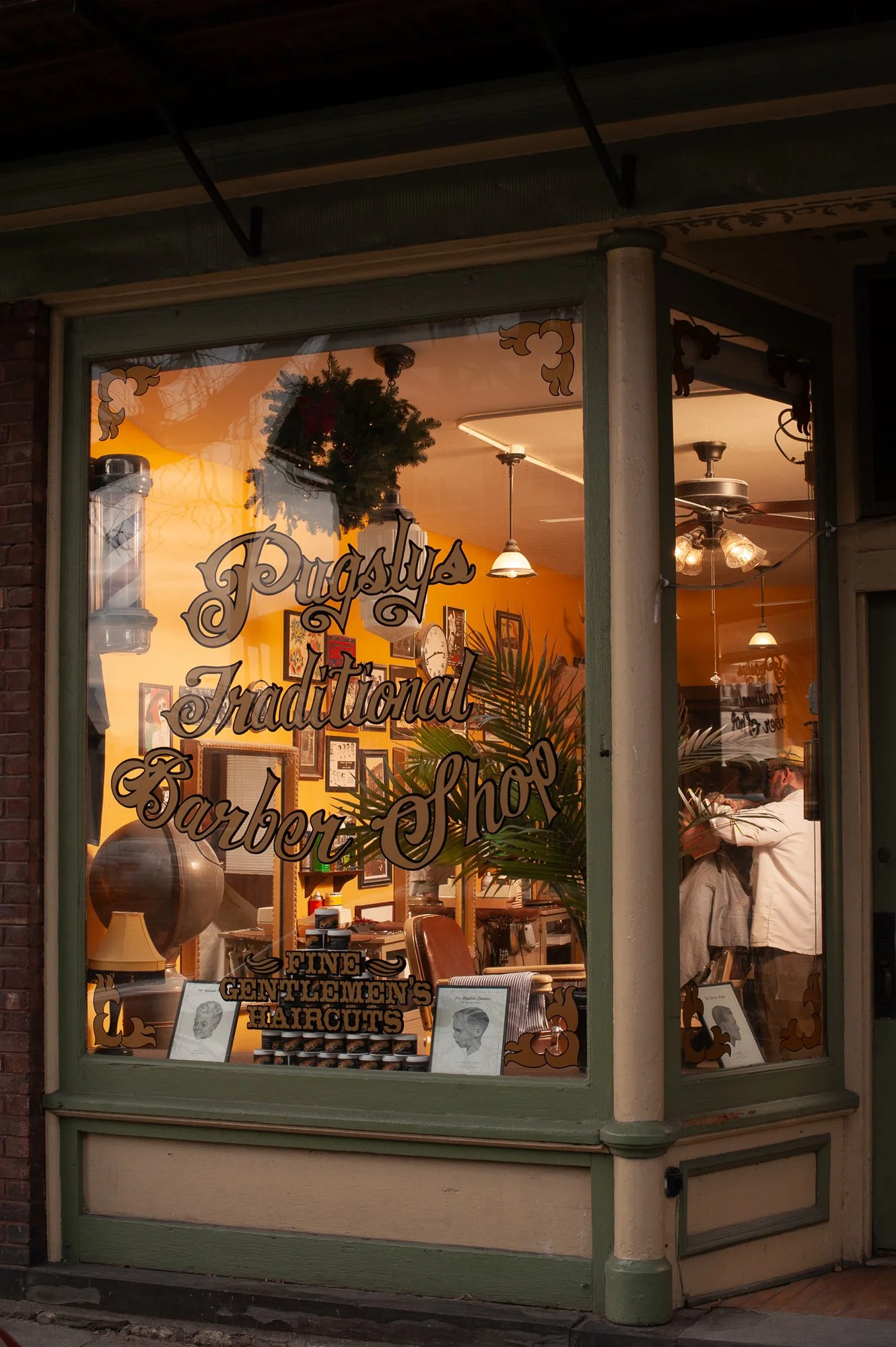
Exterior view of Pugsly’s Traditional Barber Shop in Kingston, New York, with the barbershop visible through the front windows.

Pugsly’s Traditional Barber Shop seen from the street in Kingston, New York.

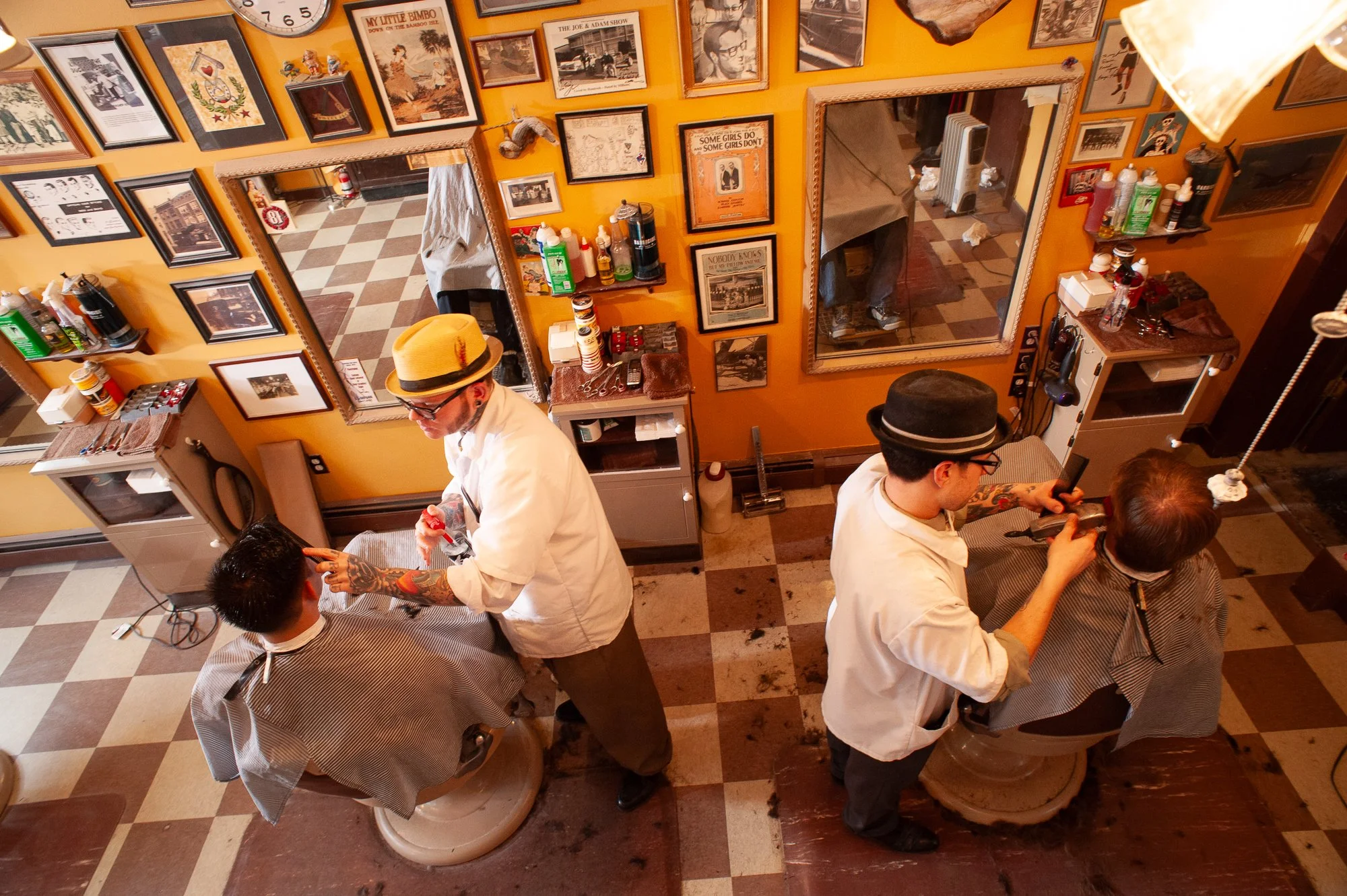
Two barbers cutting clients' hair inside Pugsly's SideShow Barbershop in Kingston, New York.

Barbers work on haircuts across the shop, with the checkered floor and decorated walls visible throughout the space.

Barber cutting a client's hair inside Pugsly's SideShow Barbershop in Kingston, New York.

Barber trims a client's hair beside the front window, surrounded by the working details of the shop.

The First Visit: Pugsly’s Original Barbershop

I first met Pugsly sometime around 2011. I honestly don't remember exactly how we connected, which is true of quite a few relationships that came out of the early years of this project. What I do remember is him and the shop.

At that point I had already photographed plenty of old neighborhood barbershops, but Pugsly's felt different. It had all the visual references of a traditional American barbershop, but it wasn't an old shop that had simply survived unchanged for decades.

Pugsly had built his place very deliberately.

He was part of a generation of barbers who clearly respected the history of the trade but weren't interested in simply preserving it. There was an obsessive attention to the space, the tools, the haircut, and the experience of being there.

Years later, when I interviewed him, Pugsly described his intention as creating a traditional walk-in gentleman's barbershop with a 1940s influence, while making the quality of the haircut and the experience equally important.

That philosophy was visible before I ever knew how to put it into words.

And it made the shop an important part of Barbershops of America.

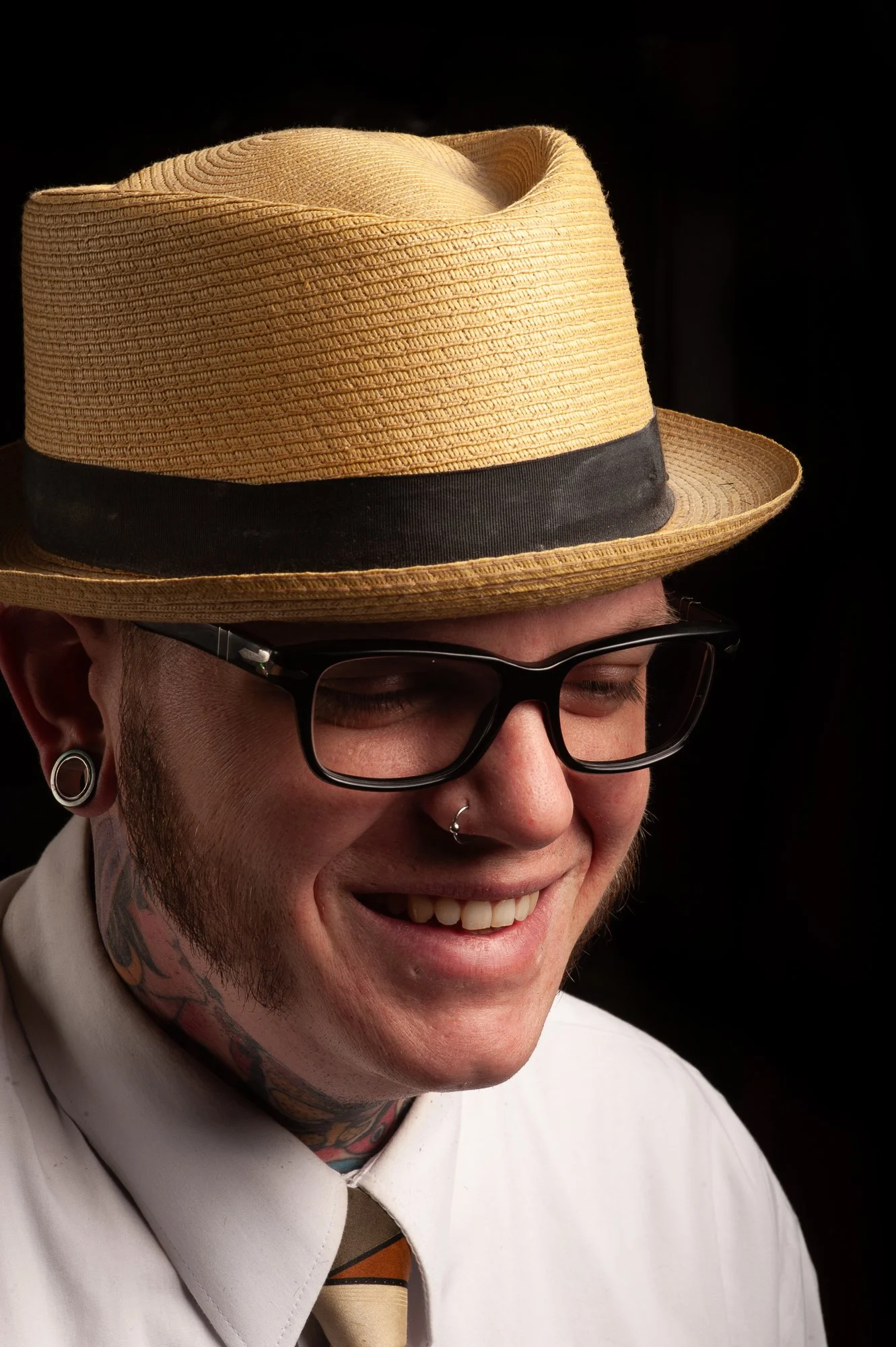
Barber portrait at Pugsly's Barbershop in Kingston, New York, wearing a straw hat and glasses.

Pugsly smiling in his straw hat and glasses during a portrait inside the shop.

Vintage taxidermy and barber shop details fill the interior of Pugsly’s SideShow in Kingston, New York.

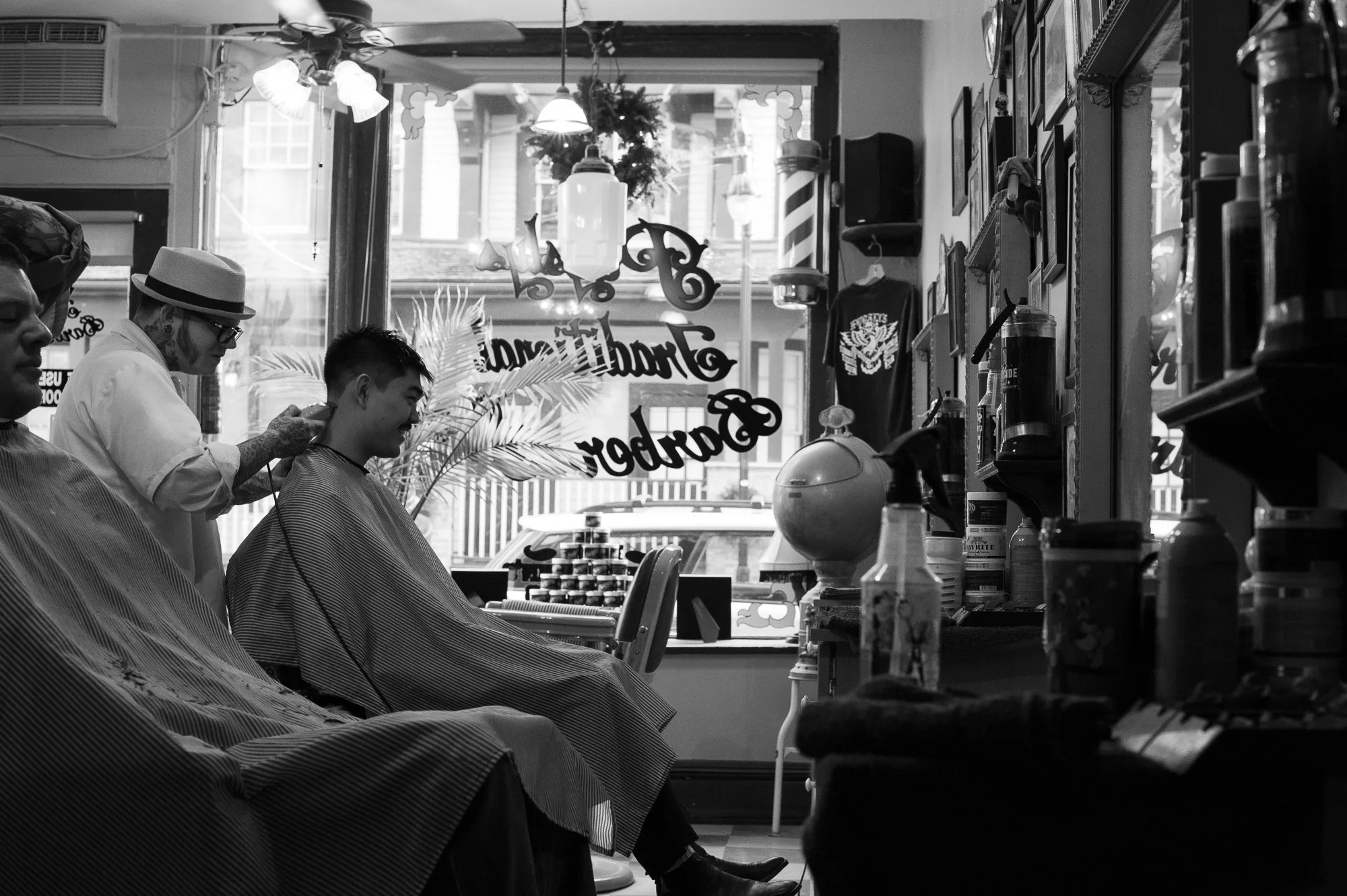
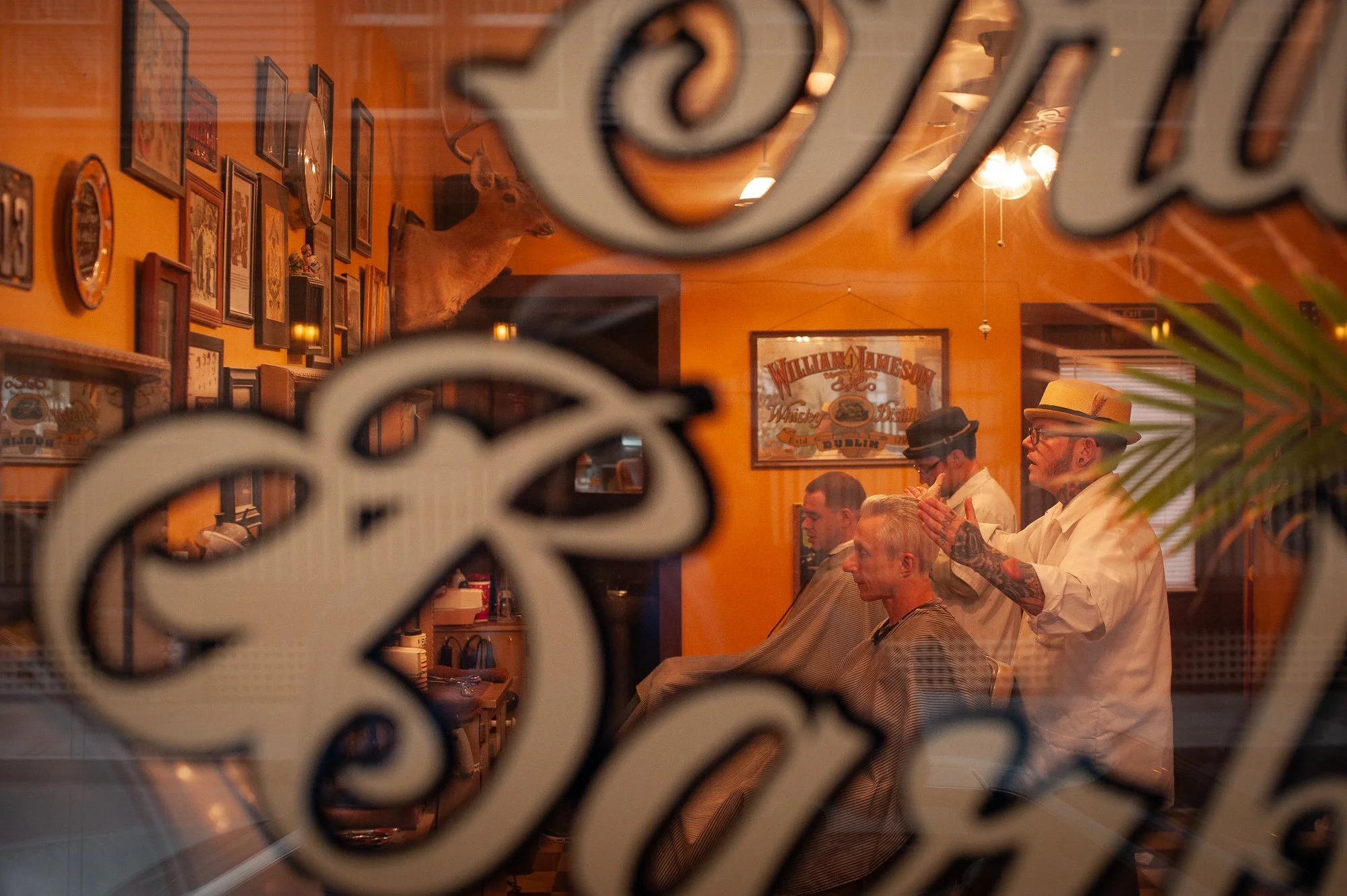
Through the front window, a haircut is underway inside Pugsly’s Barbershop in Kingston, New York.

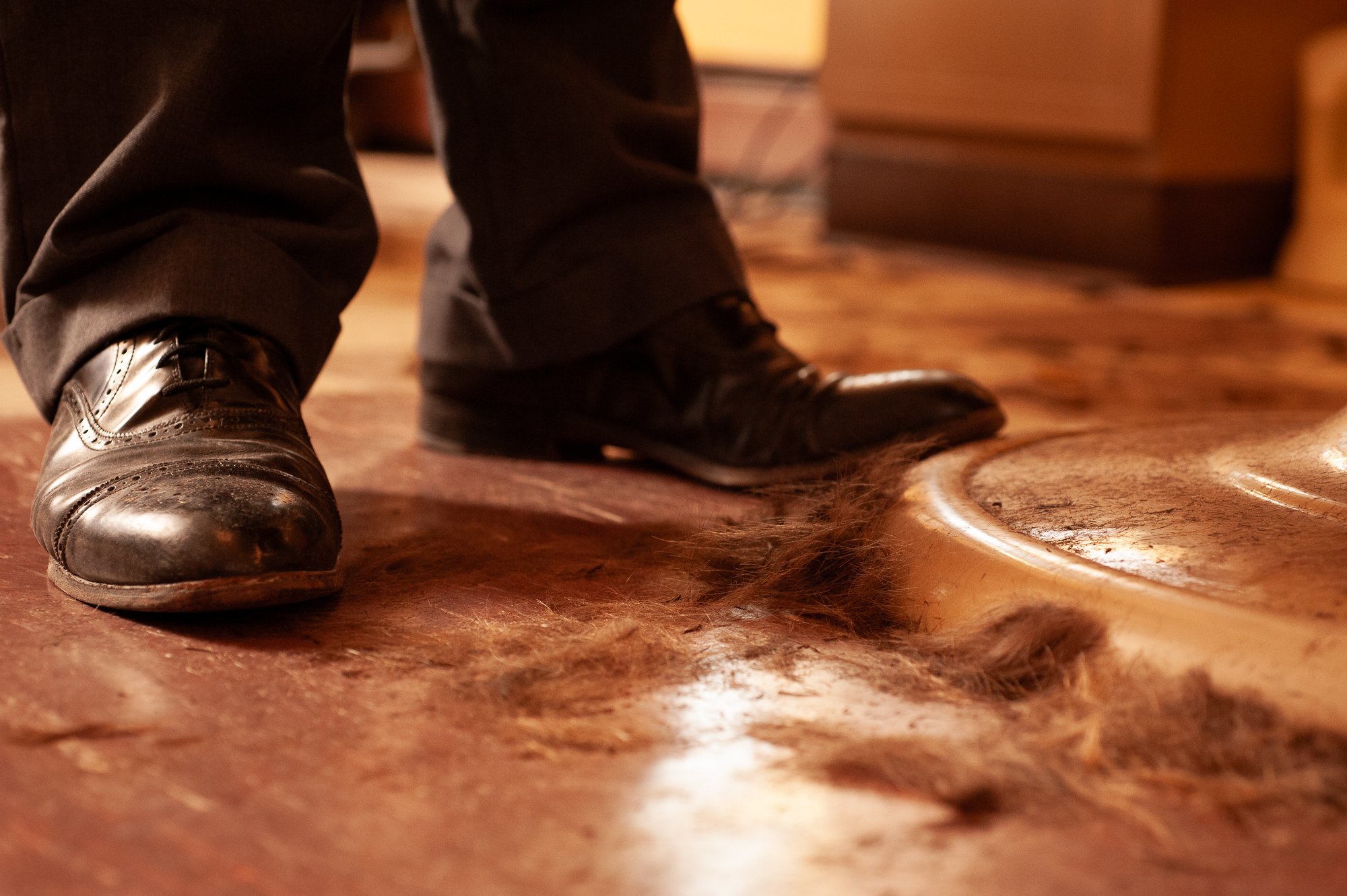
Hair clippings on the floor beside a barber's shoes and chair at Pugsly's SideShow Barbershop.

Hair clippings on the floor capture a small detail from a day of work inside the shop.

Barber cutting a client's hair inside Pugsly's SideShow Barbershop in Kingston, New York.

A haircut in progress at Pugsly's Barbershop, surrounded by the shop's photographs, artwork, and vintage decor.

Interior of Pugsly's SideShow Barbershop showing a vintage barber chair and decorated window.

Warm light, vintage details, and a barber chair waiting for the next client.

A Second Shop: Pugsly’s SideShow

By the time I returned, Pugsly had opened another shop.

Pugsly's SideShow wasn't intended to be a copy of the original. It grew out of a practical problem with the first shop: people were waiting too long.

The original was built around the traditional walk-in model. SideShow was appointment-based and gave Pugsly an opportunity to create something slightly different.

It also looked different.

The original shop leaned heavily into the visual language of the classic American barbershop. SideShow was more eccentric and personal. It still had one foot planted firmly in barbering tradition, but there was more room for Pugsly's other influences: cars, motorcycles, custom culture, music, signs, paint, and all the strange objects that somehow make perfect sense when they're together in the same room.

I photographed SideShow for the first time during the final push for the Barbershops of America book.

The timing wasn't exactly ideal.

I was crossing the country and the only opportunity I had to photograph the shop was Christmas Eve. Pugsly opened the place anyway.

That's the kind of thing I remember as much as the photographs.

Barber stations and vintage decor line the interior of Pugsly’s barbershop in Kingston, New York.

Inside Pugsly’s Sideshow, vintage decor and barber stations fill the Kingston, New York shop.

Vintage barber chair inside Pugsly’s Traditional Barber Shop.

Taxidermy and vintage barber shop details surround the entryway inside Pugsly’s SideShow.

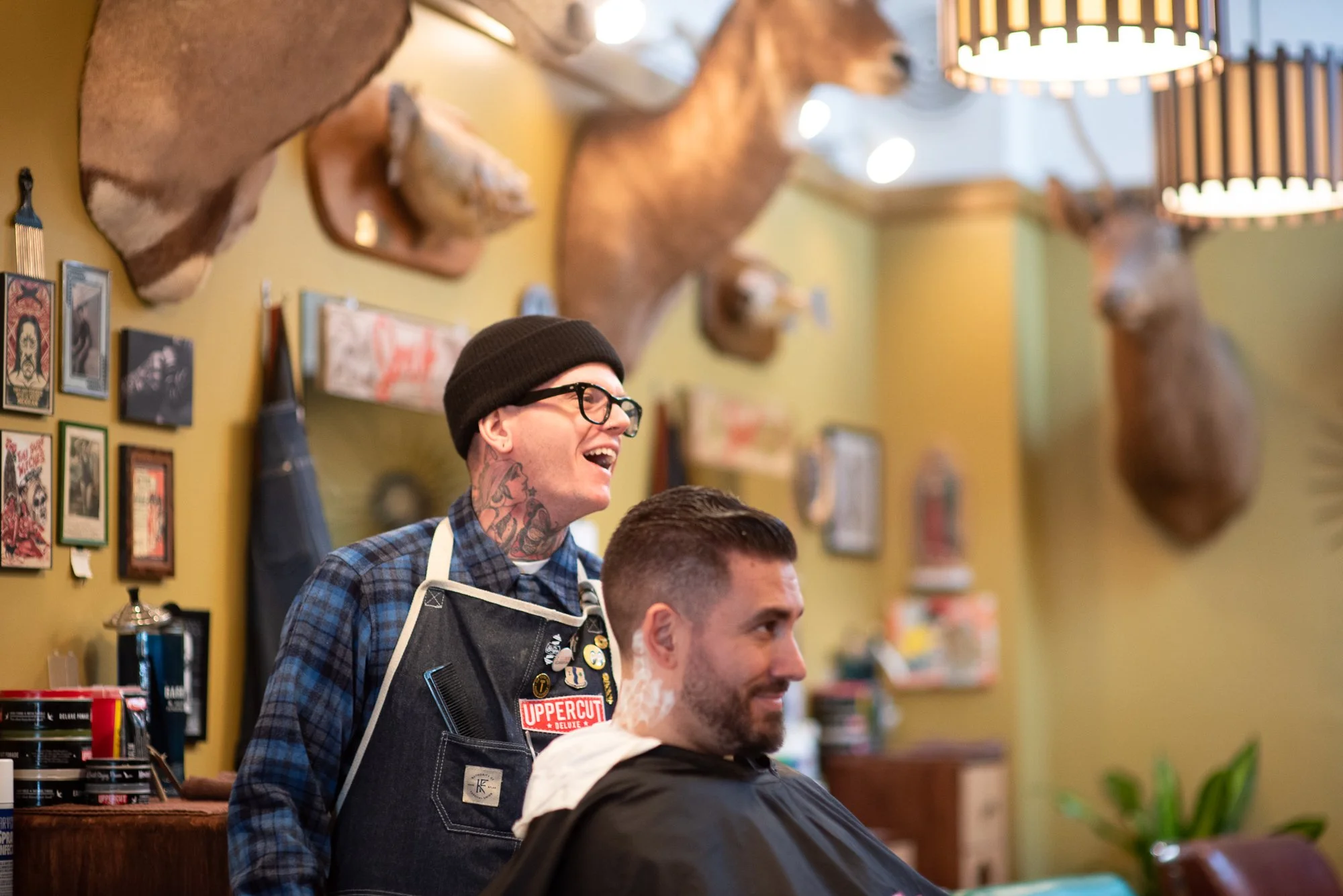
Pugsly shares a laugh with a client during a haircut at his barbershop in Kingston, New York.

Between cuts, there’s always time for a laugh.

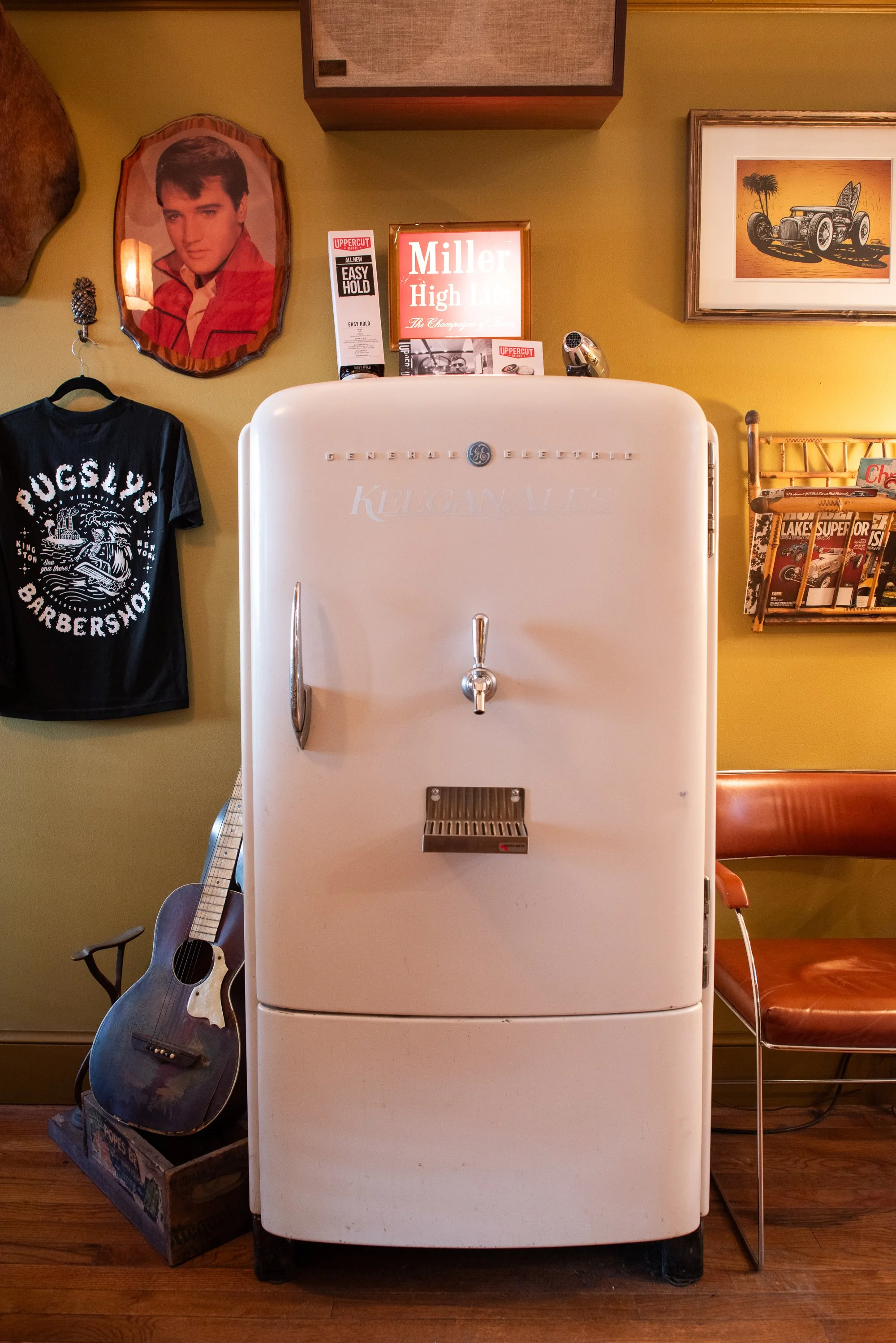
Vintage interior details at Pugsly's SideShow barbershop in Kingston, New York

Vintage kegerator and memorabilia fill a corner inside Pugsly’s SideShow.

Going Back Again

In 2026, I found myself back in Kingston.

By this point, Barbershops of America had been part of my life for more than 15 years. I had photographed roughly 250 barbershops across all 50 states, published a book, driven an unreasonable number of miles, and watched plenty of the places I photographed disappear.

So I went back to SideShow.

This was the third time I had photographed Pugsly and the second time I had photographed this particular shop.

There was no need to recreate the photographs from the previous visits. That isn't really the point.

The point was to photograph what was there now.

A barbershop isn't a movie set. Things move. Objects accumulate. Chairs get worn. Walls fill up. People get older. Businesses evolve. Something that seemed completely ordinary during the first visit can become significant simply because it is still there years later.

And things that seemed permanent sometimes disappear.

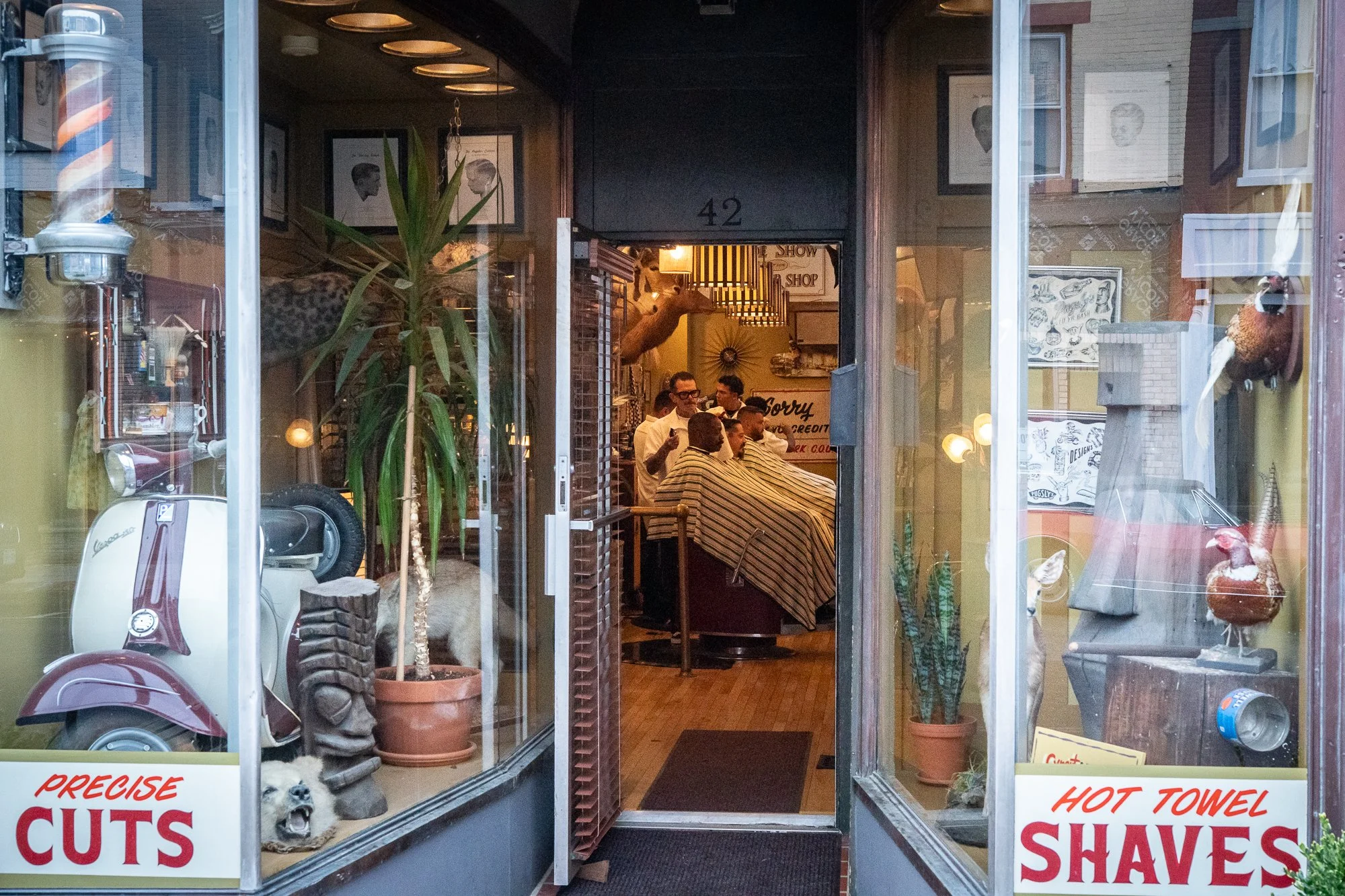
Barbers and clients inside Pugsly’s Barbershop in Kingston, New York, viewed through the front entrance.

Seen from the street, barbers work with clients inside Pugsly’s Sideshow.

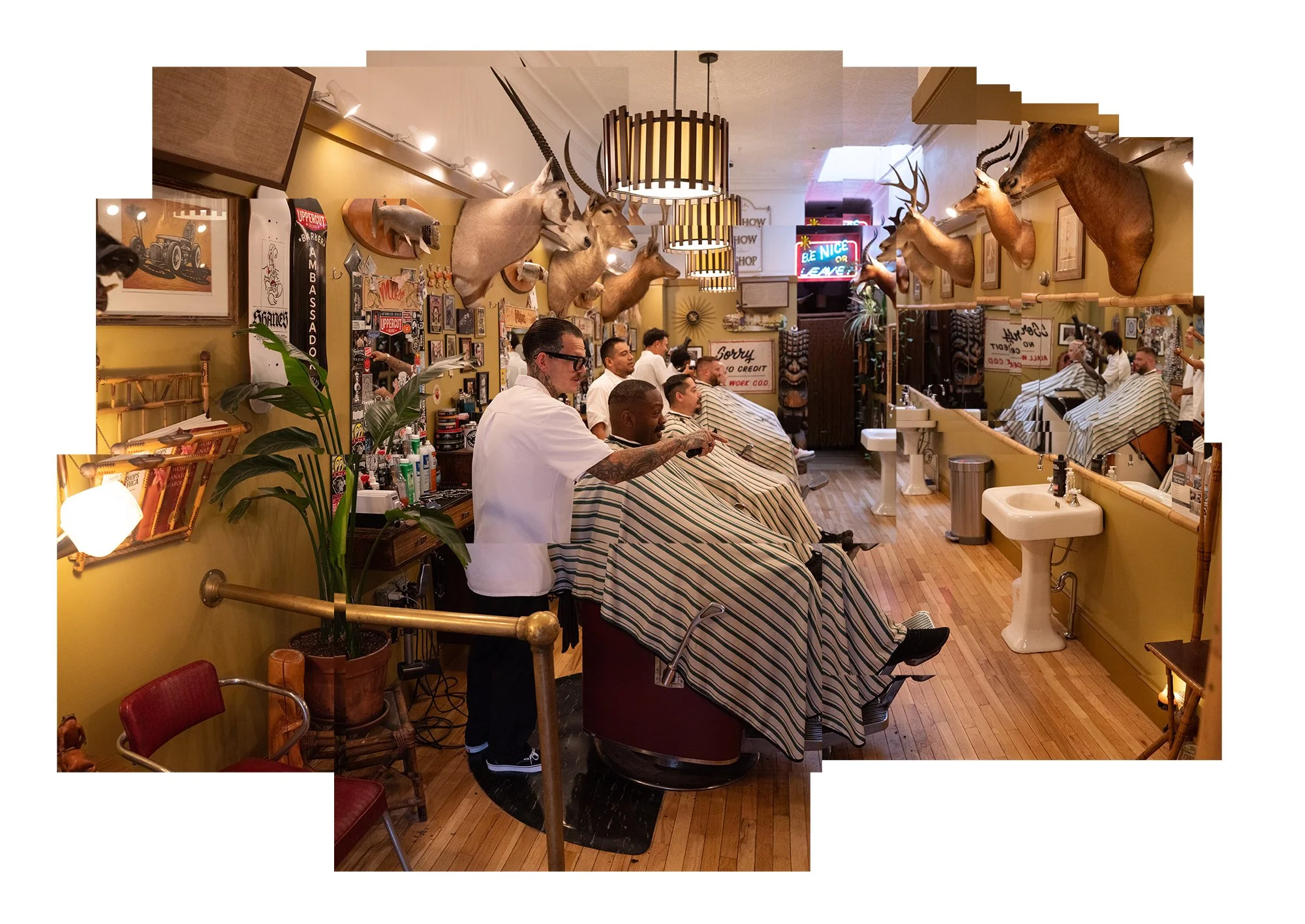
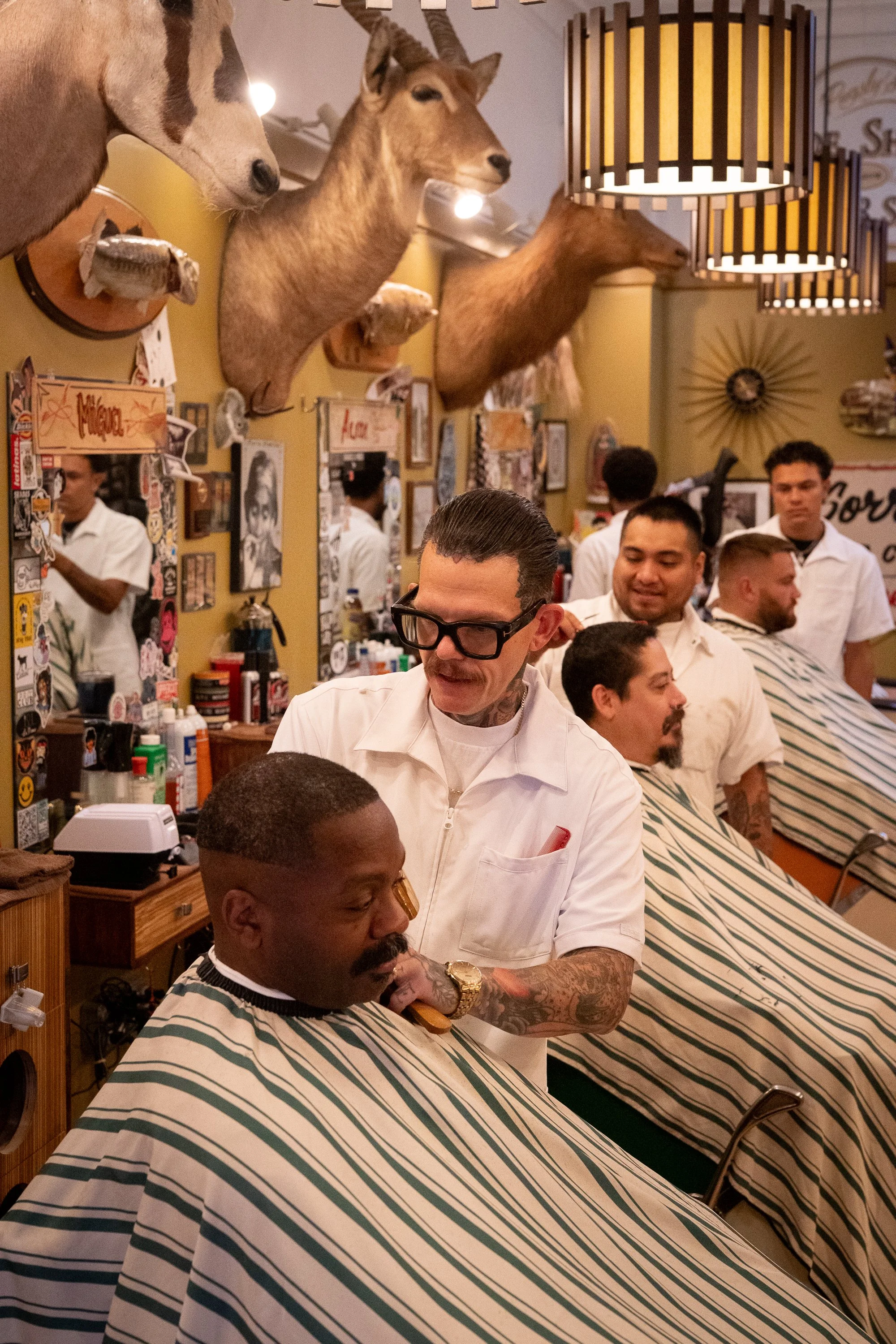
A collage of the Pugsly's barbershop interior showing barbers working with clients, barber chairs, mirrors, plants, and mounted animal displays.

A busy day at Pugsly's Sideshow - barbers working across the shop's row of chairs and detailed interior.

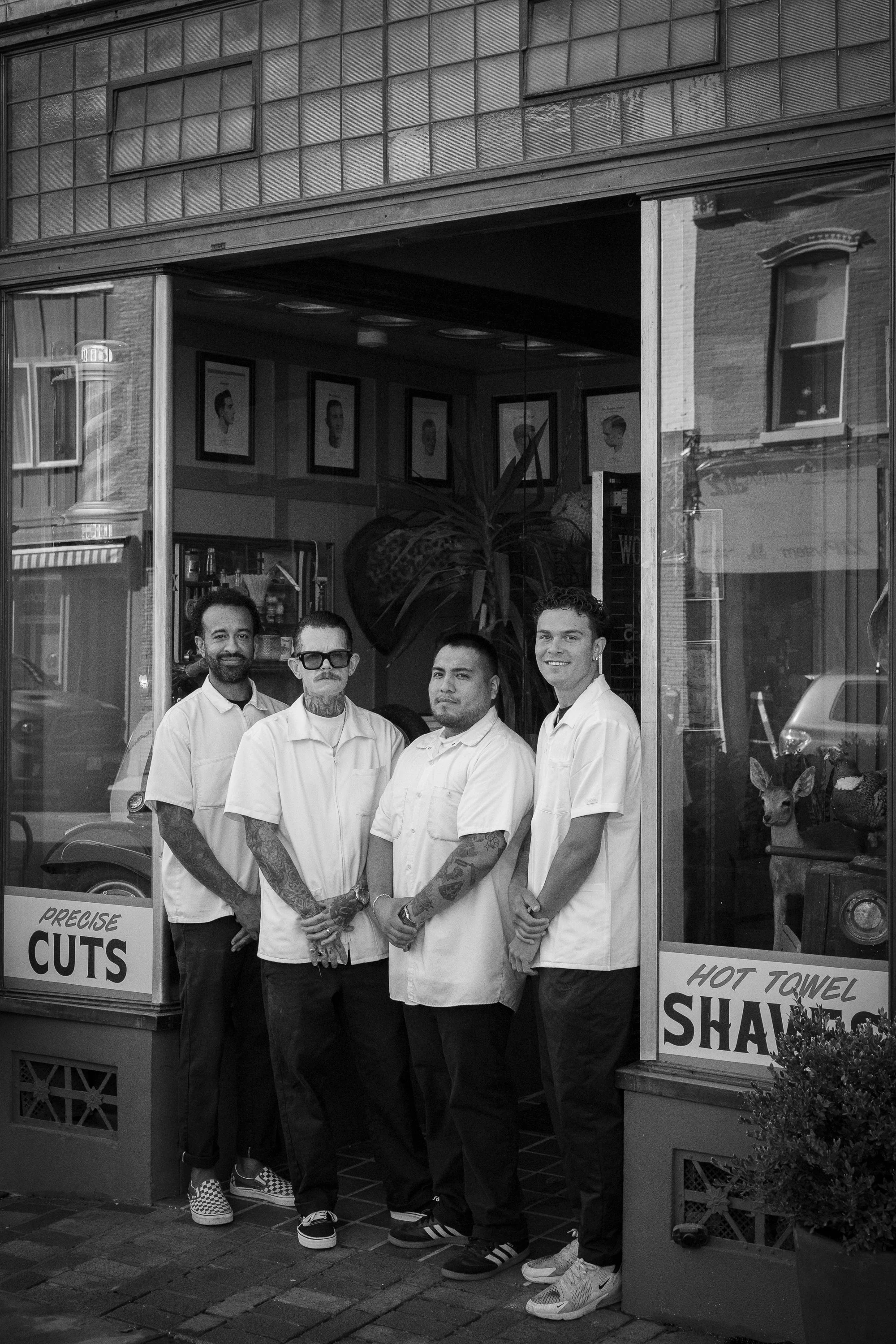
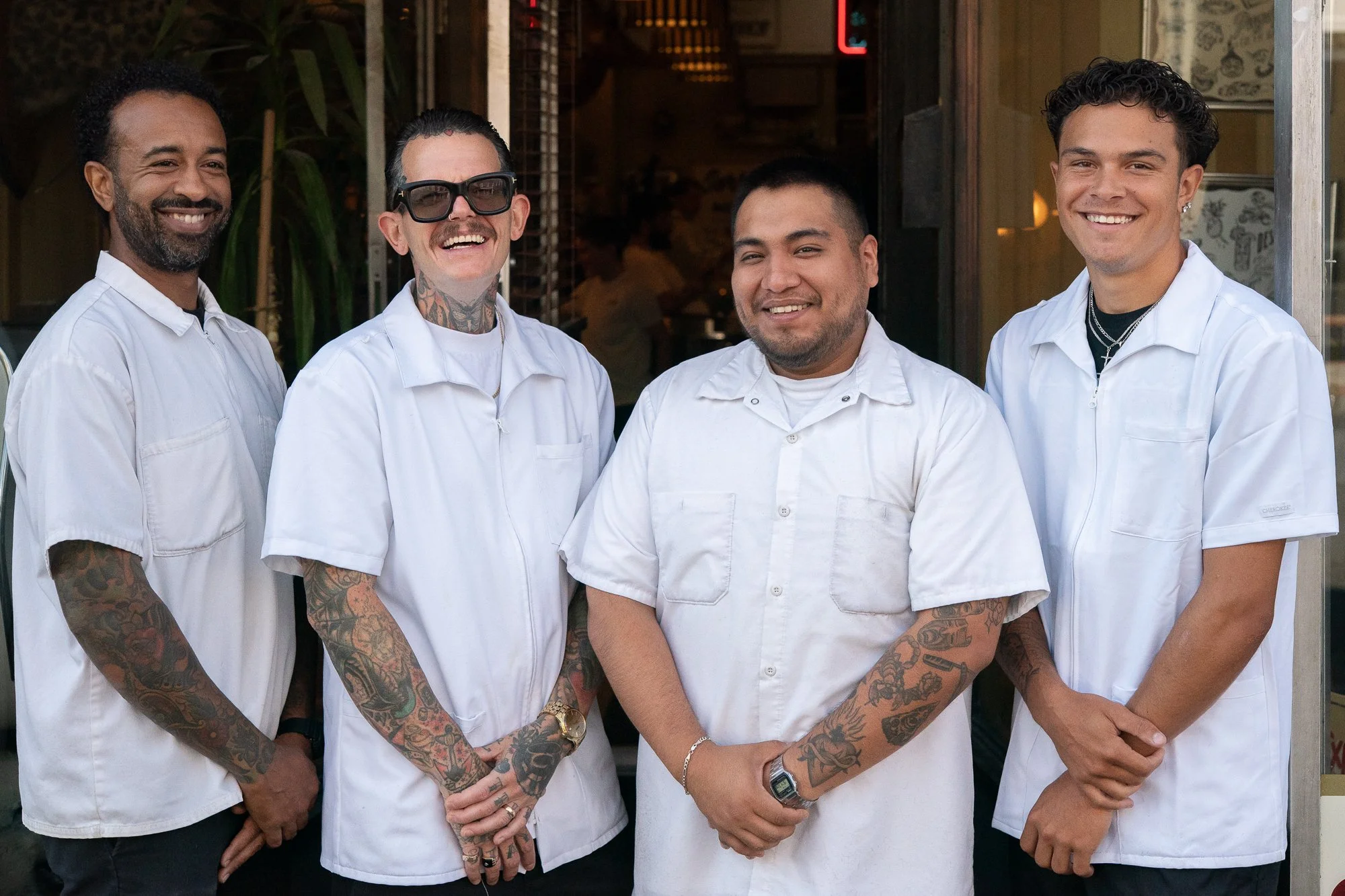
Four barbers standing together outside Pugsly's barbershop in matching white work shirts.Four barbers standing together outside Pugsly's barbershop in matching white work shirts.

The Pugsly's team outside the shop.

What 15 Years Does to a Photograph

This is the part of Barbershops of America that has become increasingly interesting to me.

When I started the project, I was primarily documenting places.

Now I'm documenting time.

A photograph of a barbershop made today can be interesting because of the people, light, architecture, objects, or activity happening inside the frame. But make another photograph of that place ten years later and suddenly the first photograph contains information you didn't realize you were recording.

The haircut on the wall. The price board. The magazines. The barber chair. The person sitting in it. The businesses next door. The way people dressed. The objects that disappeared and the ones that somehow never moved.

None of those things necessarily feel historic when you're standing there.

Time does that work for you.

That's why returning to Pugsly's matters to me.

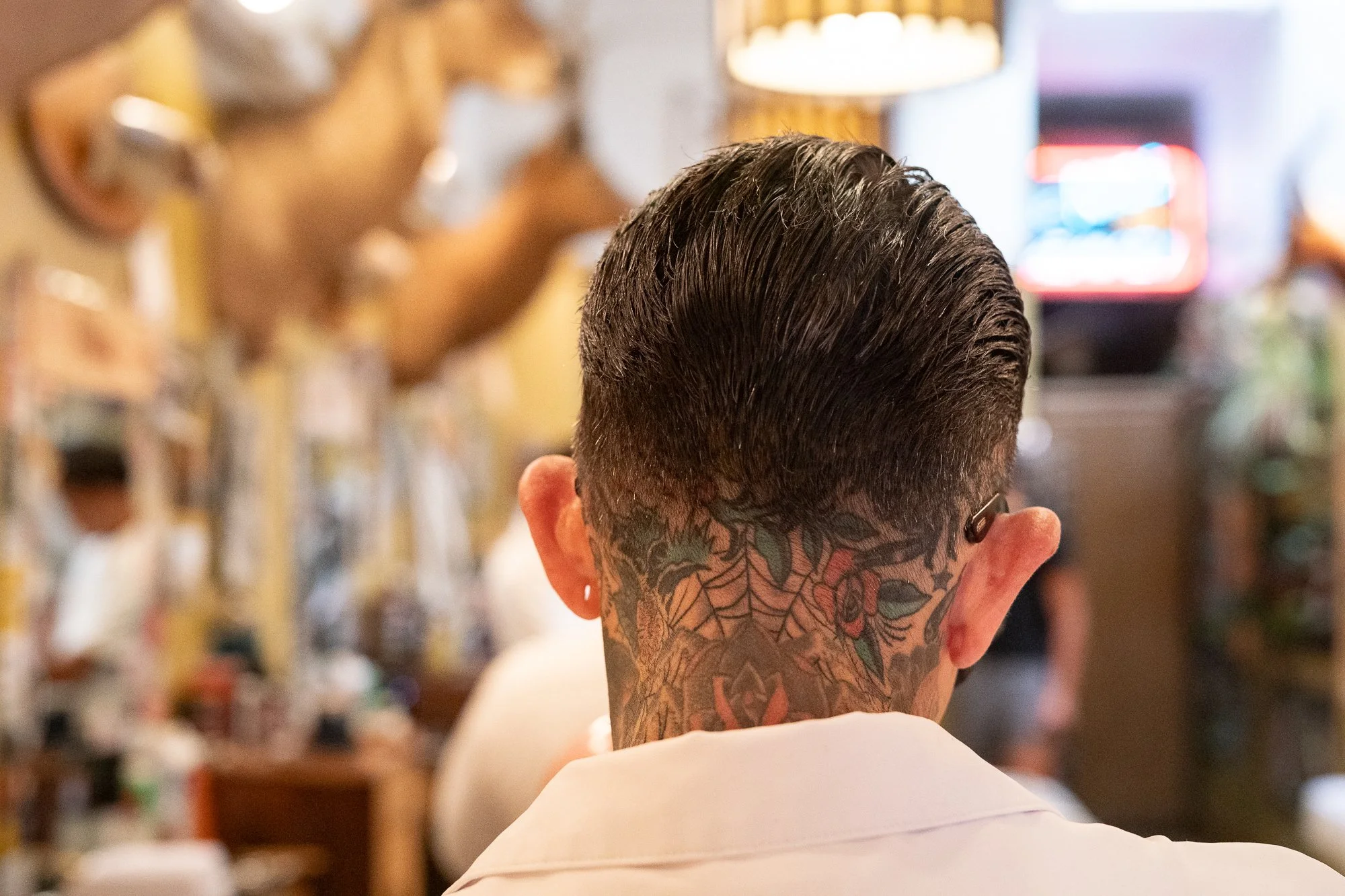
Close-up of a barber’s slicked-back haircut and neck tattoo as he works inside Pugsly’s SideShow Barbershop in Kingston, New York.

Slicked-back hair and a tattooed neck as Pugsly works behind the chair.

Barbers in white uniforms trim clients’ hair inside Pugsly’s Barbershop.

Haircut underway at Pugsly's as several barbers work throughout the shop.

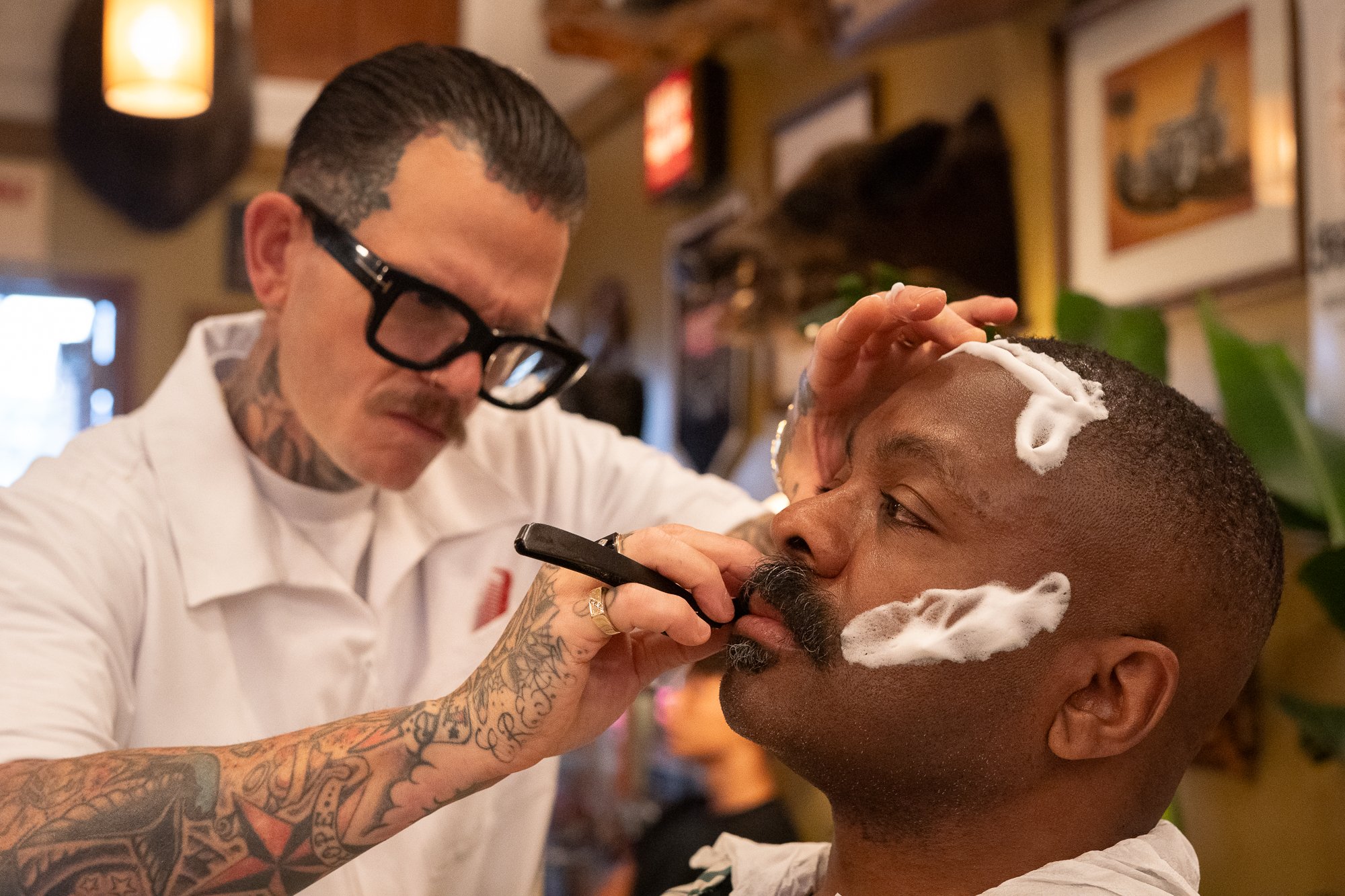
A barber in a white uniform uses a straight razor to shave a client's beard at Pugsly's barbershop.

Straight-razor shaving in progress inside the barbershop.

More Than a Collection of Barbershops

For years I described Barbershops of America as a project about traditional barbershops across the United States.

That's still true, but after 15 years it feels incomplete.

The project has become a photographic record of a particular piece of American culture during a period when that culture has changed dramatically.

Some shops I've photographed have closed. Some barbers have retired or died. Others have expanded, moved, or passed their chairs to another generation. New shops have appeared that borrow heavily from traditions that nearly disappeared a generation earlier.

And a handful of places have allowed me to come back.

Those repeat visits are becoming some of the most valuable photographs in the archive because they allow the project to show something a single photograph can't:

what stayed, what changed, and what disappeared.

Pugsly's is now part of that story.

And hopefully this wasn't the last time I photograph it.

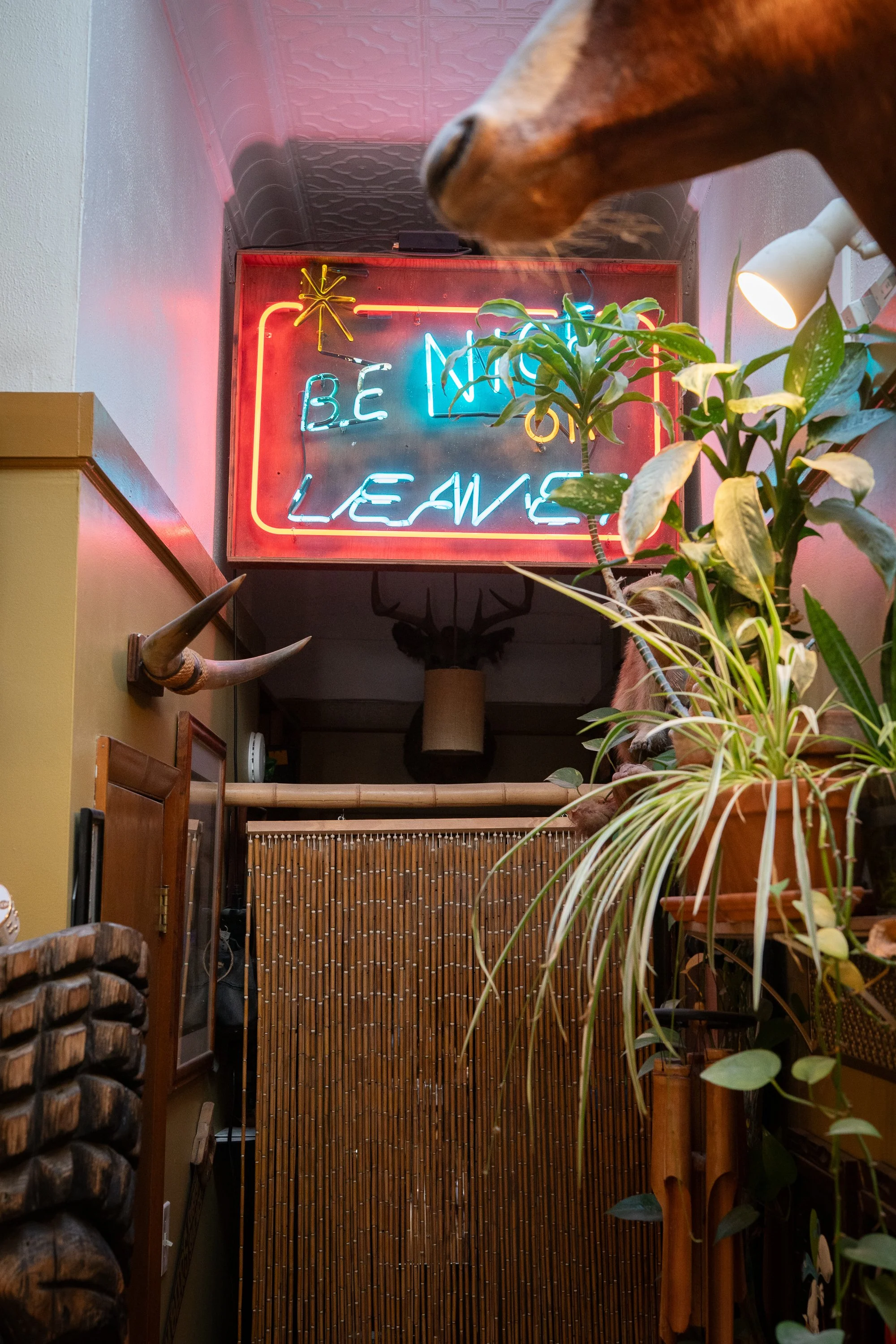
Neon “Be Nice or Leave” sign surrounded by plants and vintage barbershop decor.

The “Be Nice or Leave” neon adds another layer to the shop’s character.

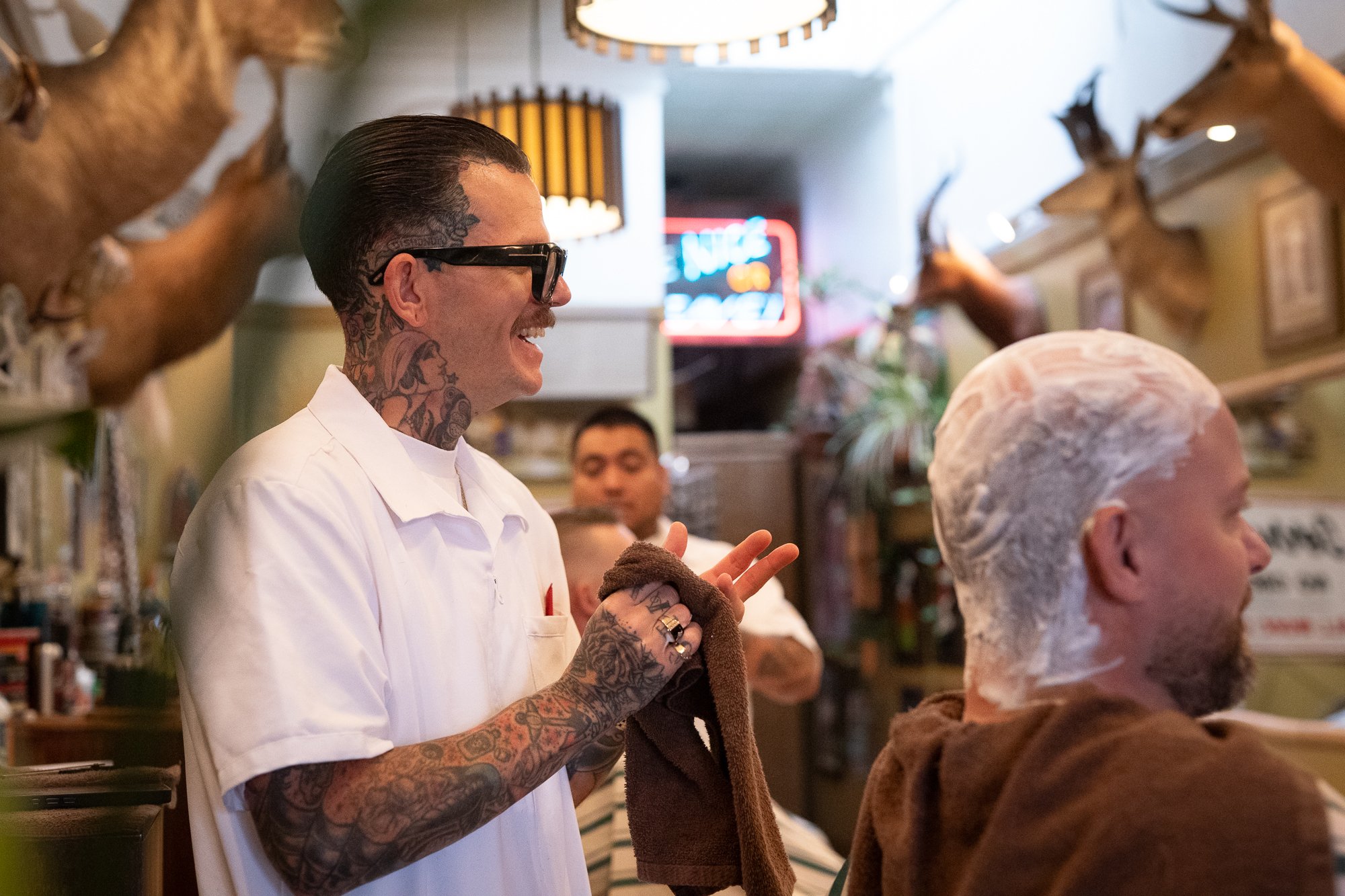
Barber holding a hot towel while working with a client during a grooming service inside the barbershop.

Between haircuts, conversation and laughter keep the shop moving.

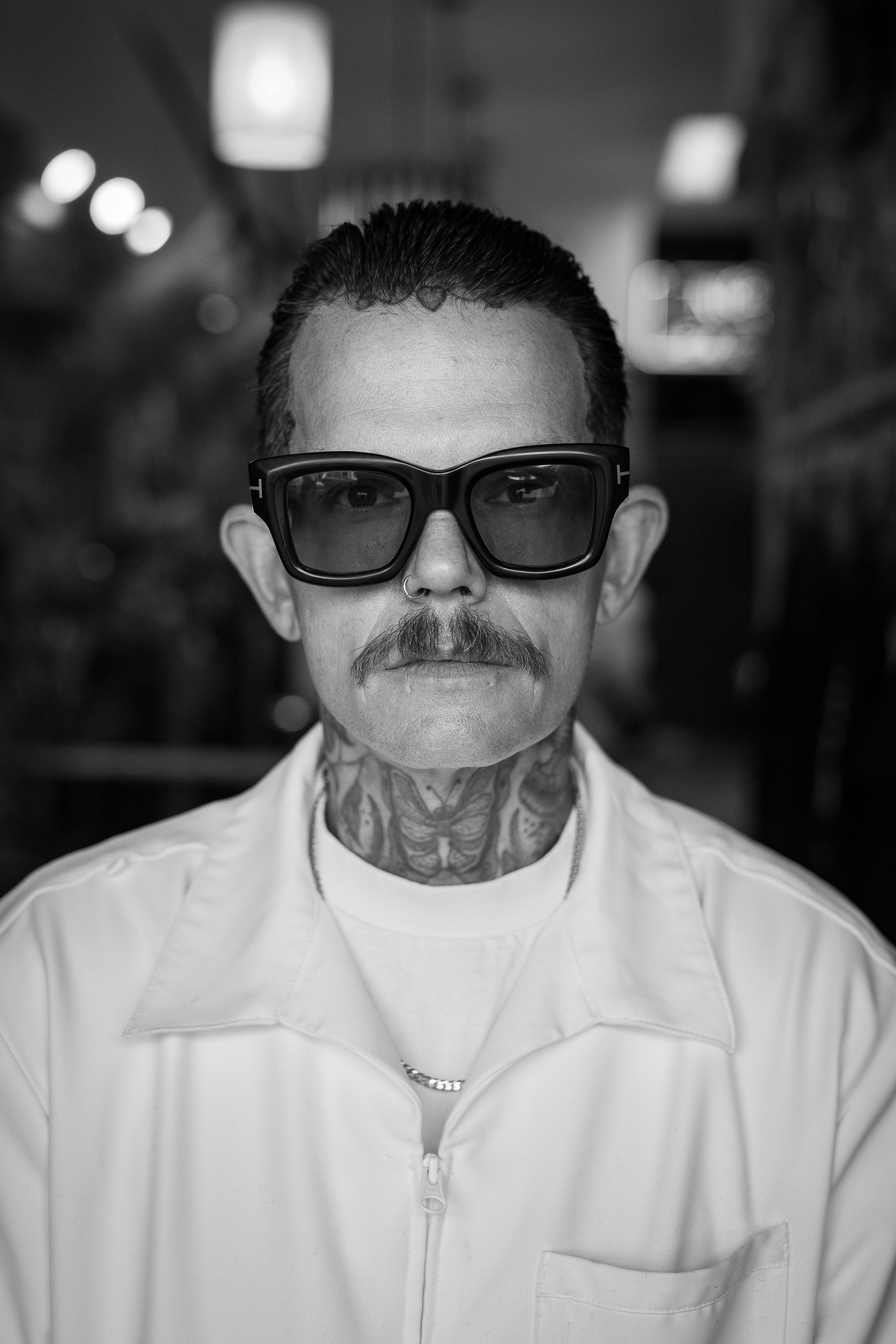
Pugsly, owner and barber at Pugsly’s SideShow Barbershop in Kingston, New York.

Portrait of Pugsly inside his Kingston barbershop.

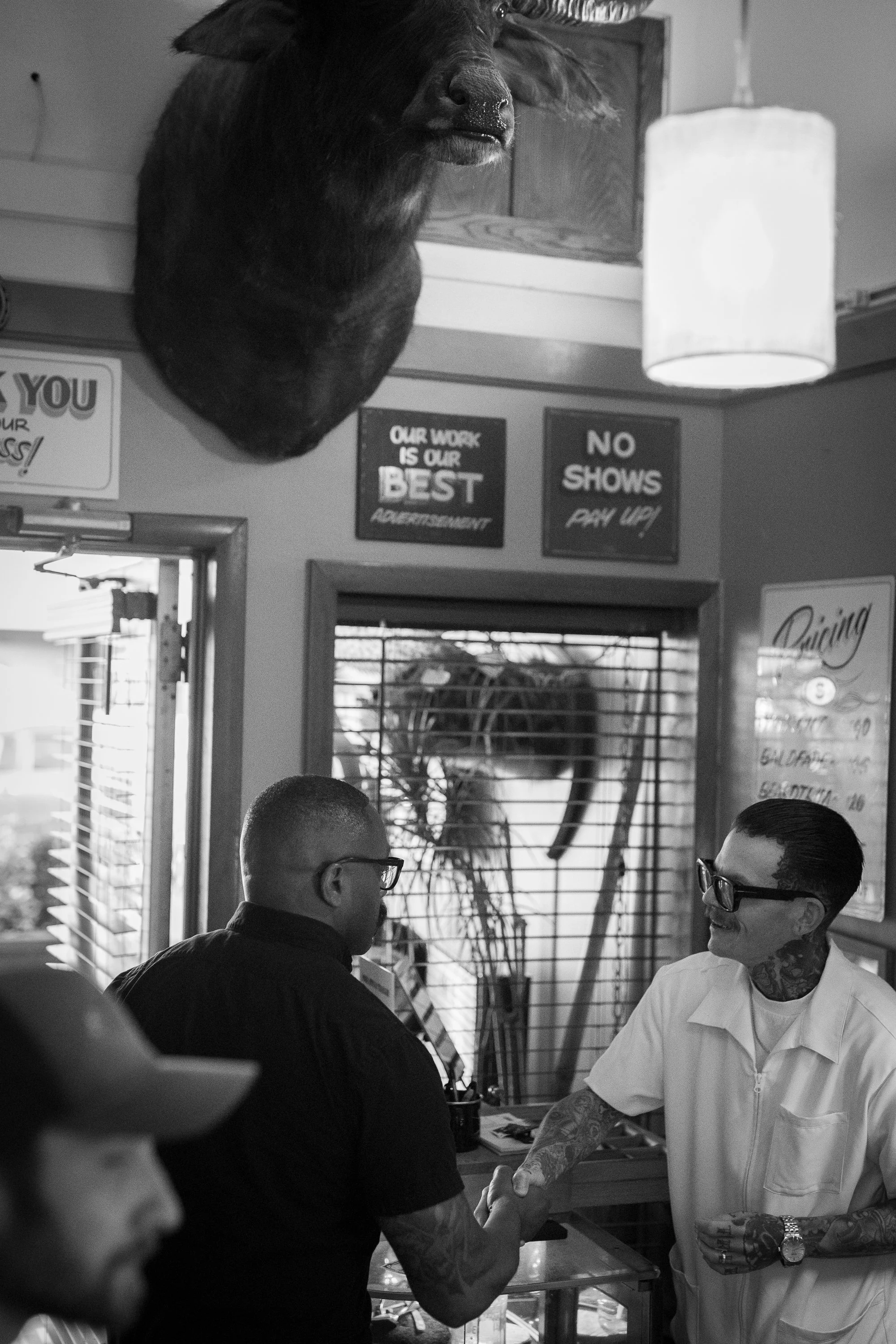
A barber in a white uniform shakes hands with a client inside Pugsly's barbershop.

Signs, displays and a mounted taxidermy fill the background as Pugsly greets his client.

Four barbers standing together in the doorway of Pugsly's barbershop.

Pugsly’s SideShow barbers gather for a portrait in the shop doorway.

One Thousandth of an Inch: Mike Clark and the Art of the Bamboo Fly Rod

Inside South Creek Ltd. With Bamboo Fly Rod Maker Mike Clark

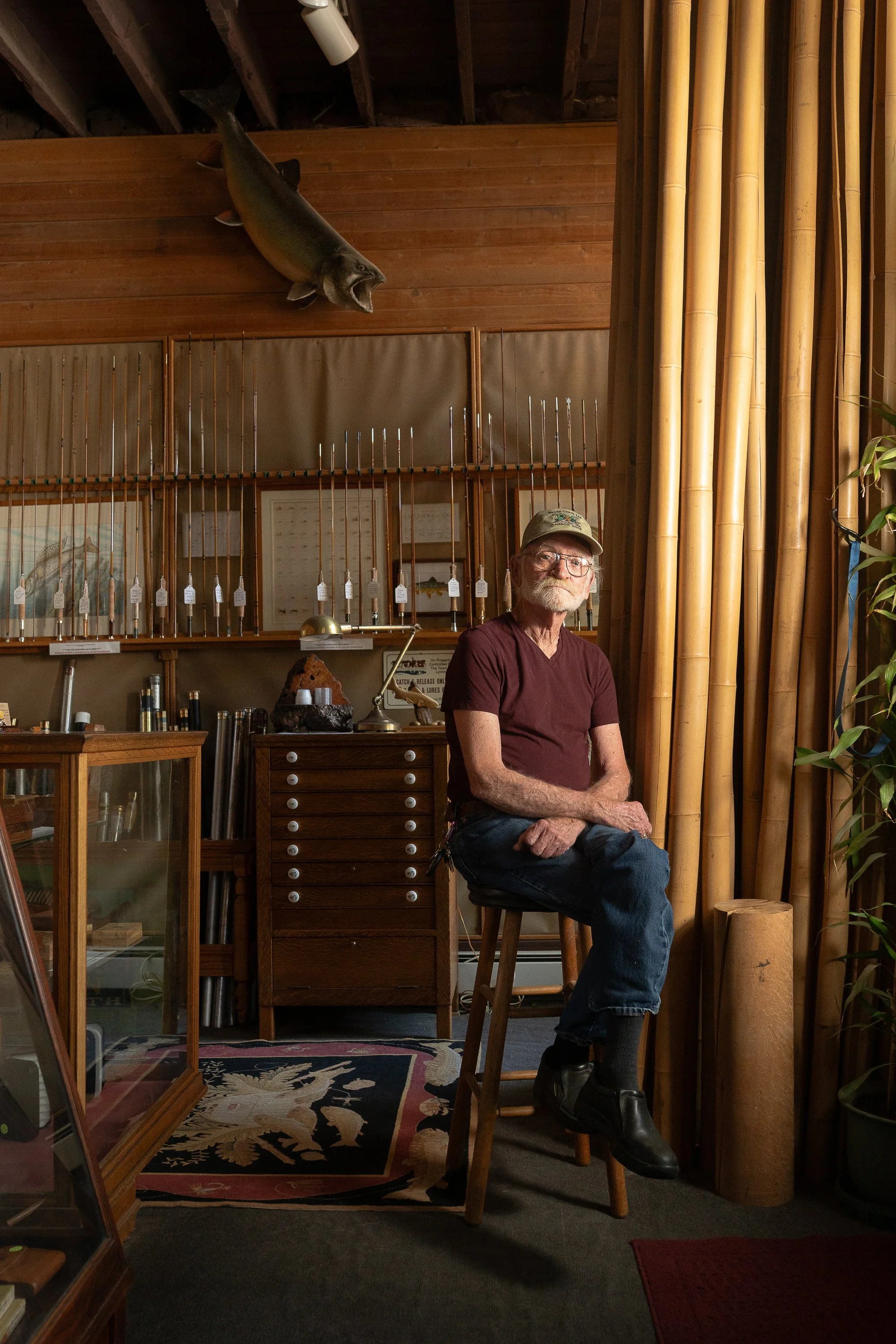
Inside South Creek Ltd. in Lyons, Colorado, where Mike Clark has spent nearly five decades building bamboo fly rods by hand.

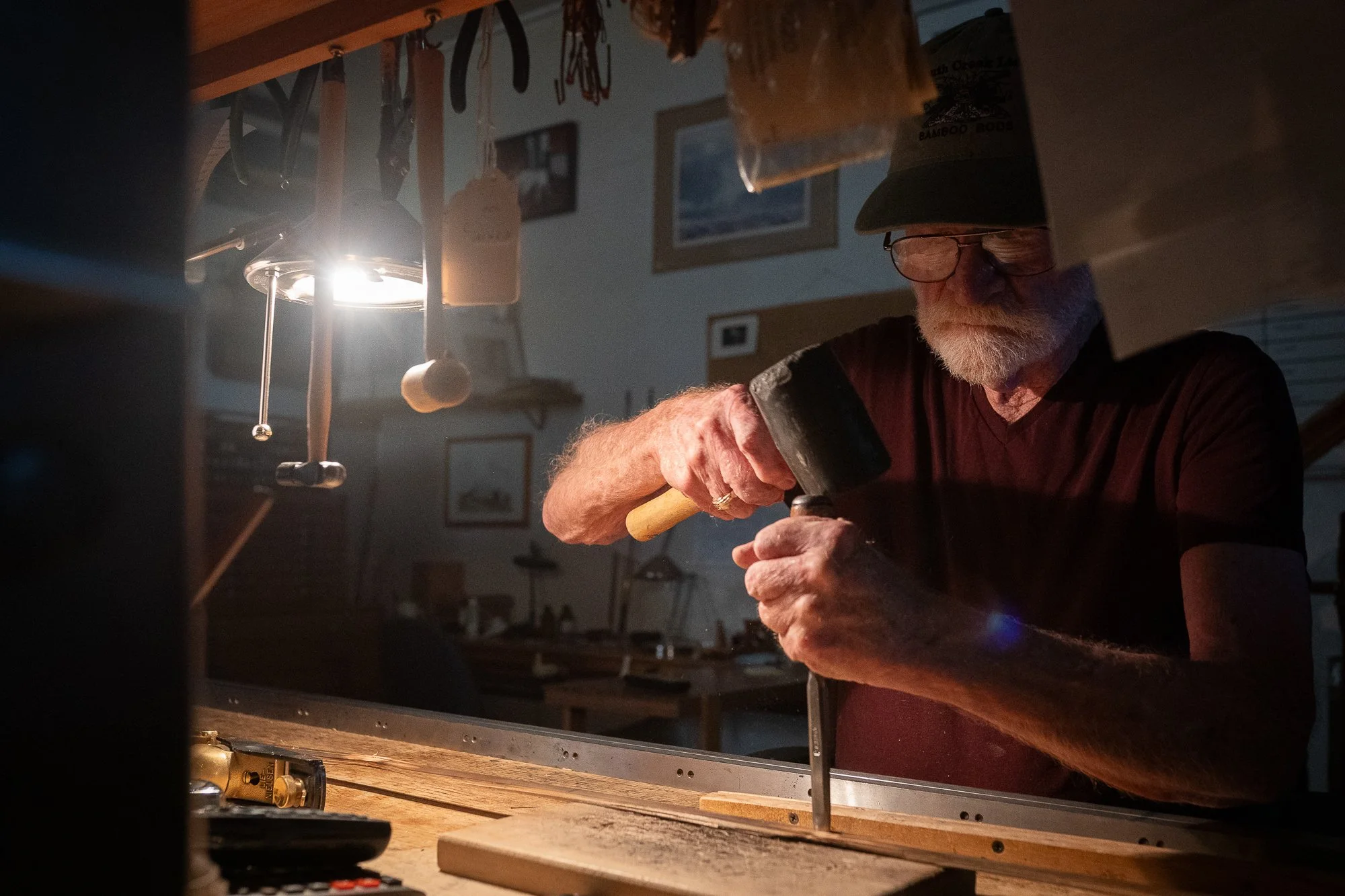
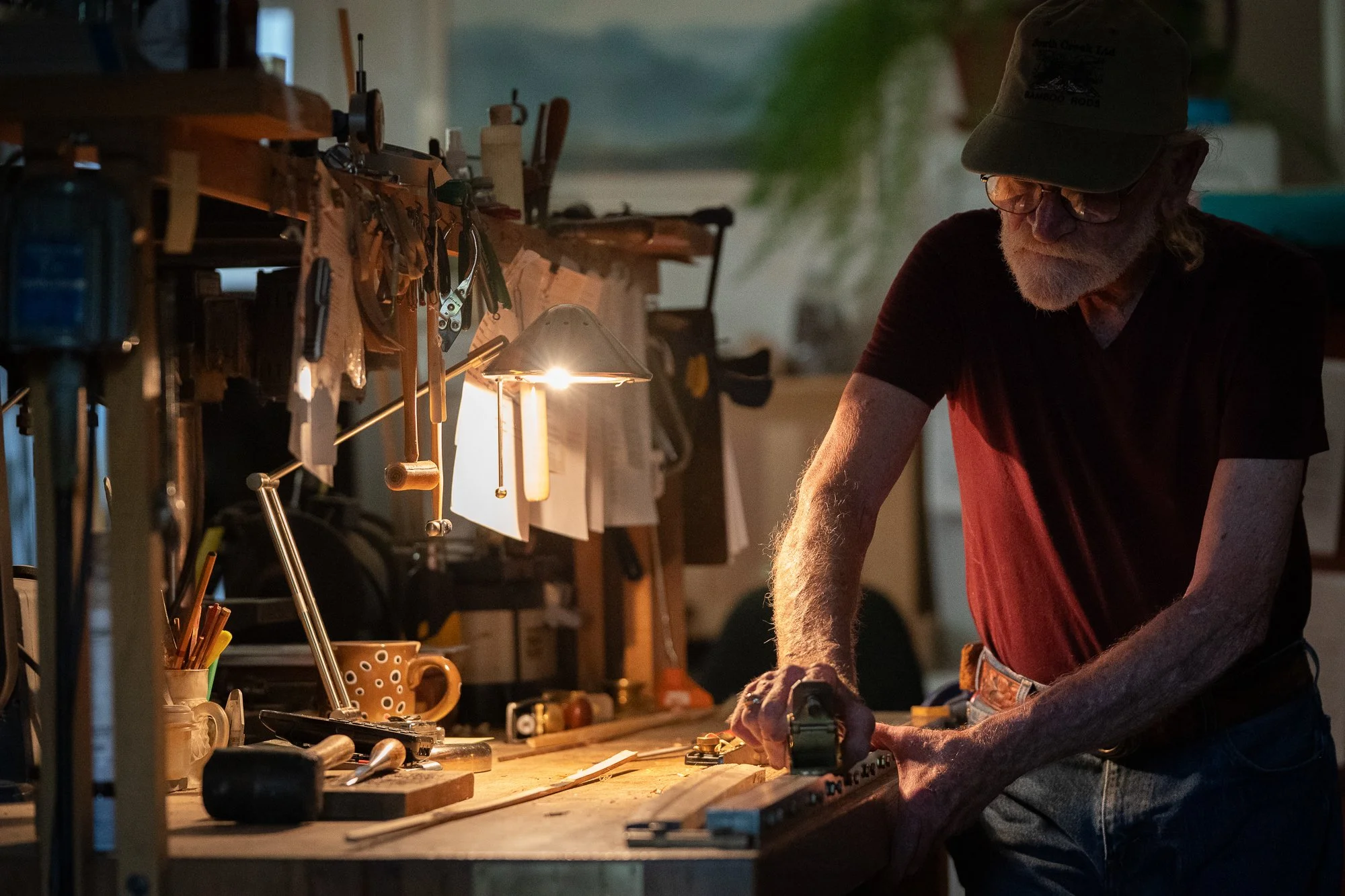
Mike Clark working on a handmade bamboo fly rod at his workbench in Lyons, Colorado.

Mike Clark has been building handmade bamboo fly rods at South Creek Ltd.since 1979.

Talk to any fly fisherman on the planet and the conversation will eventually focus on this fish or that fish they so gracefully put in the net, usually with a heavy and repeated emphasis on inches. One time I caught a 35-inch something or other on this river, yada yada yada. The fish gets a little bigger as the night goes on, as does the fight needed to land it.

Mike Clark is a perennial fly fisherman, and that’s obvious when you see him lay down a cast, but in his business he deals with one-thousandth of an inch. That’s how precise the measurements are on his custom handmade bamboo fly rods. And that’s one reason you’ll go on a two-year waiting list after putting down a deposit for one.

Most folks without the fly fishing disease cruise right through the charming town of Lyons, Colorado, population 2,000, give or take, on their way to Estes or Rocky Mountain National Park. It’s easy enough to do. Lyons sits where the plains begin folding themselves into the foothills, a place people often treat as a sandwich stop or the beginning of somewhere else.

Those in the know, however, go out of their way for South Creek Ltd.

Mike Clark seated inside South Creek Ltd. beside bamboo cane and a collection of fly rods.

Mike Clark inside South Creek Ltd. in Lyons, Colorado, surrounded by bamboo cane and generations of fly rod history.

It’s not a fly shop in the traditional sense. There aren’t aisles of plastic gadgets a grizzled guide insists you need before your next day on the river. Even from the sidewalk, you can tell this place is different.

Inside the large front windows are stunning trout mounts beneath plush maroon curtains, pulled back to reveal a pile of bamboo that stands from the floor and kisses the vaulted ceilings. Walk through the door and you’re greeted by a panorama of exquisite rods and reels lining the walls and filling antique glass display cabinets. Everywhere you look there is wood, metal, cork, cane, old photographs, fishing history and the accumulated evidence of a man who has spent most of his adult life thinking about fly rods.

The design, presentation and texture of the room make it feel less like a store than a private fly fishing museum or art gallery that, somehow, you’ve been allowed into. Move closer, though, and you’ll realize almost everything is for sale. Even a rod made more than a century ago.

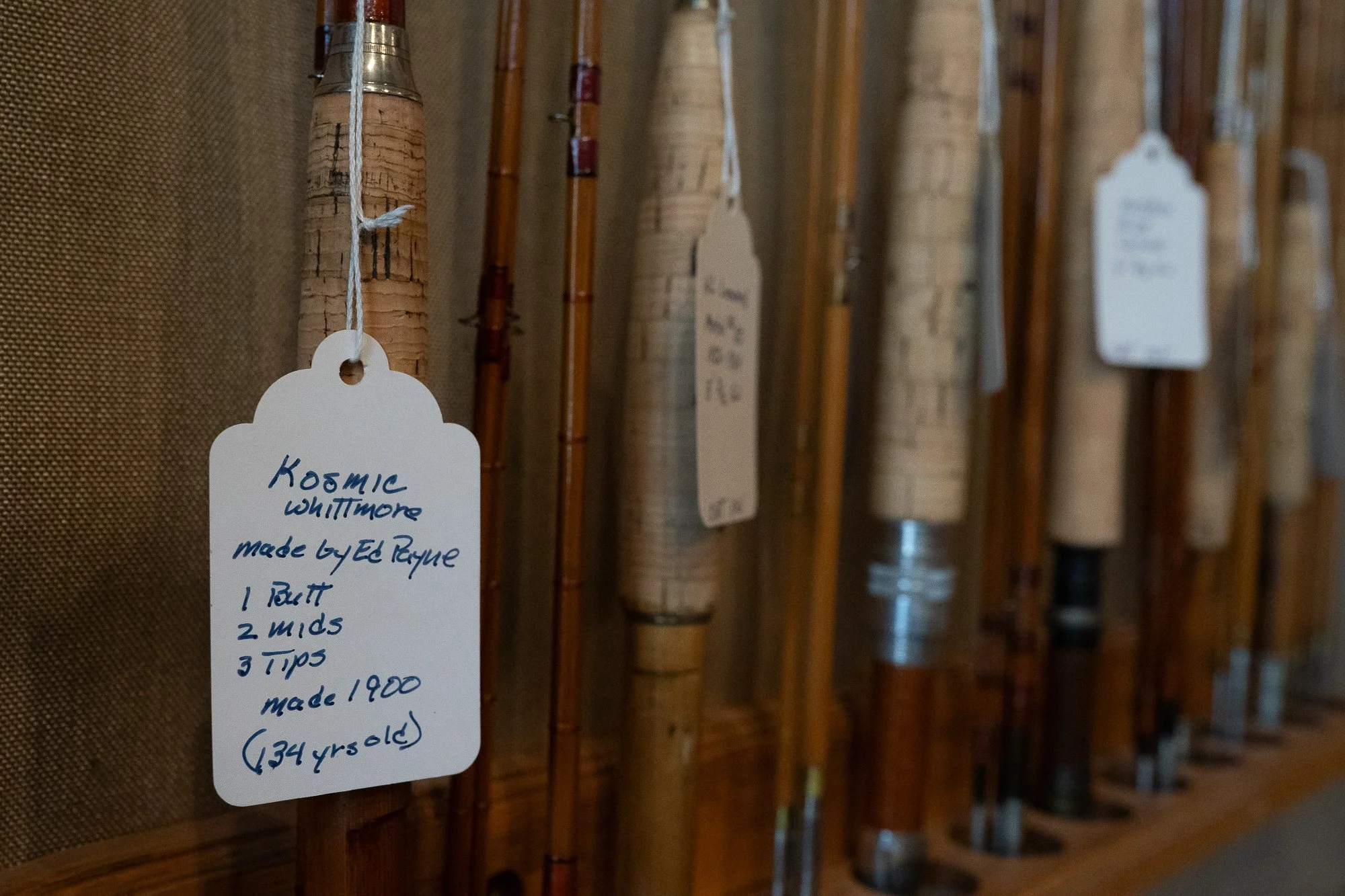
Antique bamboo fly rods displayed inside South Creek Ltd. in Lyons, Colorado.

South Creek Ltd. is also home to antique rods made by some of the craftsmenwho helped shape the history of bamboo fly fishing.

Mike doesn’t only sell his own custom rods. He deals in antiques made by many of the legendary craftsmen who came before him, which means the shop functions as both his place of business and a physical timeline of the craft. Pick something up and there’s a good chance Mike can tell you who made it, when they made it and why it matters.

Speaking of legends, there’s a framed photograph sitting on the counter showing three men in fishing gear beside a river. To the undiscerning eye, it’s just that: three guys on a fishing trip.Again, to those in the know, it’s something else entirely. One of them is Mike. Another is John Gierach, the great fly fishing writer and longtime Lyons resident. The third is A.K. Best, the world-famous fly tier. Both were dear friends of Mike’s. Both are now gone.

“I’m short on friends these days,” Clark says.

Handwritten note from fly fishing writer John Gierach displayed inside South Creek Ltd.

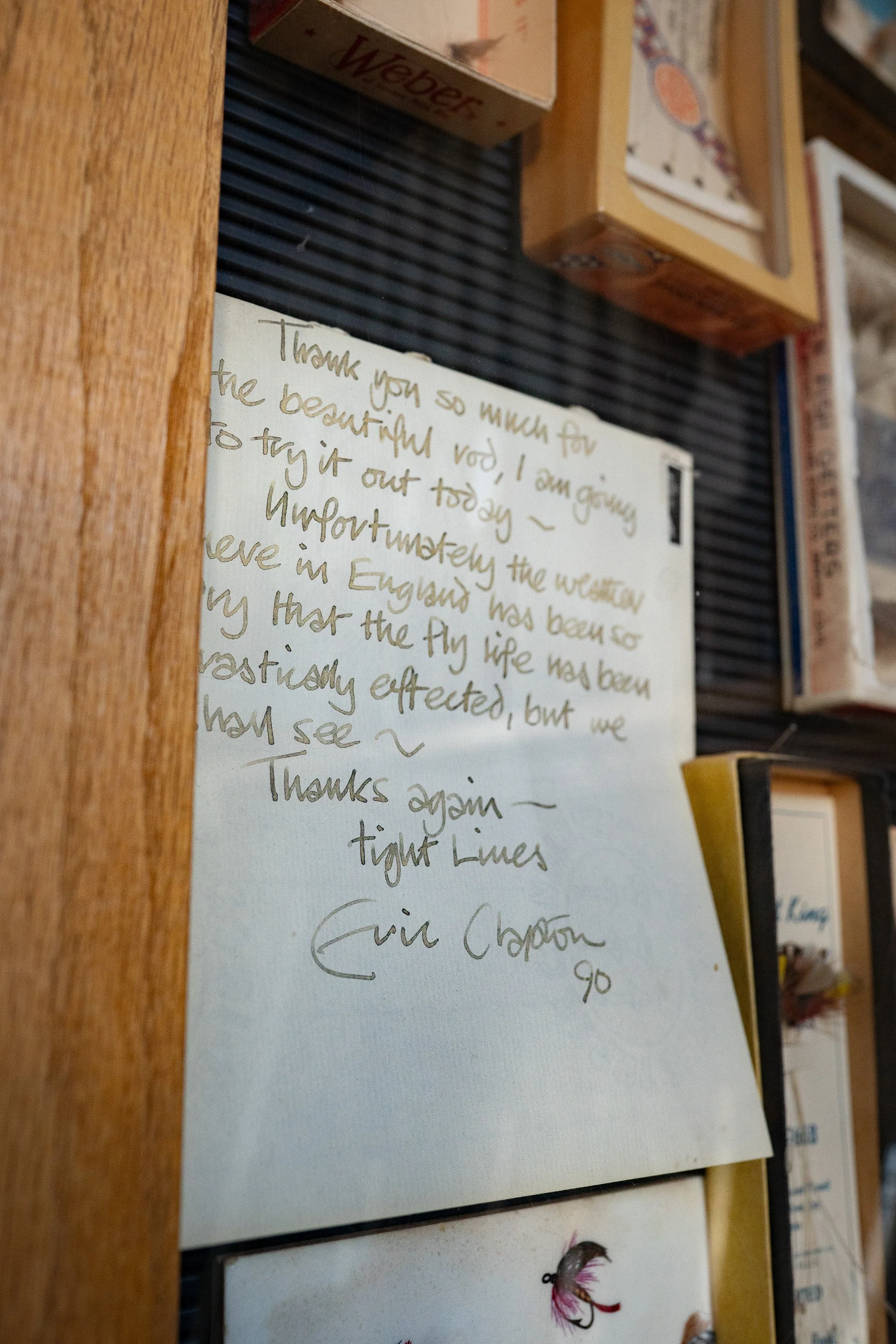
A handwritten note from the great Eric Clapton - a customer of South Creek.

He doesn’t dwell on it. That seems to be Mike’s way. At 79 years old, there’s plenty of history around him, but not much interest in turning sentimental about it. The articles are there. The rods are there. The stories are there if you ask. But there is also work to be done. And you don’t keep company like Gierach and Best for decades as an Average Joe.

The fact of the matter is that Mike Clark is one of the last of a dying breed. Few, if any, will ever rival the level of craftsmanship coming off his workbench, which sits in another space connected to the showroom. If you stop into South Creek on the right day, you might get a peek behind the curtain and see the master at work.

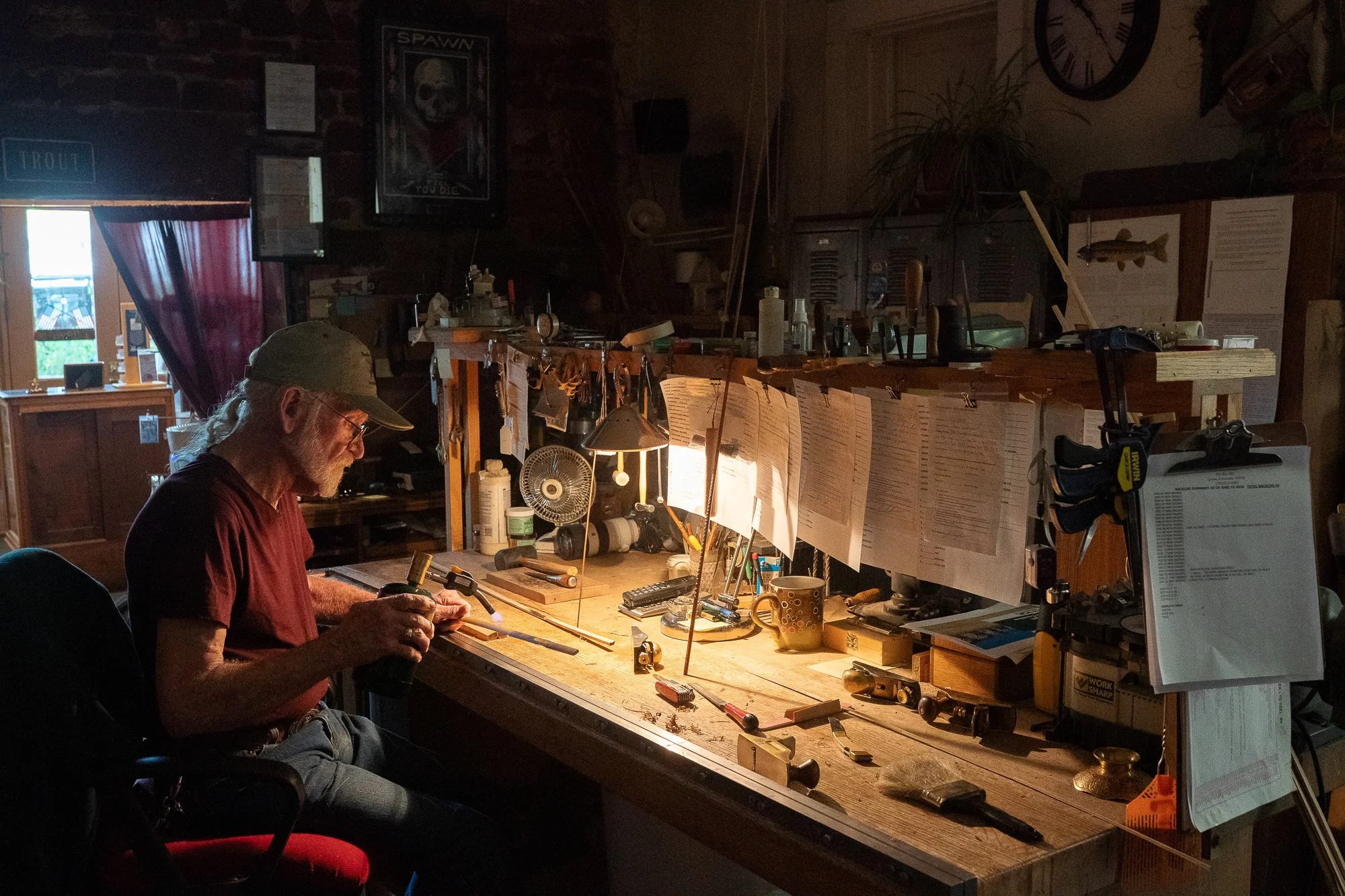
Mike Clark working at his bamboo fly rod workbench surrounded by tools at South Creek Ltd.

Mike's workbench bears the accumulated tools, materials and evidence of nearly five decades spent building bamboo fly rods.

At first, watching Clark in his element might seem almost unimpressive. You might wonder, What’s the big deal? And why the hell are these things so expensive? His rods start around $3,000 and go up when you add things like custom engraving, 24-karat gold plating or a leather rod tube.

The answer becomes clearer the longer you watch.

Mike started building bamboo fly rods in 1979 and has been striving for perfection ever since. Nearly five decades of doing something over and over has a way of removing all the unnecessary movement. Today his actions are slow, fluid and economical. Nothing seems particularly difficult because he’s spent 47 years making sure it doesn’t.

Don’t be fooled.

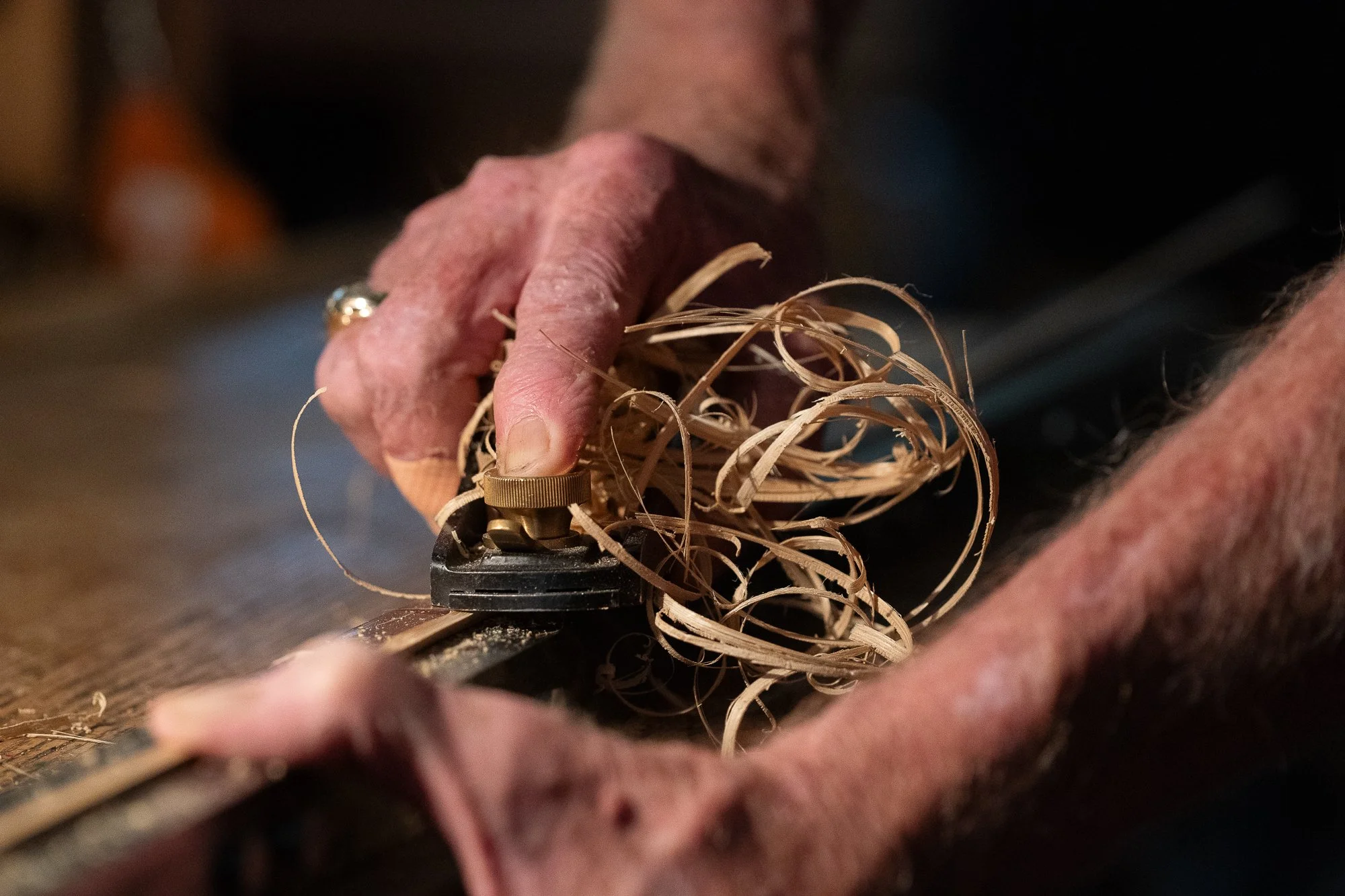
Mike Clark's hands using a plane on bamboo with curled cane shavings surrounding the tool.

Building a bamboo fly rod requires repeated handwork and measurements precise to one-thousandth of an inch.

Each rod is one of one and goes through roughly 1,400 operations and inspections before Mike will consider letting it leave the shop.

That level of thought begins long before he touches a piece of bamboo, all of which has been seasoning for four years. Mike wants to know where you fish. What kind of water. What part of the world. What species you’re after. How you intend to use the rod.

Those answers matter because they determine what he builds.

South Creek isn’t a place where you click a few boxes online, enter a credit card number and wait for a tracking notification. The person making your rod wants to understand why you want it in the first place.

Mike cares.

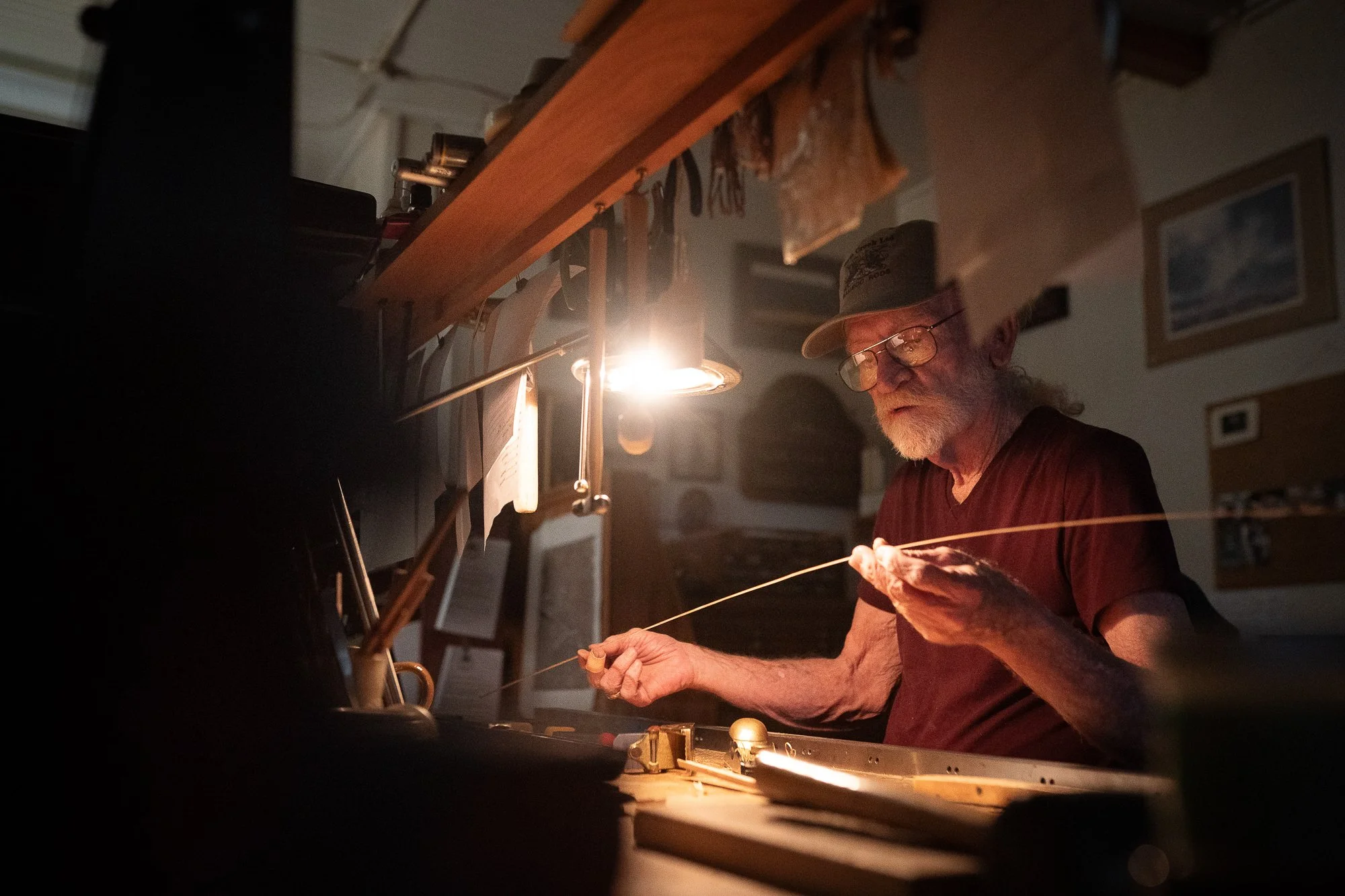
Mike Clark inspecting a long strip of bamboo cane while building a fly rod at his workbench.

Each custom rod begins with seasoned bamboo and is built for the water, species and fishing style of its eventual owner.

That’s what makes his rods coveted. It’s also why he has no problem throwing one in the garbage if it isn’t 100 percent to his liking, even if the flaw is so minute that nobody other than Mike Clark would ever know it existed.

Think about that for a minute. After all the hours, all the individual operations, all the measurements and all the accumulated knowledge required to get a rod nearly to completion, nearly perfect still isn’t good enough.

Mike Clark working a strip of bamboo at his bench during the fly rod building process.

Decades of repetition have made Mike's movements at the bench slow, deliberate and economical.

There are innumerable ways Mike could increase production. He knows that. There are machines that could make certain processes faster. He could hire more people. Streamline things. Increase output. Make more money.
He doesn’t care.

The final product is the concern because Mike knows the rod will outlive the person who ordered it.

His clients don’t buy these things because they need another fly rod. You can catch trout perfectly well with a mass-produced graphite rod that costs a fraction of the price. Mike will be the first person to remind you of that.

“The fish don’t care how much your rod costs,” he says.

That might be the best explanation for South Creek.

The fish don’t care.

The fisherman does.

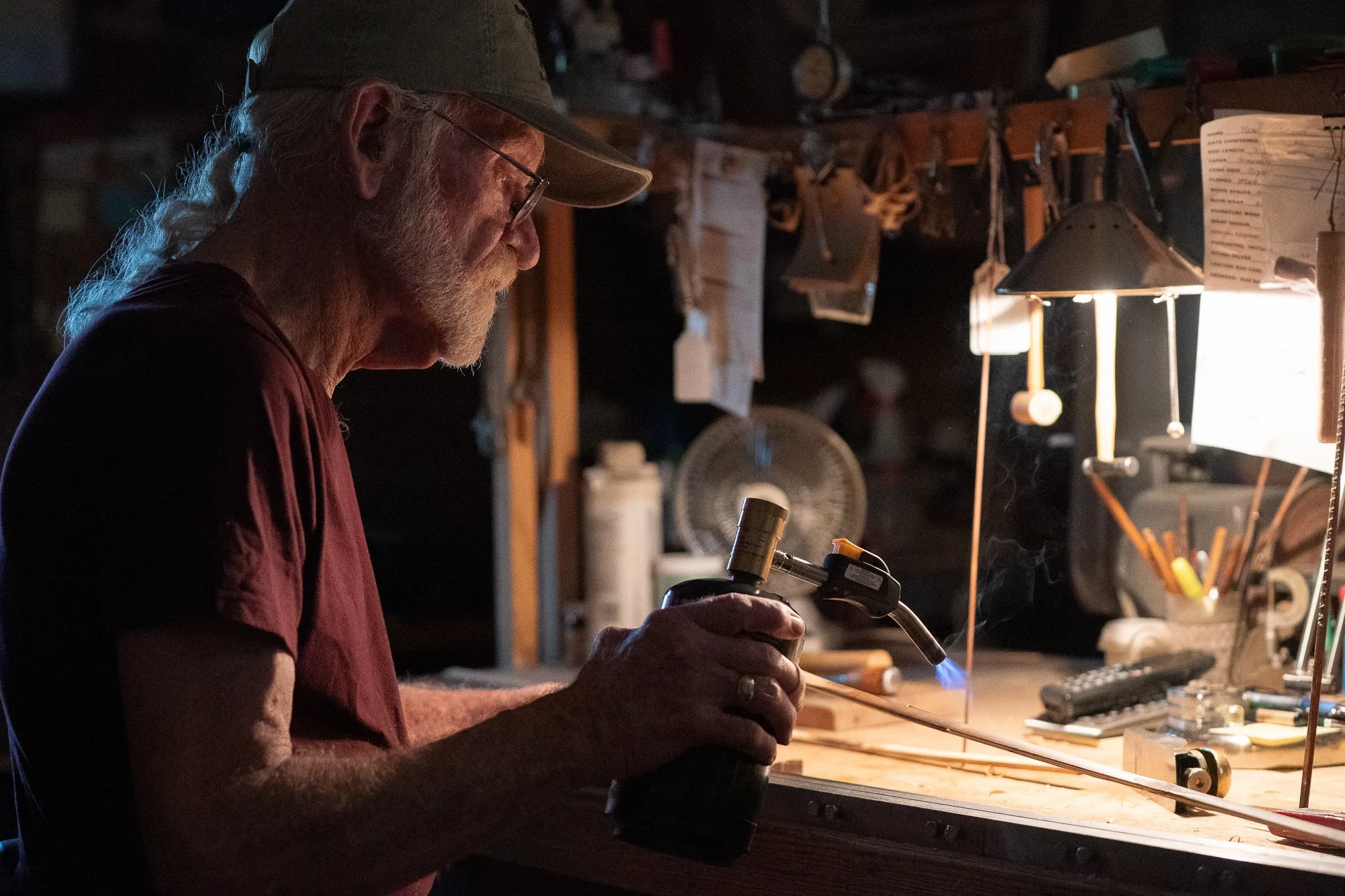
Mike Clark uses a small torch while working on bamboo at his rod-building bench.

Roughly 1,400 operations and inspections go into a Mike Clark bamboo fly rod before it leaves South Creek Ltd.

A Mike Clark rod will be cherished by its owner, then very likely handed to a son or daughter, and perhaps someday to someone who hasn’t even been born yet.

But Mike doesn’t build them to be mounted over a fireplace.

He builds them to be fished. To get wet. To be carried through brush. To bend against trout. To create memories. And maybe, decades from now, to create somebody else’s memories.

That philosophy makes more sense when you step into his workshop.

The place feels lived in because it is.

Mike’s lifetime of passion and hard work can be felt at the bench and in everything surrounding him. Antique wood cabinets are filled with tools. Exotic materials occupy corners. Photographs and art hang on the walls. Objects have naturally migrated into the places where they belong after years of use.

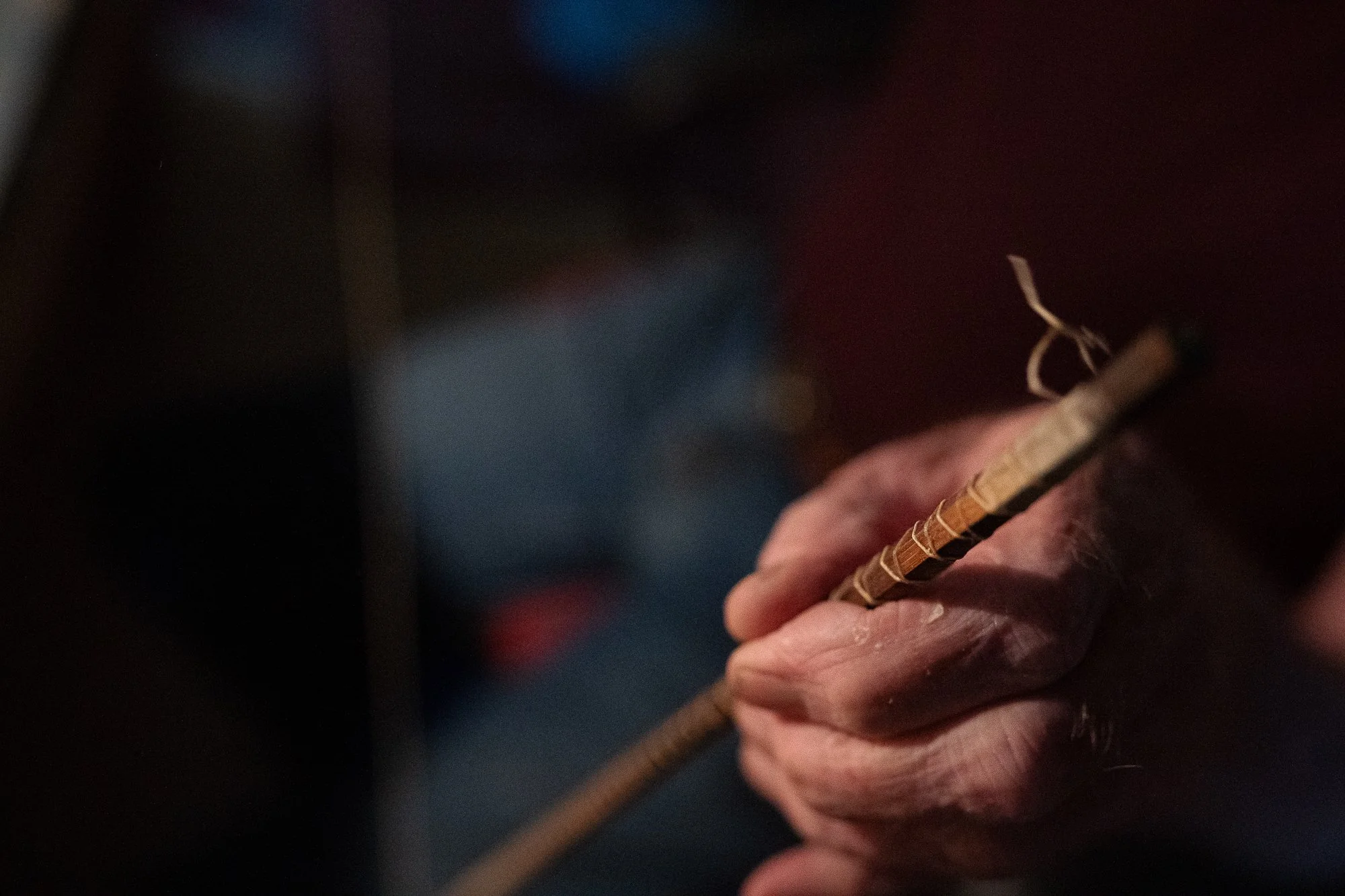
Close-up of Mike Clark's hands holding a bound section of bamboo fly rod.

The details that separate one rod from another can be nearly invisible to everyone except the man who made it.

His domain reminds me of an old barbershop. Not one of the new ones designed to look old, but the real thing. A place where the tools, cabinets, pictures and furniture have developed a certain patina that can’t be bought or manufactured.

It only comes from repetition. From someone standing in the same place and doing the same thing well for a very long time.
Look at the linoleum around the chair in an old barbershop and you can see where the barber stood during decades of haircuts. Mike’s shop has that same feeling. You can feel his presence at the bench as he works each piece of cane down to one-thousandth of an inch.

There is something almost comical about that number when you consider how fly fishermen normally measure things.

We brag in inches.

Mike works in thousandths.

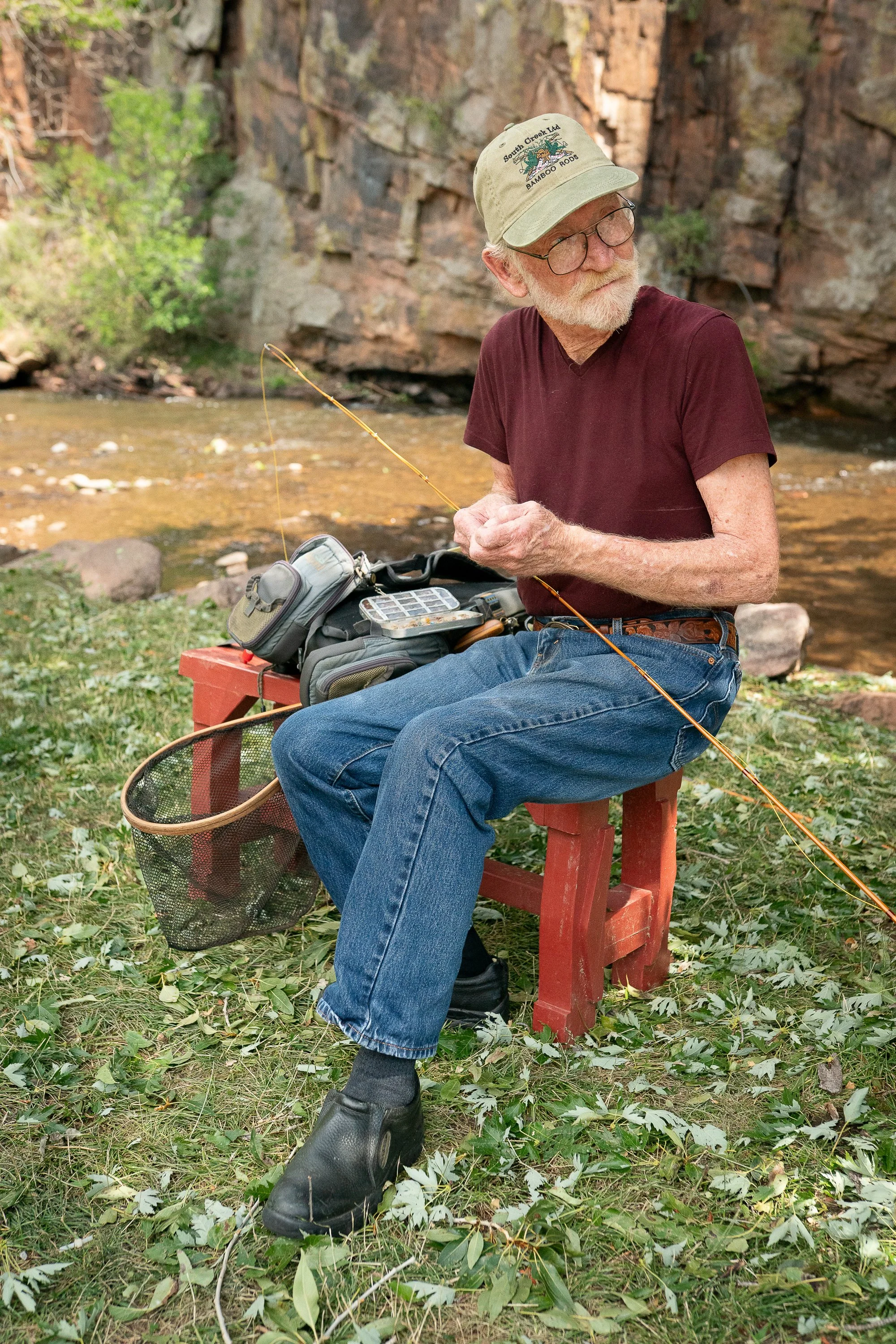
Mike Clark sitting beside a Colorado creek with a bamboo fly rod and fishing gear.

Mike doesn't build his rods to hang over a fireplace. He builds them to be fished.

At 79, Clark moves and talks with the bravado of a man with nothing left to prove. His Missouri roots never faded, and there’s a swagger to him, but it doesn’t come across as arrogance. It’s closer to the confidence of someone who knows exactly what he can do because he has spent nearly half a century doing it.

More importantly, he knows what happens after one of those rods leaves Lyons.

Someone takes it to a river.

Maybe in Colorado. Maybe Montana. Maybe halfway around the world.

They string it up. Step into the water. Make a cast.

Eventually, if things go right, a trout eats.

And for a moment, all those years of experience, four years of aging bamboo, 1,400 operations and inspections, and measurements made down to one-thousandth of an inch disappear into something wonderfully simple: a fisherman standing in moving water with a bent rod in his hand.

Meanwhile, Mike sits at his bench figuring out how to make an even better one.

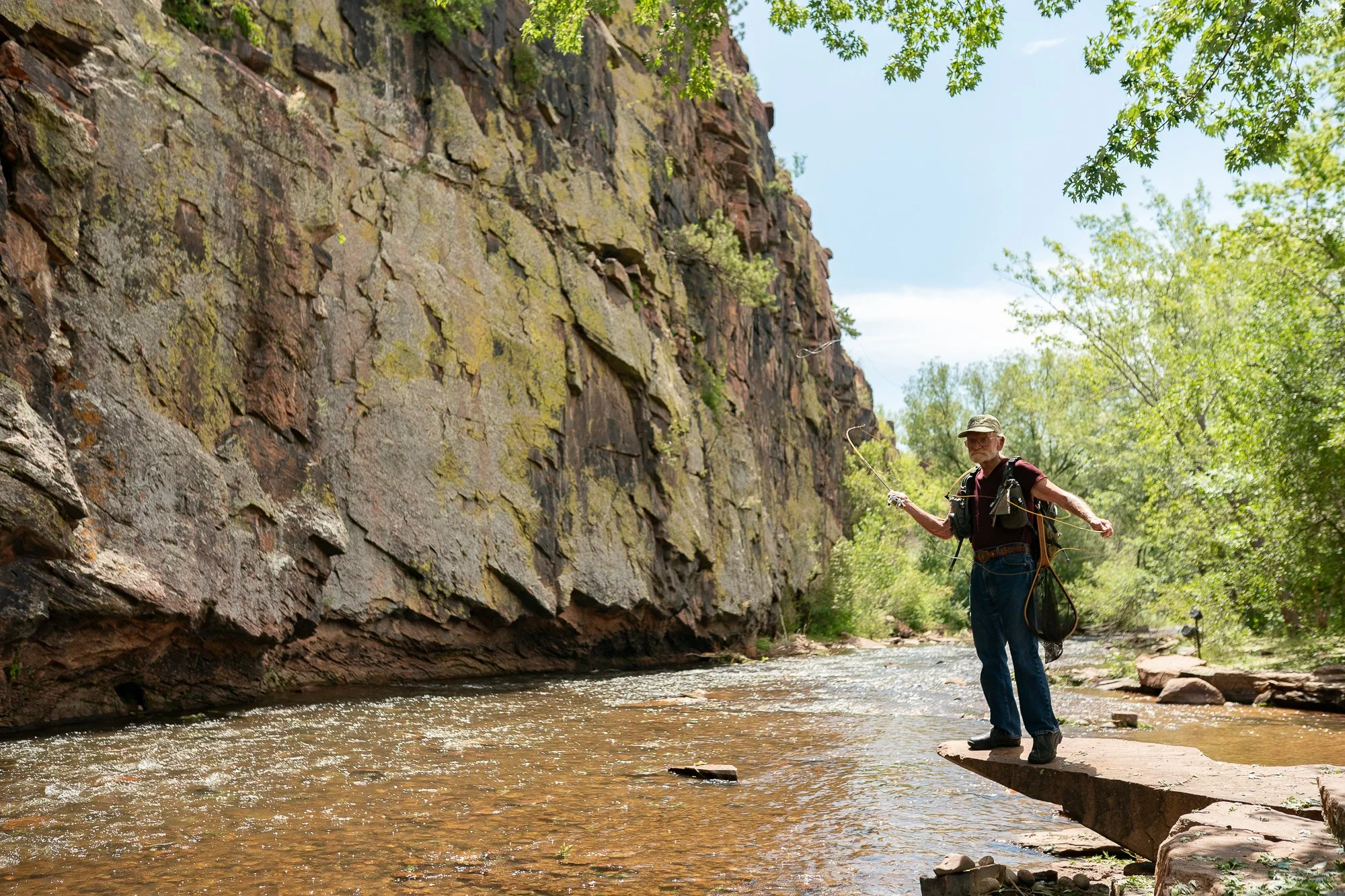
Mike Clark fly fishing with a bamboo rod beside a rocky canyon wall in Colorado.

After years of experience, thousands of individual steps and measurements made to one-thousandth of an inch, the rod eventually arrives where Mike intended it to be: on the water.

Photography & words by Rob Hammer

About the Photographs

I've spent years photographing fly fishing throughout Colorado and the American West, but the culture surrounding the sport has always interested me as much as what happens on the water. The people, places, traditions and skills behind fly fishing tell a much larger story.

Photographing Mike Clark at South Creek Ltd. is also part of a broader interest in people who have dedicated their lives to doing something well. Whether it's a bamboo rod maker in Colorado, a cowboy working cattle, a barber who's stood behind the same chair for decades or craftspeople making leather by hand, I'm drawn to work that still bears the evidence of the person who made it.

Explore more: Fly Fishing Photography | Fine Art Fly Fishing Prints | At Work Photography

Inside One of America’s Oldest Leather Tanneries

Inside Wickett & Craig: Photographs of an American Leather Tannery

Leather is part of our everyday lives, but most people never give any thought to what it is or where it comes from. After more than 6 years photographing working cowboys and ranches throughout the American West, I'm accustomed to seeing it everywhere: saddles, reins, bridles, chaps, boots, belts, and countless other pieces of gear. Usually, by the time I photograph it, the leather has already spent years being worked hard.

The Wickett & Craig tannery in Curwensville, Pennsylvania, offered an opportunity to see the other end of that story.

Founded in 1867, Wickett & Craig has been making leather for more than 150 years and is one of the few remaining specialty vegetable tanneries in the United States. The company spent its first 123 years in Toronto before moving to Pennsylvania around 1990, where it now operates a large tannery producing millions of square feet of leather each year.

I went there to photograph the people, machinery, and process behind it.

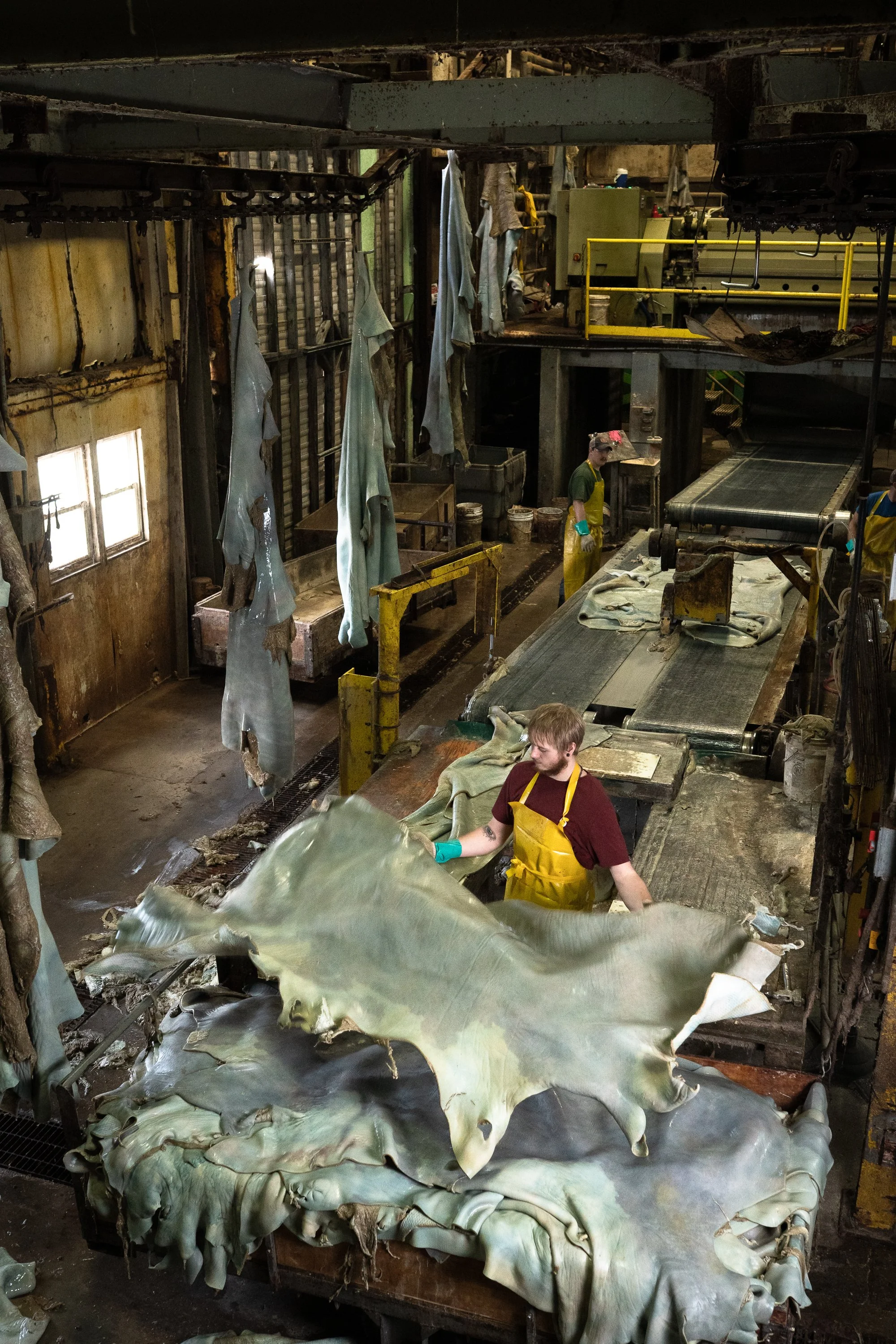
Workers handle leather hides beside machinery inside the Wickett & Craig tannery in Pennsylvania

Hides move through one of the working areas inside Wickett & Craig.

Inside an American Leather Tannery

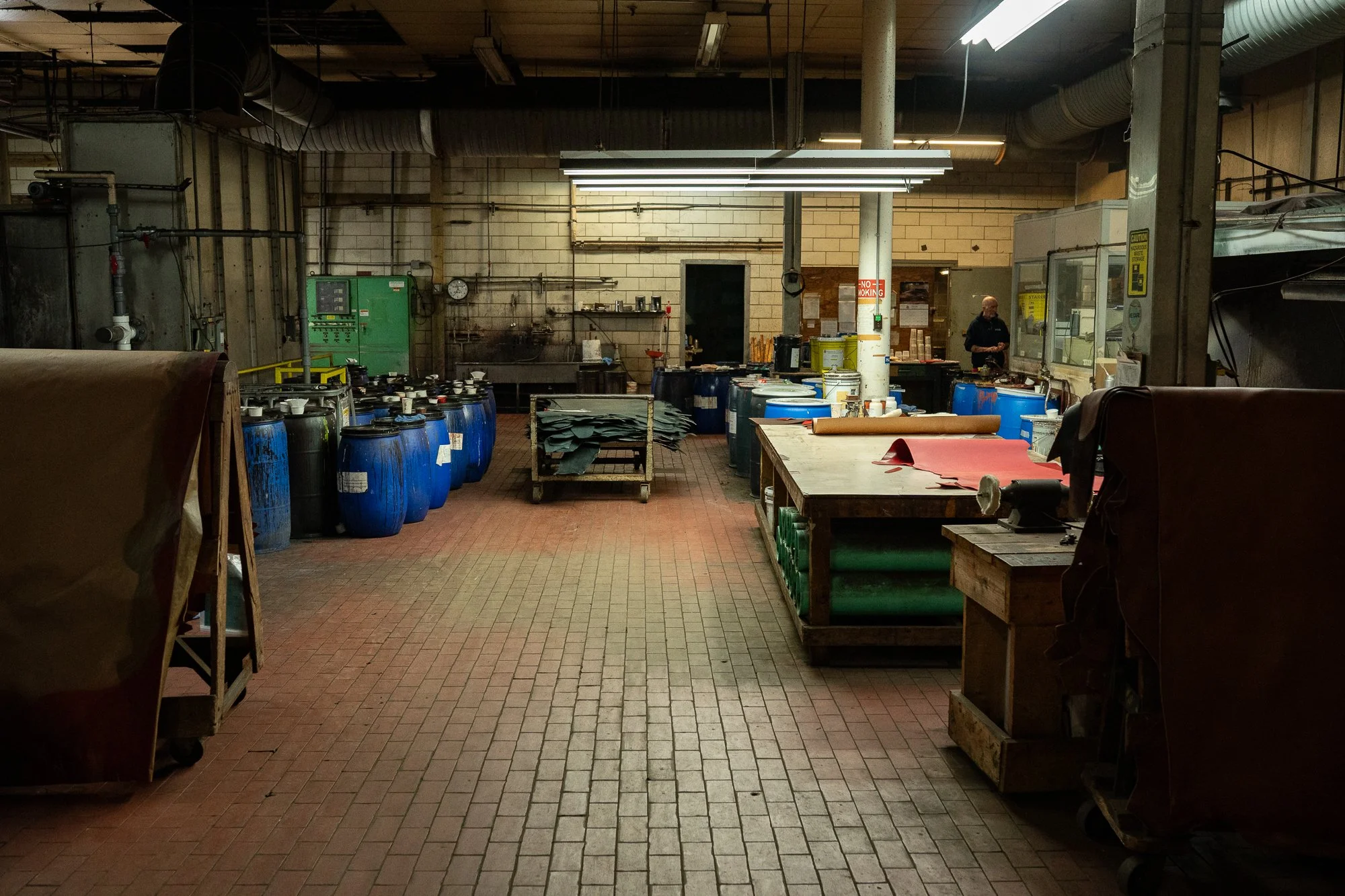
There isn't much about the inside of Wickett & Craig that feels designed for visitors. It's a working industrial building, and nearly every surface shows evidence of what happens there. Pipes run overhead, hides hang throughout the facility, enormous drums occupy entire sections of the building, and years of water, oils, dyes, tannins, and production have left their marks on the floors, walls, and machinery.

That's exactly what made the place interesting to photograph.

I've always been attracted to working environments where nothing has been cleaned up or arranged for the camera. There is already enough visual information in a place like this. The challenge isn't creating something interesting, but figuring out how to organize what is already happening into a photograph.

Wickett & Craig operates on more than 16 acres and produces roughly 4.5 million square feet of leather annually. Walking through the tannery, the scale of that production is immediately apparent. Hides are stacked, hanging, stretched, soaked, rolled, and fed through machinery as they move from one part of the building to another.

The finished leather most people recognize is still a long way off.

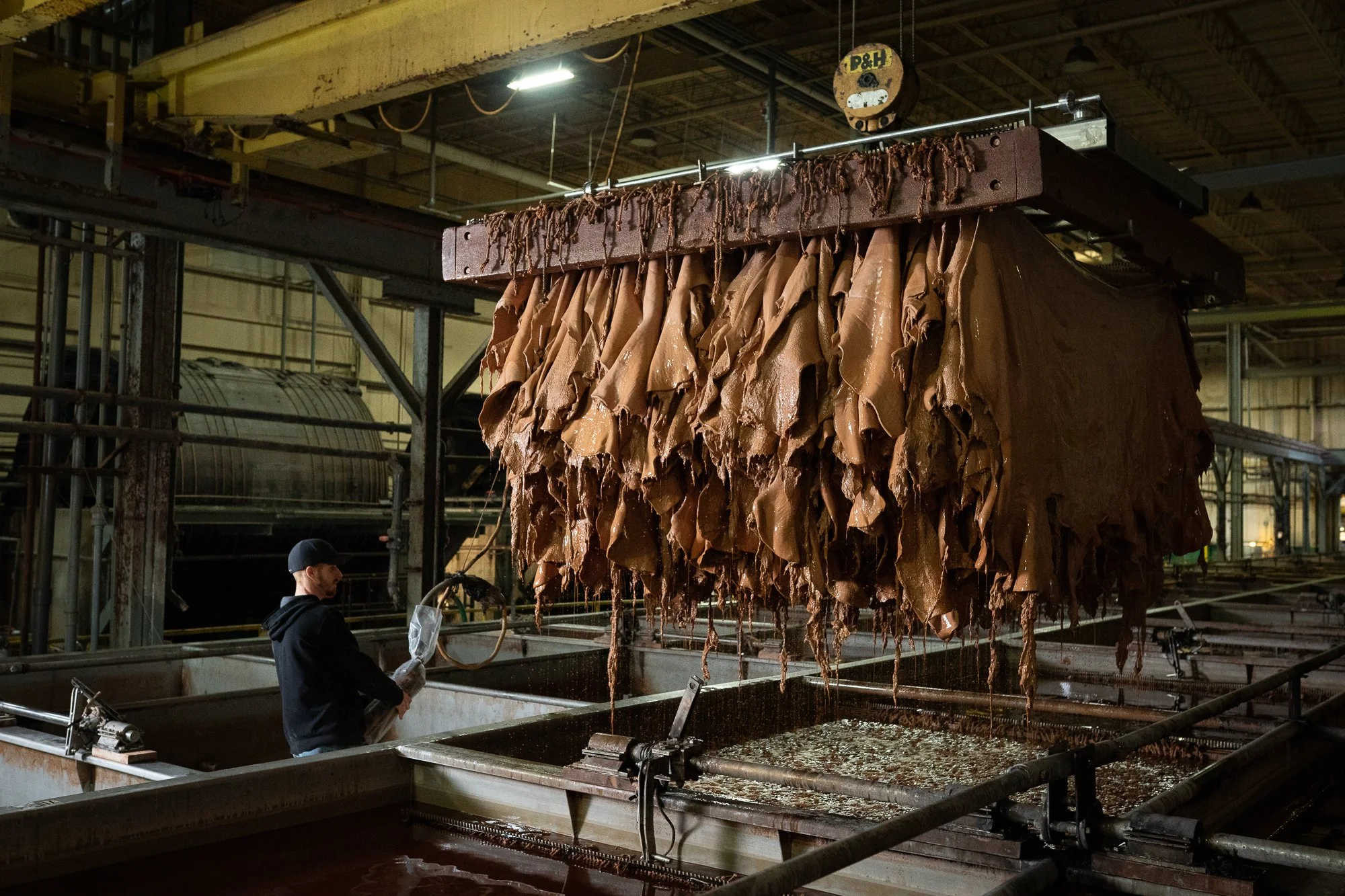
Leather hides hang above tanning vats inside the industrial tannery

Hides hang over the tanning vats as they move through the vegetable tanning process.

A Wickett & Craig worker handles a large wet leather hide beside a metal processing machine inside the Pennsylvania tannery.

Leather is handled by hand in the tannery's wet processing areas.

Making Vegetable-Tanned Leather

Wickett & Craig specializes in vegetable-tanned leather, a traditional method that uses naturally derived tannins to transform raw cattle hides into leather. Compared with modern chrome tanning, vegetable tanning is a considerably slower process. At Wickett & Craig, the complete transformation takes roughly six weeks.

The hides come from North American cattle and first have to be prepared, rehydrated, dehaired, fleshed, and split before tanning begins. From there they move into a tanning yard containing 72 vats filled with a proprietary tanning liquor that includes natural extracts from mimosa and quebracho. The hides spend approximately two weeks in the tanning solution.
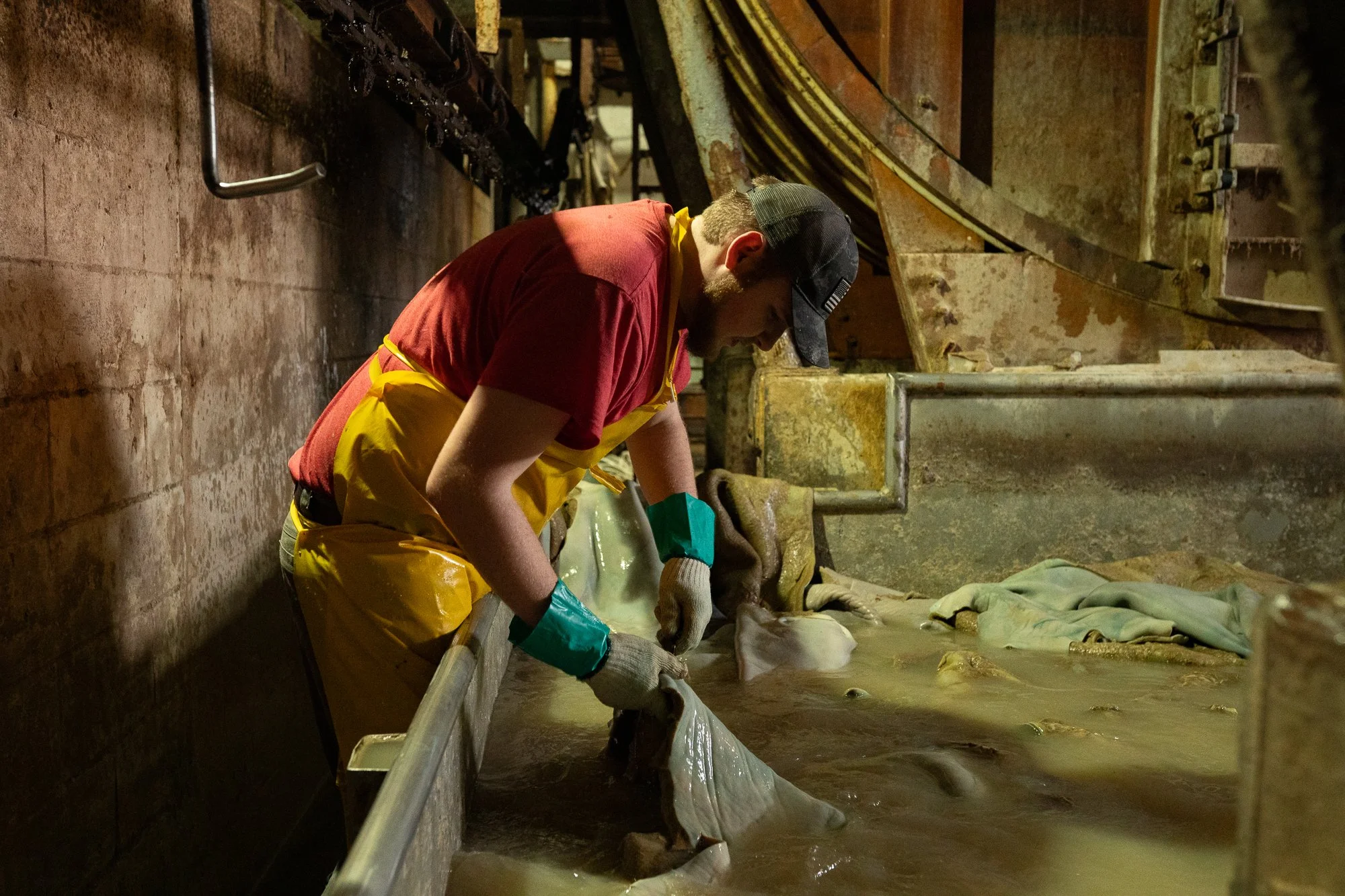
After tanning, the leather moves through a series of processes that determine its eventual thickness, color, feel, and finish. Large rotating drums are used for dyeing and conditioning. Oils and waxes are worked into the leather, while products such as Wickett & Craig's English Bridle and Harness leathers receive additional treatment with waxes and tallows.

Eventually the hides are stretched across large perforated screens and moved into a climate-controlled drying area. After several days of drying, they continue through finishing and grading before leaving the tannery.

Understanding the basic process helps explain the photographs, but what interested me most wasn't the individual sequence of steps. It was seeing how much physical work still exists inside an operation producing leather at this scale.

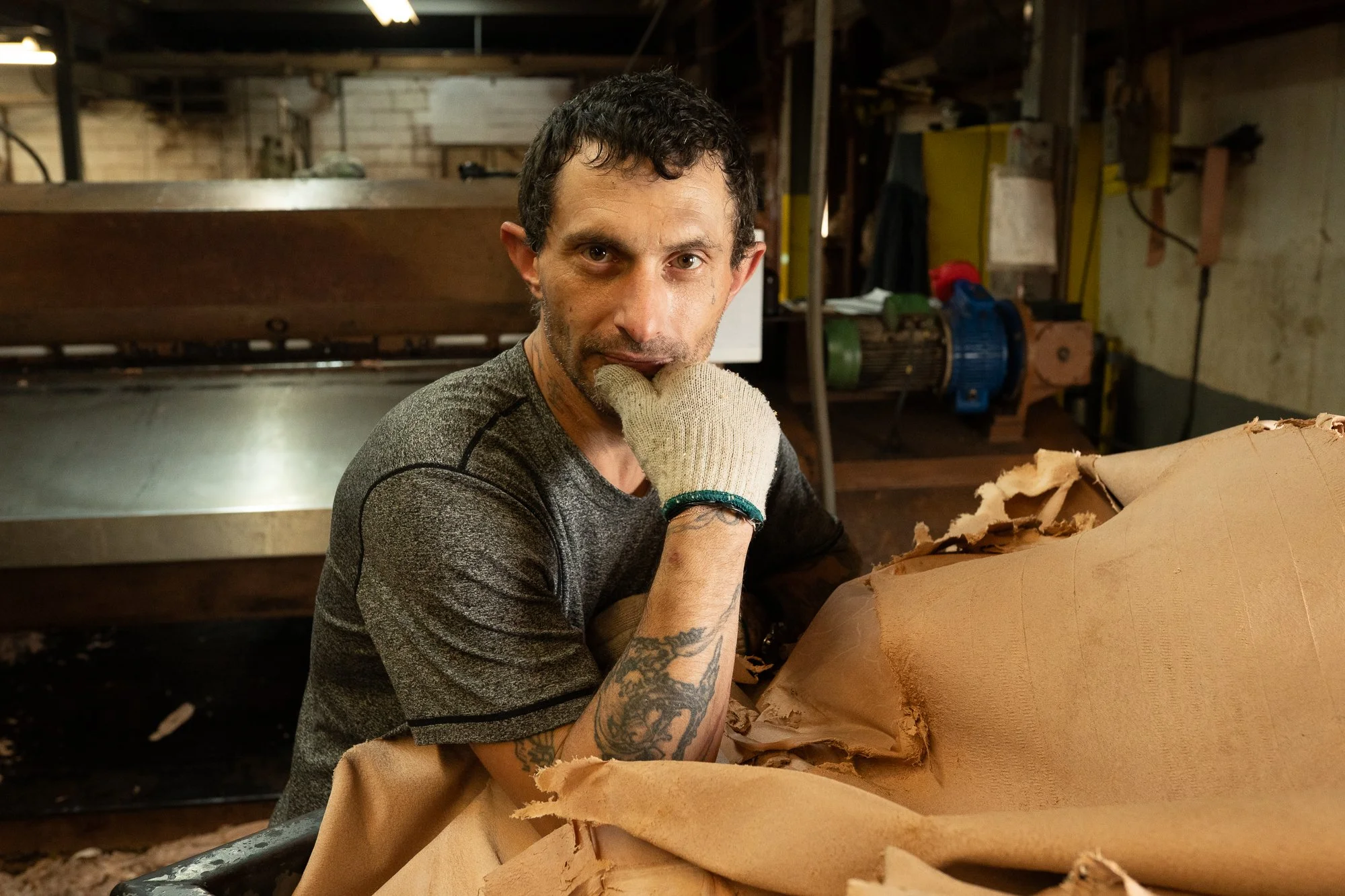
A Wickett & Craig worker stands beside a large brown leather hide inside the Pennsylvania tannery

A brief pause in the work, surrounded by leather and processing machinery.

The People Behind the Process

Machines do a lot of the heavy work at Wickett & Craig, but the tannery doesn't feel automated.

Workers are constantly handling the material, moving hides, operating equipment, checking leather, guiding it through machines, and preparing it for whatever happens next. Even with the size of the facility and machinery, there is a very human rhythm to the place.

That's something I've always been drawn to photograph.

People who have done the same kind of work for years develop an efficiency that is difficult to fake. Movements become automatic. They know how a piece of material should behave and recognize when something isn't right. That kind of physical knowledge is visible even when you don't fully understand the job yourself.

Photographing people who are actually working also changes my role as a photographer. There is very little reason for me to direct anything. I can watch, learn the rhythm of what is happening, and try to anticipate where the next photograph might be.

The goal isn't to make the tannery look cleaner, prettier, or more dramatic than it is. The worn machinery, wet floors, stained walls, work clothes, hanging hides, and odd industrial light are all part of the place. Removing those things would remove much of what makes it worth photographing.

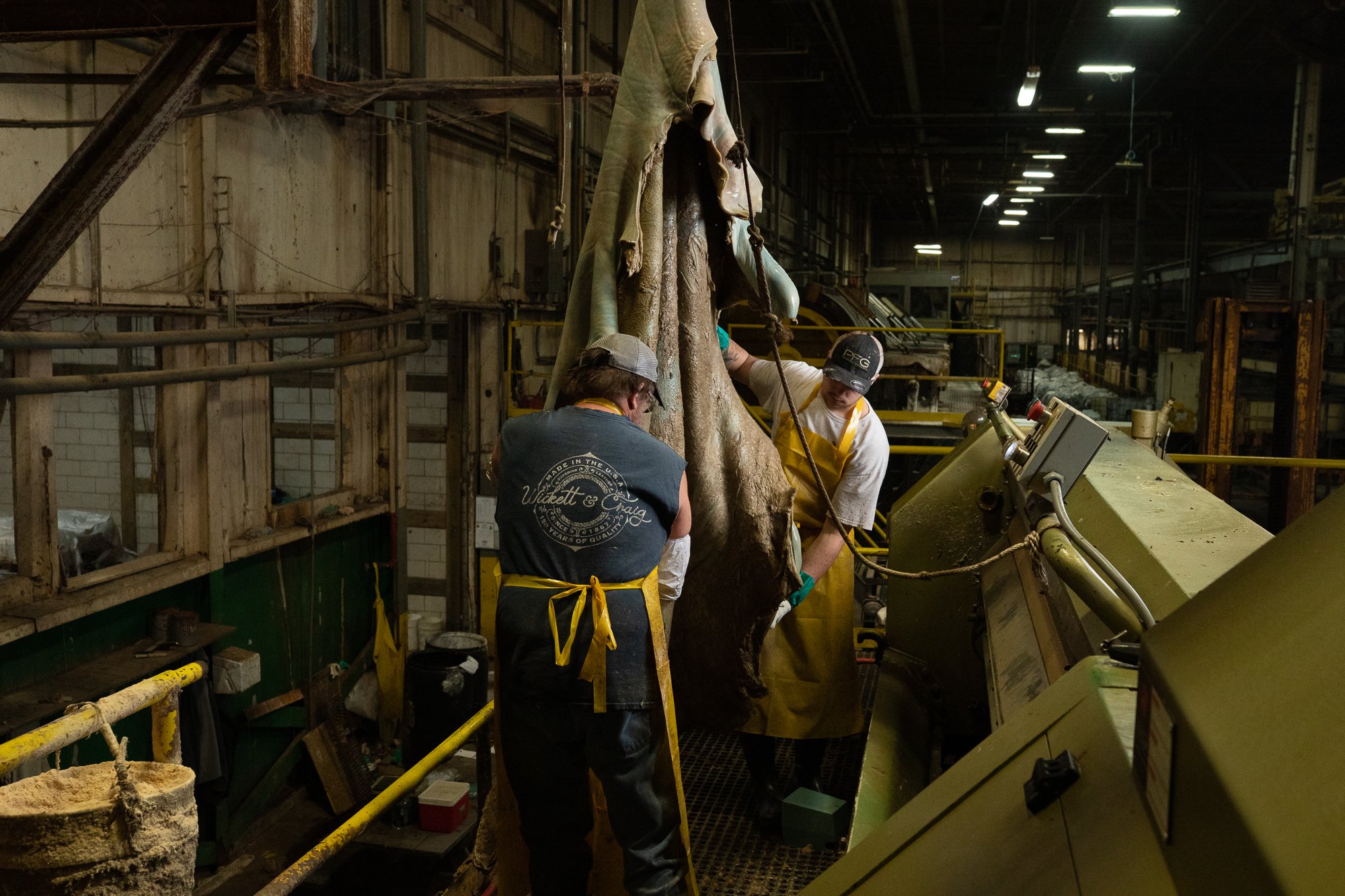
Two workers handle a suspended hide beside industrial machinery at Wickett & Craig

Handling a hide this size takes two people.

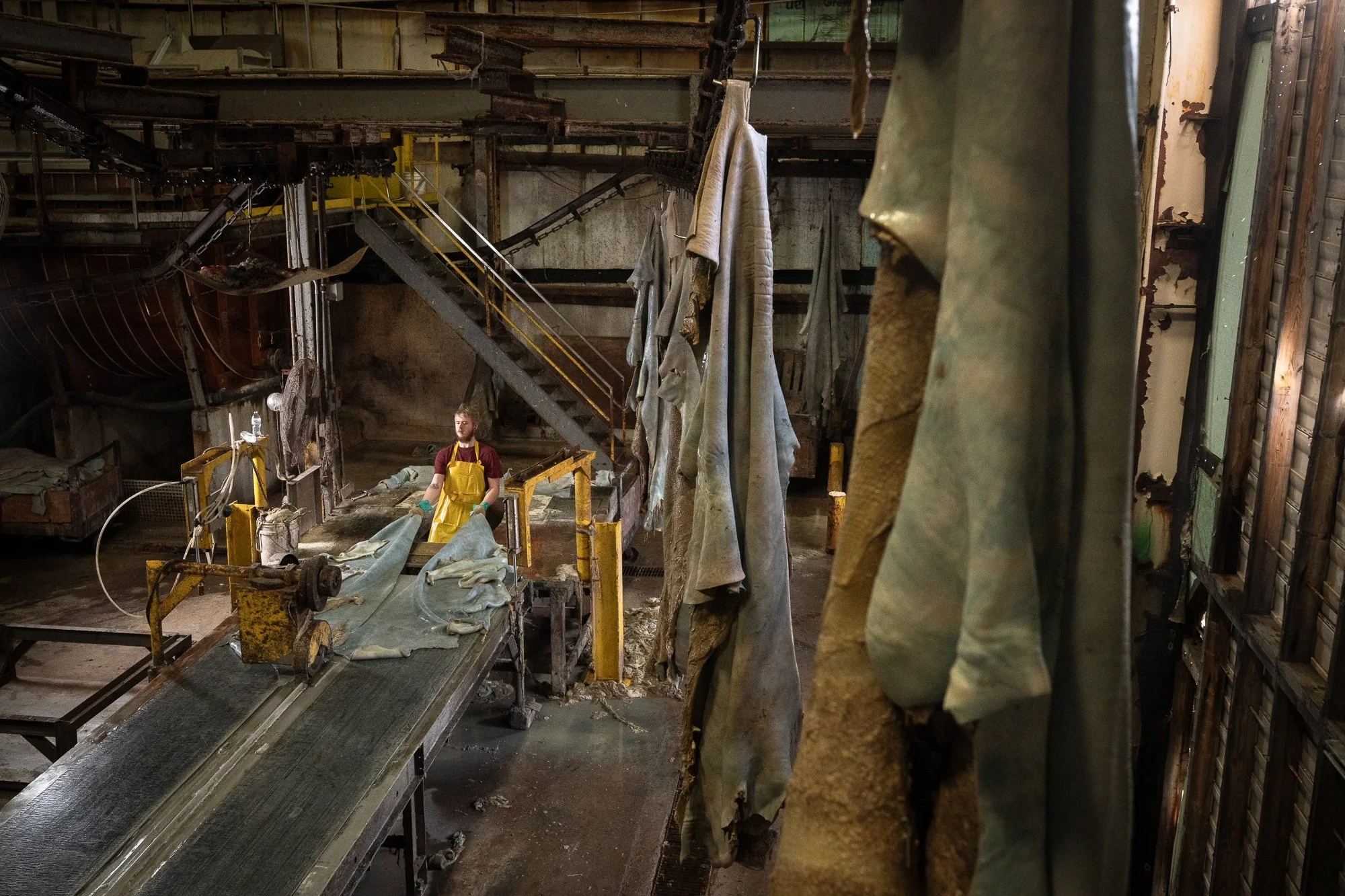
A worker handles leather hides on a conveyor inside the Wickett & Craig tannery in Pennsylvania

Conveyors, hanging hides, and machinery fill this section of the production floor.

A Tannery With More Than 150 Years of History

Wickett & Craig began making leather in Toronto in 1867 and remained there for more than a century. When the company relocated around 1990, it moved to Curwensville, a small Pennsylvania town in a region with its own long history of tanning and leather production.
Today, the company occupies a facility covering more than 16 acres. Although the machinery and production requirements have evolved over the years, Wickett & Craig continues to specialize in vegetable tanning at a time when much of the world's leather is produced using faster methods.

There is something compelling about seeing an old process continuing at a meaningful industrial scale. This isn't a demonstration of how leather used to be made or a historic workshop preserved for visitors. People are coming to work every day and producing leather that will be shipped to manufacturers and craftspeople around the world.

The history is interesting, but the fact that the work is still happening is what matters.

Photographing People at Work

The photographs from Wickett & Craig also fit into a much broader subject I've returned to throughout my career: people at work.

I've photographed inside barbershops across all 50 states, on cattle ranches throughout the American West, and in workshops, factories, and other places where people make things or work with their hands. The occupations are different, but many of the things that attract me to them are the same.

Working environments develop their own visual language. Tools end up in particular places because that's where they're needed. Buildings change around the work being done inside them. Clothing gets stained and machinery gets worn in predictable places. The environment gradually becomes a record of the work itself.

The people change too. Someone who has performed a task thousands of times moves differently from someone doing it for the first time. Those small gestures and routines often make better photographs than anything I could have staged.

That's why I'm generally most comfortable photographing people while they're actually doing something. Once the work starts, my presence becomes less important. The person I'm photographing has something else to concentrate on, which allows the photographs to become less about the camera and more about what is actually happening.

Interior of the Wickett & Craig tannery with leather, work tables, barrels, and industrial equipment on the production floor

Pipes, barrels, work tables, and leather give the production floor its distinctly industrial character.

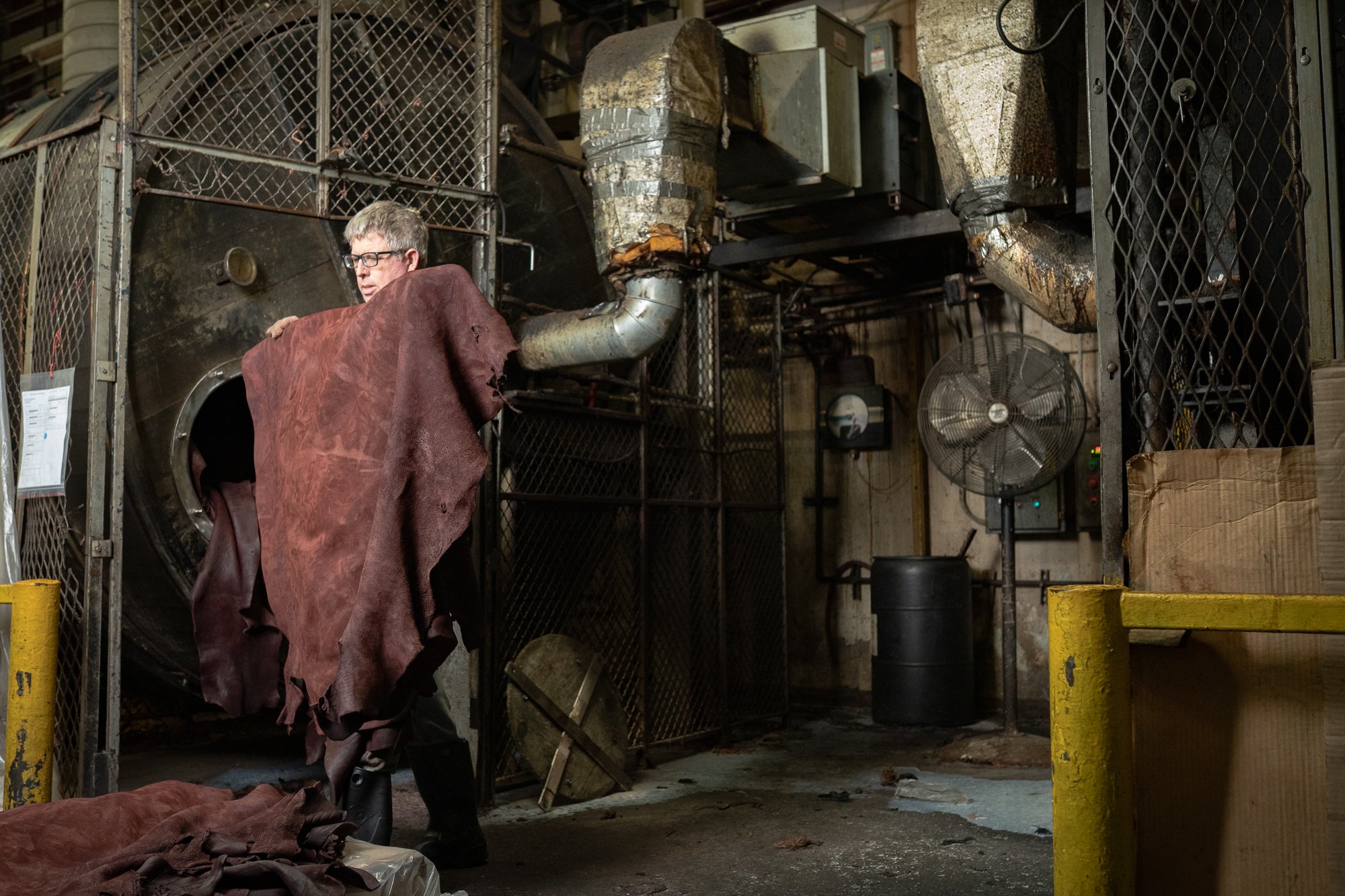
A folded leather hide is carried past metal machinery and stacked materials on the tannery floor

Moving hides from one part of the tannery to another is part of the daily work.

From the Tannery to the Cowboy

My interest in Wickett & Craig also connects naturally to my ongoing Cowboy Photography project.

Leather is one of the fundamental materials of cowboy culture, although it's easy to overlook because it is so commonplace. A working cowboy may spend much of the day surrounded by it without ever thinking of leather as a material in the abstract. It has already become a saddle, reins, a bridle, boots, chaps, or a belt. It's equipment.

The leather I've photographed on ranches also tends to be at the opposite end of its life from what I saw at Wickett & Craig. Saddles have been shaped by years on horseback, reins darkened by hands, sweat, and weather, and boots scratched and covered in dust. Good leather records its use, which is part of what makes old cowboy gear so visually interesting.

At Wickett & Craig, I was seeing the material before any of that happened. Before a saddlemaker or leatherworker turned it into something useful, and long before years of work gave it the character I'm accustomed to photographing.

Some of the heavier leather produced at Wickett & Craig ultimately becomes saddles, bridles, straps, and other equestrian equipment. That creates a direct line between a tannery in a small Pennsylvania town and the ranches I've photographed thousands of miles away in the West.

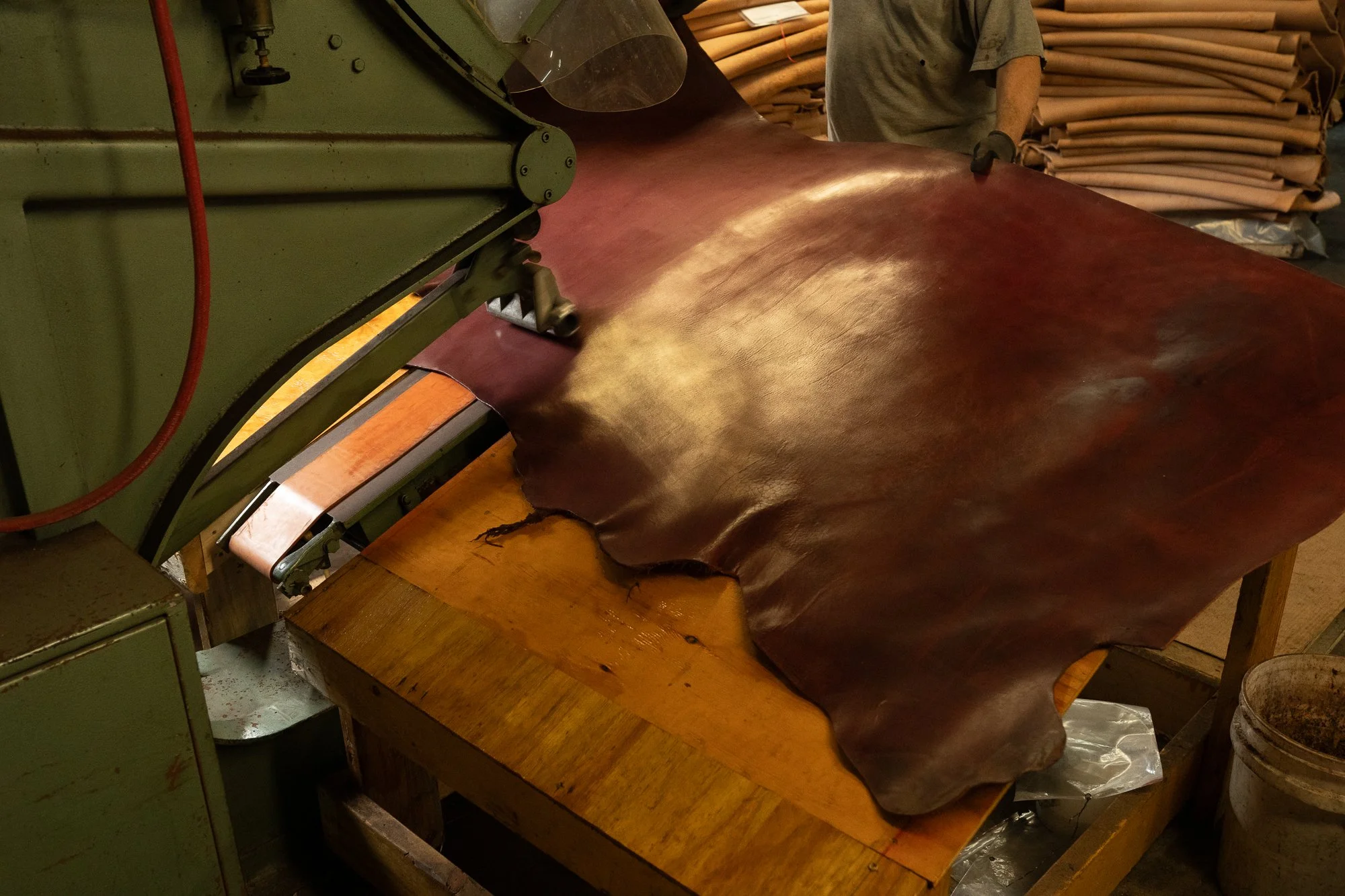
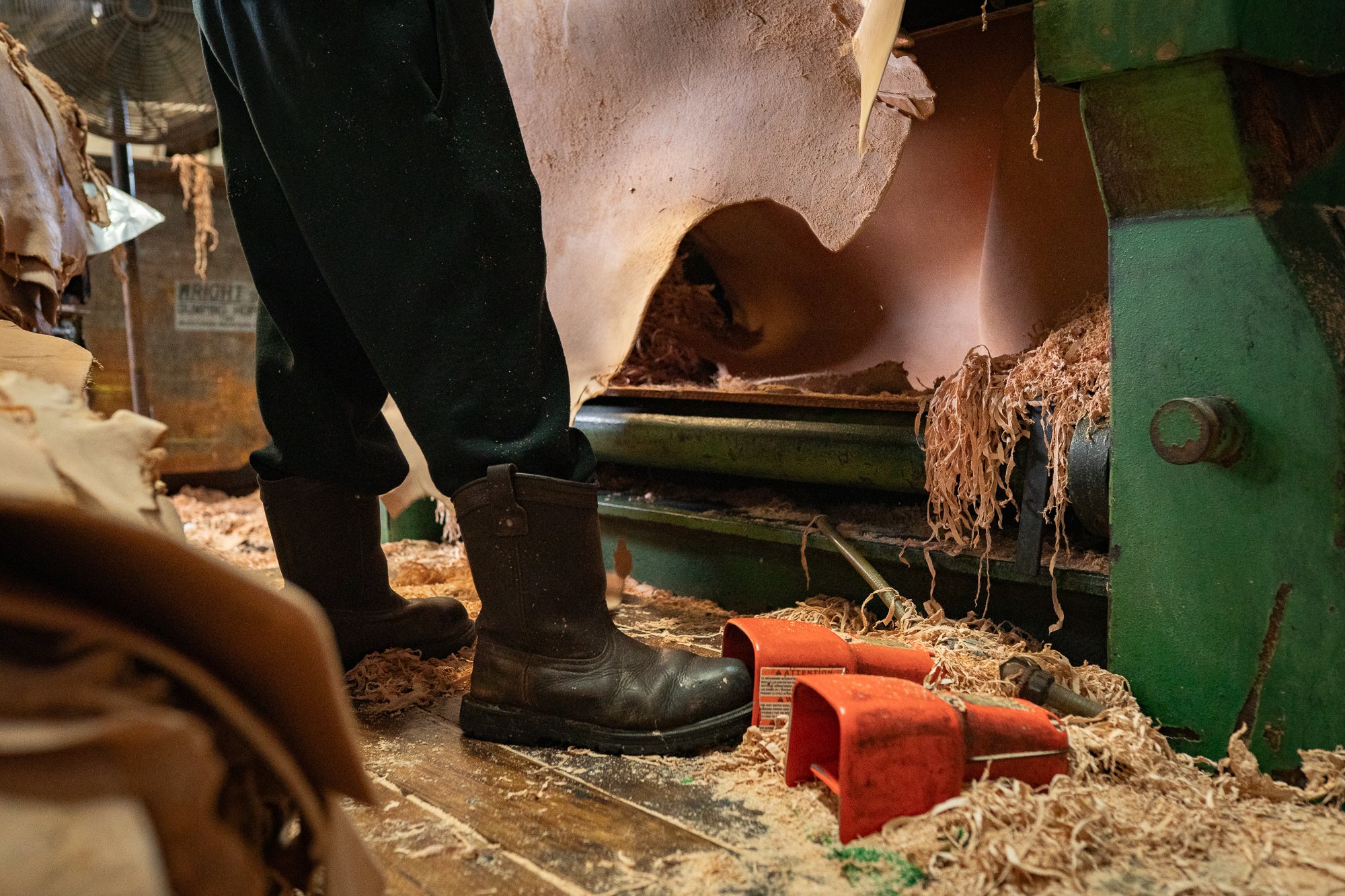
A broad brown leather hide feeds through a large metal processing machine as it is guided by hand

Near the end of the process, leather passes through one of the tannery's finishing machines.

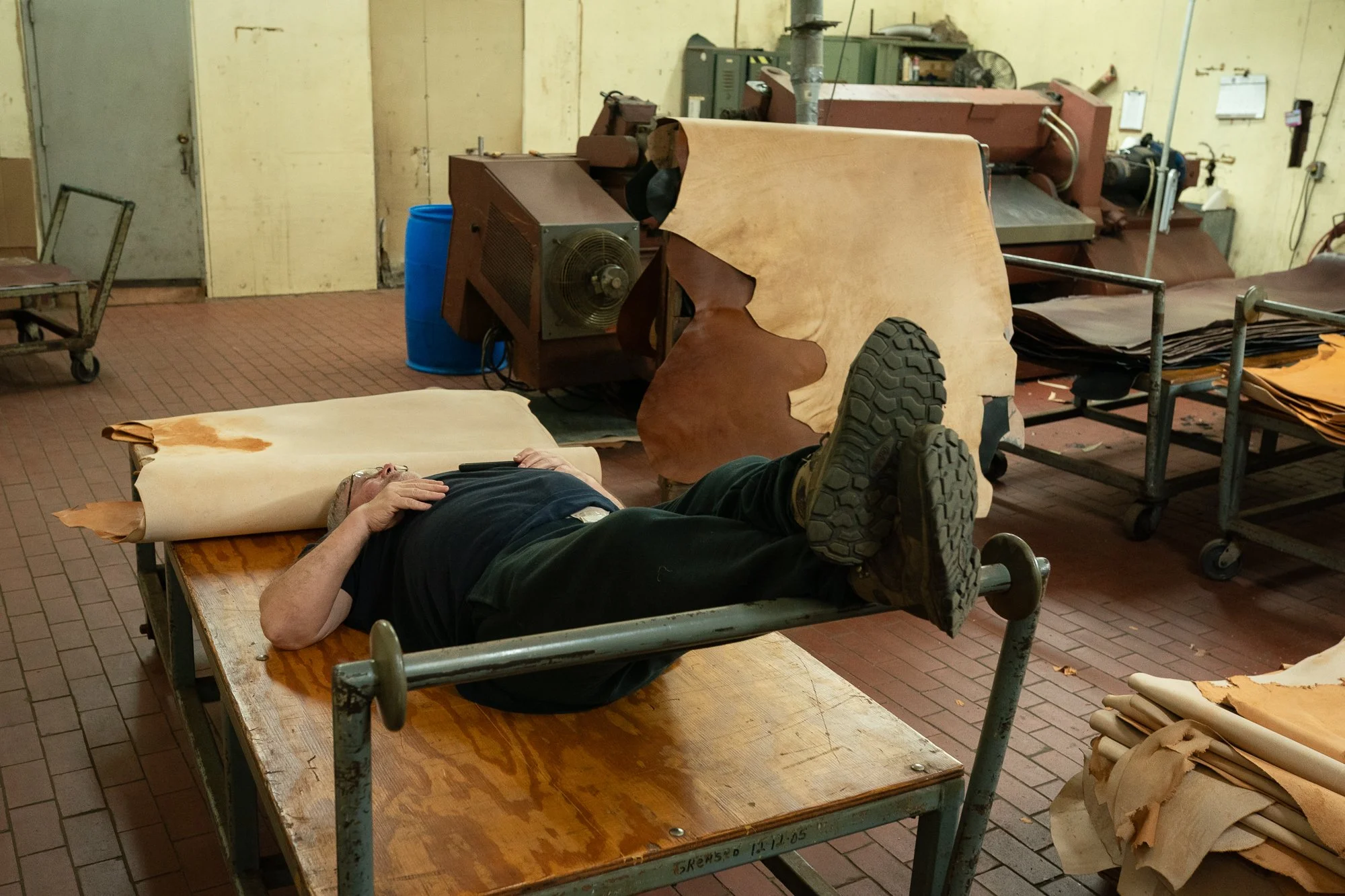
A worker lies on a work table surrounded by leather hides and processing equipment inside the Wickett & Craig tannery

A brief pause after a long day of work, surrounded by leather and equipment.

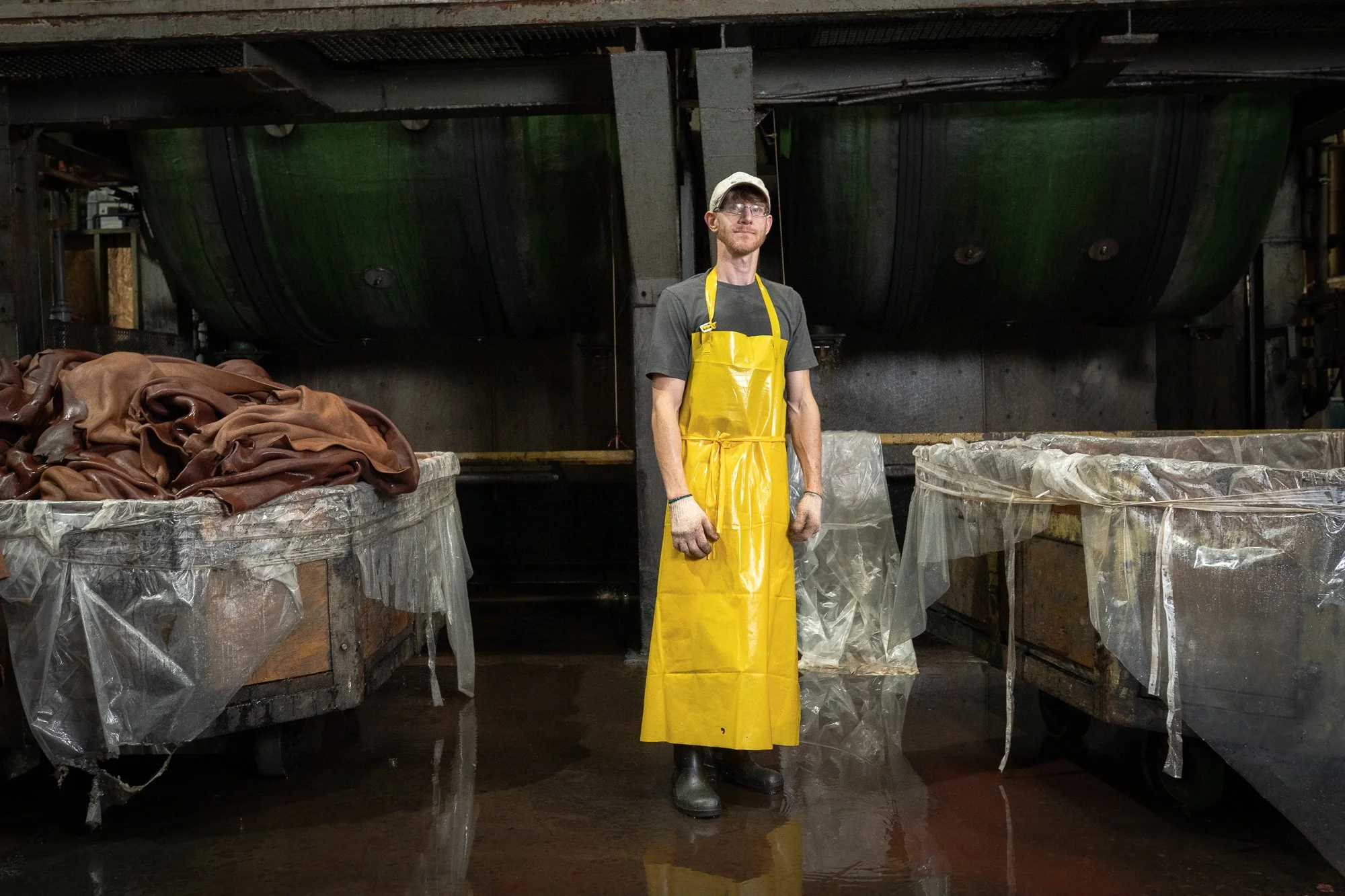
A portrait surrounded by carts loaded with leather on the tannery's production floor

A portrait between the carts of leather and large drums on the tannery floor.

The Work Before the Work

One of the things I like about photographing manufacturing is that it exposes parts of everyday objects that are normally invisible.

When you look at a well-made saddle, it's natural to think about the saddlemaker. You see the stitching, tooling, construction, and design and understand that someone had to know how to make it. What is much easier to forget is that the craftsman began with a material somebody else had already spent weeks making.

The same is true of boots, belts, bridles, and countless other leather goods.

By the time those objects reach the people who use them, the tannery has disappeared from the story. There is no obvious evidence of the vats, drums, drying racks, machinery, or workers in Pennsylvania who handled the leather long before it became a finished object.

That's part of what made Wickett & Craig worth photographing.

My Cowboy project is largely about documenting a working culture that still exists despite the tendency to talk about the American West in the past tense. The same idea applies here. Wickett & Craig isn't interesting simply because the company was founded in 1867 or because vegetable tanning is an old process.

It's interesting because people are still doing the work.

A hide comes into the tannery. Over the next several weeks, people and machines transform it into leather. That leather leaves Pennsylvania and becomes something else in somebody else's hands. Eventually, some of it will wind up on a horse or a ranch, where another kind of work begins.

The tannery and the cowboy might seem like two completely different subjects.

For me, they're connected by the same thing: the work.

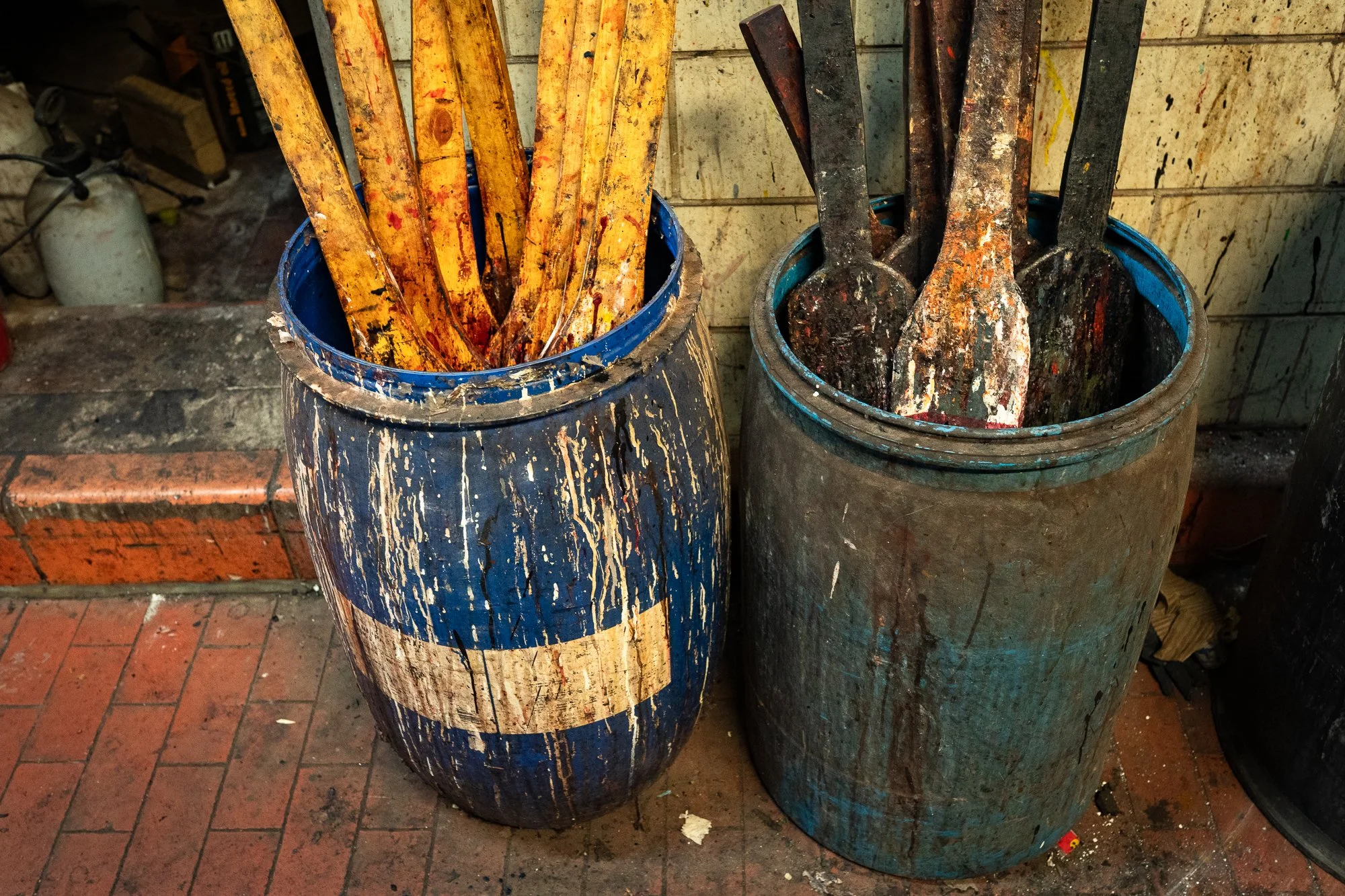
Worn tools stand in two barrels inside the Wickett & Craig tannery

Years of use show up in the tools and equipment around the tannery.

A worker handles a leather hide beside industrial processing machinery at Wickett & Craig

The work continues around the large processing machines inside the tannery.

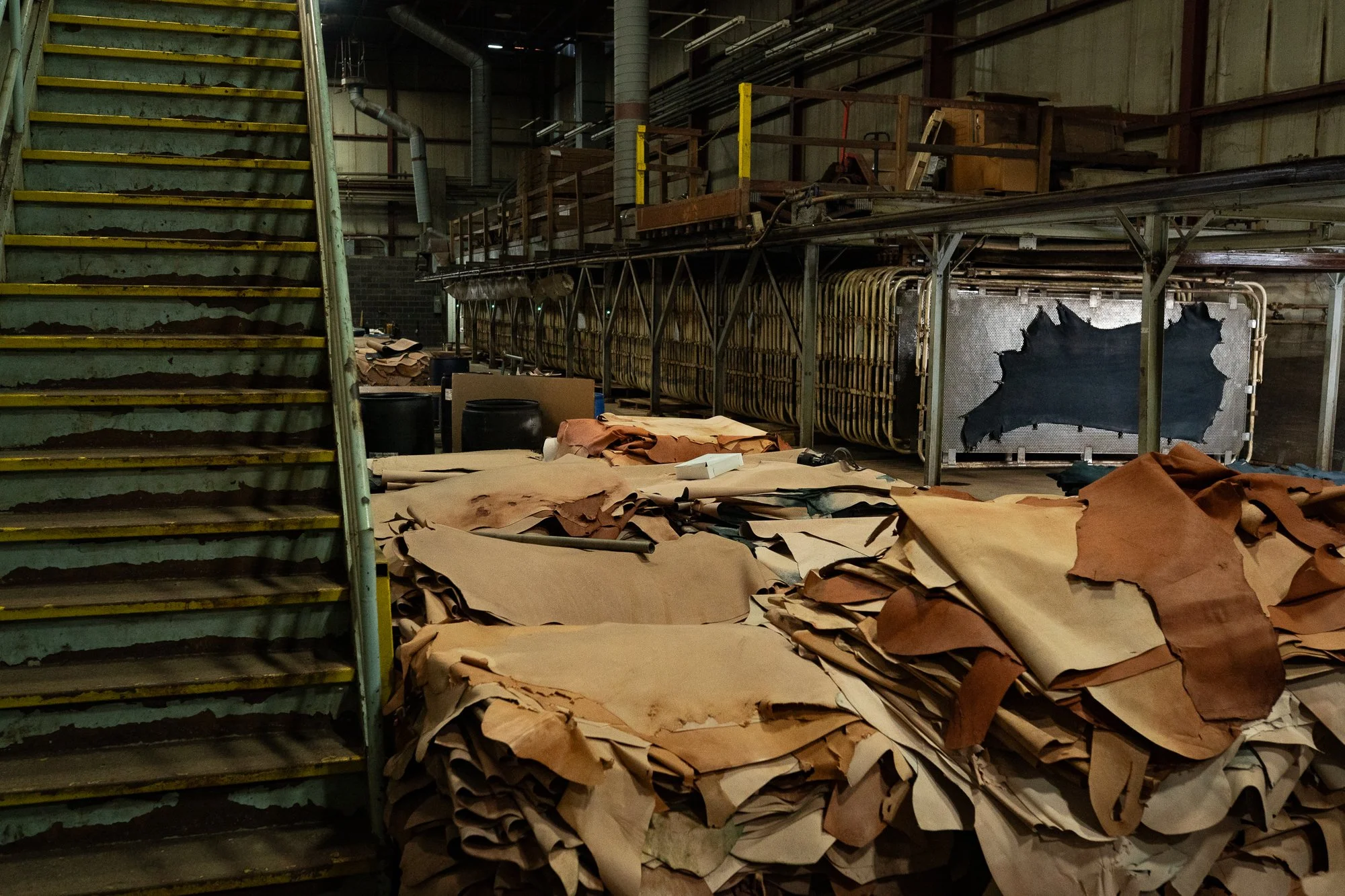
Stacks of brown leather hides fill a production area alongside machinery, carts, and work surfaces

Stacks of leather wait alongside the machinery and work areas throughout the facility.

Photographing Wyoming: Cowboys, Ranches & the Open Road

Wyoming Photography: Cowboys, Ranches, Small Towns & the American West

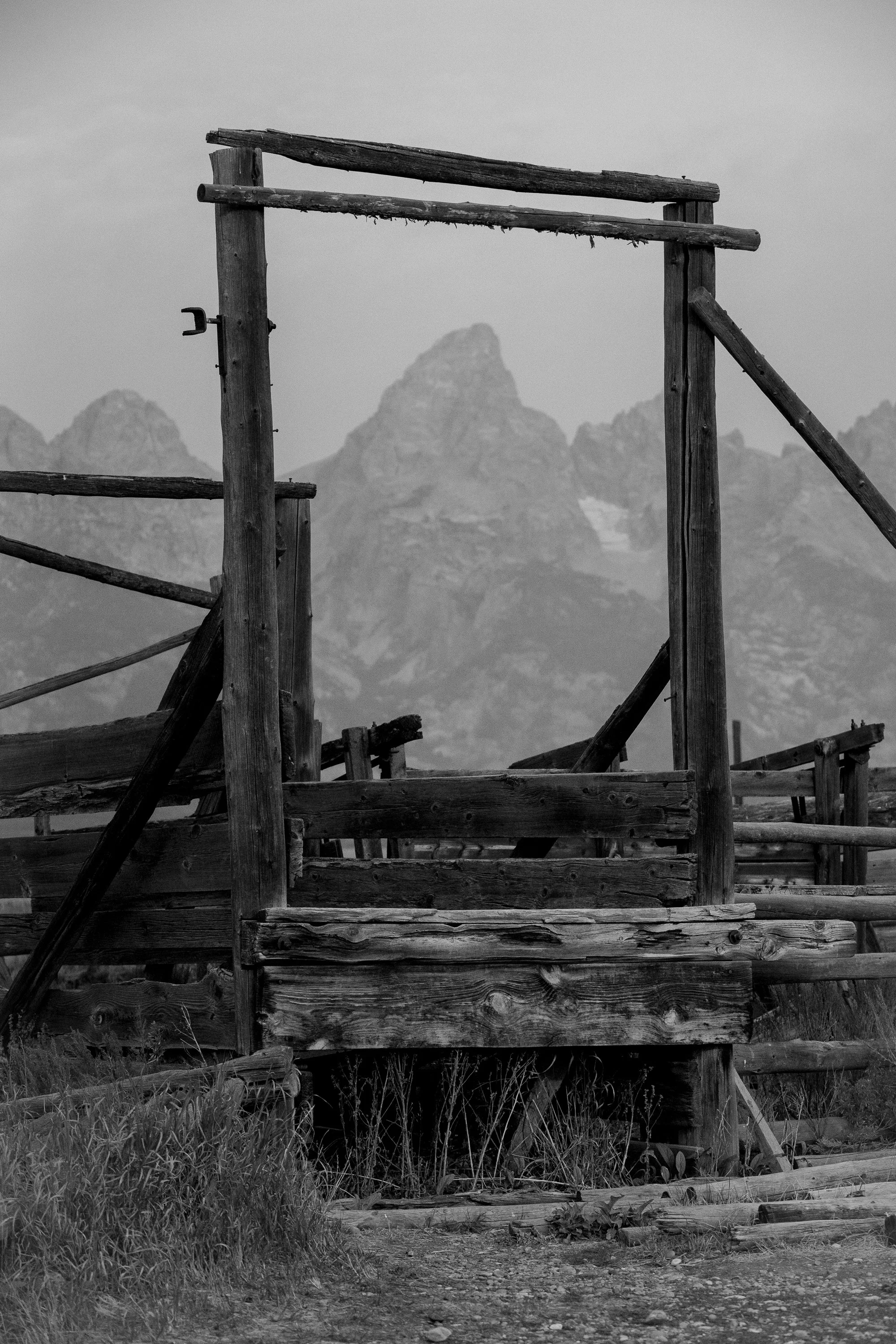
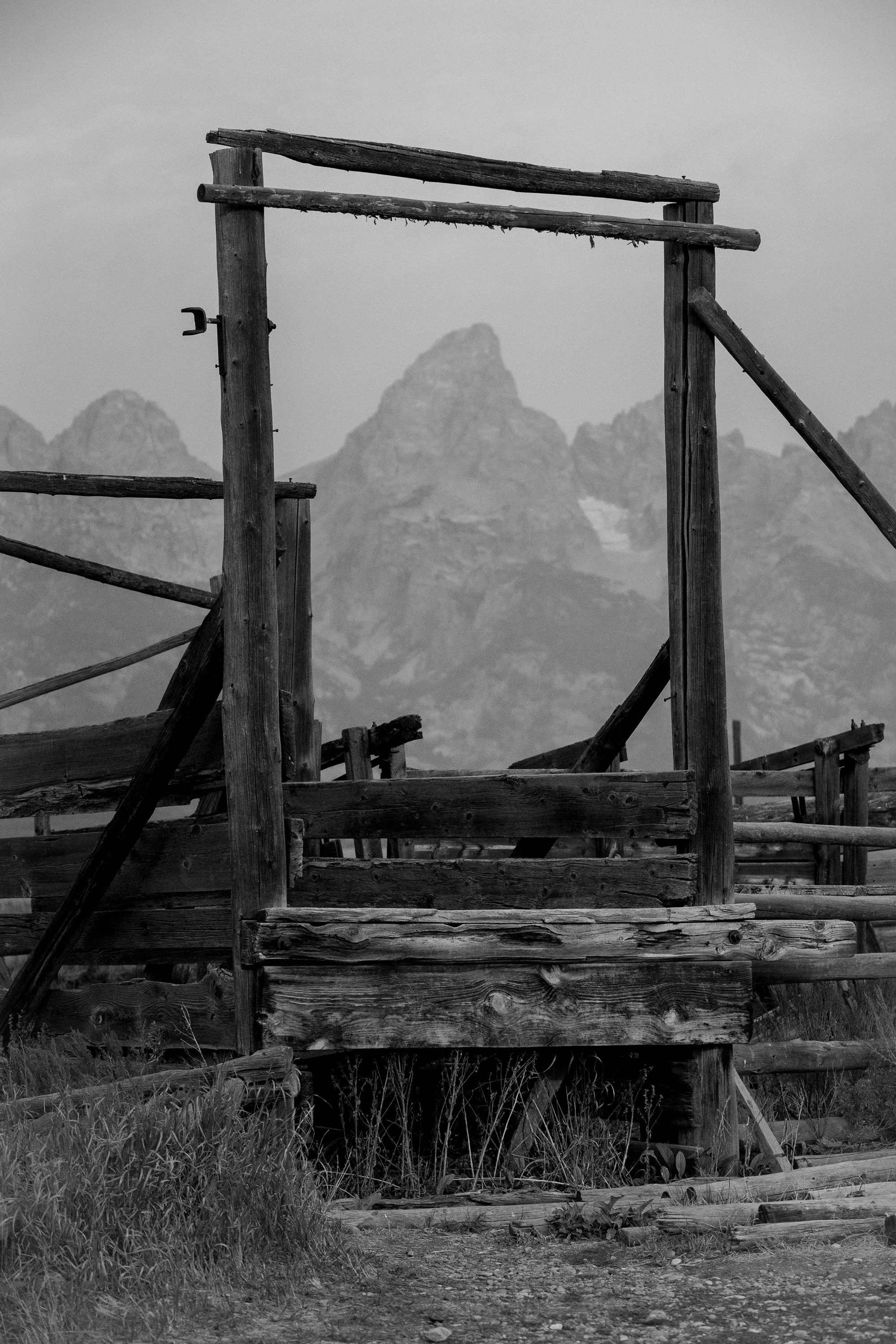
Weathered wooden ranch corrals with Wyoming mountains in the distance

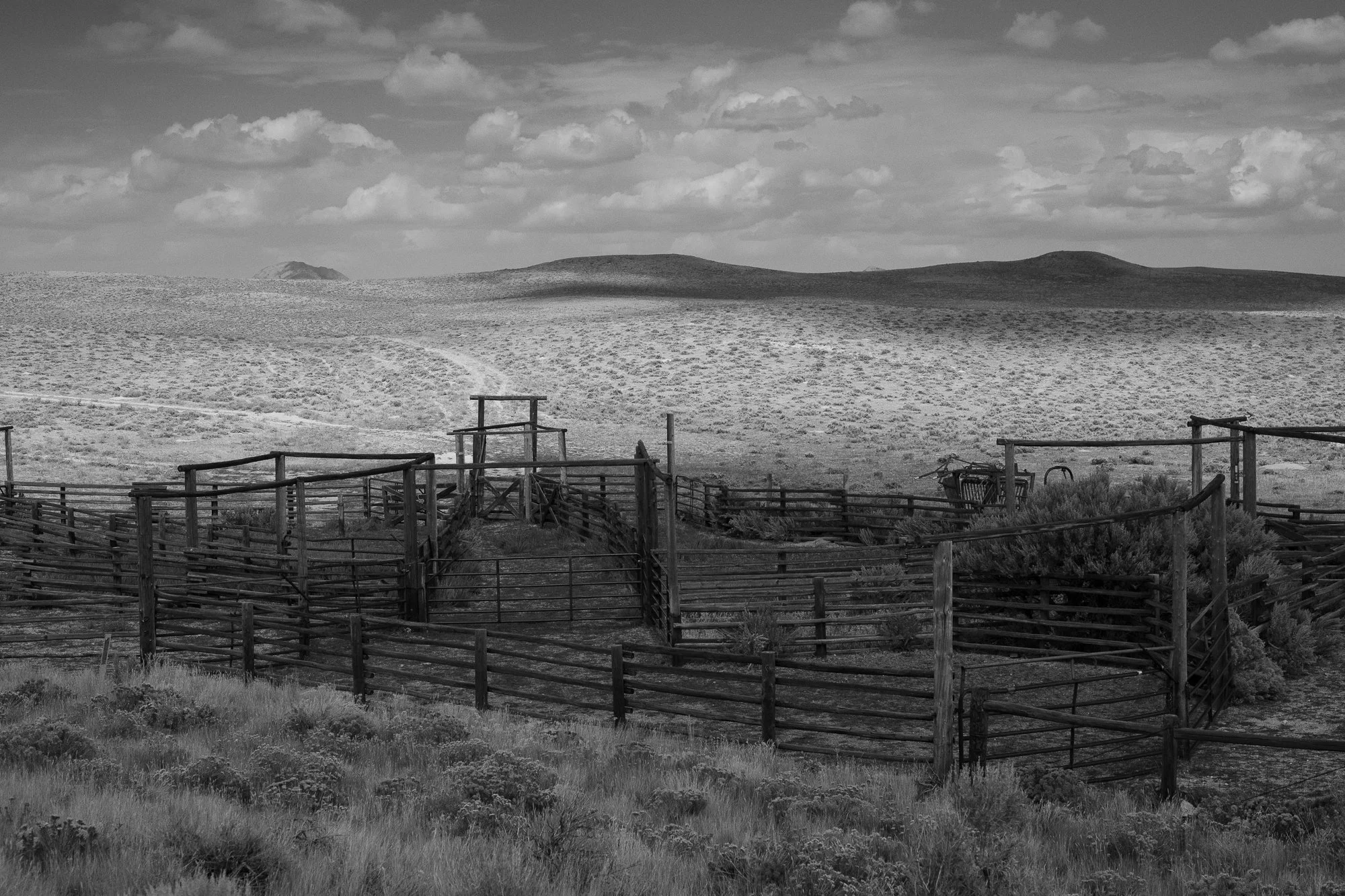
Weathered wooden corrals sit against the mountains in the distance.

I've spent a lot of time driving through Wyoming over the years, usually with somewhere specific to be and enough time built into the trip to stop when something catches my attention. And in Wyoming, that happens a lot.
Most photography of Wyoming understandably focuses on the obvious places. Yellowstone, wildlife, etc etc. All of which deserve the attention they get. But that's never really been what keeps me coming back with a camera.

I'm more interested in the Wyoming between those places.

The working ranches. Cowboys. Small towns. Rodeos. Bars. Old motels. Empty highways. People going about their lives. And all the strange, quiet things you find after enough hours on the road.

Over the years, those photographs have become part of several long-term bodies of work documenting the American West. Taken together, they tell a story about Wyoming that has less to do with its famous scenery and more to do with what it feels like to spend time there.

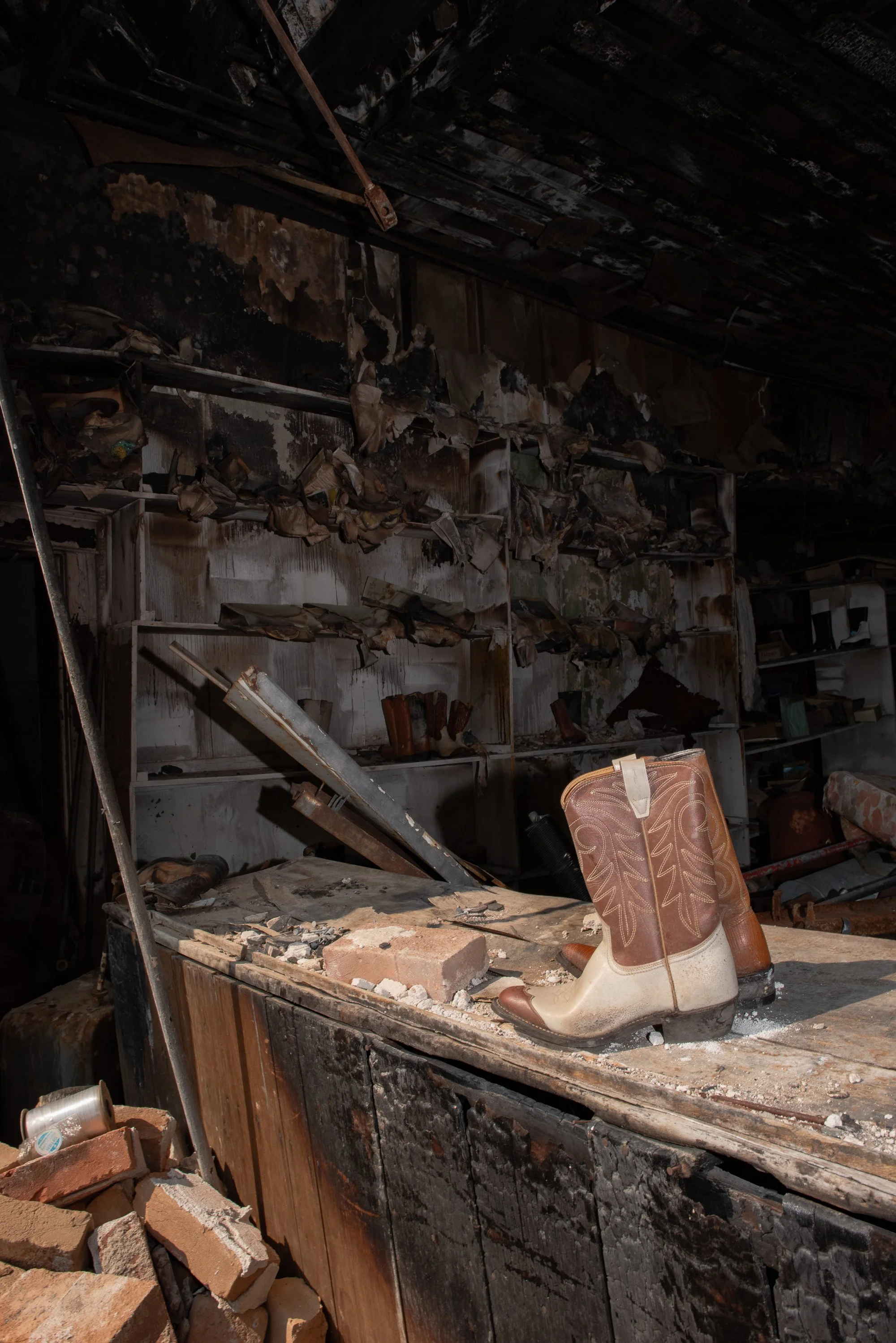
Worn cowboy boots resting on a workbench inside an old Western building

Worn cowboy boots sit among the tools and debris in a burned out building.

Photographing Wyoming Beyond The Instagram Hot Spots

There probably isn't another state in America as visually associated with the West as Wyoming. It's hard to separate the place from the mythology surrounding it.

The landscape certainly has something to do with that. Everything feels bigger. Towns are separated by enormous stretches of nothing. Weather can change quickly. Mountains appear on the horizon and stay there for hours.

But the longer I've photographed Wyoming, the more interested I've become in the evidence of people living inside that landscape.

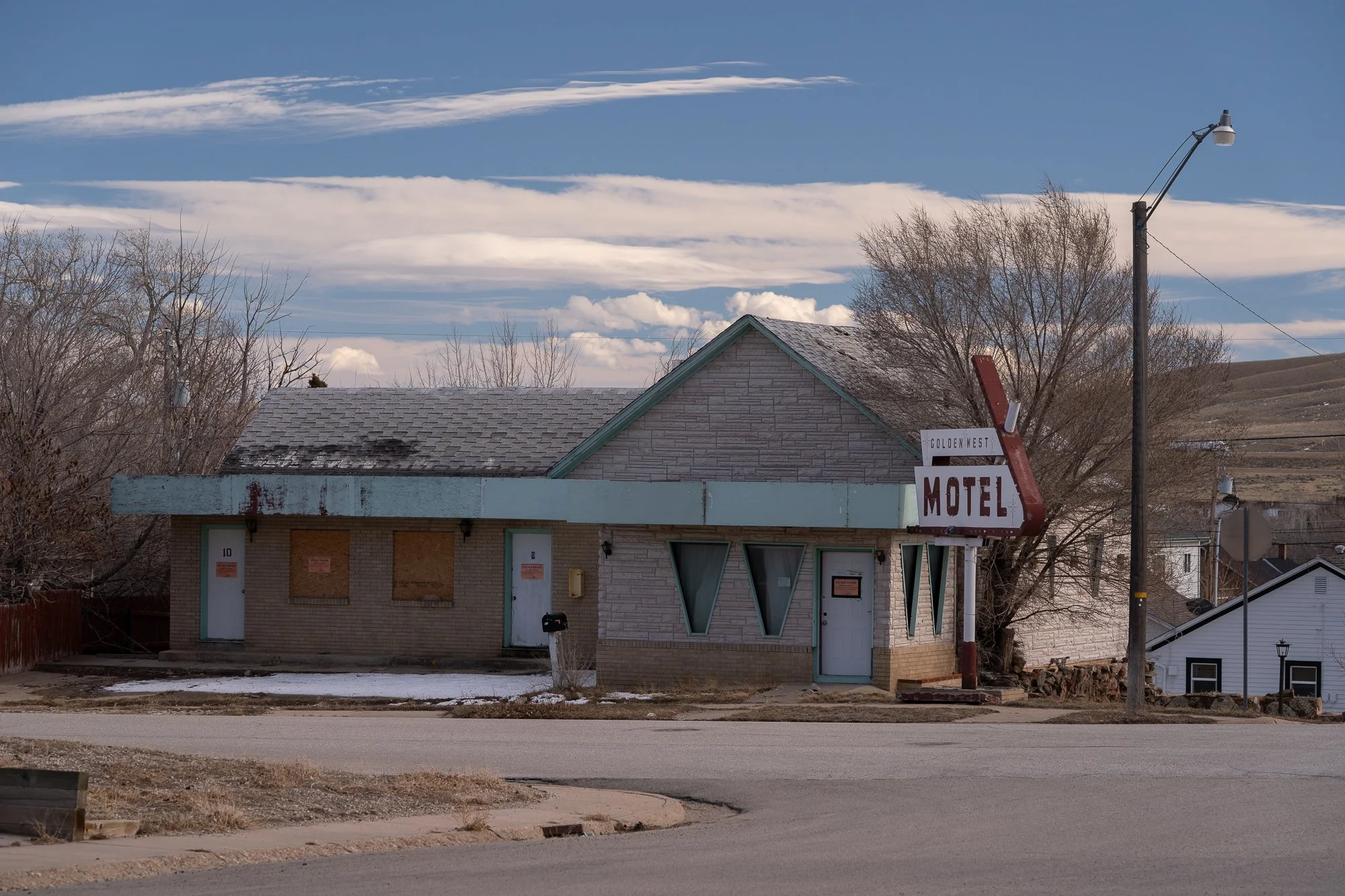
A faded motel sign. An old truck parked outside a bar. A gas station in the middle of nowhere. Horses standing behind a fence. A main street that looks like it hasn't changed much in 40 years.

None of those things are unique to Wyoming on their own. Together, though, they start to describe the place in a way that another photograph of the Tetons can't.

That's the Wyoming I keep looking for.

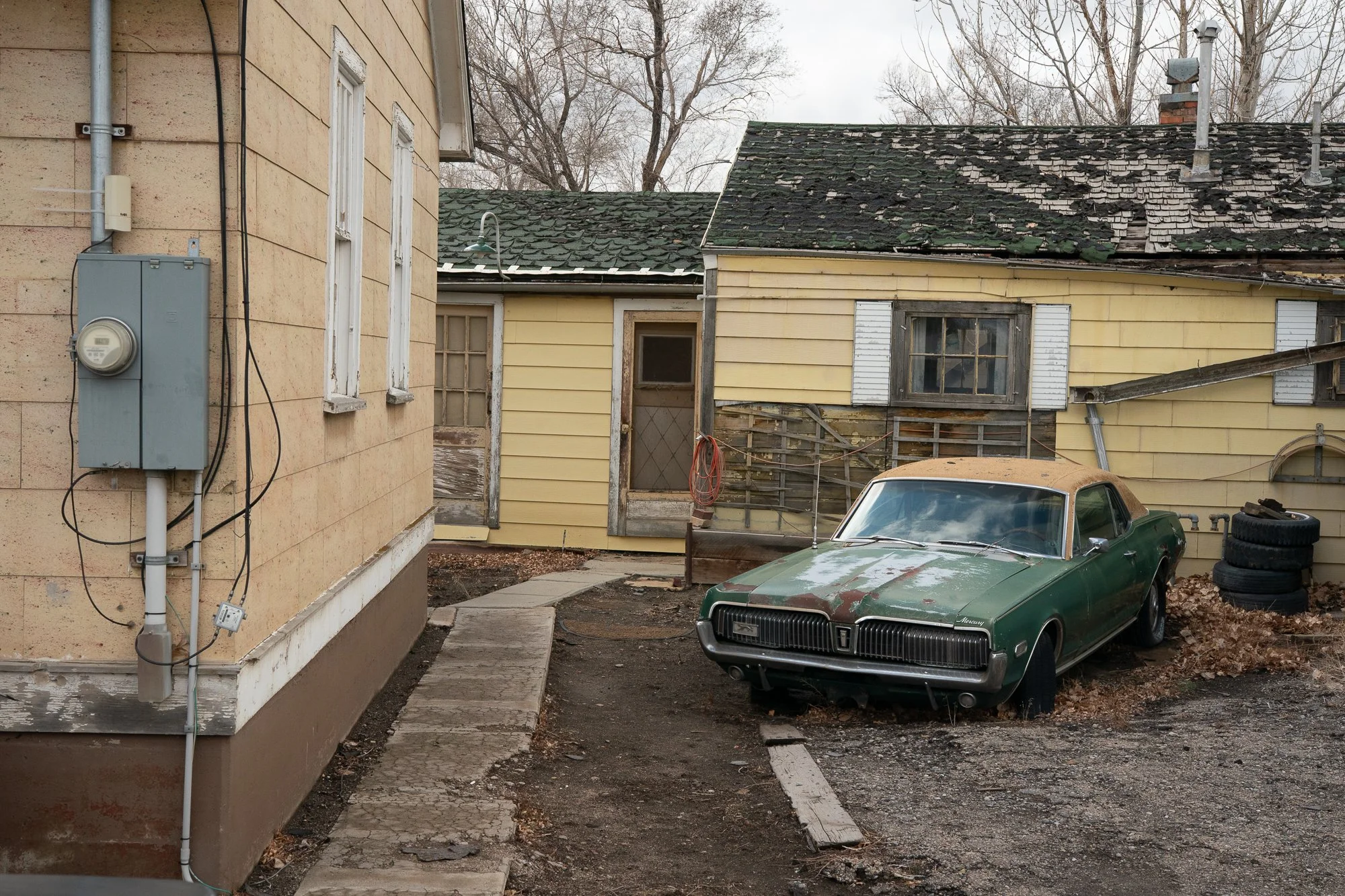
Weathered green vintage car parked beside an old Wyoming building

An old car parked beside a dilapidated building adds another detail along the road.

Man sitting in a pickup truck with an American flag on a Wyoming street

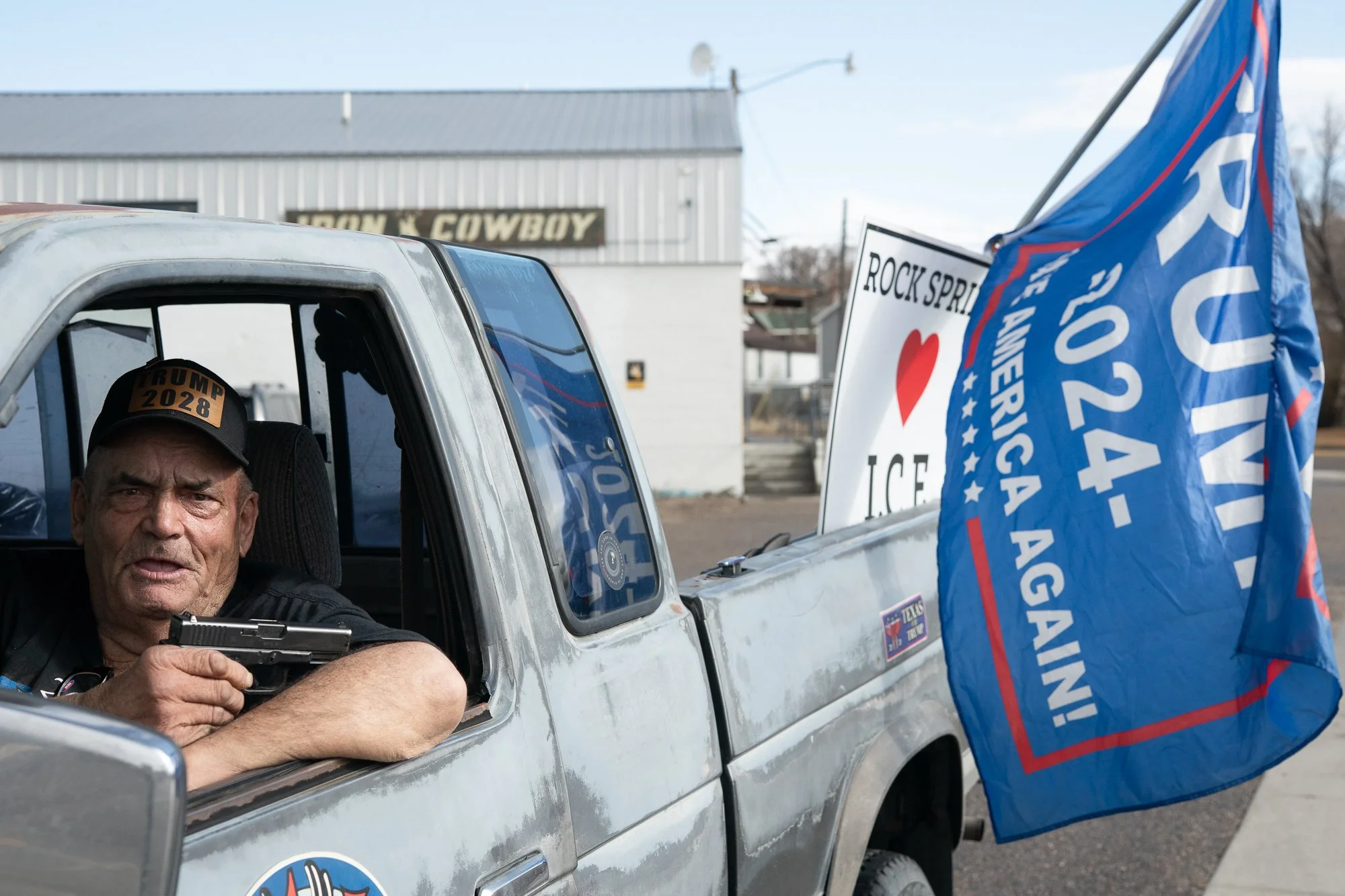
A man holding a gun sits in his truck with a Trump flag hanging off the tailgate.

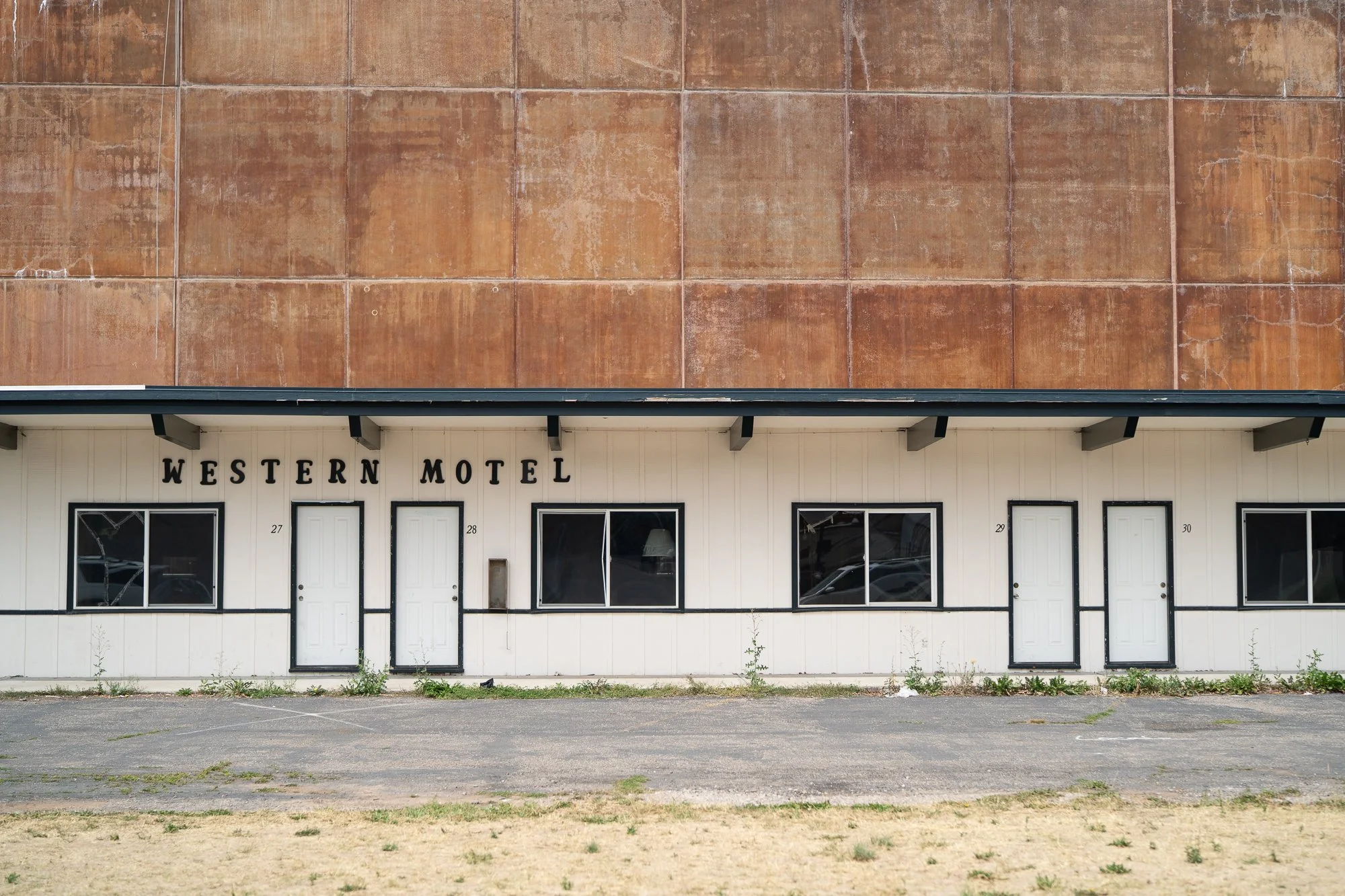
Old motel beside a Wyoming road with rocky cliffs behind it

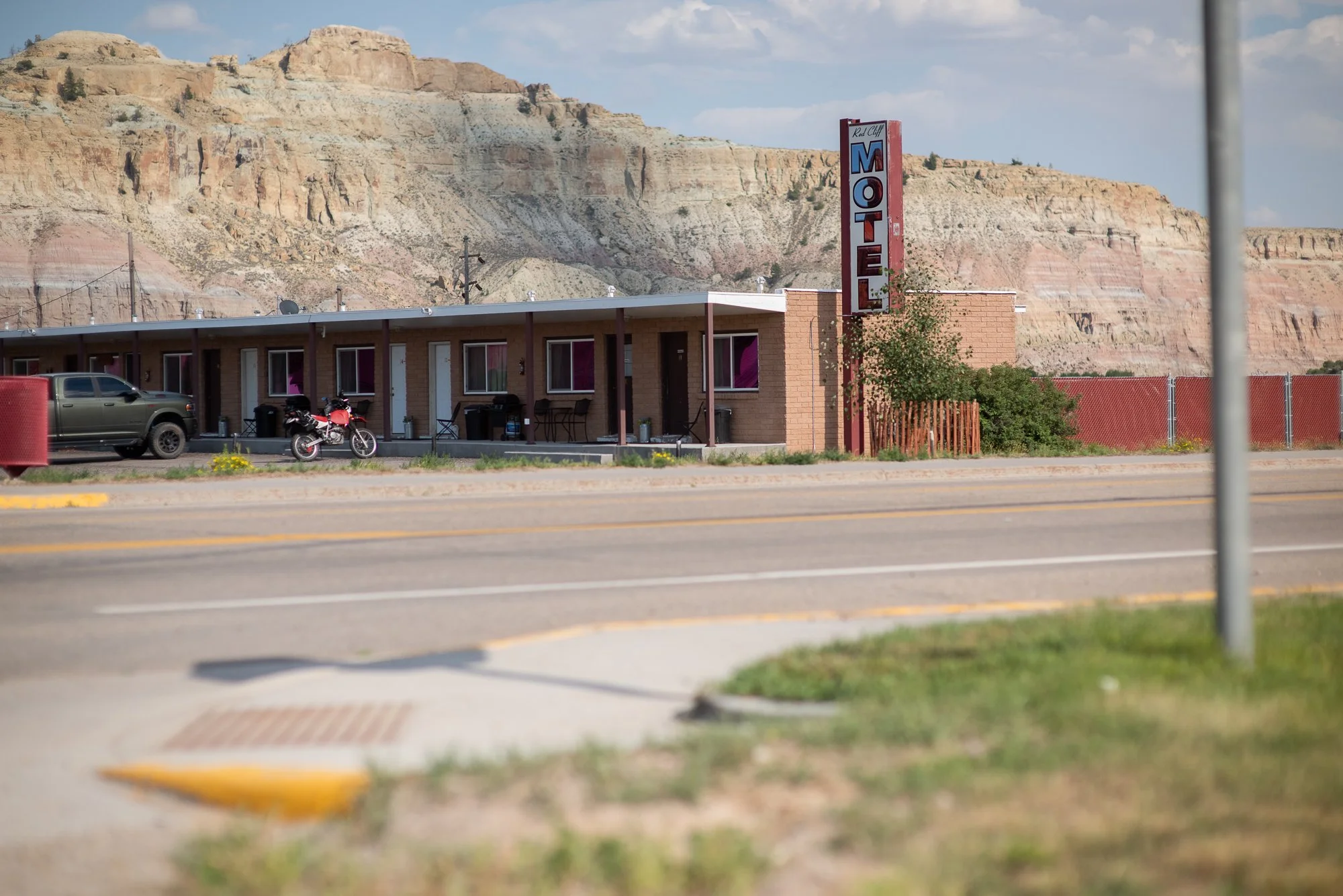
The old motel sits beside the road with rocky cliffs behind it.

Package liquor storefront with Bud Light sign in a Wyoming town

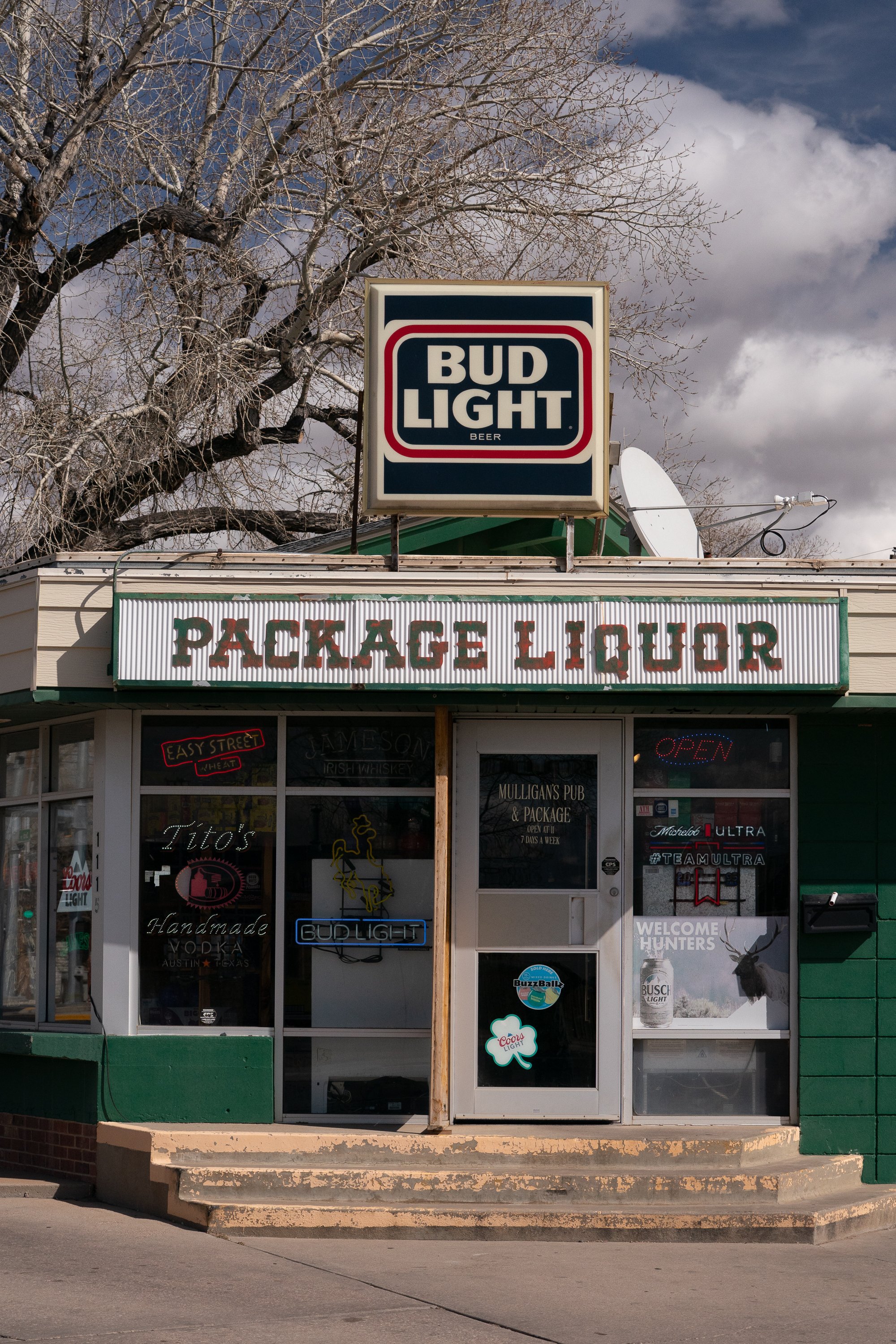
Old signs and storefronts are part of the small-town landscape.

Wyoming Cowboy Photography

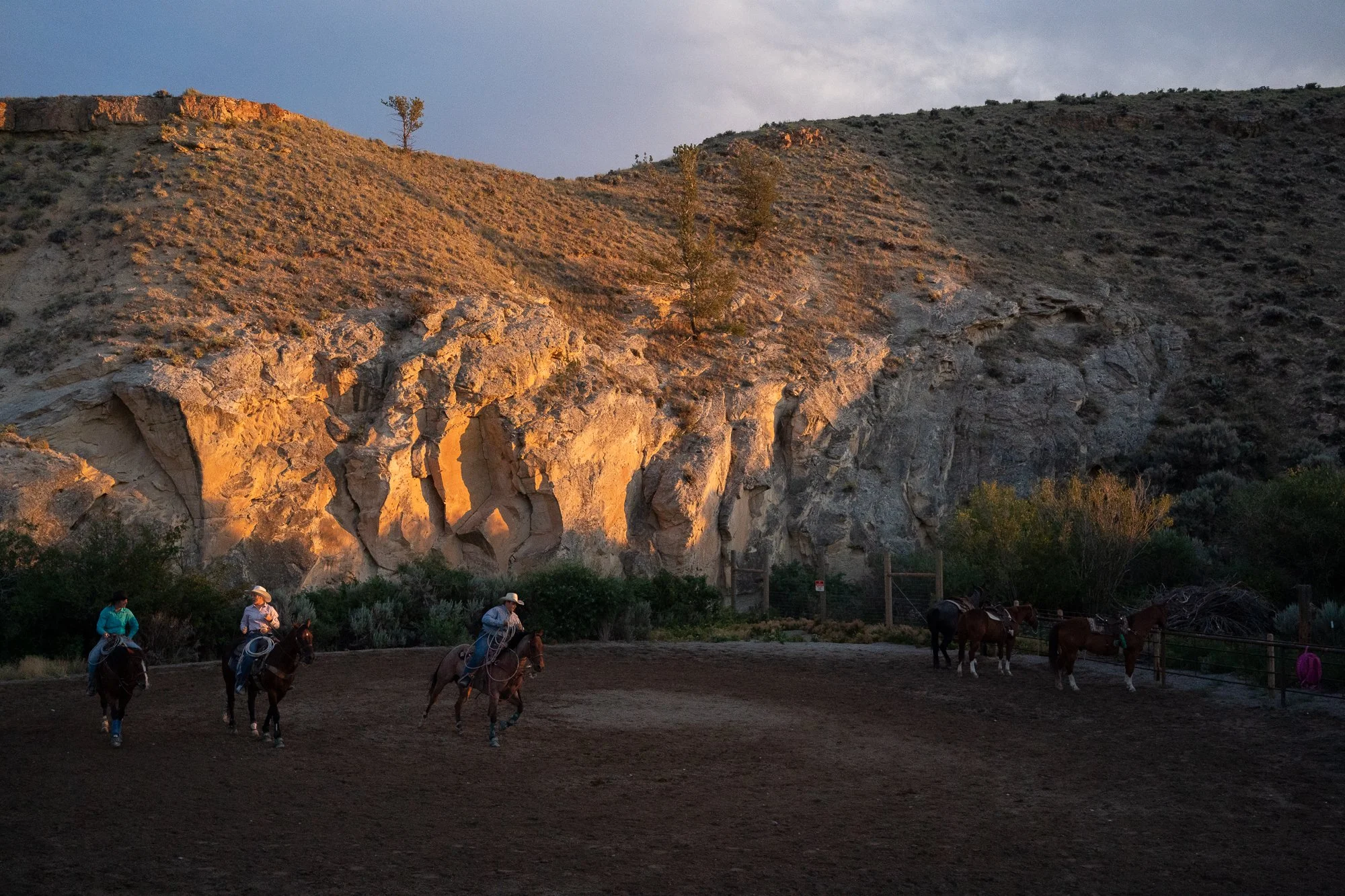
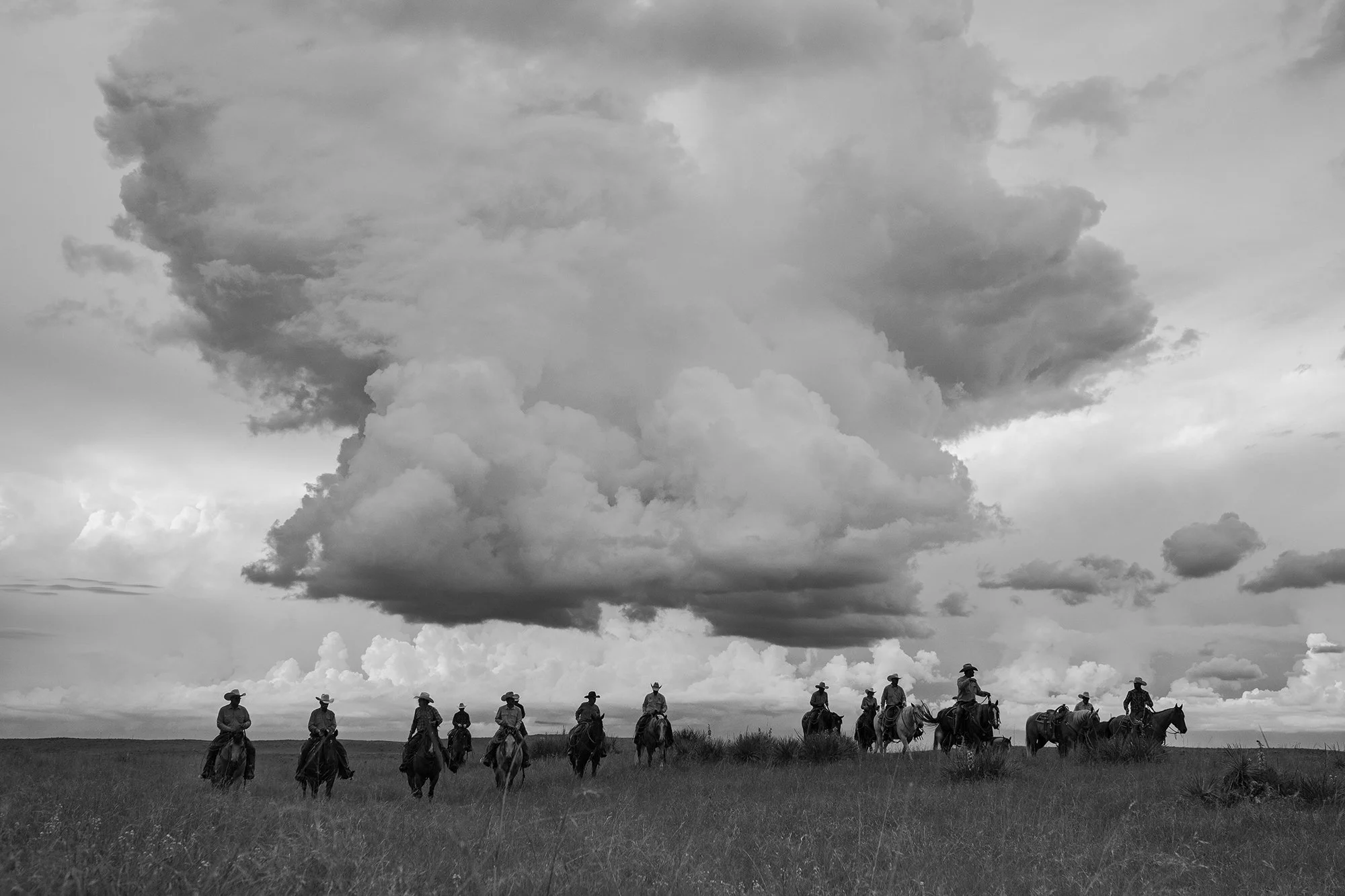
For the past several years, a significant part of my work has focused on working cowboys and ranches throughout the American West.

There's an enormous difference between photographing the idea of a cowboy and photographing someone who actually makes a living horseback.

The work isn't performed for the camera. Cattle need to be gathered and moved. Calves need to be branded. Fences need fixing. Horses need to be saddled. The weather doesn't care that you're trying to make photographs.

That's precisely what makes it interesting.

When I'm photographing cowboys in Wyoming, I'm not interested in manufacturing some romantic version of the West that doesn't exist. I'm interested in the things that happen naturally when people are doing work they've spent their lives learning how to do.

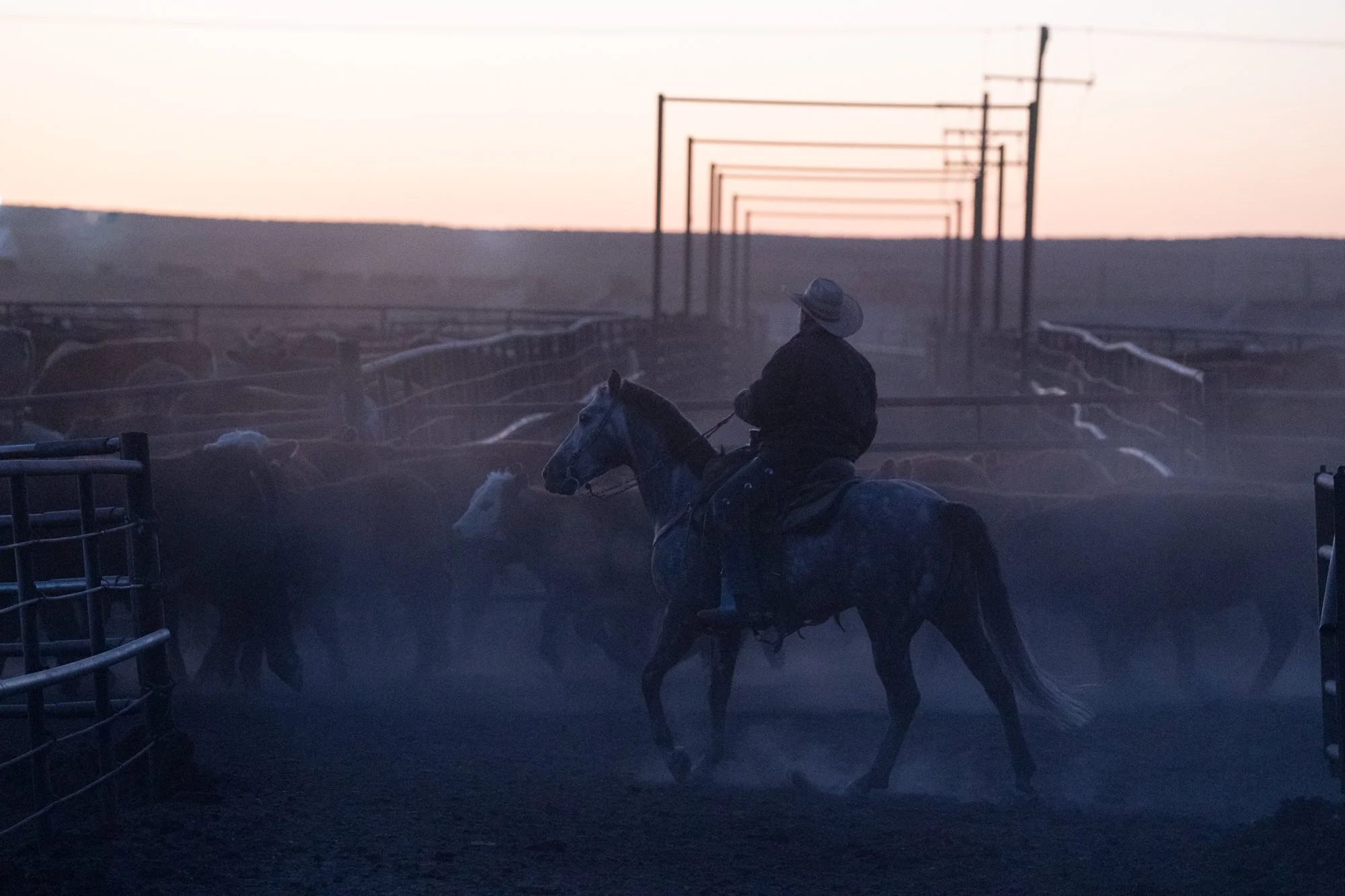
A rider disappearing into a cloud of dust. The way a horse and cowboy move together while sorting cattle. Frozen hands early in the morning. Long stretches where nothing particularly dramatic happens, followed by thirty seconds when everything happens at once.

Those moments are what have kept me working on this project year after year.

They also serve as a reminder that the American cowboy isn't simply a historical character. Ranching culture is still very much alive in Wyoming.

Weathered wooden cattle corrals on a working ranch in Wyoming

Weathered cattle corrals sit below the rolling hills on a working ranch in Wyoming.

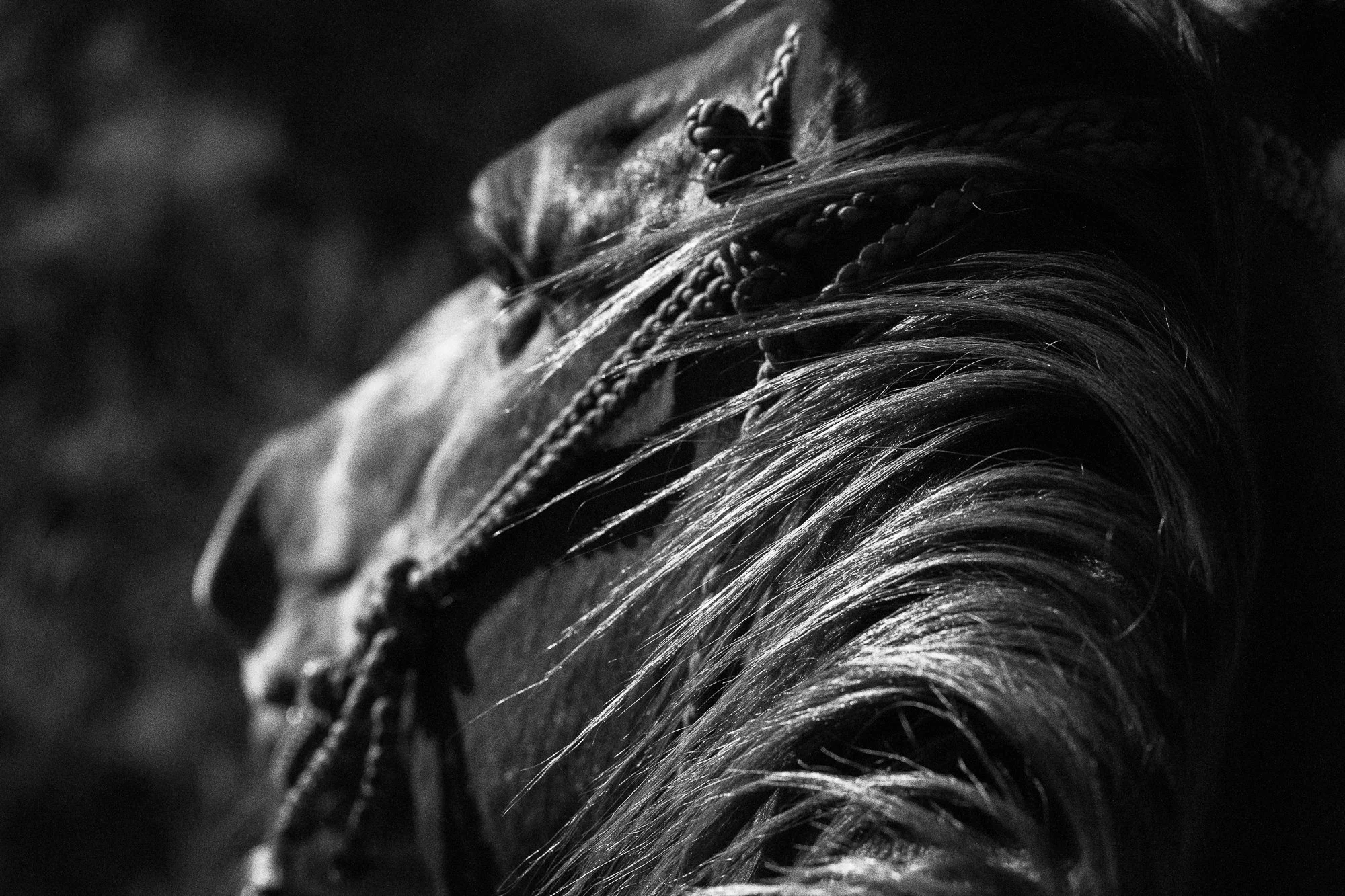
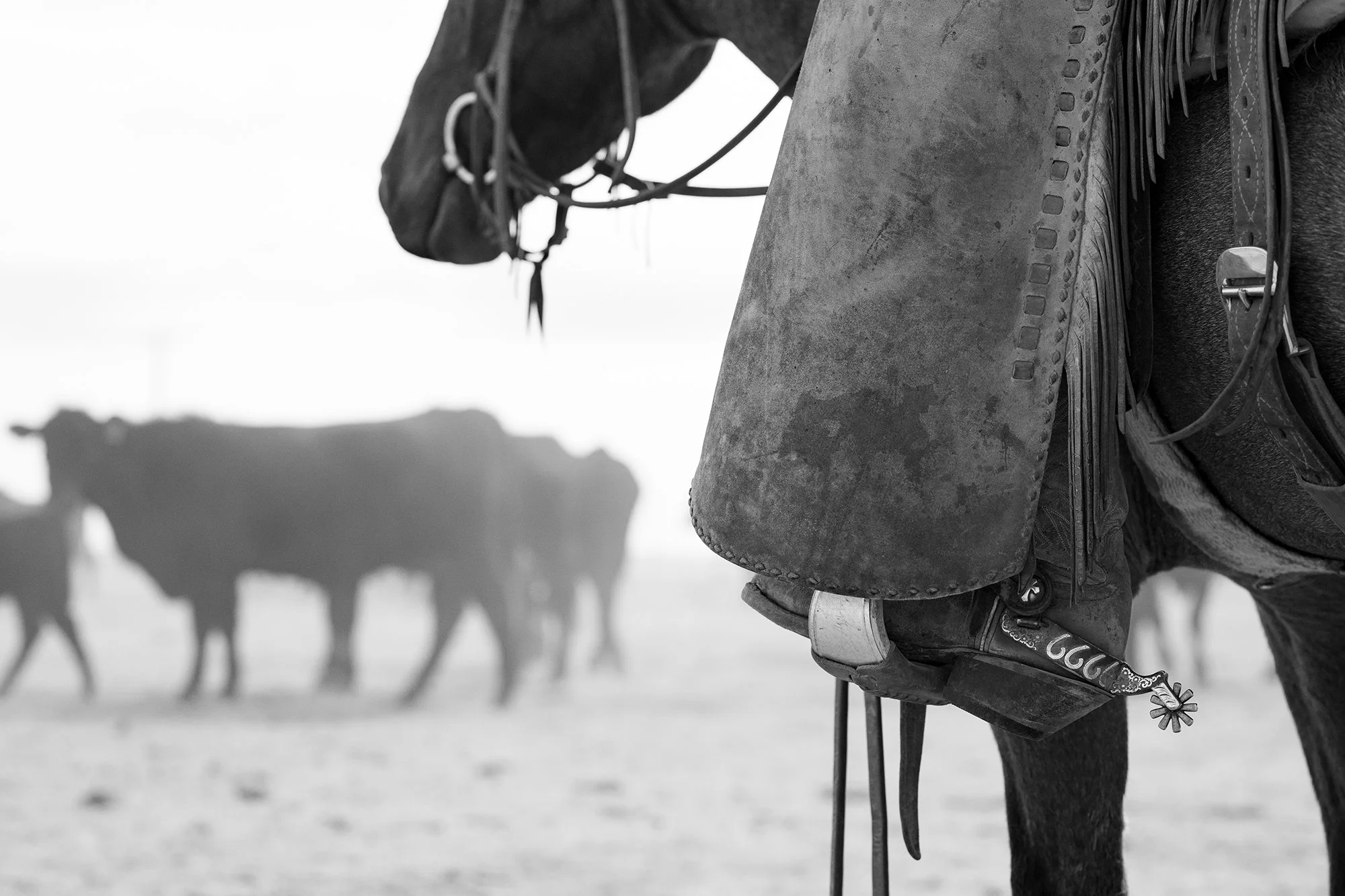
Close view of a cowboy's horse wearing a worn Western bridle

First light illuminates a horses face on a working cattle ranch.

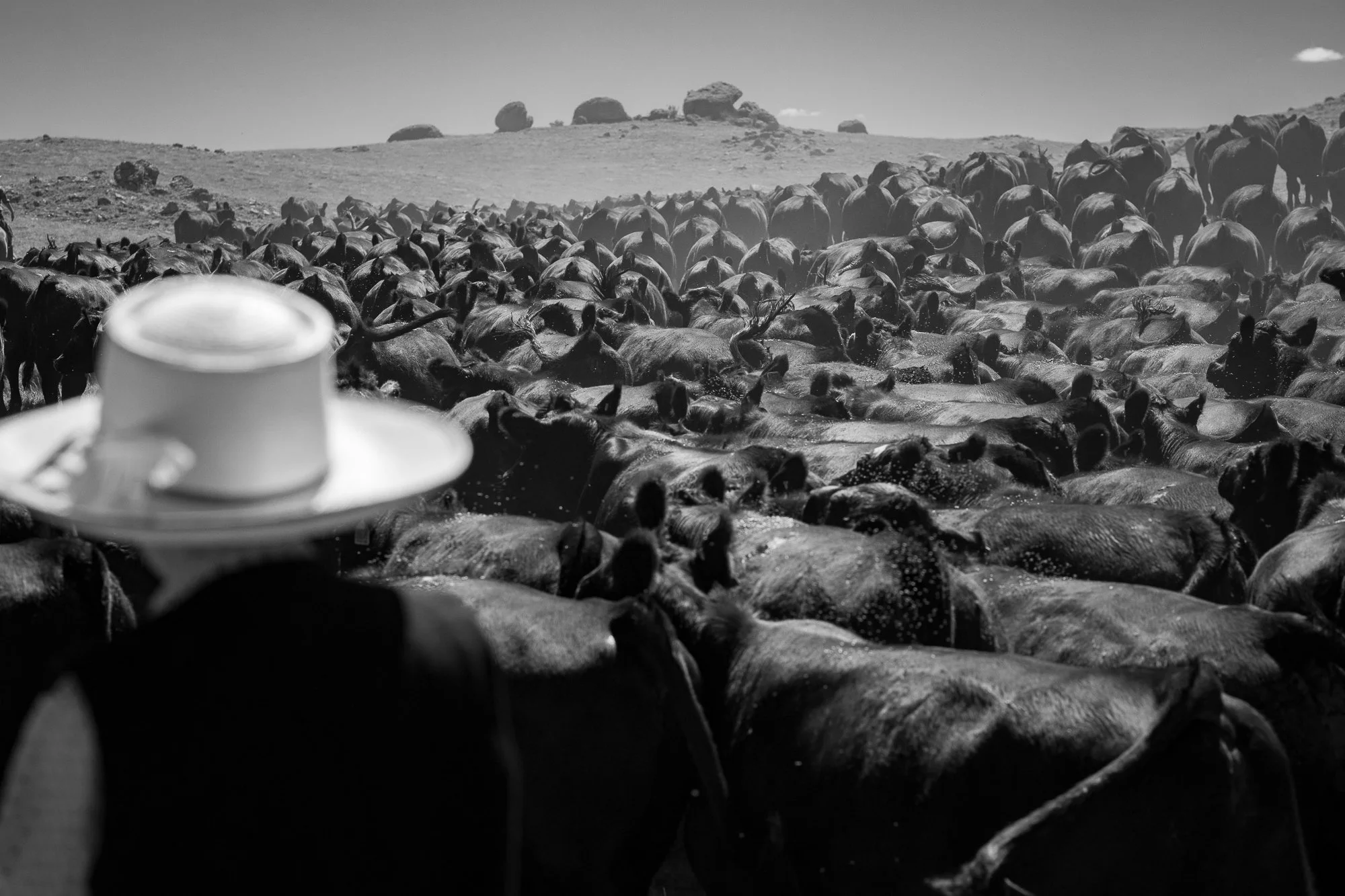
Cowboy on horseback moving cattle across a Wyoming ranch

Working cattle brings the cowboy, horses, and land into the same frame.

Photographing Working Ranches in Wyoming

Access is everything when photographing ranches.

You can't understand much about a place by showing up for twenty minutes, making a few photographs and leaving. The pictures get better when people stop paying attention to the camera.

That takes time.

Over the years I've been fortunate to spend time on working ranches throughout the West, documenting cattle drives, brandings, roundups and the everyday work that happens between those bigger events.

Some of my favorite photographs aren't necessarily of cowboys at all.

They're the details surrounding the work. Saddles worn smooth from years of use. A pair of gloves sitting on a fence post. Steam coming off a horse on a cold morning. Trucks covered in dirt. Dogs waiting for something to happen. People standing around talking after the work is finished.

Those details say as much about ranching as the dramatic moments do.

The landscape is always present too. In Wyoming, it's impossible for it not to be. Ranching happens at a scale that can make a rider on horseback look insignificant against the country surrounding them.

That relationship between people, animals and land is a large part of what I'm trying to photograph.

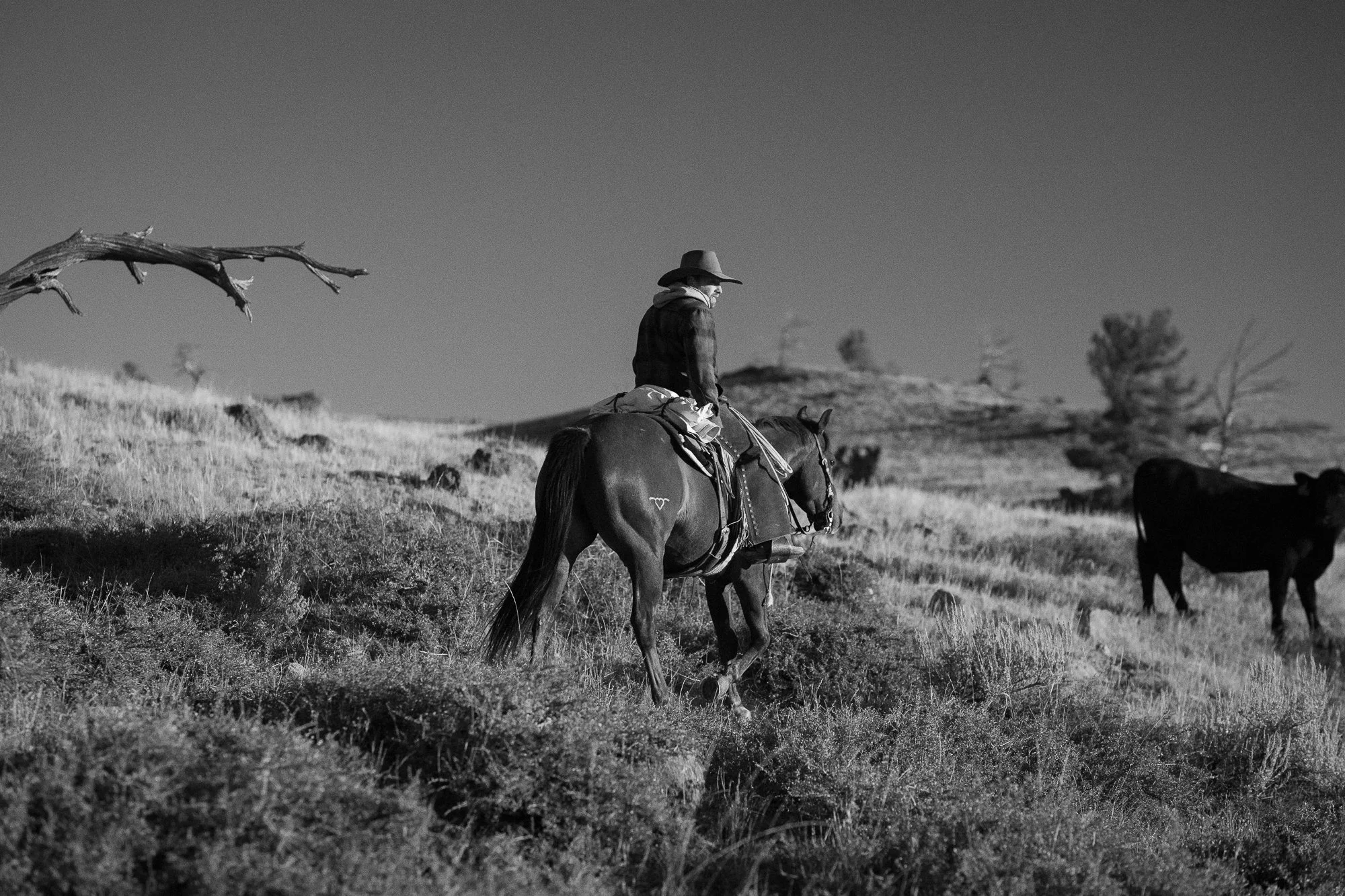
Cowboy on horseback moving cattle across a Wyoming ranch

Horse and rider move through the pasture as cattle gather nearby.

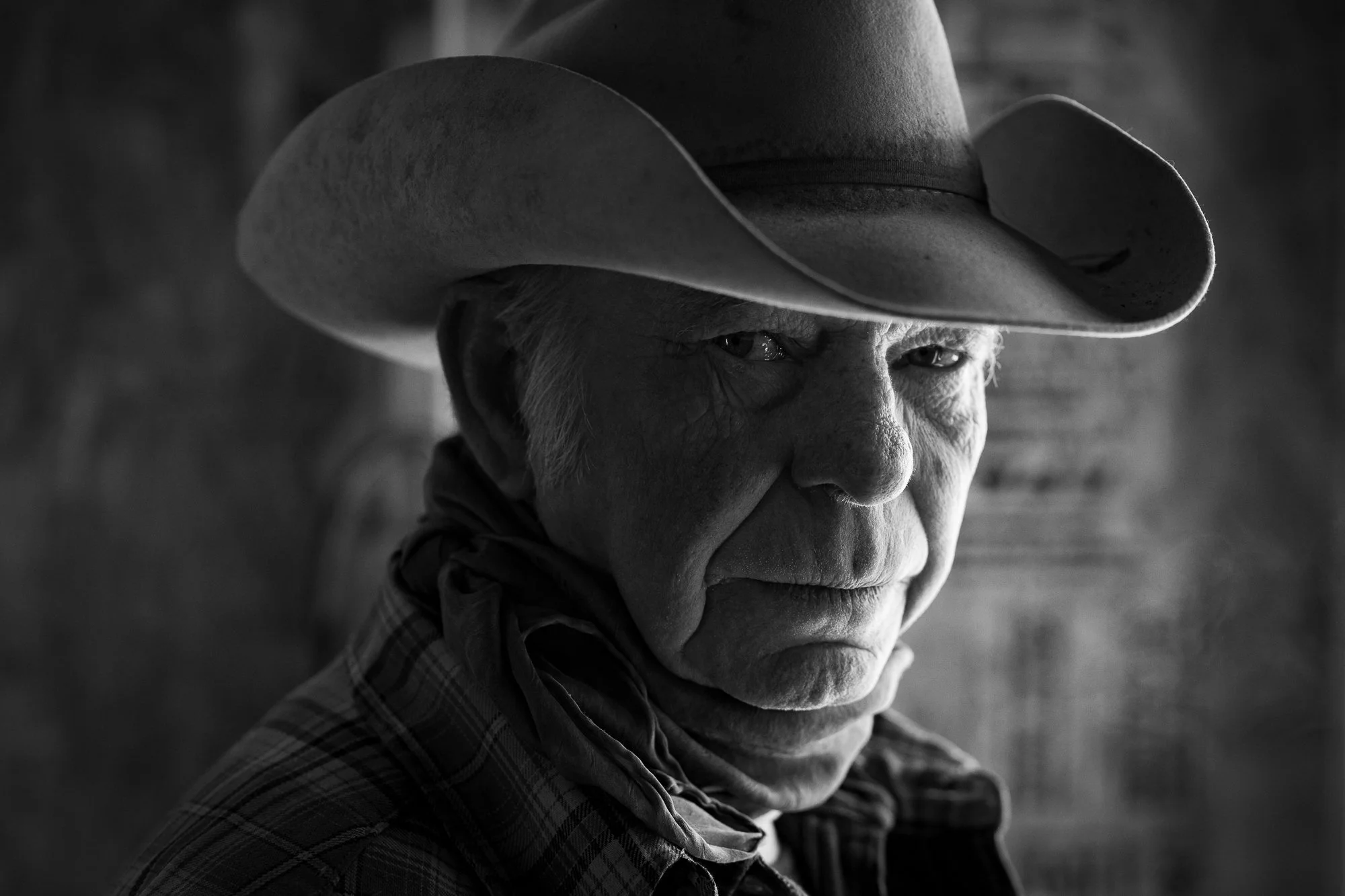
Portrait of a cowboy wearing a hat and bandana

Cowboy portrait inside a working ranch workshop.

Small Town Wyoming

Long before I started seriously photographing cowboys, I was photographing the American road.

For years I've driven around the country making photographs of places and objects that aren't typically considered important enough to photograph. Motels. Diners. signs. Abandoned buildings. Old cars. Storefronts. Bars. Basketball hoops. And whatever else makes me pull over.

Wyoming is particularly good for that kind of wandering.

There are towns where the main street seems disproportionately wide for the number of people living there. Bars that might be the only place open for miles. Old motels hanging on beside highways that travelers now pass through without stopping.

Some places are changing quickly. Others feel like they exist in their own time zone.

That's what interests me.

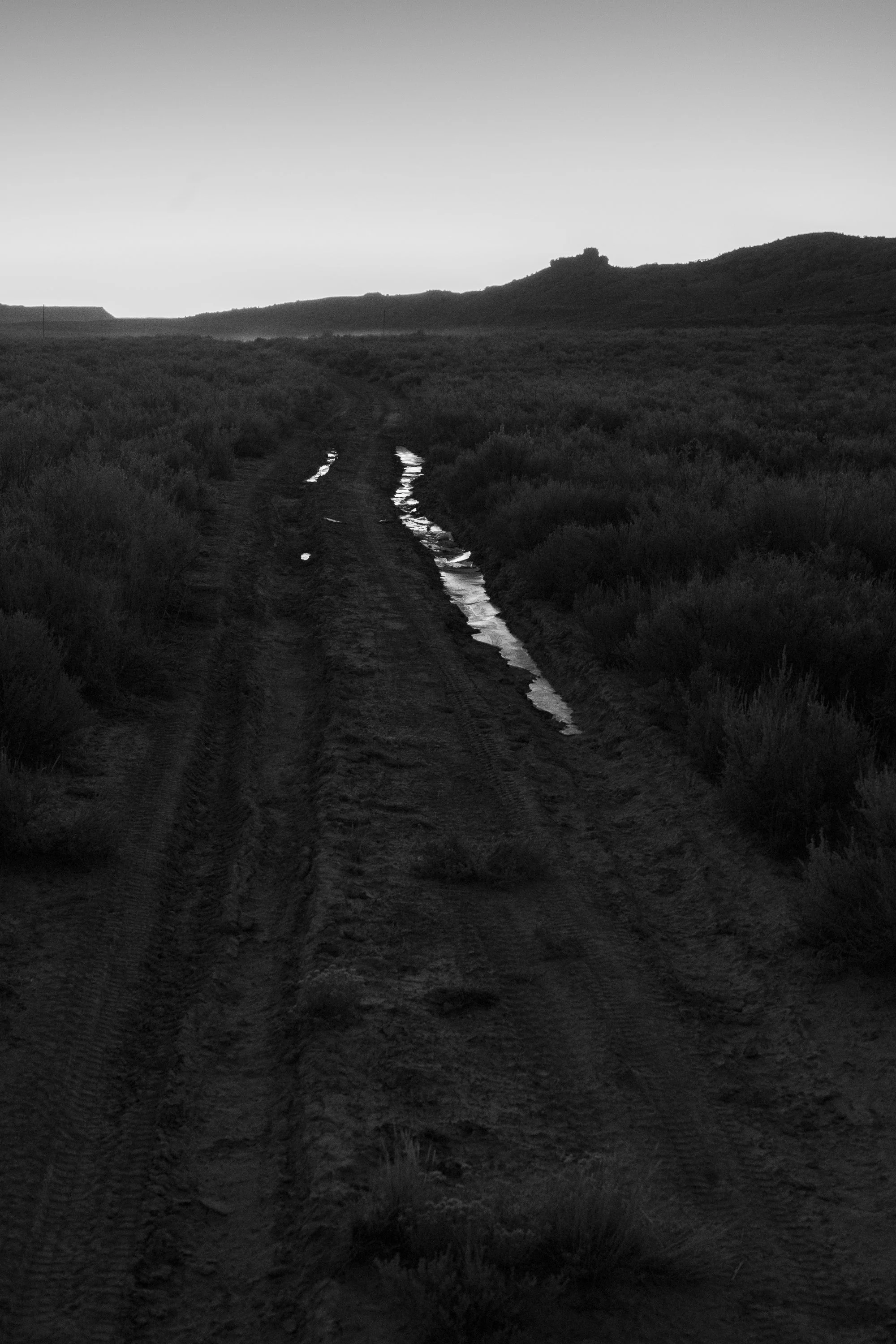
Road trips are usually organized around destinations, but photography has taught me that the spaces between those destinations are often more interesting.

Wyoming has a lot of space between destinations.

And I've learned not to hurry through it.

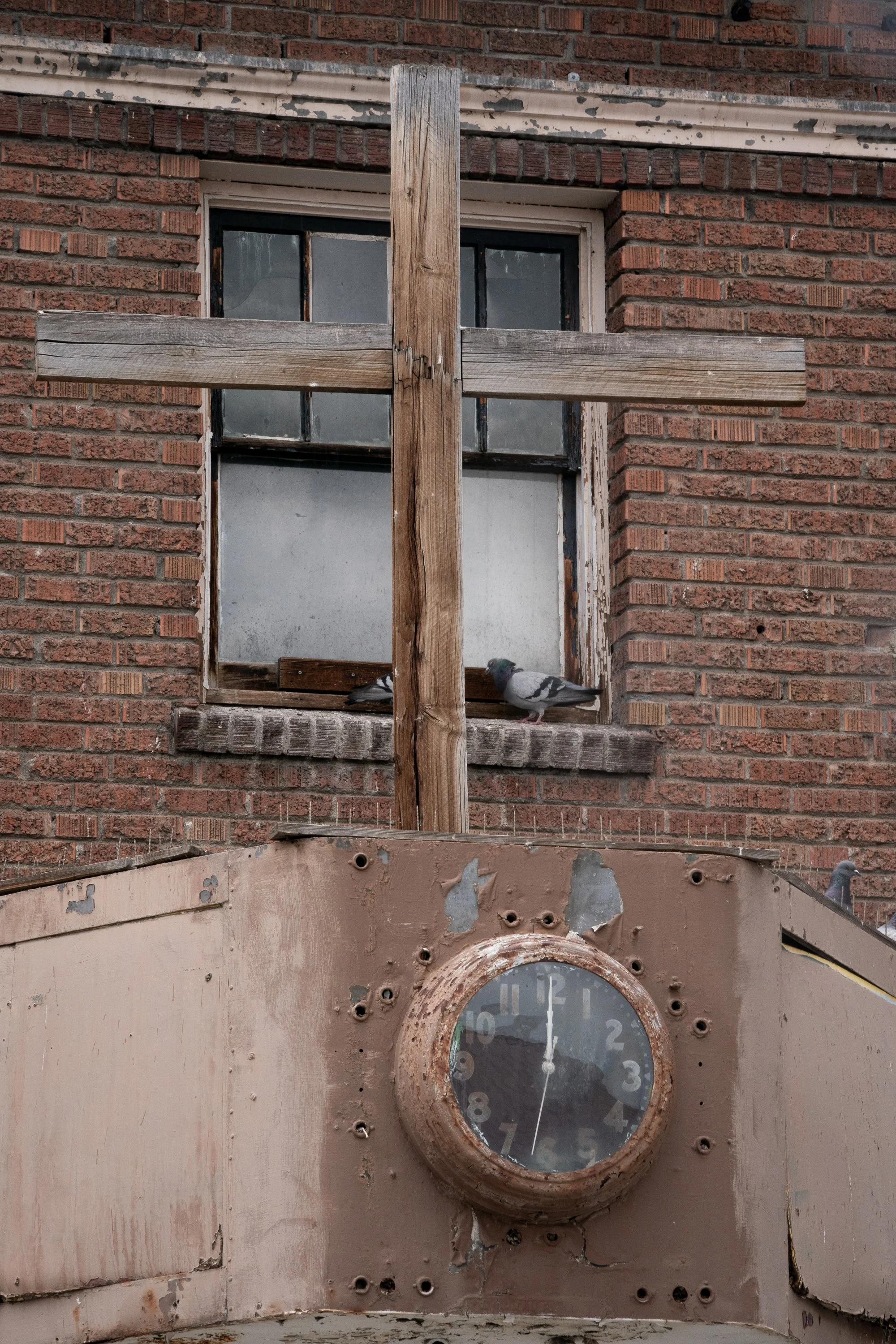
Weathered brick building with an old clock and boarded window in Wyoming

Old clocks, weathered brick, and worn storefronts are part of the small-town landscape.

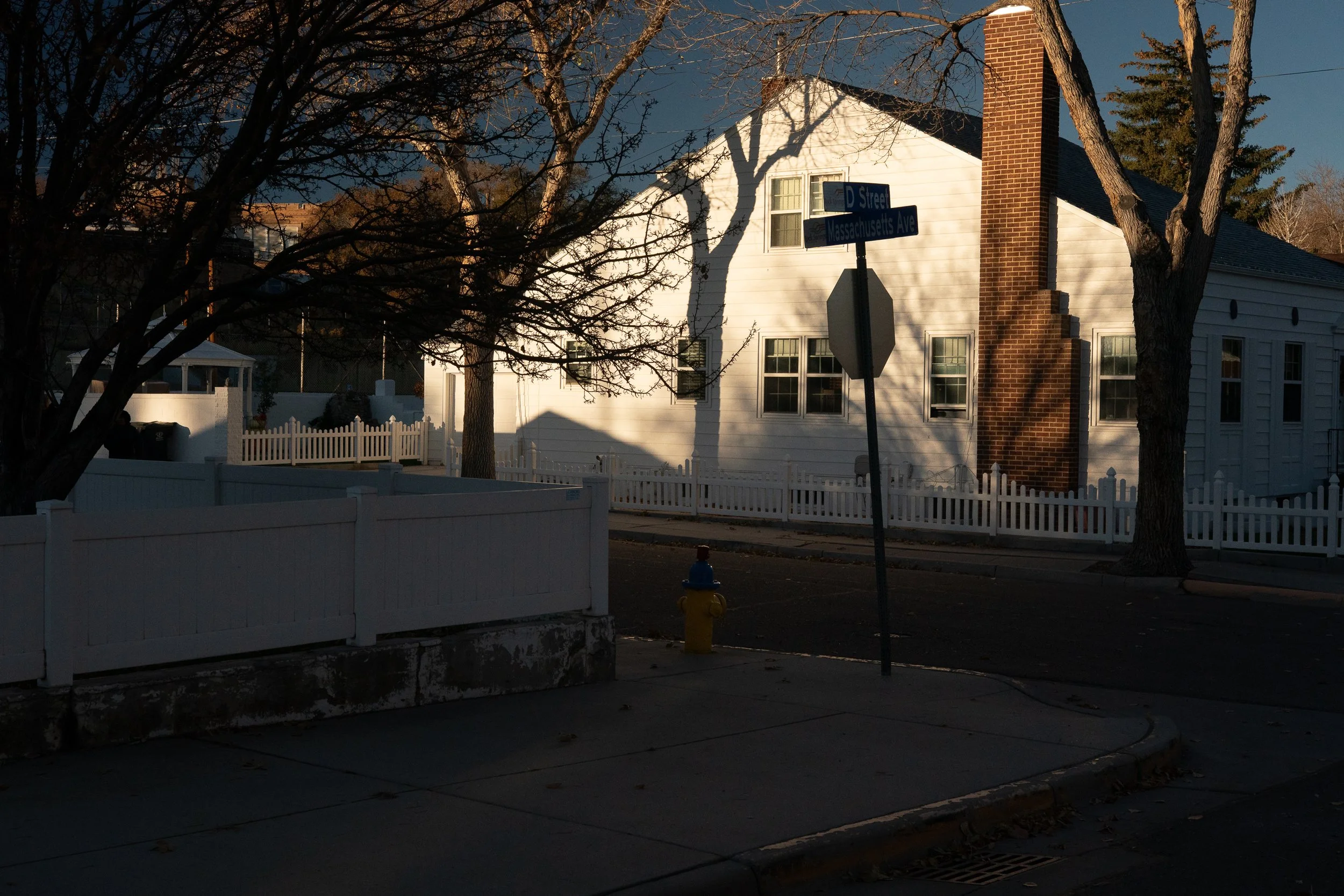
White church and quiet main street in a small Wyoming town

Small-town streets like this make it easy to slow down and look around.

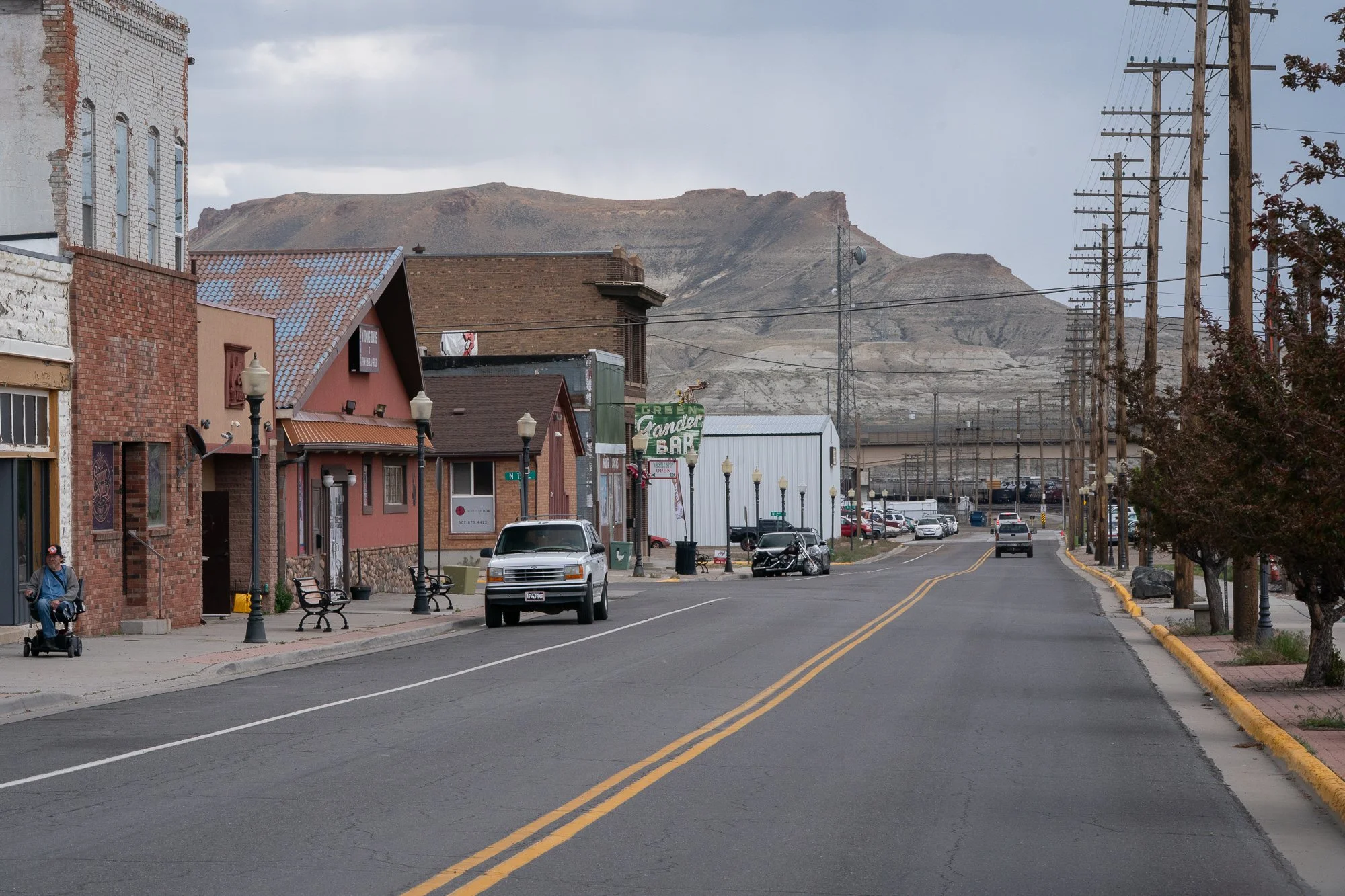
Wyoming small town street with storefronts and mountains in the distance

Wyoming's main streets often run straight toward the mountains, with businesses and storefronts along the road.

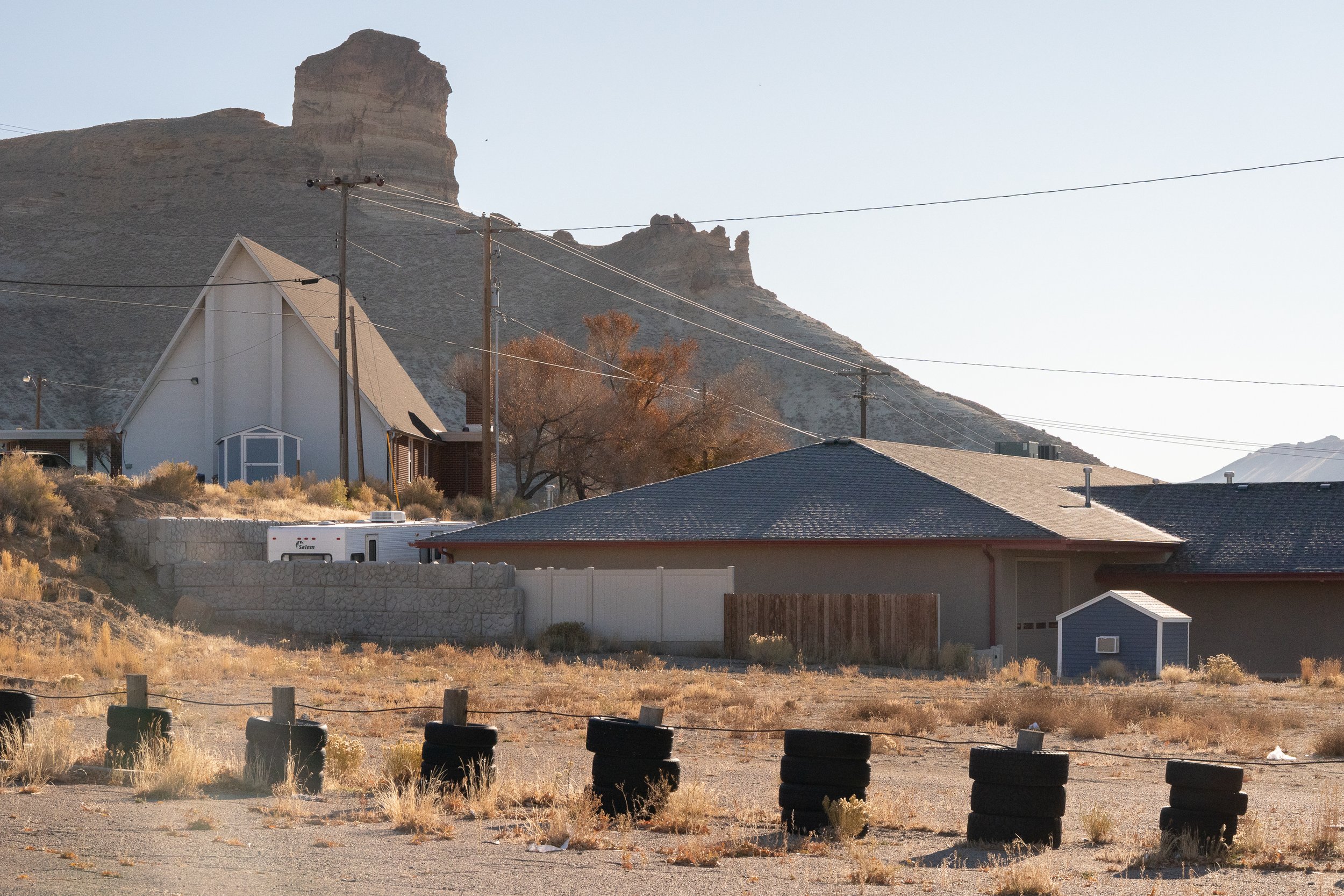
Small Wyoming town with homes and a mountain rising behind them

The mountains rise behind the houses and streets of town.

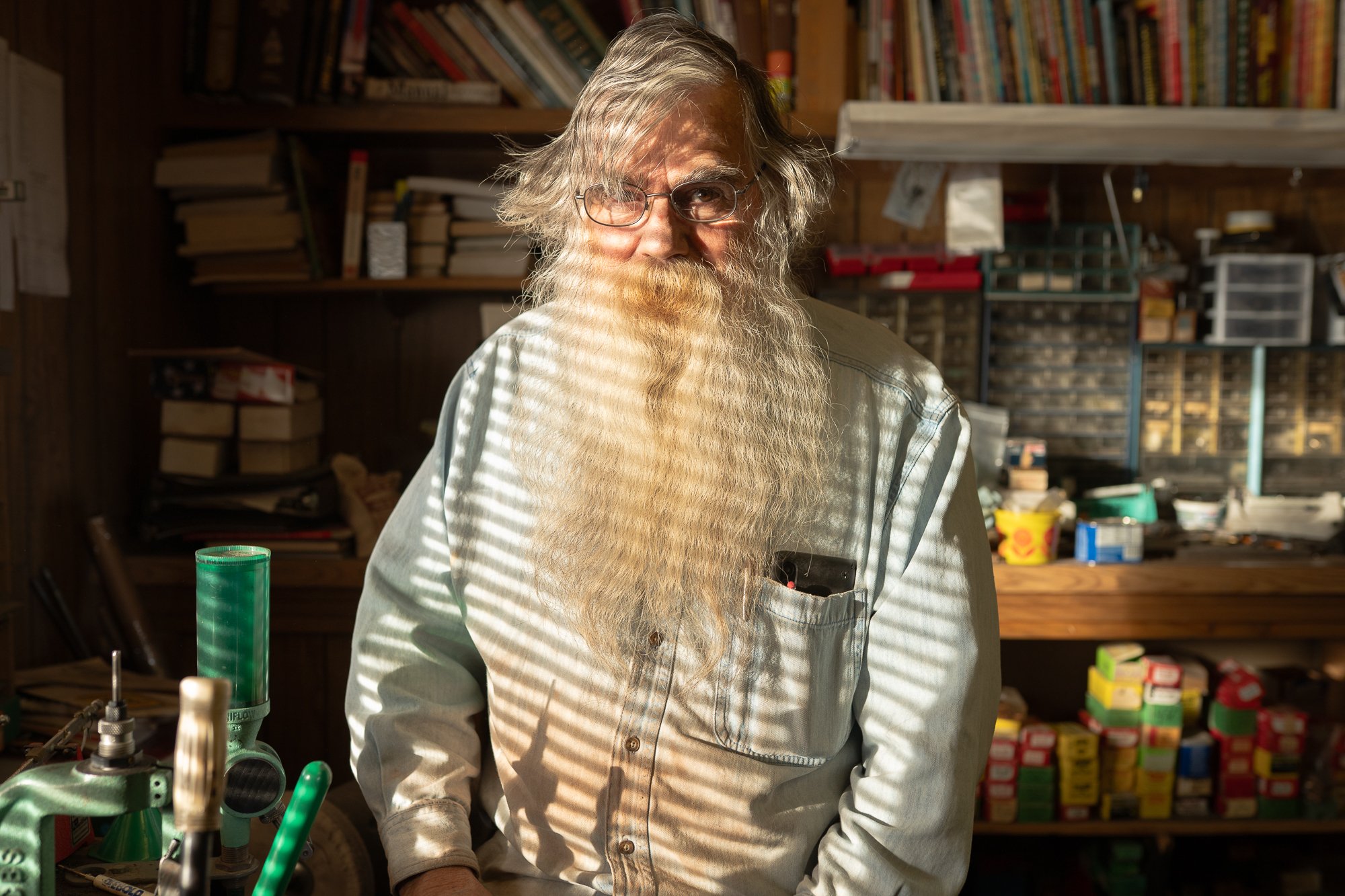
Portrait of a man standing inside a Western workshop in Wyoming

Light from the window adds detail to the portrait.

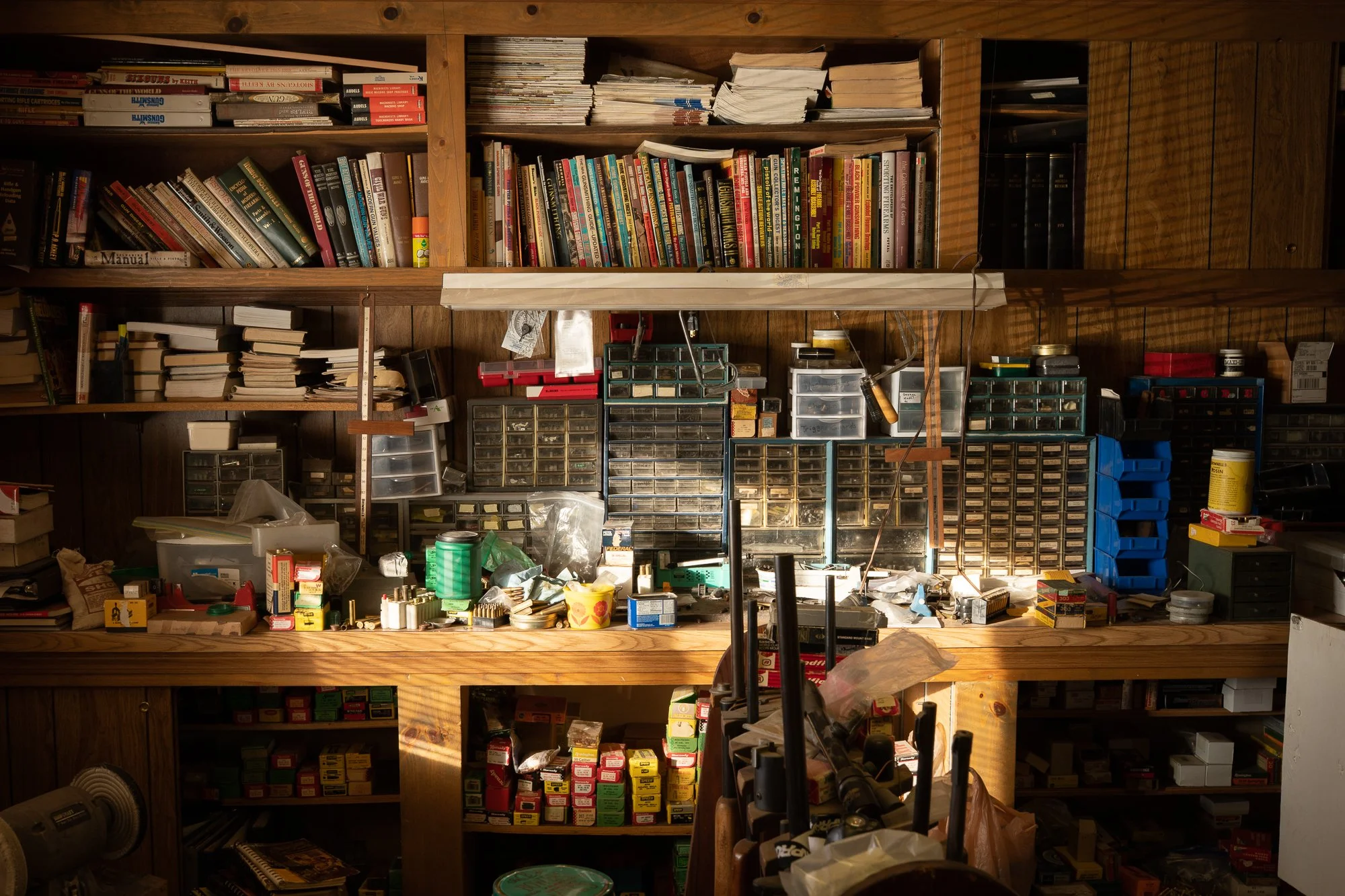
Books tools and supplies on shelves inside a Wyoming ranch workshop

Books, tools, and supplies fill the shelves and workbench of the shop.

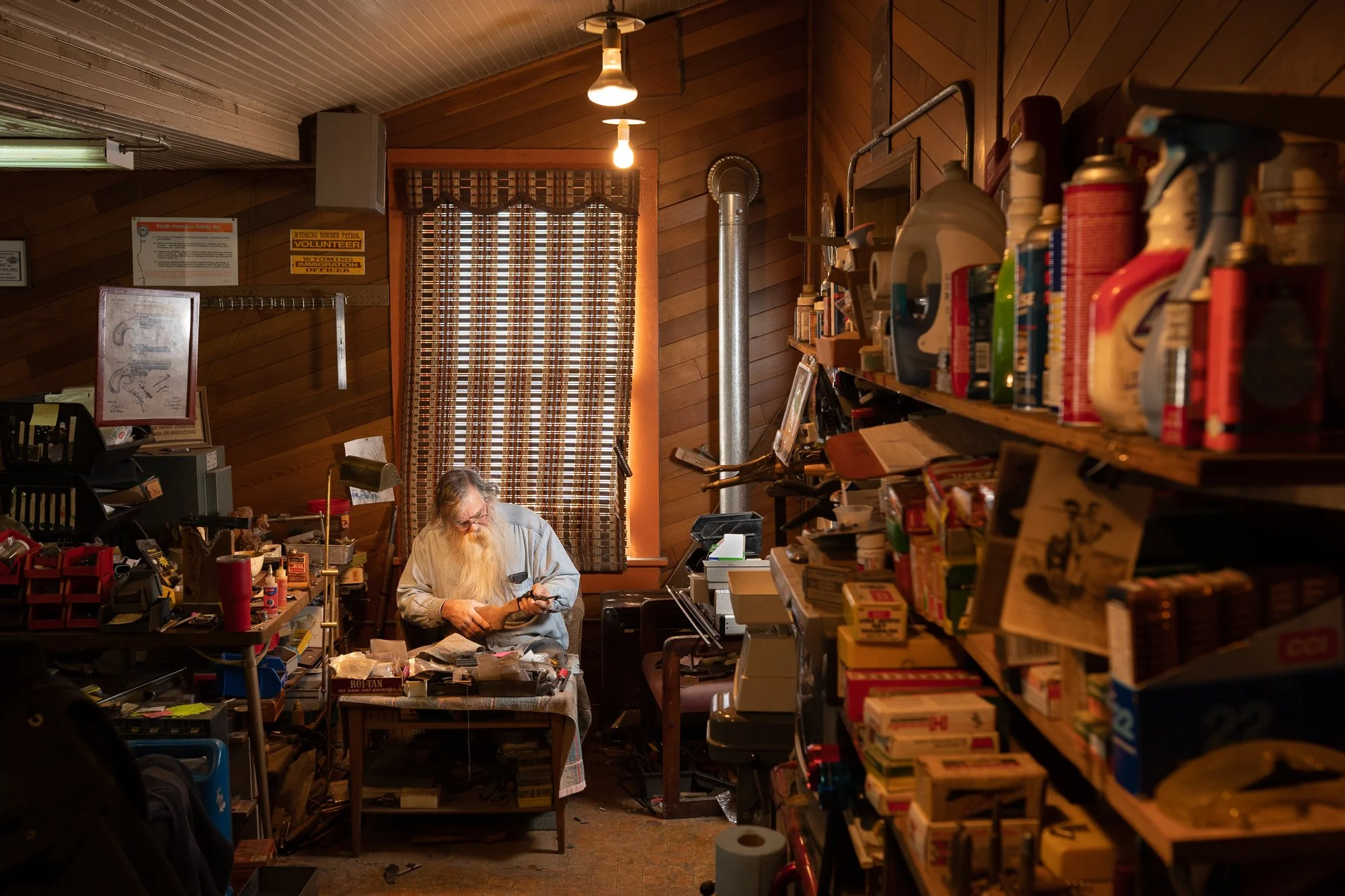
Man working on a rifle at a cluttered workbench in a Wyoming shop

A man works on a rifle at the crowded workbench.

Saddles and Western ranch gear inside a Wyoming ranch building

Saddles and ranch gear fill the interior of the building.

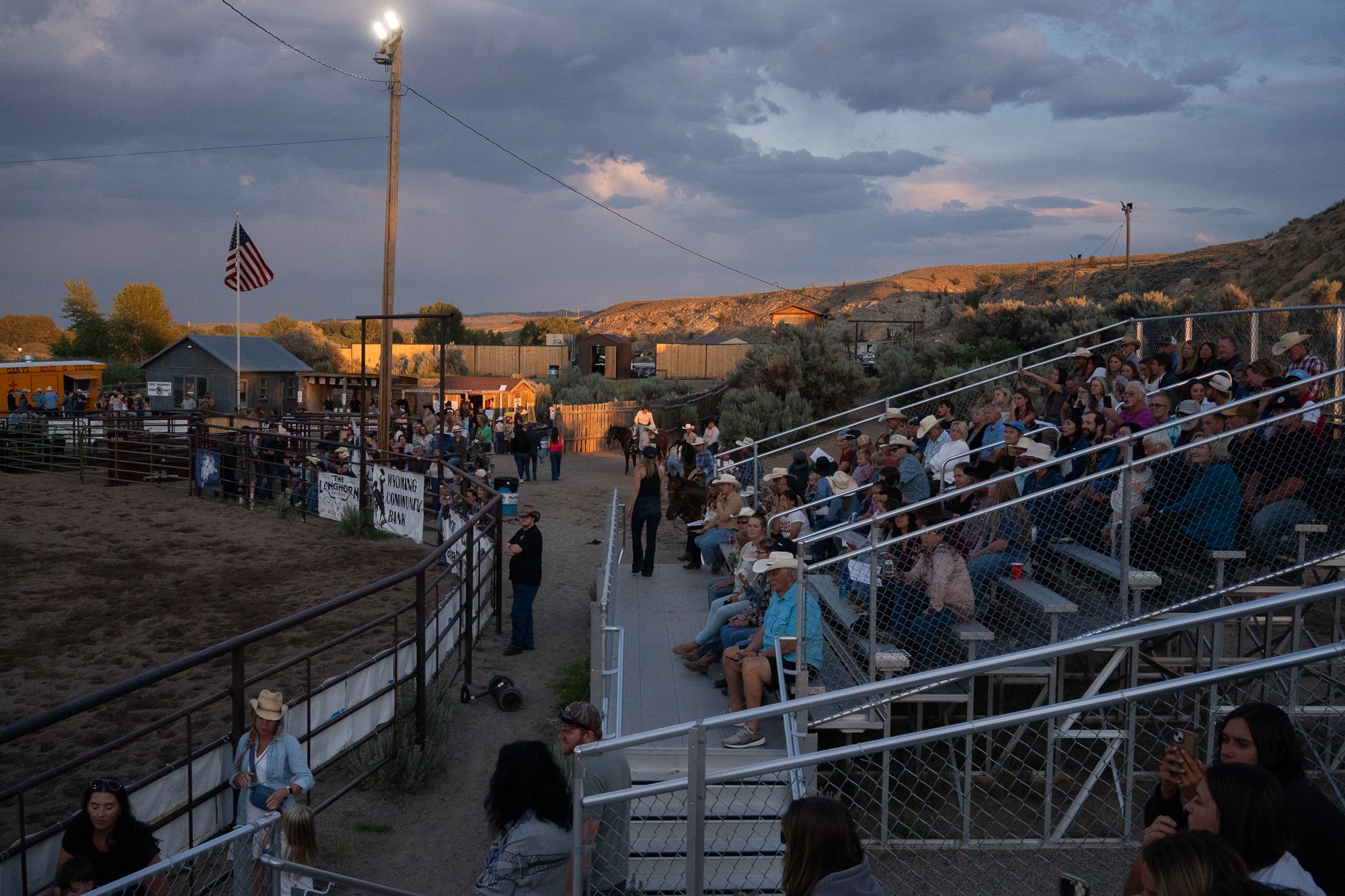
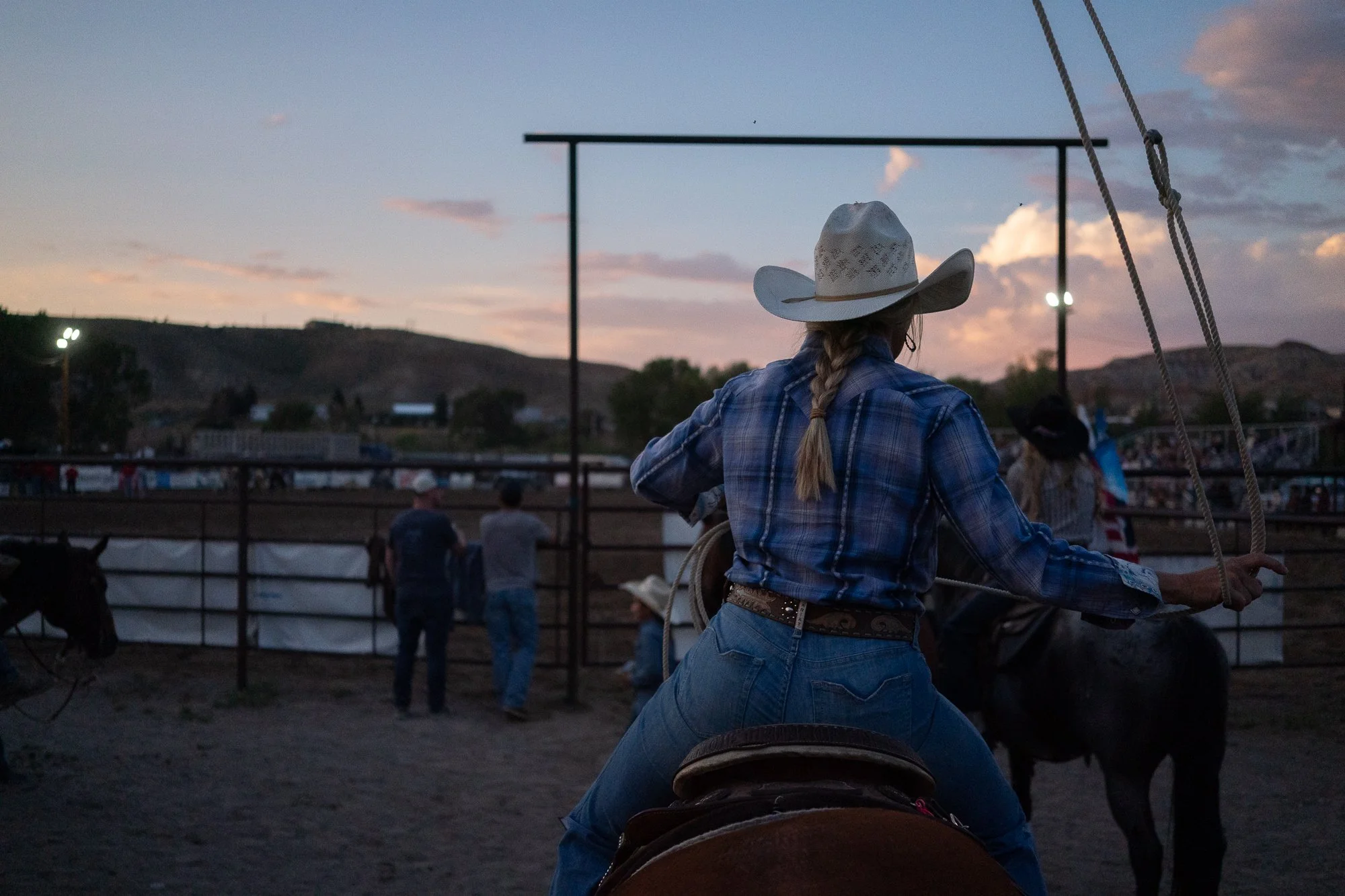
Rodeo Culture in Dubois, Wyoming

Dubois is a small town in western Wyoming with a population of roughly a thousand people. During the summer, Friday nights mean rodeo.

I went there expecting to photograph the rodeo and came away much more interested in everything surrounding it.

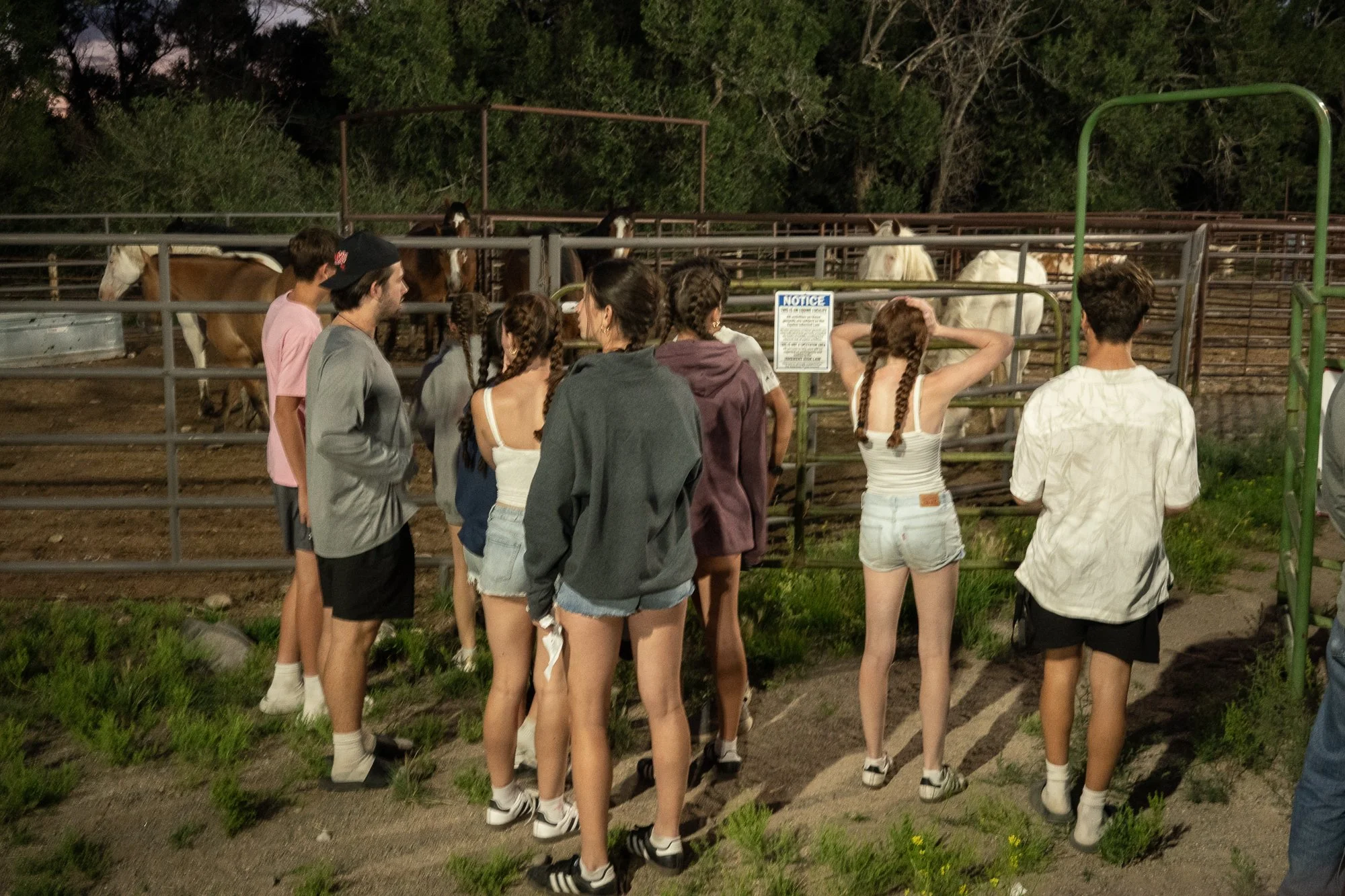
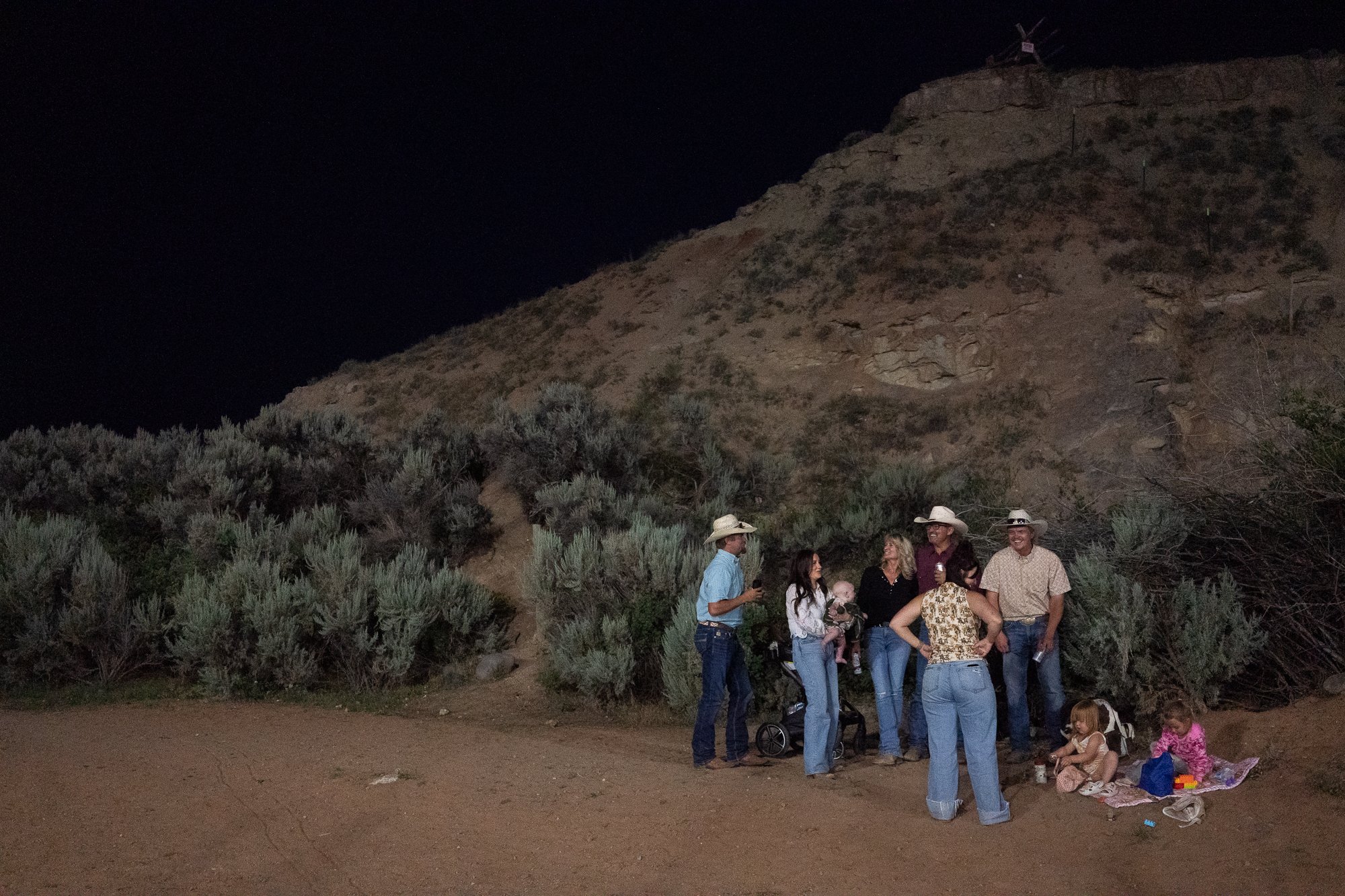
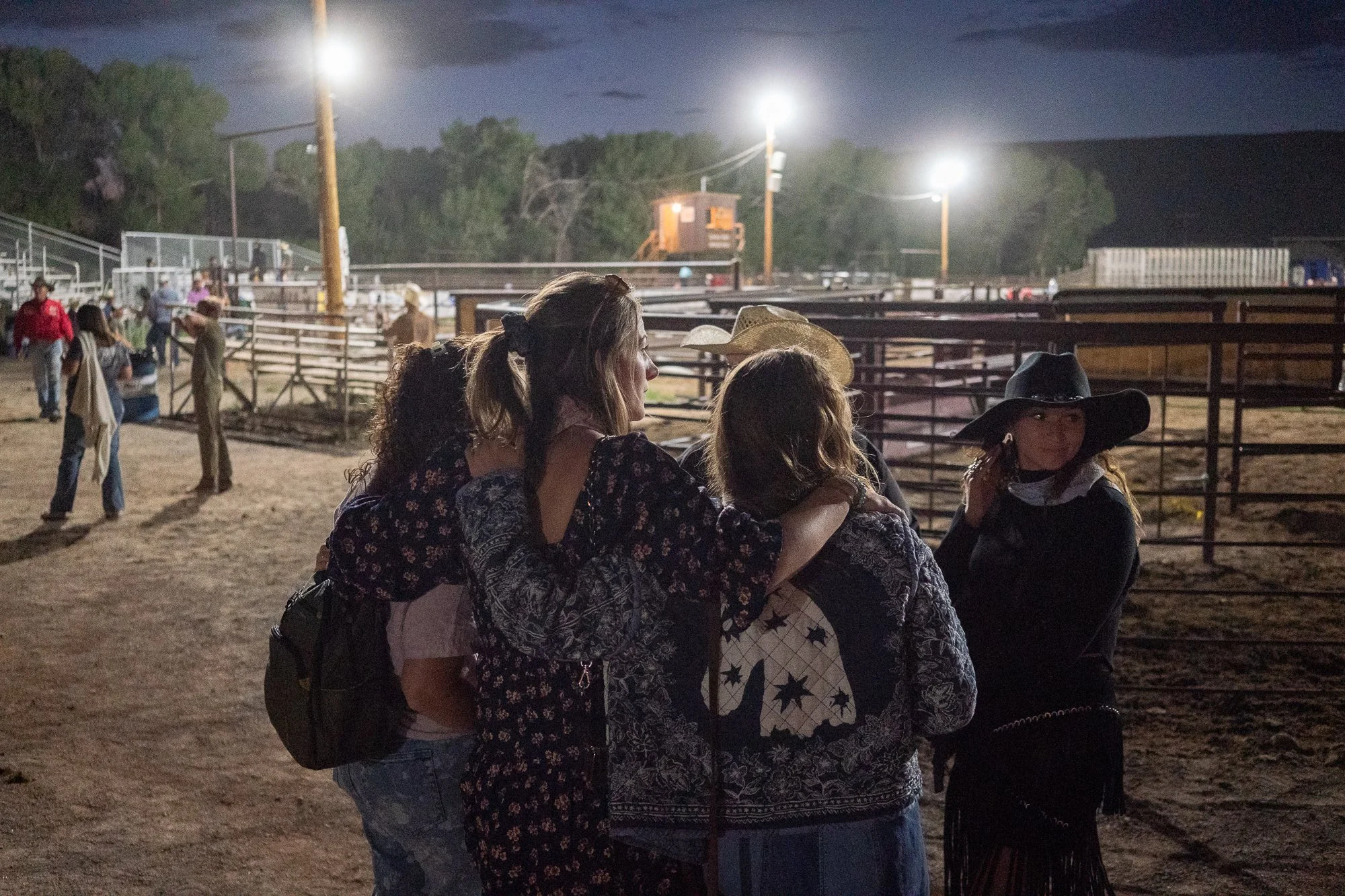
Of course there were cowboys, horses, broncs and bulls. But there were also kids running around behind the chutes, families sitting in the stands, competitors talking before their events and all the little interactions happening away from the arena.

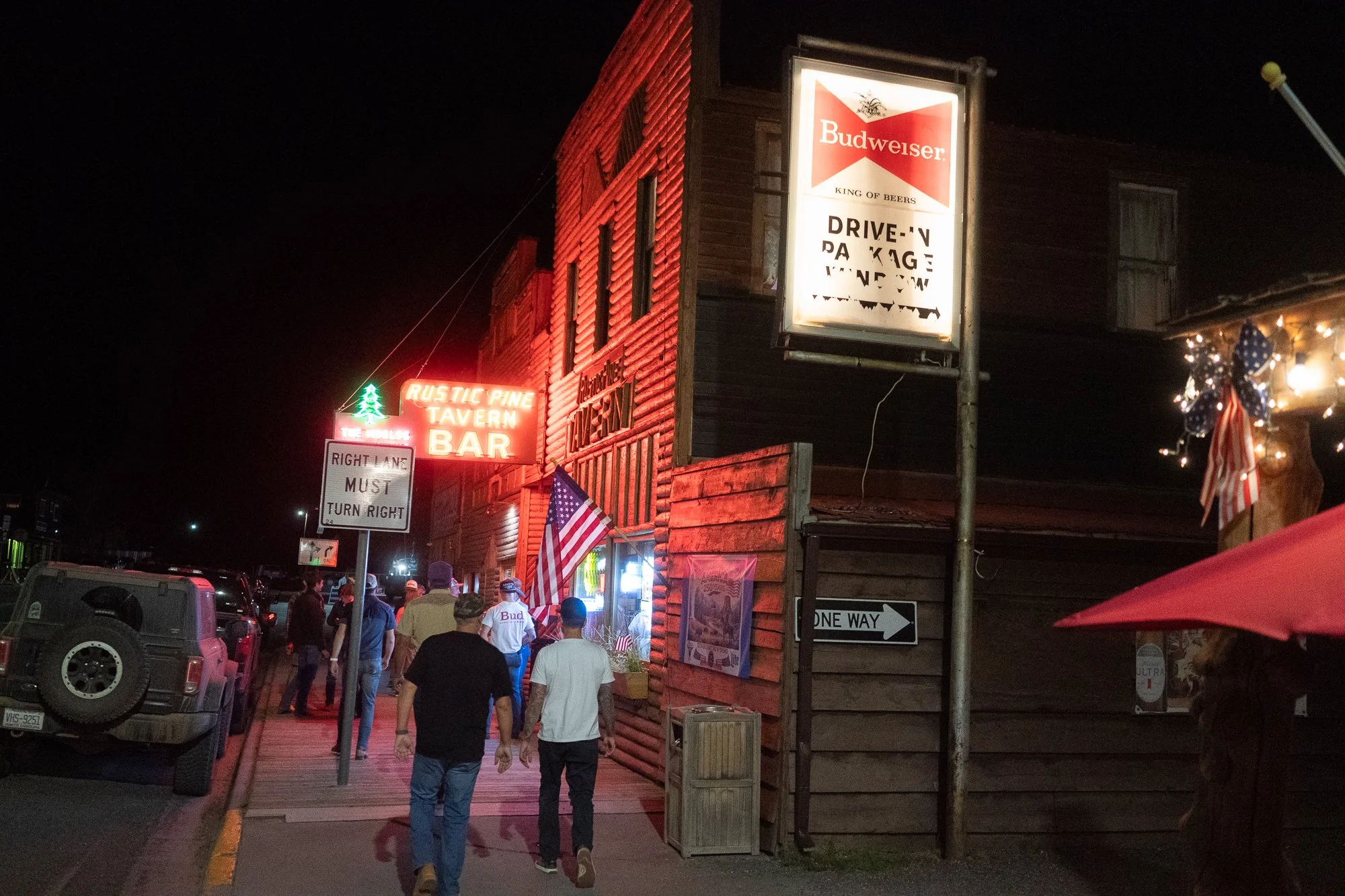
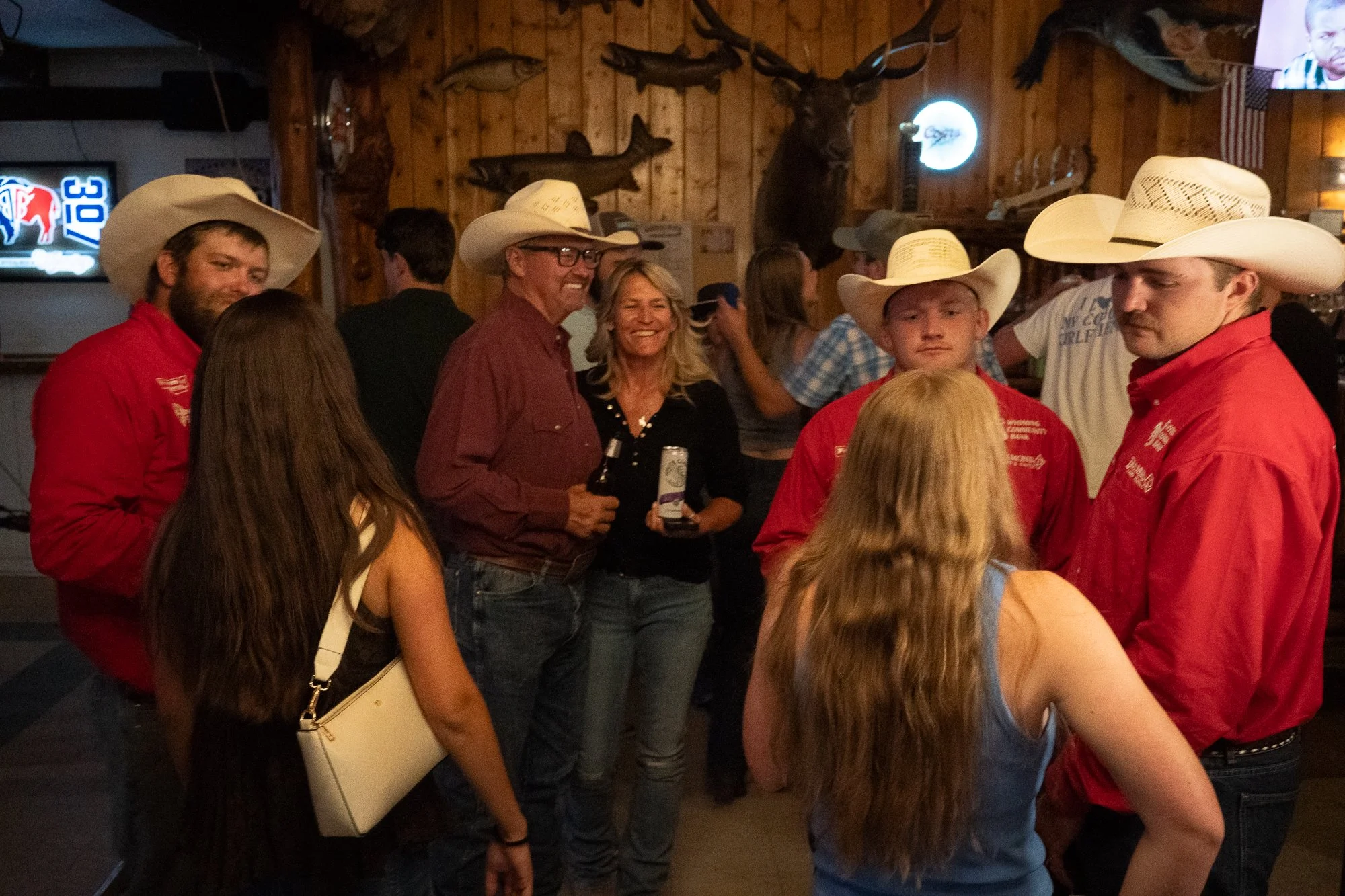
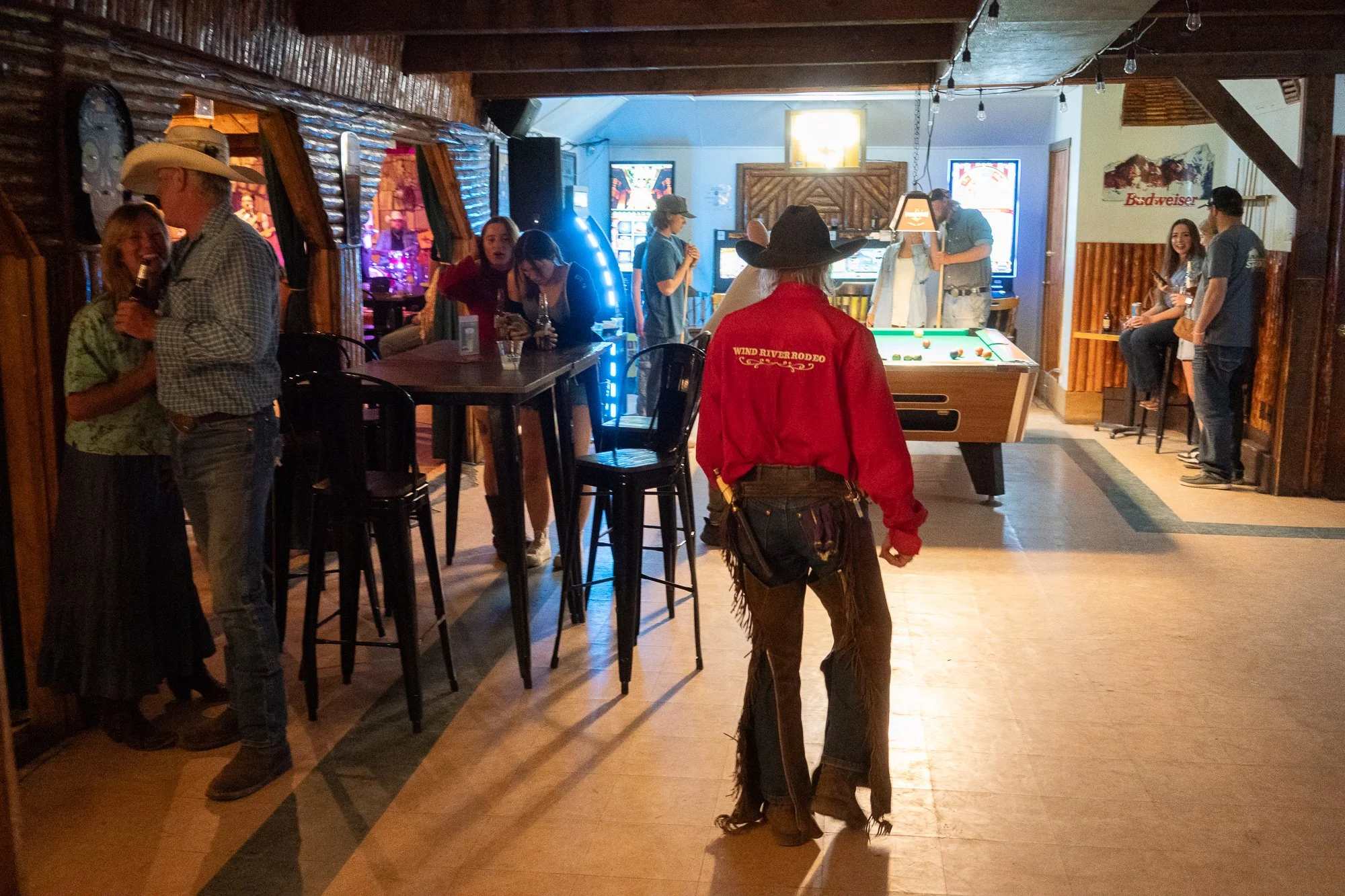
Afterward, a lot of the same people ended up at the local bar.

That's where the story became more interesting to me.

Cowboys who had been competing a few hours earlier were drinking, talking and dancing. Rodeo spectators mixed with locals. The distinction between the event and everyday life disappeared.

Those photographs became less about rodeo and more about a small Western community.

That's generally where I want the camera to be.

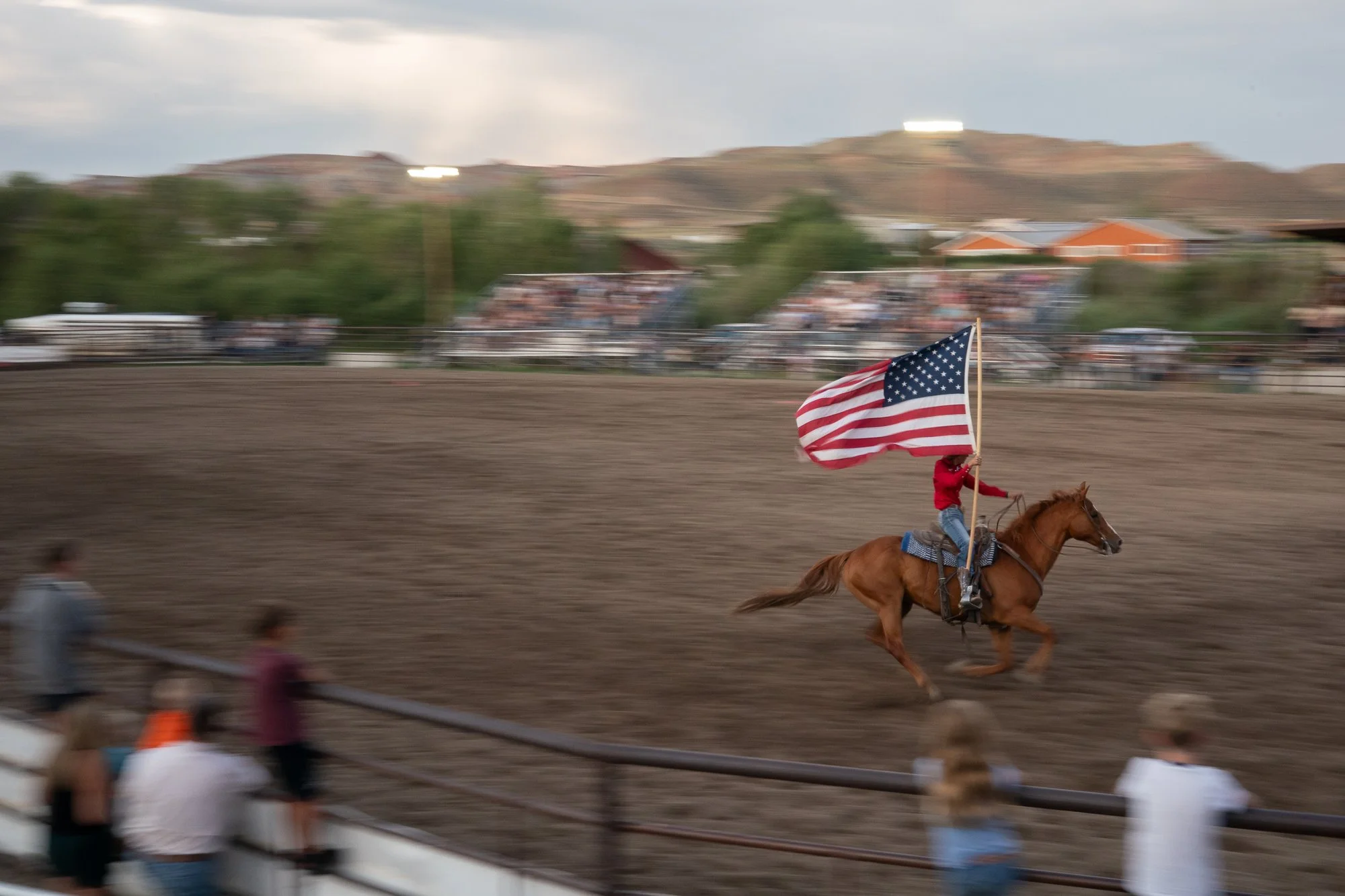
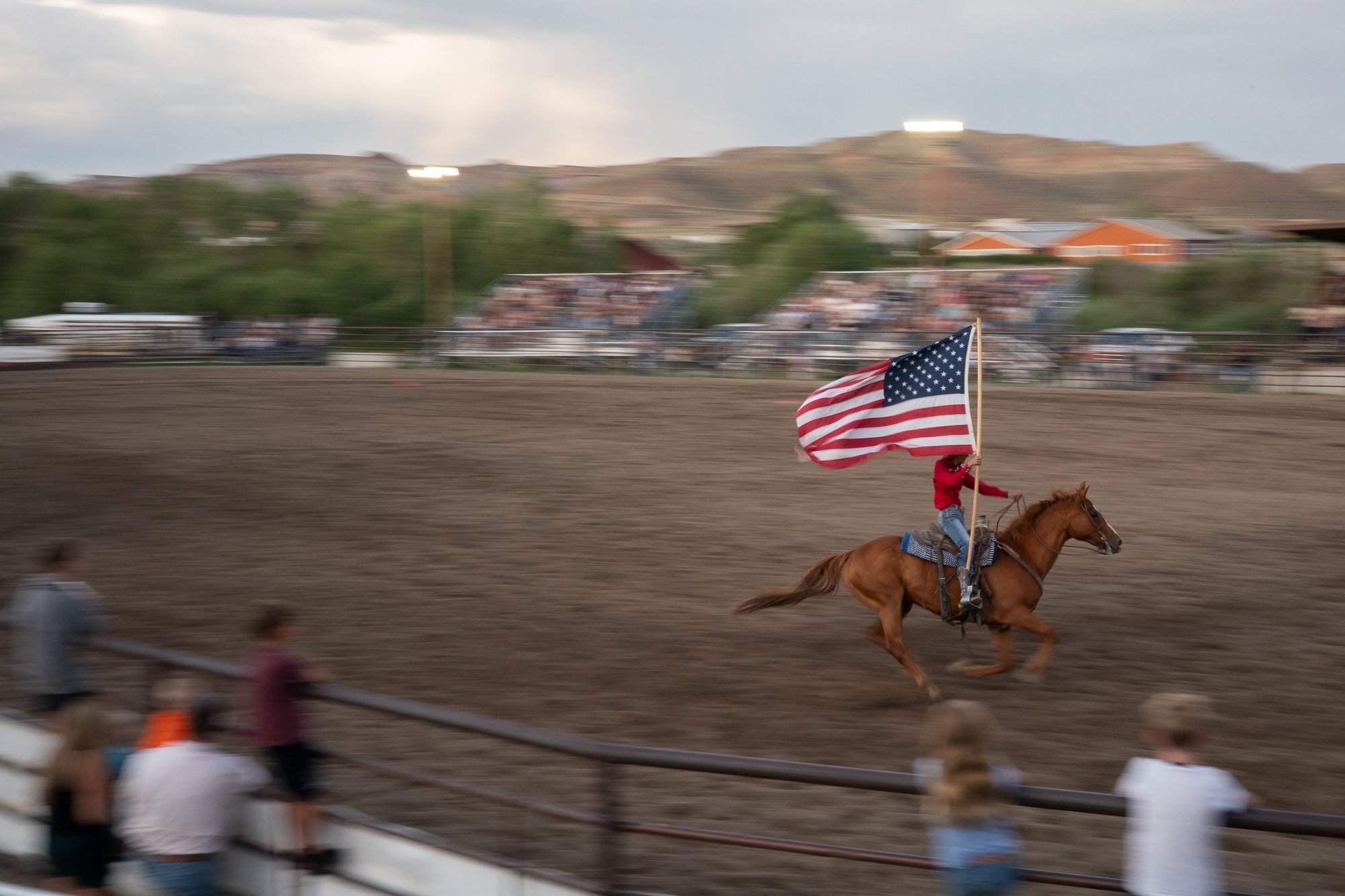
Cowboy on horseback carrying an American flag at a Wyoming rodeo

A cowboy carries an American flag through the rodeo arena.

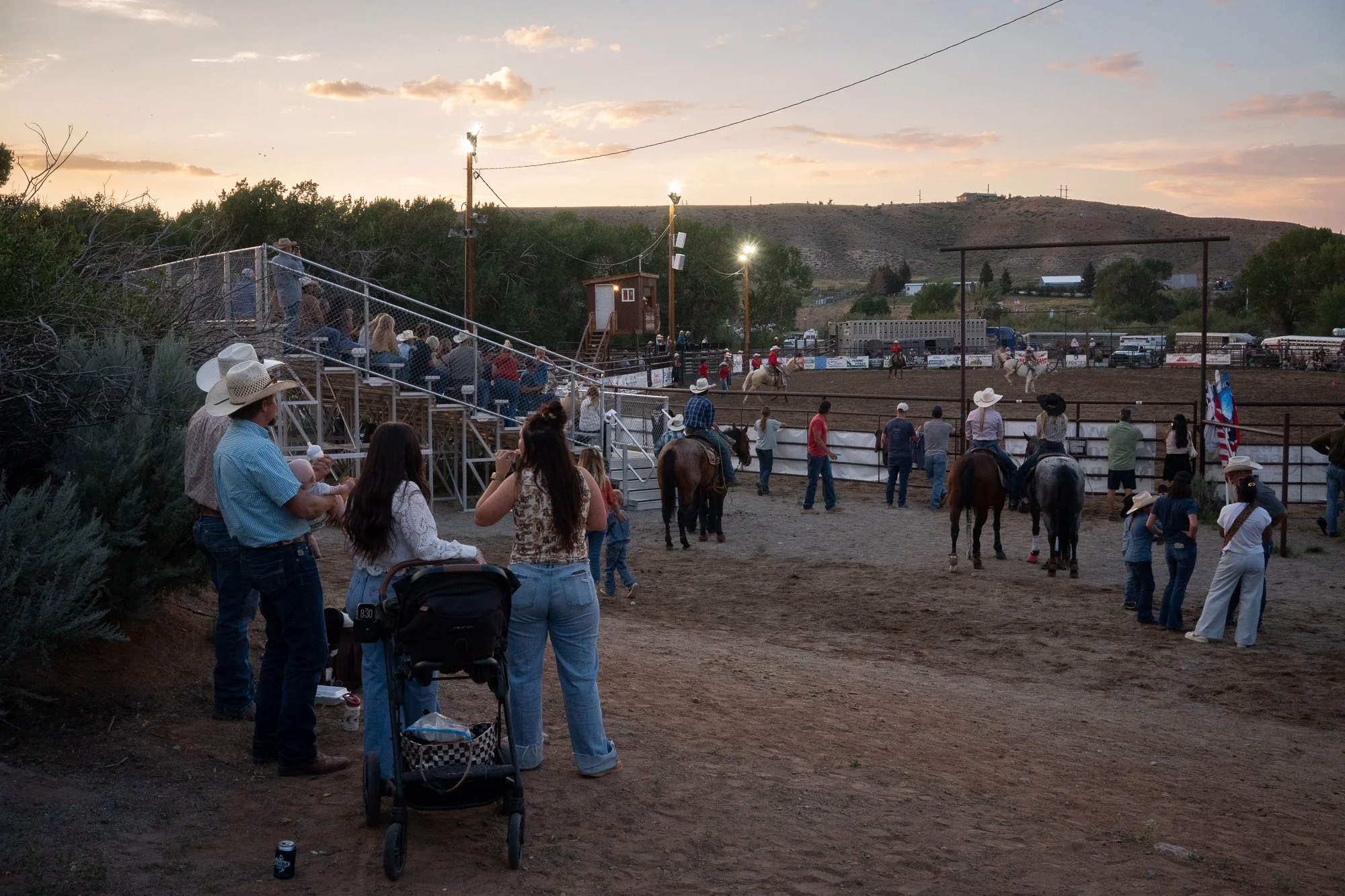
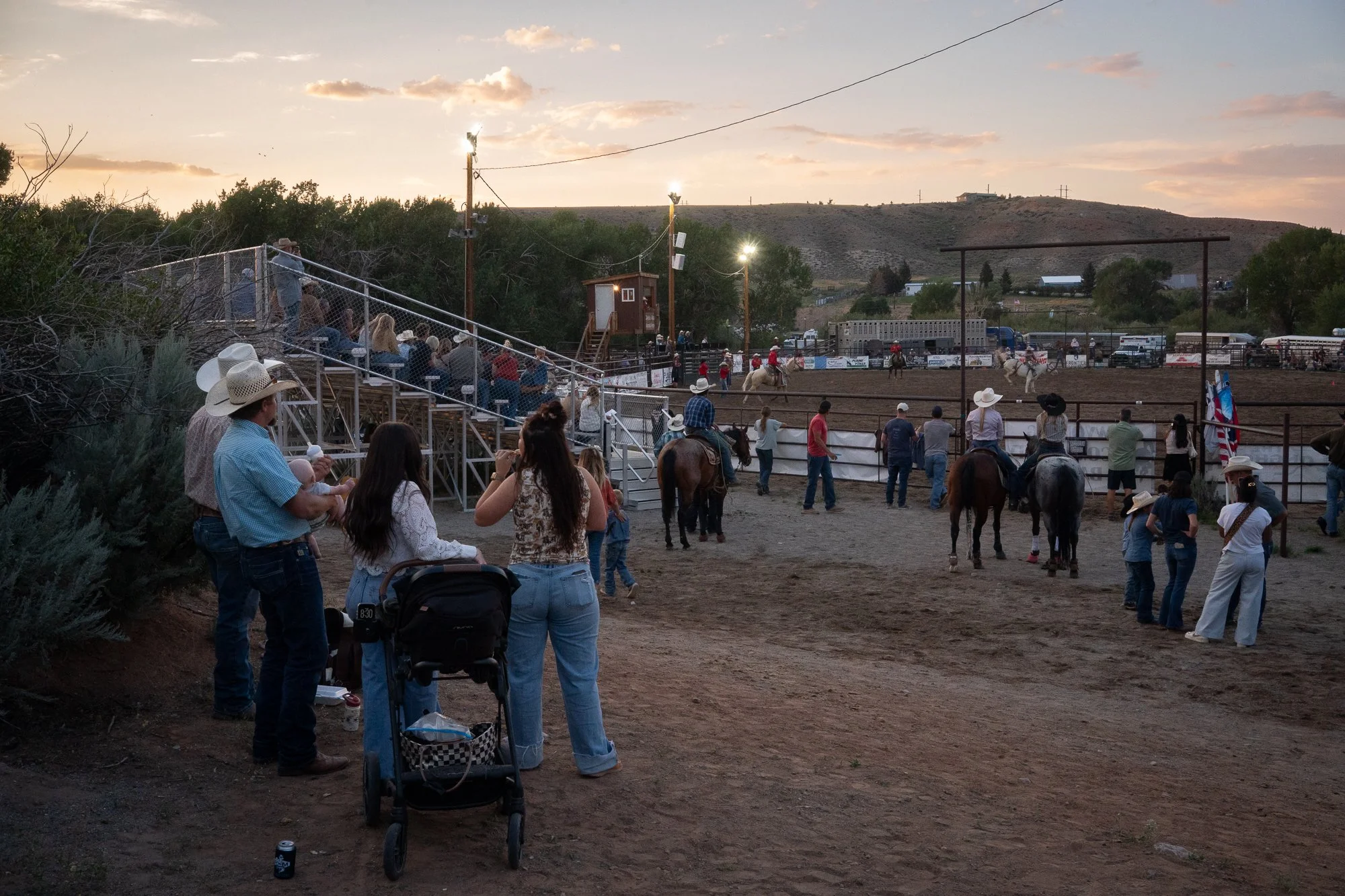
Cowboys and spectators gathered at a Wyoming rodeo in the evening

Cowboys and spectators gather around the rodeo as the evening gets underway.

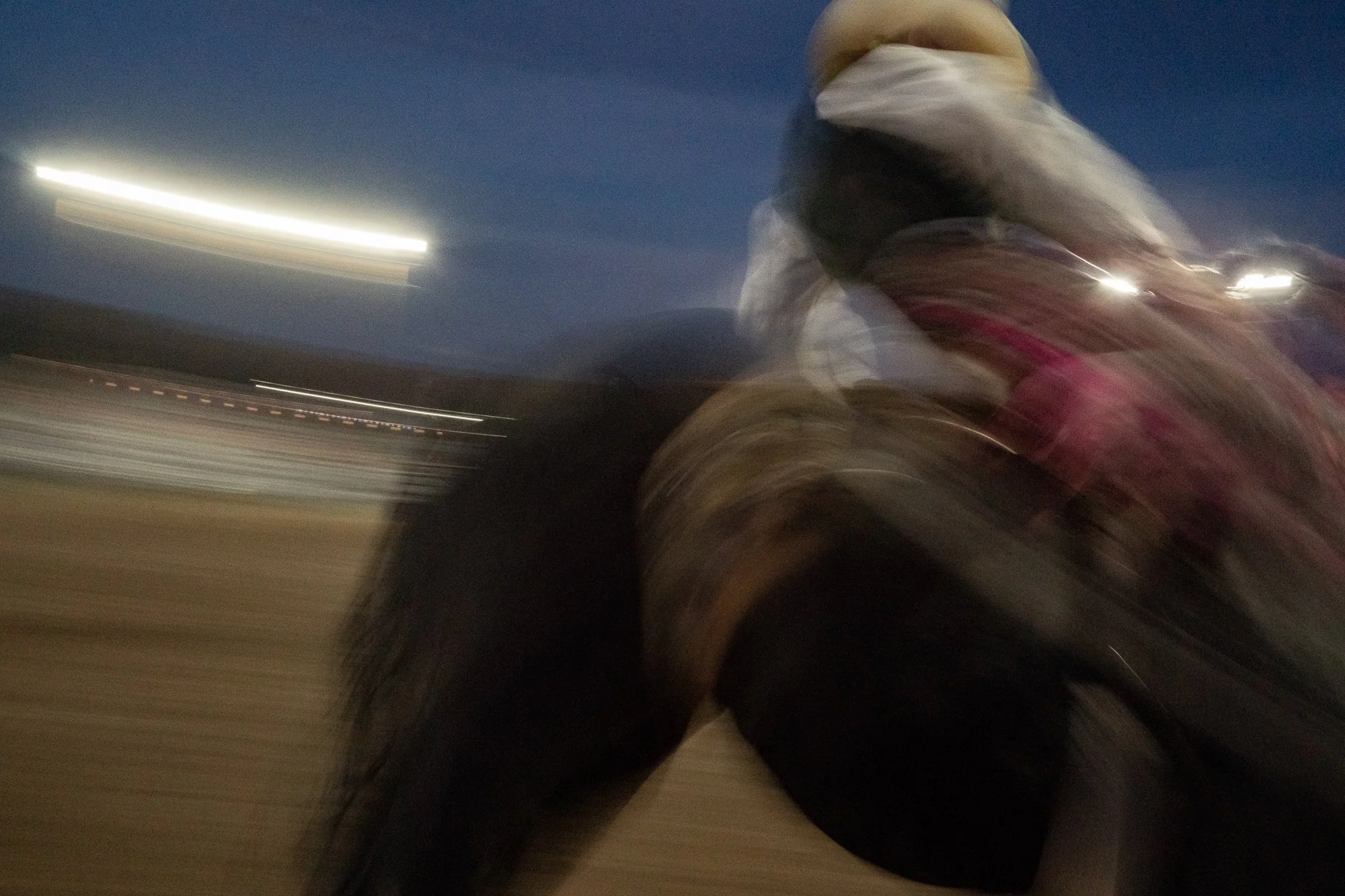
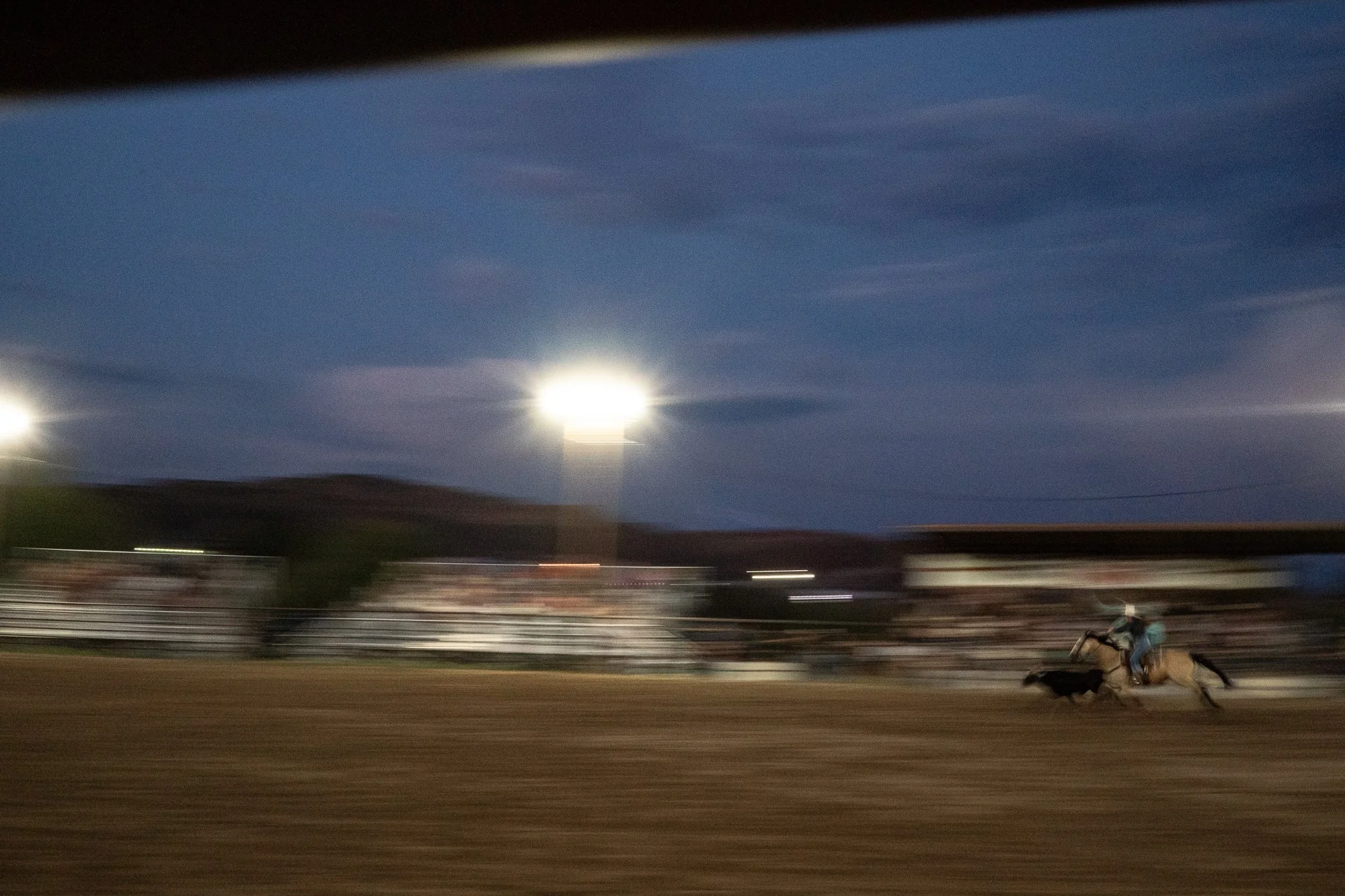
Cowboy riding a horse at a Wyoming rodeo in low light

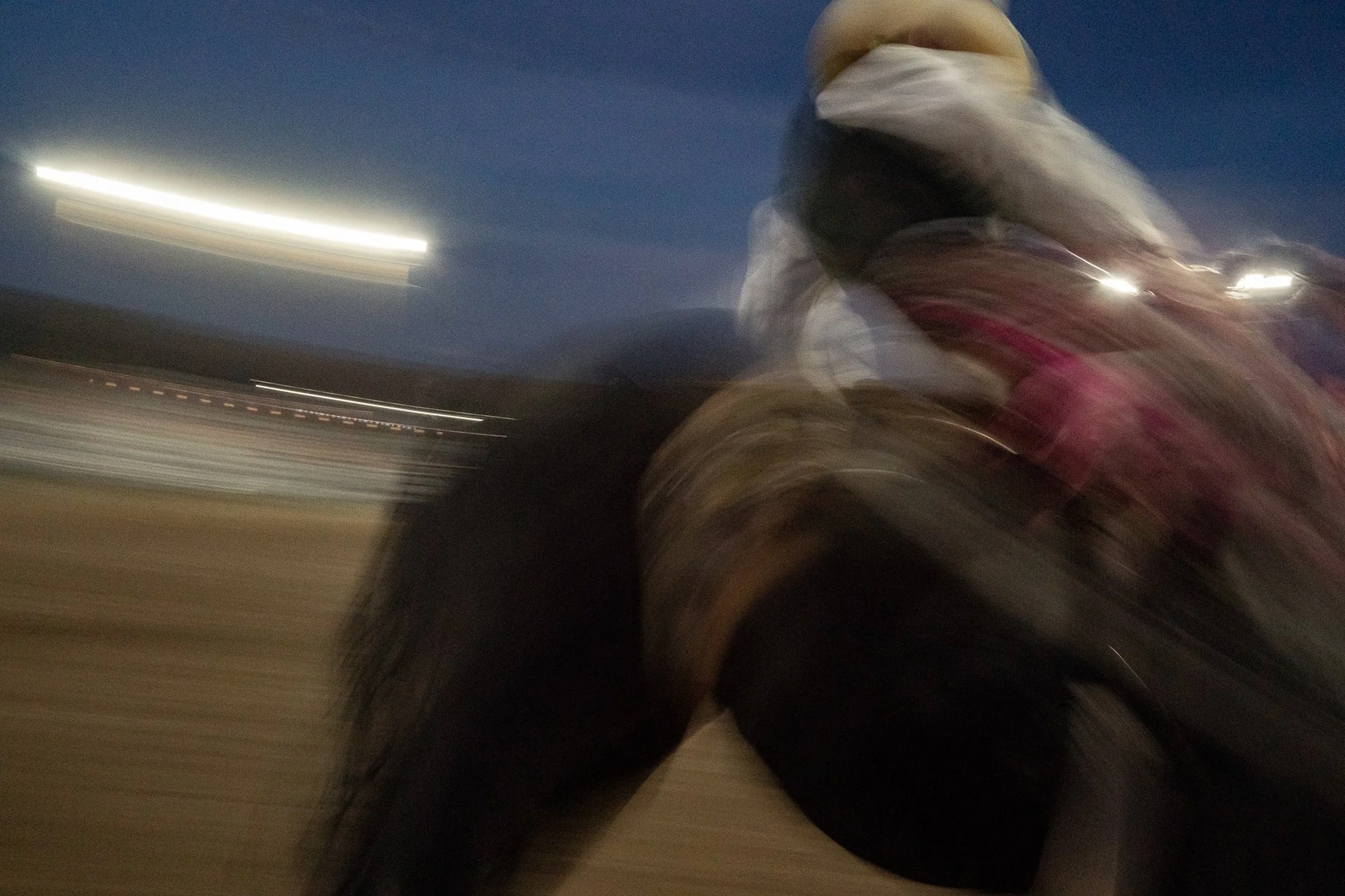
Horse and rider move through the arena in a blur of motion.

Crowded Western bar at night in a Wyoming town after a rodeo

The night continues at the local bar after the rodeo.

Cowboys and spectators gathered inside a Wyoming bar after a rodeo

Rodeo competitors and spectators mix together inside the bar after the events.

Rodeo participant in Western clothing walking through a Wyoming bar

The rodeo continues into the evening at the local bar.

Wyoming Road Trip Photography

Driving is an enormous part of making this work.

There isn't really another way around it.

Wyoming rewards that kind of travel because the distances force you to slow down. You can drive for hours through country that initially appears empty before realizing how much is actually there.

Weather systems move across the horizon. Light changes constantly. Pronghorn appear beside the highway. Towns come and go in a few minutes.

Then there's all the human stuff.

Hand-painted signs. Old bars. Gas stations. Churches. Trucks. Motels. Ranch entrances. Buildings whose original purpose isn't immediately obvious.

I've missed plenty of photographs because I told myself I'd stop on the way back.

I've learned not to do that anymore.

If something makes me look twice, I turn around.

Sometimes it turns into a photograph. Most of the time it doesn't. That's part of the process.

There isn't a checklist for this kind of Wyoming road trip photography. I'm not driving from one famous overlook to another trying to reproduce photographs I've already seen.

The whole point is not knowing what I'm looking for until I see it.

Dirt road winding through sagebrush and open Wyoming countryside

The dirt road cuts through the open country and sagebrush.

Golden West Motel sign and weathered building in a Wyoming town

Mountains rise behind the Golden West Motel and its roadside sign.

Open Wyoming landscape with a mountain ridge and lone tree

Open country and scattered trees stretch toward the mountains.

Weathered brick storefront with chimney and entrance in Wyoming

Weathered brick and an old storefront show the age of the building.

Fish shaped sign above a street in a small Wyoming town

A fish-shaped sign adds another unexpected detail to a small Wyoming town.

Why I Keep Photographing Wyoming

The West has changed enormously, and it continues to change.

That's part of the reason I feel an urgency to keep photographing it.

I'm not interested in pretending Wyoming is frozen in some earlier era. It isn't. New houses go up. Old businesses disappear. Ranches change hands. Towns grow. People leave and other people arrive.

At the same time, there are aspects of life here that remain closely connected to the state's history.

People still make their living raising cattle. Cowboys still spend long days horseback. Small-town rodeos still bring communities together on summer nights. There are still roads where you can drive a long time without seeing another car.

The tension between those things interests me.

Photography can't preserve a place, but it can preserve evidence of what it looked and felt like at a particular moment.

That's enough reason for me to keep going back.

There will always be another road I haven't driven, another ranch I haven't visited, another town I've passed through too quickly.

And probably another reason to turn the truck around.

Sandman Motel sign and storefront along a Wyoming street

The Sandman Motel sign stands beside the road in town.

Snow covered ranch buildings and livestock trailer beneath Wyoming mountains

Ranch buildings and a livestock trailer sit in the snow below the mountains.

Western Motel building and sign in a small Wyoming town

The Western Motel sits along the road beneath the rocky cliffs.

Basketball hoop mounted against a brick building beneath a Wyoming hillside

A basketball hoop stands against a brick building below the rocky hillside.

Fine Art Photography of Wyoming & the American West

These Wyoming photographs are part of my larger ongoing documentation of cowboy culture, working ranches, rural communities and everyday life throughout the American West.

A selection of the work is available as limited-edition fine art photography prints, produced using archival materials and available in a range of sizes and custom framing options.

The photographs aren't intended to present a polished or invented version of the West. They're records of people, places and moments I've encountered after years of traveling and photographing this part of America.

View the Full Cowboy Gallery

View Cowboy Photography Prints

View More Roadtrip Photography

View my Roadtrip Photography Book

Wyoming road leading through open country toward a mountain

The road runs through open country toward the mountains.

Wyoming mountain range beyond a sagebrush covered hillside

Sagebrush and open country stretch toward the mountain range.

Wyoming lake reflecting mountains and clouds across the open landscape

The lake reflects the mountains and clouds across the open country.

Grand Teton mountain range rising above the Wyoming landscape

The Grand Teton range rises above the landscape.

Artwork featured on the set of Dutton Ranch

Cowboy Photography Featured on the Set of Dutton Ranch

Recently, one of my cowboy photography prints appeared on the set of Dutton Ranch, the latest series set within the world of the modern American West.

It wasn't the first time my work has found its way onto a television set. Previously, four of my photographs were used on the set of Yellowstone, where they appeared as part of the visual landscape of one of the most successful Western dramas in recent memory.

As a photographer who has spent years documenting working ranches, cowboys, and ranching culture throughout the American West, those placements feel particularly meaningful. The photographs weren't created for television. They were made while documenting real people, real ranches, and a way of life that continues to shape the region today.

Seeing those images incorporated into productions that have helped reignite public interest in the American West is a reminder that authentic Western imagery still resonates with audiences far beyond ranch country.

Like many photographers, I've had images published in magazines, licensed for commercial campaigns, and exhibited in galleries. Seeing a photograph become part of a television production is a different experience altogether. Rather than serving as the subject of a story, the image becomes part of the environment itself—helping establish a sense of place, history, and authenticity within the world being portrayed on screen.

Two cowboys on horseback standing on a canyon ledge in a black and white Western landscape

Two riders pause on a canyon ledge, showing the kind of real Western imagery that gives the cowboy photography project its sense of place.

The Importance of Authentic Western Imagery

The popularity of Western television and film has created renewed interest in the people, places, and traditions that continue to define ranching culture throughout the American West.

Audiences are increasingly drawn to stories that feel authentic. Whether it's a working ranch in Texas, a historic cattle operation in Nevada, or a multi-generational ranching family in Nebraska, viewers can recognize the difference between imagery that is staged and imagery that reflects lived experience.

Production designers and set decorators understand this better than anyone.

Every object that appears on screen helps establish the identity of a character, a family, or a place. The artwork hanging on a wall becomes part of that visual storytelling.

When a production chooses photography from real ranches and real working cowboys, it helps create a more believable world.

Photographing the Modern American West

The photographs featured on the set is part of an ongoing documentary project focused on cowboy culture and ranching communities throughout the American West.

Over the past several years, I've traveled countless miles documenting historic ranches, branding crews, horse wranglers, ranch families, saddle makers, artists, and working cowboys whose lives remain deeply connected to the land.

The goal has never been to recreate a romanticized version of the West.

Instead, the project focuses on the people who continue to live it every day.

The ranches may differ in size and geography, but many share the same values: hard work, stewardship, resilience, and a strong connection to tradition.

Those qualities continue to resonate far beyond ranch country.

Why Western Art Matters in Interior Spaces

One of the things I enjoy most about creating fine art prints is seeing where they ultimately end up.

Some are installed in private homes.

Others find their way into ranch headquarters, lodges, hospitality projects, corporate offices, and Western-inspired interiors.

A television set adds another chapter to that story.

In each case, the photograph becomes more than an image on a wall. It contributes to the atmosphere of a space and helps tell a larger story about the people who inhabit it.

The best Western artwork doesn't simply depict the West—it reflects the character, history, and culture behind it.

Cowboy photography print displayed on the wall behind a dining table scene on Dutton Ranch

Rob Hammer’s cowboy photography print appears on the set of Dutton Ranch as part of the room’s Western set decor.

From Working Ranches to Television Screens

What makes this placement especially meaningful is that the photograph originated in the same world the series seeks to portray.

The image wasn't made on a movie set.

It wasn't created during a commercial production.

It was made while documenting real people and real ranching communities across the American West.

That authenticity has become one of the defining themes of the project, and it's gratifying to see those photographs continue to find new audiences through publications, exhibitions, private collections, and now television.

Cowboy Photography Prints from the American West

Many of the photographs from this ongoing project are available as museum-quality limited edition prints.

Collectors, ranch owners, designers, and hospitality clients have incorporated the work into homes, offices, lodges, and Western-inspired interiors throughout the country.

Each photograph is rooted in real places and real experiences, offering a contemporary look at ranching culture and life in the American West.

Explore More from the Cowboy Project

The image featured on the set of Dutton Ranch represents one photograph from a much larger body of work documenting cowboy culture across the American West.

Additional stories from the project include historic ranches, working cowboys, ranch families, Western artists, saddle makers, and the landscapes that continue to shape the region.

Together, they form an ongoing visual record of a culture that remains both enduring and relevant in the modern world.

While trends come and go, the stories of the American West continue to resonate. Seeing one of these photographs become part of a television production is a reminder that authentic Western imagery still holds a powerful place in the cultural imagination.

Cowboys on horseback gathered with a large horse herd in open ranch country beneath a wide sky

A horse herd gathers in open ranch country, reflecting the working landscapes and ranch culture behind Rob Hammer’s Western photography.